

Sanofi Bets $1.6 Billion on Next-Gen Multivalent Respiratory Vaccines with Vicebio Acquisition

Vicebio
Developer of New Vaccines

Sanofi
Pharmaceutical R&D Developer
As the global respiratory vaccine market ushers in a new era of updates and replacements, Sanofi has made its move once again.
On July 22, Sanofi announced a proposed acquisition of Vicebio Ltd, a UK-based innovative vaccine startup, for $1.15 billion in cash plus up to $450 million in milestone payments., with a total transaction value of up to 1.6 billion US dollars, is expected to be completed in the fourth quarter of 2025. This transaction is regarded as "an important move for Sanofi in the field of respiratory vaccines."
Common viruses such as Respiratory Syncytial Virus (RSV) and Human Metapneumovirus (hMPV) are becoming significant causes of hospitalization and mortality among the elderly population globally. Meanwhile, COVID-19 has accelerated the transformation of vaccine technology paradigms, driving vaccines from single antigens to multivalent combinations, from structural instability to precise conformational locking, and from cold chain dependency to room temperature storage.
Vicebio is a key "piece of the puzzle" in this new era — its innovative approach based on "Molecular Clamp" technology offers a vaccine development solution distinct from mRNA and viral vectors, striking a delicate balance between structural stability and platform adaptability.
Technology as the core, capital as the wings, and resources as the foundation, Vicebio深耕 respiratory vaccine track
Vicebio is a privately-owned biotechnology company headquartered in London, UK, founded in 2018 by Medicxi, a European life sciences investment firm. Its origins trace back to technology transfer from the University of Queensland, Australia. The core technology, "Molecular Clamp," was initially developed by researchers at the University of Queensland and exclusively licensed through UniQuest. This technology serves as the cornerstone for Vicebio’s development of novel vaccines targeting life-threatening respiratory viral infections.
Vicebio's core team is a "dream combination": CEO Emmanuel Hanon has over 20 years of experience in the vaccine field, having led the merger of Novartis and GSK's R&D organizations. During his time at GSK, he spearheaded the development of blockbuster vaccines such as quadrivalent influenza, shingles, malaria, and RSV, with expertise spanning the entire chain from R&D to production; Chairman Giovanni Mariggi, as a partner at Medicxi, supports the company with precise capital operations and strategic vision, ensuring that technological R&D and commercialization progress in steady synchronization.
In September 2024, Vicebio completed a $100 million Series B financing round.Led by TCGX with participation from Goldman Sachs Alternative Investments and other institutions, this funding acts as an "accelerator," propelling the development of its multi-target vaccine pipelines for RSV, hMPV, PIV (parainfluenza virus), and more. The acquisition by Sanofi in 2025 represents a leapfrog opportunity—leveraging Sanofi's global resource network, Vicebio's research achievements are expected to move out of the lab more quickly, benefiting patients worldwide.
From the technical萌芽 in university laboratories, to the rapid growth nurtured by capital, and further to the global layout in collaboration with industry giants, Vicebio has built a solid moat in the respiratory vaccine sector through the triple synergy of "technology + capital + resources."
"Molecular Clamp" Technology Breakthrough: Stable Conformation, Multivalent Superiority, Easy Storage and Transportation, Wide Compatibility
One of the biggest challenges faced by traditional recombinant protein vaccines lies in the instability of protein conformation, which prevents the immune system from effectively recognizing their "native state," thereby compromising immunogenicity. While mRNA vaccines address this issue, their high cost raises price barriers, and reliance on cold-chain logistics increases distribution and application difficulties.
Vicebio's "Molecular Clamp" technology offers another approach: it acts like a precise "molecular clamp," firmly locking the viral glycoprotein in its highly immunogenic prefusion conformation. This conformation resembles the virus's "original state" at the moment of invading the human body, making it easier for the immune system to recognize and identify it as an "enemy," thereby triggering a strong protective immune response.
This technology brings three key advantages:
First, the Molecular Clamp technology supports multivalent vaccine design and can integrate various viral antigens. For example, VXB-241 (RSV+hMPV bivalent), VXB-251 (RSV+hMPV+PIV3 trivalent),A single vaccination that covers multiple pathogens can enhance prevention efficiency, reduce healthcare resource consumption, and flexibly respond to viral mutations.——When one virus mutates, other antigens can still provide protection, creating possibilities for the development of universal combination vaccines (such as those targeting multiple influenza subtypes).
Secondly,Traditional mRNA/viral vector vaccines have significant limitations in storage and transportation — mRNA requires ultra-low temperatures, and viral vectors are also prone to instability.Vaccines produced using Molecular Clamp technology can be stored refrigerated at 2-8°C without the need for freeze-drying. They can also be manufactured into pre-filled syringes, simplifying the usage process for medical institutions and reducing risks associated with improper storage. Additionally, the simplification of production and distribution processes facilitates the rapid delivery of vaccines to areas with weak cold chain infrastructure, strengthening the public health support network.
Finally, the Molecular Clamp technology has strong generalization capabilities. In addition to covering common respiratory viruses such as RSV and hMPV, it is also suitable for vaccine development for influenza, coronaviruses, and adenoviruses. Vicebio once attempted to use it to develop a COVID-19 vaccine by stabilizing the prefusion conformation of the spike protein. In response to new respiratory viruses, this technology can rapidly stabilize key antigens and advance vaccine development, significantly shortening the R&D cycle to quickly respond to urgent public health needs.
Bivalent for the elderly, trivalent for broader coverage, multivalent pipeline strengthens respiratory protection network
Relying on the breakthrough of "molecular clamp" technology,Vicebio has built a multivalent vaccine pipeline ranging from bivalent to trivalent, precisely targeting key protection groups such as the elderly population while continuously expanding coverage against various respiratory viruses.These pipelines are not only the implementation carriers of technological advantages, but also provide practical disease prevention solutions with the characteristic of "one vaccination, multiple protections."
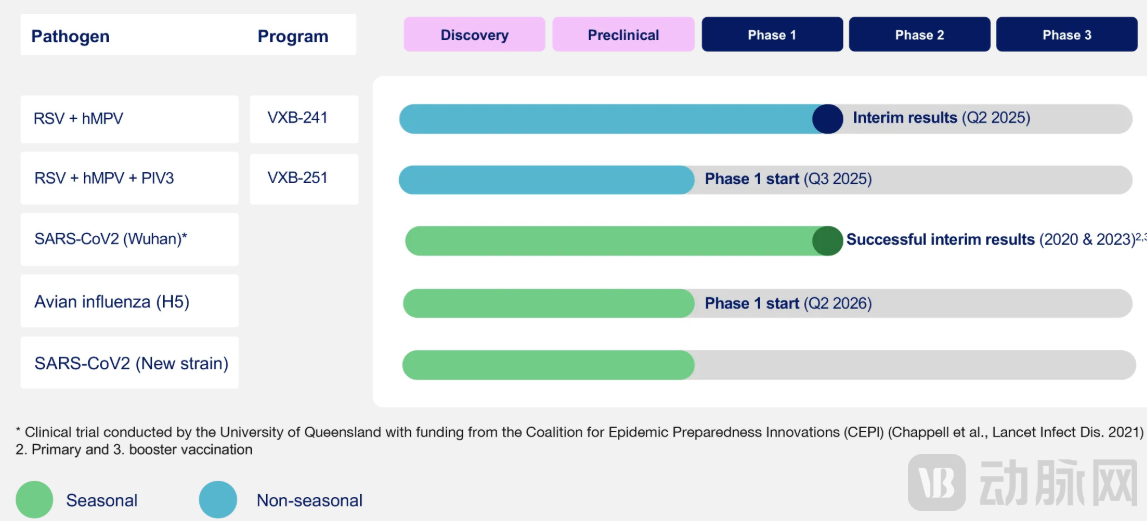
Figure 1: Overview of Vicebio's Pipeline
1VXB-241: Dual Protection, Focusing on the Elderly Population
VXB-241, one of Vicebio's leading products, is a bivalent vaccine candidate targeting RSV and hMPV., and is currently in the exploratory Phase I clinical research stage targeting populations aged 60 and above to evaluate the safety of the candidate vaccine in this key protective group.
RSV and hMPV are important pathogens causing respiratory infections in the elderly. These two viral infections can lead to severe respiratory diseases in the elderly, such as pneumonia and bronchitis, often resulting in physical frailty, increased hospitalization rates, and even life-threatening conditions in certain cases. According to WHO data, RSV alone causes over 600,000 hospitalizations annually in people aged 65 and above.
2VXB-251: Trivalent Action, Expanding Protection Scope
VXB-251 is a trivalent candidate vaccine in the preclinical stage, targeting RSV, hMPV, and PIV3.By incorporating PIV3 into the protective scope, the focus on key populations is further strengthened, expanding the vaccine's protective boundary.
According to statistics, nearly all children are infected with RSV before the age of 2. In 2019, there were 33 million RSV-related acute lower respiratory infections globally in children under 5 years old, resulting in 3.6 million hospitalizations and 101,000 deaths in children, accounting for 2% of total annual deaths in this age group. For children under 6 months of age, the proportion of deaths is even higher.
PIV3 is a common respiratory infection virus in children, which can lead to diseases such as bronchitis or pneumonia, accounting for a significant proportion of pediatric respiratory illnesses. Meanwhile, PIV3 can also infect the elderly and immunocompromised individuals, causing severe respiratory symptoms.
A single vaccination could potentially provide protection against three common and highly harmful respiratory viruses for the recipient. The development concept of this multivalent vaccine aligns with the current trend in respiratory vaccine advancements, offering a more comprehensive solution to meet clinical needs.
Vaccine Giants Accelerate Layout, Respiratory Vaccine Market Vibrancy Explodes
Global Respiratory Virus Vaccine Market Welcomes Rapid Growth, becoming the focal track in the pharmaceuticals industry. In 2022, Sanofi/GSK's Beyfortus was approved for marketing, ending the long-standing absence of RSV vaccines. In 2023, GSK’s Arexvy and Pfizer’s Abrysvo were successively approved, establishing protective barriers for the elderly population aged over 60 for the first time. Meanwhile, a report by Grand View Research shows that the RSV vaccine market will rapidly expand at a compound annual growth rate as high as 40% within several years, highlighting the enormous potential of this "silver-haired group" in the vaccine segment.
As hMPV, parainfluenza virus, PIV3, and other "respiratory killers" often attack in tandem with RSV, their similar symptoms pose a significant challenge to clinical diagnosis and treatment. Therefore, multi-pathogen combination vaccines have become the new battleground — this innovative solution, capable of fending off multiple viruses at once, is key to enhancing the density of the public health protection network.
Under this trend,Multinational pharmaceutical companies are seizing the opportunity through self-research, collaboration, mergers and acquisitions.In 2023, AstraZeneca acquired Icosavax for $1.1 billion, precisely valuing its RSV-hMPV bivalent vaccine entering Phase III clinical trials; MNCs such as Pfizer and Johnson & Johnson have also heavily deployed in this field through either independent research or collaborations.
As a giant in the vaccine field, Sanofi's strategic layout has long been taking shape—acquiring key technology platforms to quickly address strategic gaps and form a differentiated product portfolio. In the RSV vaccine space, it has both deeply cultivated the middle-aged and elderly market—successfully launching Arexvy, the world’s first RSV vaccine for older adults—and strengthened pediatric defenses through Beyfortus, an RSV antibody drug developed in collaboration with AstraZeneca, which has already gained a leading position in pediatric prevention.
The acquisition of Vicebio represents the continuation of Sanofi's strategy in the respiratory vaccine field. Its significance goes beyond simply supplementing the product line; it extends Sanofi's antibody prevention approach to the structural protein vaccine domain, forming a "two-pronged" product matrix that greatly enhances flexibility in responding to future changes in the vaccine market.
More crucially, what Vicebio has brought is not a single vaccine, but a reusable and scalable technical platform. This innovative system, known as the "molecular clamp," acts like a "vaccine-producing engine," with the potential to be applied to the development of vaccines for more pathogens, expanding from respiratory viruses to broader fields.
From a strategic perspective, this acquisition continues Sanofi's consistent logic of building a "platform-based ecosystem," making the strategic puzzle of "antibody + vaccine + technology platform" more complete and seizing the initiative in the next-generation multivalent vaccine ecosystem. As analysis firm AlphaValue noted, against the backdrop of slow progress in early vaccine projects, Vicebio will inject new R&D momentum into Sanofi.
From an industry perspective, Sanofi's acquisition of Vicebio epitomizes the global respiratory vaccine market's trend towards "technology platformization and product multivalency." Industry giants are no longer content with competing on single products; instead, they are integrating innovative technologies to build protective systems that cover broader populations and address more pathogens.
Looking at the broader global public health landscape, behind the mergers and acquisitions lies humanity's collective effort to combat viral threats. As innovative technologies like the "molecular clamp" accelerate their implementation through the resource networks of multinational corporations (MNCs), and as multivalent vaccine research continuously pushes boundaries, the ultimate beneficiaries will be more populations around the world in need of protection. This may very well be the most anticipated underlying value in the wave of industry mergers and acquisitions.