Abbott's Absorbable Esprit BTK Stent Receives Approval in Canada for CLTI Treatment

Abbott
Diagnostic and pharmaceutical product manufacturers
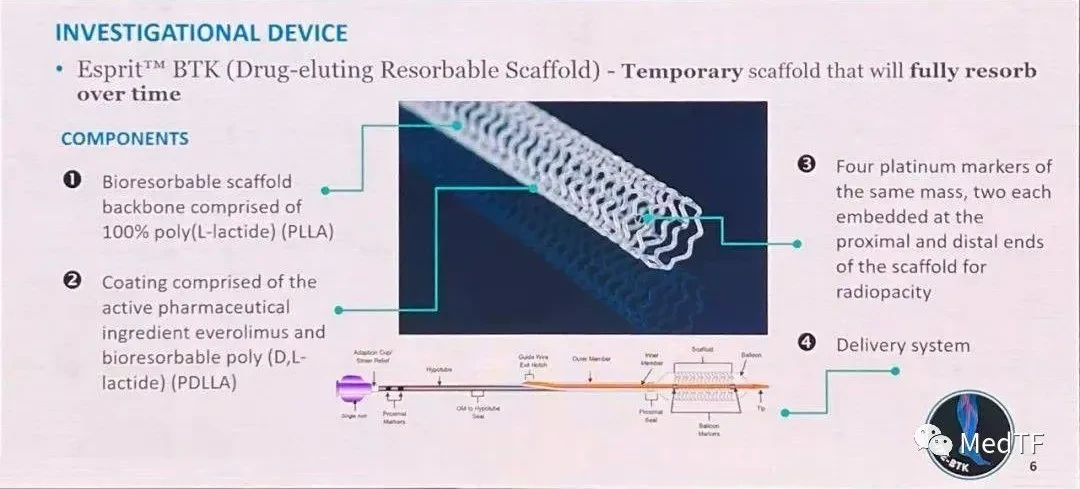
Abbott Announces Its Bioresorbable ScaffoldEsprit BTKObtainApproved for marketing by Health Canada。Esprit BTKIt is a product specifically designed for patients with chronic limb-threatening ischemia (CLTI) below the knee, which keeps arteries open and releases the drug everolimus to promote...Into the blood vessel healing, and ultimately completely degrades after completing its mission. Before this,Esprit BTKApproved for marketing by the FDA and CE.

Expert Evaluation
"Health Canada's approval of Abbott's Esprit BTK represents a significant milestone in our journey to combat below-the-knee peripheral artery disease and ushers in a new era of improved clinical outcomes for patients worldwide. By offering a treatment option superior to balloon angioplasty, Abbott is reshaping the therapeutic landscape for CLTI."
---Brian DeRubertis New York Presbyterian-Weill Cornell Medical Center
Executive Evaluation
"We deeply understand that patients with severe PAD not only endure immense suffering from the disease but also face limited treatment options—existing solutions are often caught between high-risk surgeries and minimally invasive therapies with limitations. Our revolutionary bioresorbable stent technology for below-the-knee applications is filling this clinical gap, ultimately helping PAD patients regain a higher quality and more complete life."
---Julie Tyler Senior Vice President of Abbott's Vascular Business
Although peripheral artery disease (PAD) affects a large number of people, public awareness is severely lacking. Currently, more than 800,000 patients in Canada suffer from this condition, but only a small fraction have received a definitive diagnosis. Critical limb-threatening ischemia (CLTI), the most severe clinical manifestation of PAD, results from the buildup of arterial plaque that obstructs the delivery of blood and oxygen to the lower legs and feet. Patients often endure excruciating pain and suffer from non-healing open wounds. Approximately one in five CLTI patients ultimately require amputation, and over 50% of those undergoing amputation have never had a vascular assessment prior to the procedure. Moreover, 60% of amputees face a risk of death within five years post-surgery.
InEsprit BTKBefore its approval for marketing, the clinical standard treatment was balloon angioplasty—a technique that uses a catheter to deliver a tiny balloon to the site of the blockage, compressing the plaque against the arterial wall to restore blood flow.Flow. However, the short-term and long-term outcomes of treating vascular occlusion with balloon angioplasty alone are not ideal, and in most cases, restenosis occurs, leading to the need for repeated treatments.
Last year, Abbott announced clinical data showingEsprit BTK is significantly superior toBalloon Angioplasty.Esprit BTKNot only can it significantly improve patient outcomes, but it also reduces the need for repeat surgeries by 48% during the study period.
Esprit BTK
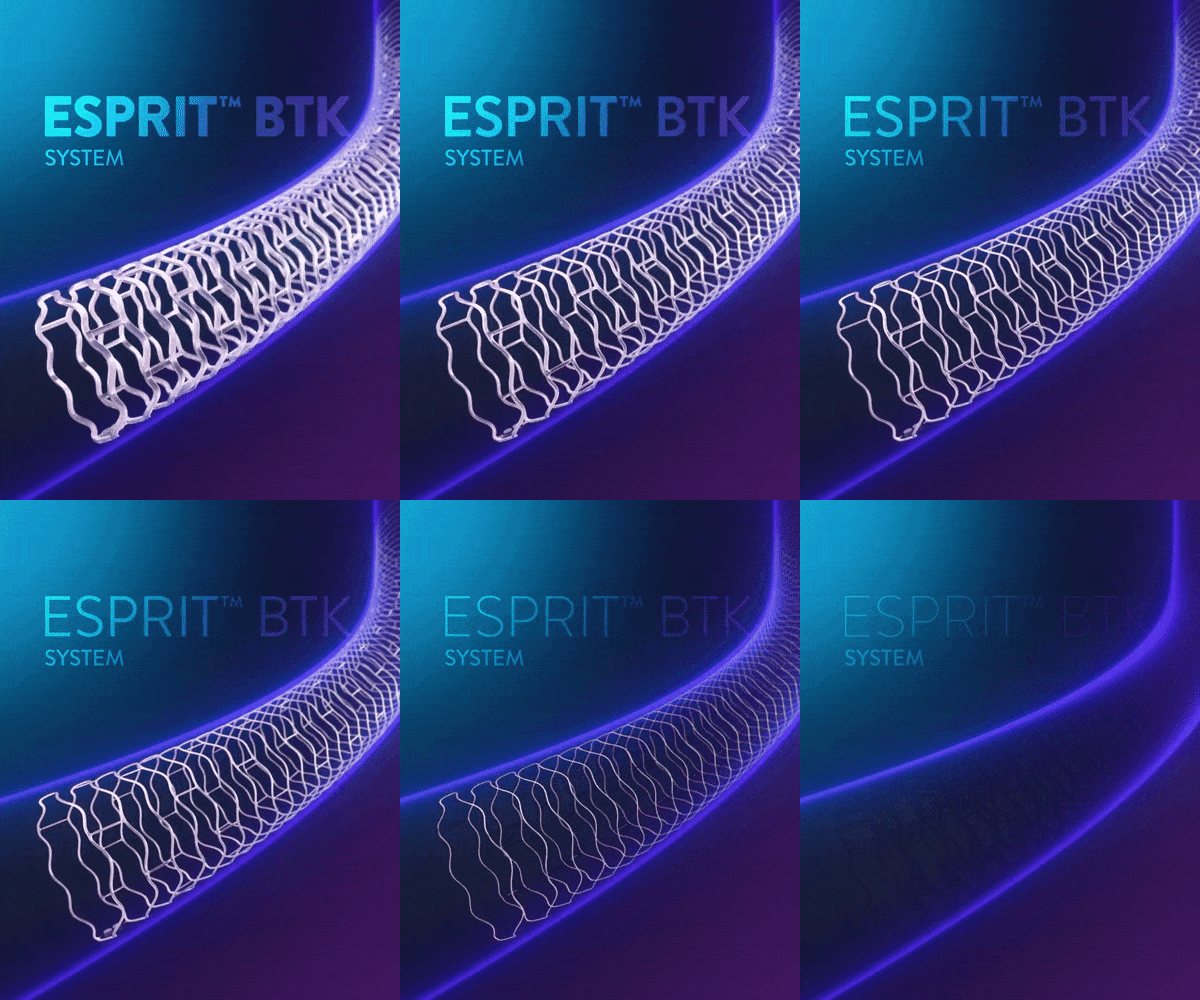
The absorbable stent has two platinum markers at the distal and proximal ends, respectively, for precise positioning.