

In Conversation with Judy Lux of Clincase: How a German Company Bridges China's Innovative Healthcare Industry to Europe
The American historian Daniel J. Boorstin once made a famous judgment: The greatest obstacle to discovery is not ignorance—it is the illusion of knowledge.
"The greatest obstacle to discovery is not ignorance, but the illusion of knowing." This line is especially apt in the context of Chinese life sciences going global today.
More and more Chinese innovative healthcare companies are making the European market their next stop. Backed by globally first-in-class, FIC/BIC products and impressive clinical data, they submit applications to broader markets — and then receive an inquiry letter from a regulatory agency. The regulator doubts the completeness of the evidence chain: perhaps a modification to an electronic case report form left no complete audit trail, or perhaps the timeline of key data entry contains logically ambiguous areas.
Over the past few years, Judy Lux, founder of Clincase, has repeatedly examined this scenario: the product is often superior, yet because the R&D system lacks the element of "documentation," the company gets stuck at the regulatory review stage. At this point, the "illusion of knowing" that Boorstin spoke of has taken on a concrete face.
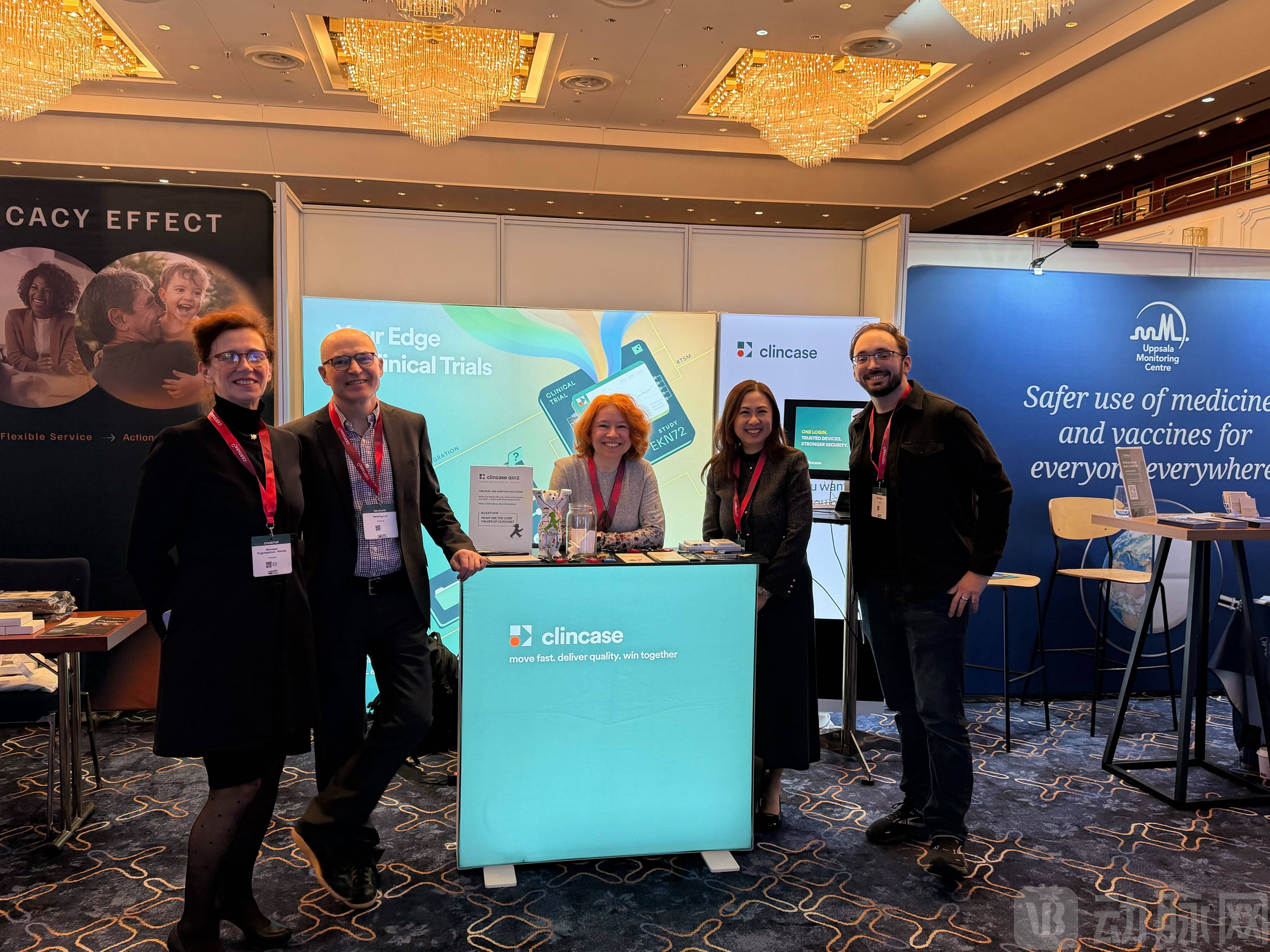
The Clincase team at the 2026 ACDM (Association for Clinical Data Management) Annual Conference, Berlin
To that end, Judy Lux set Clincase off on a new journey.
1From Xi'an to Berlin: Twenty Years of Reversing Direction
In 2004, Judy Lux moved from Singapore to Berlin.
In an entirely unfamiliar environment and market, concepts long taken for granted can take on new life. For Judy Lux, moving to a new place meant re-understanding what the word "internationalization" really means; and the more places she visited, the more she had to translate how different civilizations define "trust."
At the time, she was responsible for business development between Singapore and China in Singapore's aerospace industry. After arriving in Germany, she joined an aviation maintenance company, just as it was setting up a branch in Xi'an, China — and her task was precisely to assist German engineers in transferring technology and knowledge to their Chinese counterparts.
The Chinese team quickly mastered an operational process and could complete the work as required; the result itself was fine. But the German engineers were not satisfied. They kept asking: Why must it be done in this order? If a step deviates, what consequences will follow? Which records must be retained? How do we prove that this work was performed by authorized and trained personnel?
"I realized that what they really wanted to transfer was not a set of operating manuals, but an entire quality mindset," Judy Lux later recalled. The Chinese team excelled at learning and getting things done; the German team focused on whether the work could be completed repeatedly and consistently to a unified standard, and whether the entire process could be proven to be under control at any point in time. Two completely different definitions of "trust," built respectively on results and on process + evidence chain.
Later, she turned to internationalization consulting for German SMEs, initially helping European companies enter Asia. But soon a stronger, opposite demand emerged: more and more Chinese companies wanted to enter Europe, yet lacked a systematic understanding of local regulatory logic.
In 2008, she and her partners co-founded Clincase in Germany, initially positioned to build an electronic clinical platform that meets international regulatory requirements, serving global pharmaceutical companies, CROs, hospitals, and research institutions.
The strategic turning point came in 2025.
That year, Judy Lux attended the DIA China Annual Meeting. Standing in the venue, she realized that China's life sciences industry had reached a new juncture: innovative drug, biotech, and medical device companies were no longer content with the domestic market, but had begun systematically mapping out broader international territories such as Europe. The cross-cultural management experience accumulated over more than two decades, her understanding of European clinical research, and Clincase's digital platform capabilities — which had been running for nearly twenty years — suddenly found a new and more urgent application scenario.
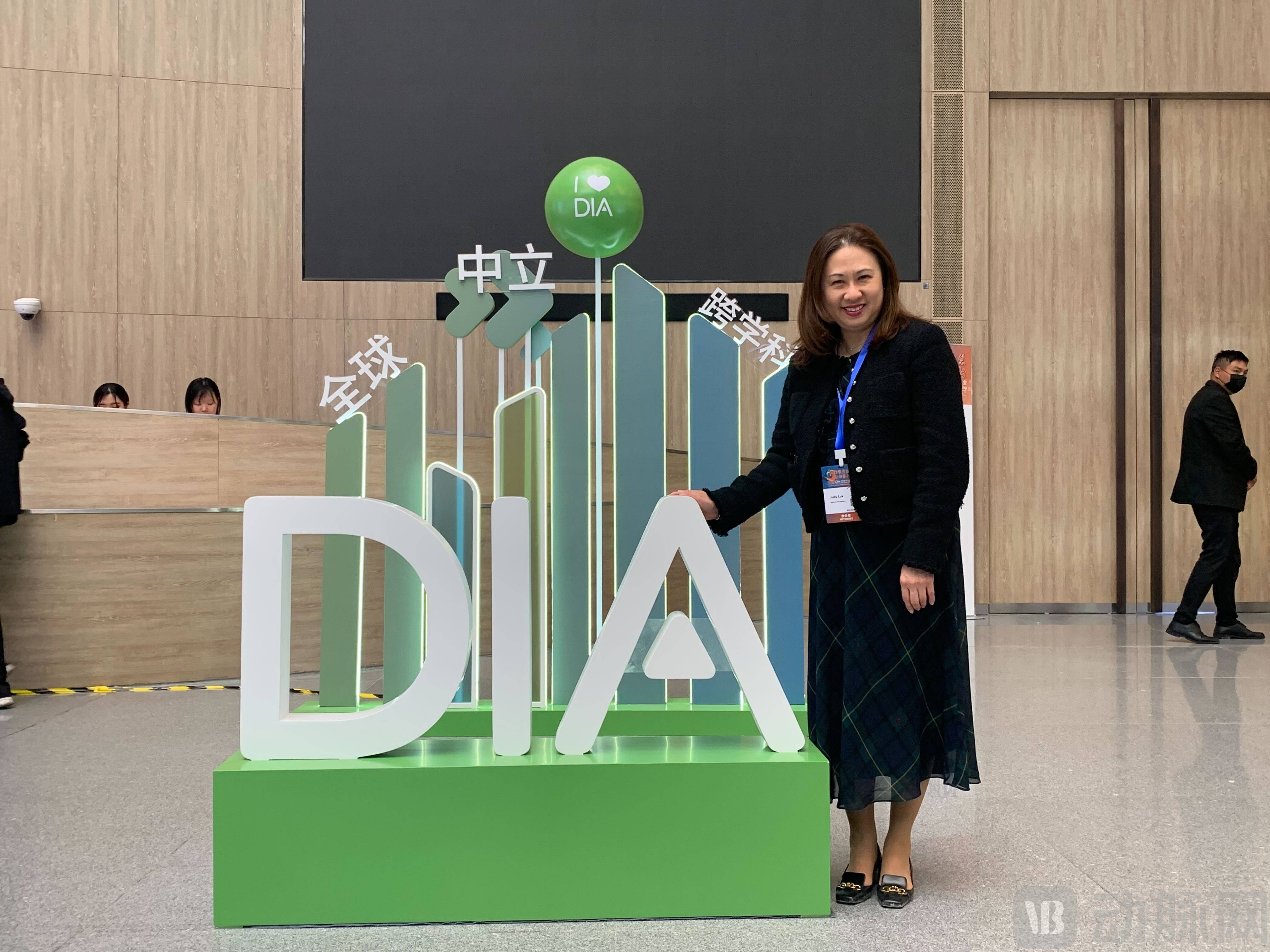
Co-Founder Judy Lux at the 2025 DIA China Annual Meeting
2Scrutinizing Every Data Point in Clinical Trials
Chinese companies excel at answering "how to do things well" — this is the judgment Judy Lux gave when discussing her understanding of the differences between China and Europe; European regulators, by contrast, keep asking "why do it this way" and "how do you prove that the whole process has always been under control."
This difference was already fully revealed in that technology transfer in Xi'an, and the same logic has run through everything since she entered the clinical research field. European regulators never stop at a study report with positive conclusions when reviewing a clinical trial. They also ask: How was this data generated? Who modified it along the way? Why the modification? After the modification, who reviewed it? Has the electronic system itself been validated? Were the risks identified before the study began? Is there a record behind every key decision?
To a R&D system accustomed to being results-oriented, these questions look like cumbersome bureaucratic procedures, but they in fact form the foundation on which international regulatory trust is built.
Judgments come from evidence. In June 2026, a Chinese pharmaceutical company announced that during an EU GMP on-site inspection, its drug substance portion met EU GMP requirements, but its drug product portion failed the inspection due to inadequate deviation management measures. Industry consensus holds that inconsistent inspection results between drug substance and drug product lines, and substandard deviation management, are recurring typical problems for domestic drugmakers in overseas GMP inspections — the two sides' understanding of "quality control" is not aligned.
Judy Lux attributes this problem to a structural weakness. In her view, the shortfall of Chinese companies lies in not having built an evidence chain that international regulators can fully review and accept — because "documentation" was, for a long time, not designed as part of the R&D process.
3Bridging the Triple Divide: Regulations, Data, and Culture
In Judy Lux's framework of observation, Chinese life sciences companies need to cross three chasms to enter the European market—the regulatory system, data trust, and cultural collaboration.
The difficulty of the regulatory system is systemic in nature. European regulation spans the entire lifecycle, from product development, clinical trial design, data management, computer system validation, vendor management, change control, and risk management through to post-marketing surveillance. If a company only starts "catching up" at the filing stage, it has often already missed the most critical window — many requirements must be embedded into process design from the early stages of R&D and clinical development, and retrofitting them later costs several times more.
The difficulty of data trust is the most easily underestimated of the three chasms, and the one where companies most easily "trip up" in practice. Judy Lux shared a real scenario her team encounters repeatedly: a company preparing to conduct international multicenter clinical research assumed that an electronic data capture (EDC) system was merely a tool for entering data, so in the early stage of the project the team cared more about whether the database could go live quickly, and paid no attention to whether the data management system complied with international regulatory requirements.
After Clincase stepped in to assess it, problems quickly surfaced: some key data lacked complete traceability; the data modification process had no clear review mechanism; the division of permissions among users in different roles was not clear enough; and the design of some electronic case report forms (eCRFs) did not even fully correspond to the key endpoints set out in the study protocol. These problems do not immediately show up in day-to-day project work, but once they reach regulatory review or a GCP on-site inspection, they are very likely to trigger further regulatory doubts about overall data integrity — and once such doubts arise, a single explanatory note is very hard to remedy.
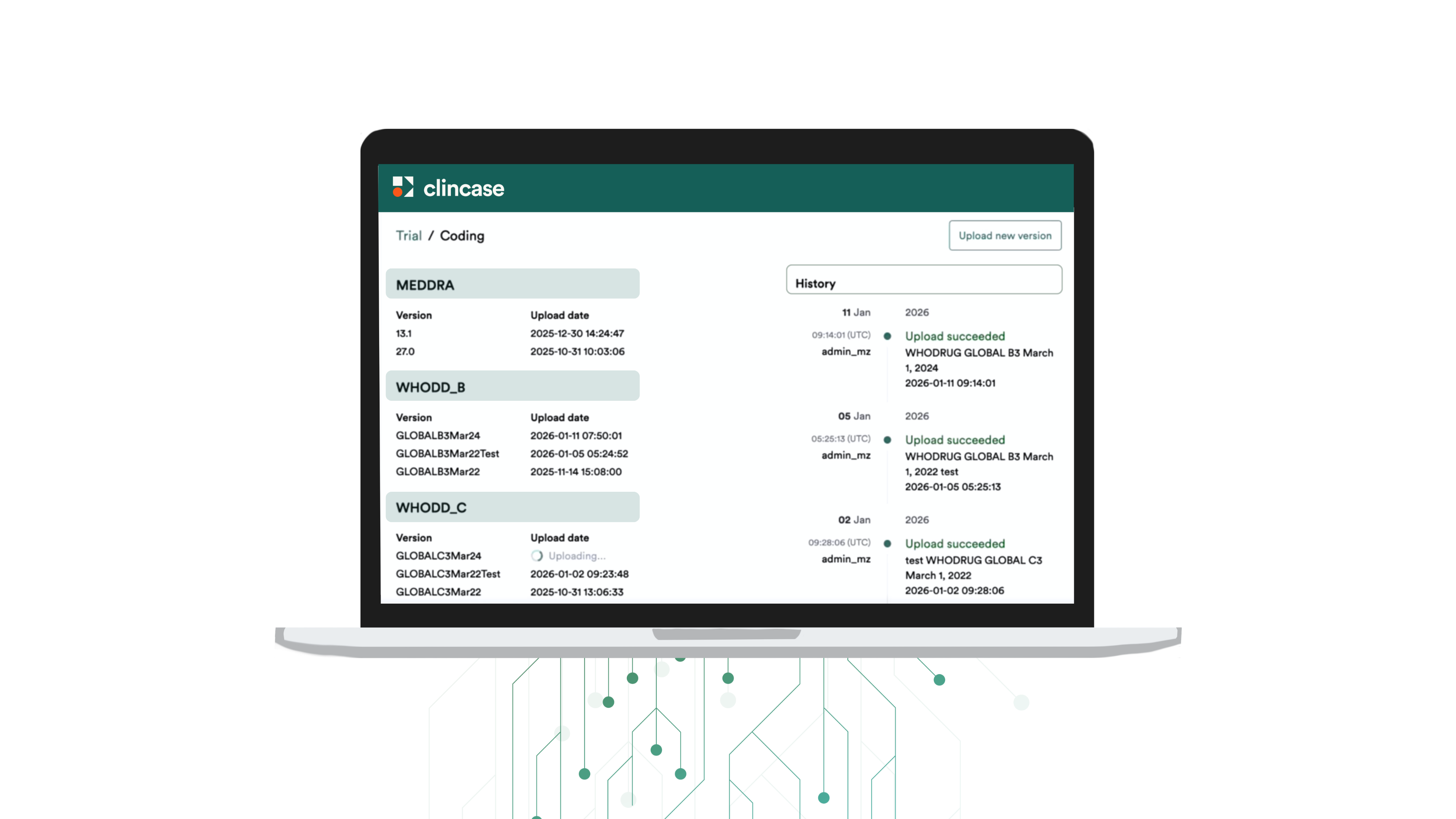
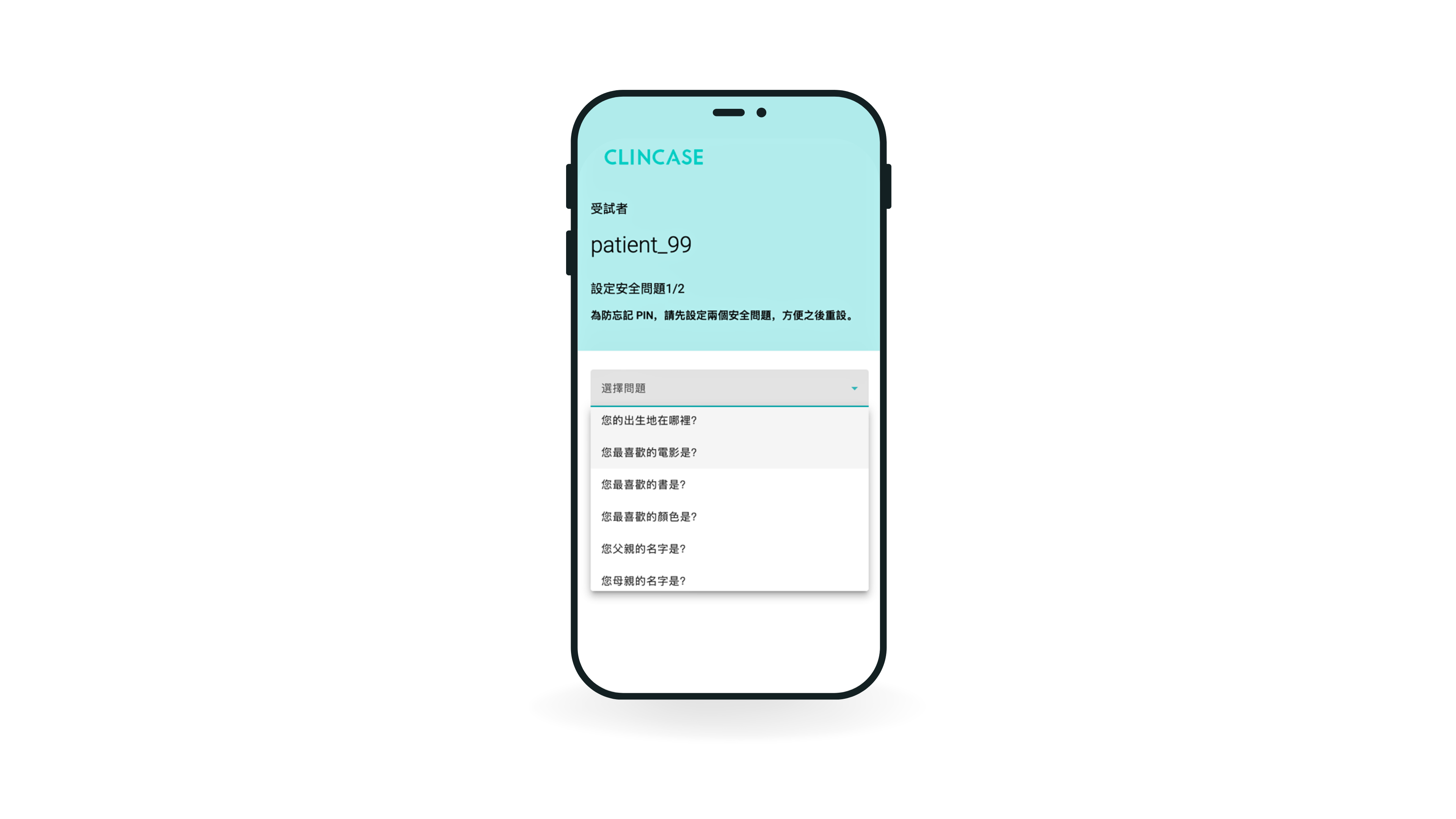
So, before the study formally began, the two sides reworked the entire data management process: optimizing the eCRF design, rebuilding logical validation checks for key data (Edit Checks), improving the audit trail, optimizing user permission management, and, in accordance with international regulatory requirements, completing computer system validation as well as related change management and validation documentation.
"On the surface, this work increases upfront investment," Judy Lux said, "but it helps the client establish a more standardized data management system before the study actually begins — that is far more secure than the time and risk saved by remedying things afterwards."
The difficulty of cultural collaboration can be seen as a mismatch in communication styles. Chinese teams emphasize speed, flexibility, and rapid response; European teams place more value on boundaries of responsibility, written records, and formal approval after thorough discussion. If both sides do not understand the logic behind this difference, problems easily arise: insufficient information transfer, inconsistent understanding of responsibilities, and reduced decision-making efficiency. In Judy Lux's view, the key to resolving this layer of difference is to help both sides understand the reasons behind each other's ways of working, and to jointly build a transparent, executable collaboration mechanism based on mutual trust.
4Counterintuitive Entry: Discuss Mindset First, Then System
Faced with these three chasms, Clincase chose a somewhat counterintuitive entry point: first explain the logic at the mindset level to clients, then discuss concrete measures such as system deployment.
"Many people think the first thing we do is give the client an EDC system, or start building eCRFs. Actually, no," Judy Lux said. For a company preparing to conduct international clinical development, the Clincase team usually first sits down with the client to discuss a few topics that seem unrelated to software settings: Which countries does this product hope to enter in the future? Who is the target regulator? Which data will truly determine the success of future registration? Which steps have the greatest impact on patient safety and data quality? How should these risks be controlled in advance before the trial begins?
If we break these questions down, we find that it is precisely these questions that determine how quality is built across the entire clinical study. This is the core logic of "Quality by Design": true quality cannot be verified by inspection after the trial ends; rather, it must be "designed in" at every stage — protocol design, data collection, system configuration, and project management.
Once the key quality elements have been sorted out, the team then translates international regulatory requirements into the digital platform, so that the entire clinical study meets international regulators' expectations for data integrity and traceability from the very beginning.
On this basis, the Clincase team also deliberately keeps its distance from the CRO identity.
Judy Lux stresses that Clincase is a German technology company focused on the eClinical digital clinical research platform, not a CRO. Many international CROs have mature clinical research capabilities and their own EDC or eClinical platforms, but Clincase does not intend to compete with them.
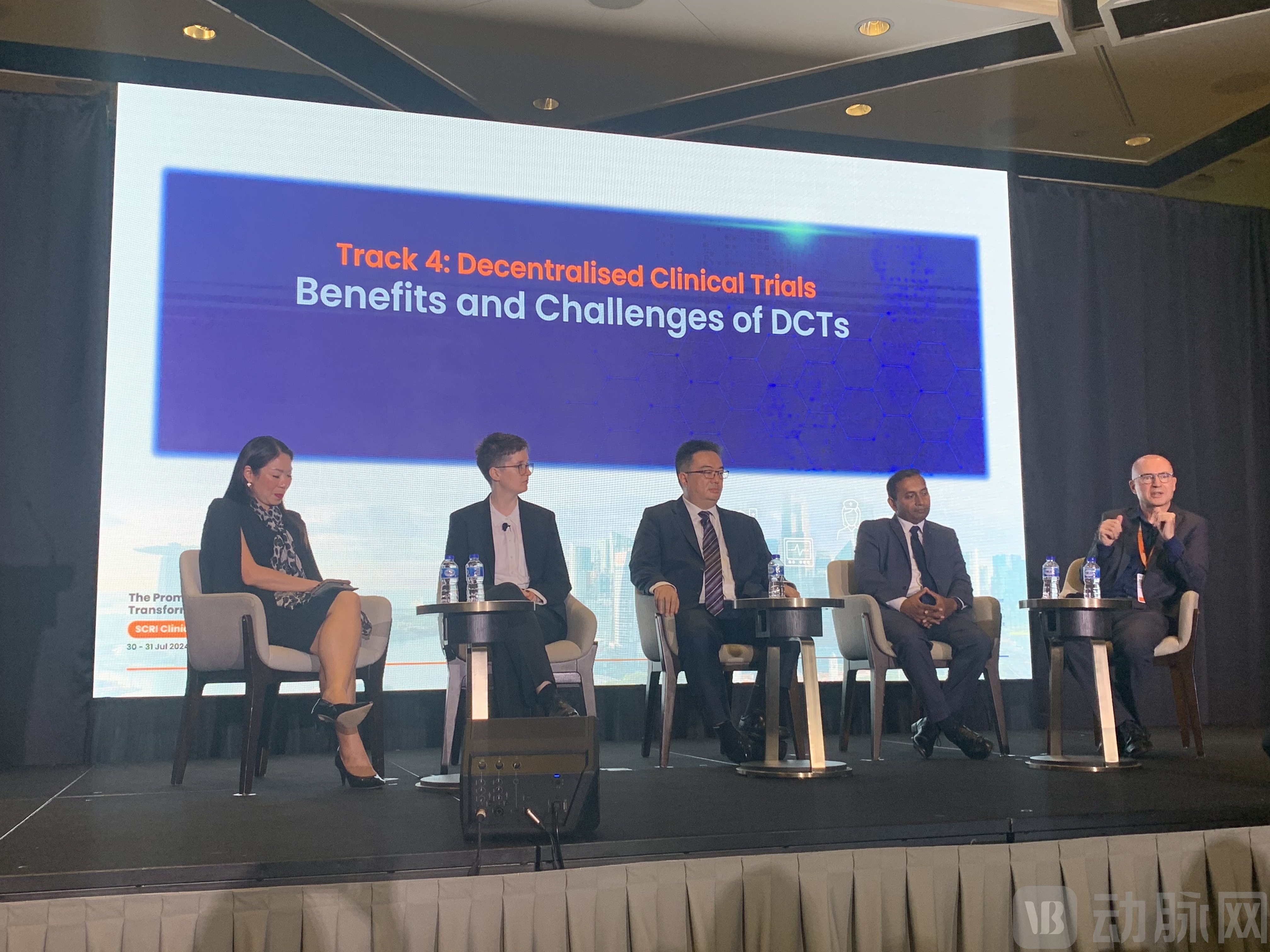
Lu Hanlin, CEO (first from right), sharing on site at the Singapore Clinical Research Institute (SCRI)
For Chinese clients, the role Clincase wants to play is that of a long-term technology partner who understands both international compliance and the development pace of Chinese companies. The Clincase platform can be flexibly configured, supporting companies in building their own data management teams, and also supporting multicenter research in collaboration with CROs and hospitals in different countries; clients always retain control over their own clinical data and research processes, rather than being pushed into some fixed service model.
5Navigating Regulatory Changes: Partnering with CSGCT
If the foregoing describes the experience Clincase has accumulated on the front line, then since ICH E6(R3) (the third revision of the Guideline for Good Clinical Practice (GCP) issued by the International Council for Harmonisation of Technical Requirements for Pharmaceuticals for Human Use (ICH)), Judy Lux has put forward a more fundamental judgment: the core change brought by regulation is that it requires companies to fundamentally rethink the design logic, data governance approach, and technology systems of clinical research.
Under the new regulatory framework, clinical research quality can no longer be backstopped by inspection after the study ends. Companies need to identify key quality factors at the study design stage and embed risk control into every link — protocol design, data collection, and system validation. This means Chinese companies need to establish, in advance, a data governance system that meets international requirements, validated computer systems, complete audit trails, and digital infrastructure capable of supporting cross-border research. And these capabilities are the ticket to entering overseas markets.
In 2026, Clincase's strategic collaboration with the Chinese Society of Gene & Cell Therapy (CSGCT) unfolded precisely against this backdrop.
According to Judy Lux, in their very first exchange, the two sides found their goals highly aligned, aimed at forging closer connections between China's cell and gene therapy industry and the international market.
Notably, this collaboration is also a two-way street.
For international CGT companies hoping to enter China, CSGCT leverages its network advantages in China's CGT ecosystem to help connect leading researchers, hospitals, research institutions, CROs, and CDMOs; Clincase, through its own international clinical research experience and eClinical platform, provides relevant projects with digital infrastructure including EDC, ePRO/eCOA, RTSM, eConsent, and clinical data management.
For Chinese CGT companies hoping to go international, the path is exactly the reverse. CSGCT helps identify innovative companies and projects with internationalization potential, while Clincase draws on its experience in the European clinical research environment, international data standards, and digital clinical trials to help companies understand earlier the specific requirements of global clinical development for data quality, system validation, traceability, and risk management. At the same time, it helps them connect with research institutions, industry partners, investment institutions, and multinational pharmaceutical companies in Europe and other international markets, creating opportunities for future international clinical collaboration, co-development, or licensing cooperation.
At the CSGCT Annual Meeting in September 2026, Judy Lux hopes to convey three messages to the industry through this collaboration —
First, China has already entered the center stage of global innovation; especially in cell and gene therapy, China not only possesses leading research capabilities but is also nurturing a growing number of innovative therapies with international competitiveness.
Second, internationalization requires not only innovation but also international recognition. Future competition is not only about products and technology, but also about clinical data quality, digital capabilities, and international compliance capabilities; only by establishing a clinical research system that meets international standards can innovative results truly gain the recognition of global regulators, partners, and investors.
Third, Clincase hopes to become a long-term international partner for Chinese life sciences companies — a bridge connecting China with the international clinical research ecosystem.
Asked what she hopes to see when looking back on this collaboration in two years, Judy Lux said the success she understands and expects is "more and more Chinese biotech companies being able to conduct international clinical development with greater confidence, operating according to international standards from trial design and data management to quality system building"; and also "more international collaborations truly landing," whether joint clinical research between Europe and China, or long-term cooperative relationships established among international pharmaceutical companies, Chinese biotech companies, hospitals, CROs, and research institutions.
She also hopes that CSGCT can become an important platform connecting China with the international cell and gene therapy industry, and that Clincase can become a long-term, sustainable partner within this ecosystem.
6Conclusion: The Metaphor of Morning Light
Explaining the name Clincase, Judy Lux said the sun rises in the east every day, symbolizing hope and a new beginning, and also representing a force of continuous growth and innovation.
In her view, this name carries the company's original aspiration. Today, China is already one of the most active countries in global life sciences innovation, and more and more innovative drugs, medical devices, and cell and gene therapy technologies are going global. She believes that in the future, important forces in global medical innovation will keep emerging from the East, and what Clincase wants to do is precisely to help these innovations reach the international stage more smoothly.
Looking back over these more than twenty years — from Singapore to Germany, from aerospace to medical clinical research, and now to driving Chinese innovative healthcare companies toward international markets — Judy Lux has changed career directions several times. But peeling away these surface narratives layer by layer, one can say that she and her team have always been doing one thing: connecting. Connecting teams from different countries, different cultures, and different work logics; and the core of that connection is building trust between different systems.
Chinese life sciences companies do not lack innovation, technology, or execution. What they need to reach next is a system that can be fully recognized by the international review system. The strategic collaboration between Clincase and CSGCT, at this juncture, seeks to provide a replicable path for the internationalization of China's CGT industry. That path may not be smooth, but it points in a clear direction: letting more Chinese innovation truly reach the world, and making the world more willing to trust innovation from China.