

Behind the Merger of Come-Future and Mediinfo: What Industry Logic Does It Signal?

Come-Future
Provider of Digital Healthcare Solutions

Mediinfo
AI-Native Smart Healthcare Solutions Provider
Recently, a merger has caught the attention of an entire industry.
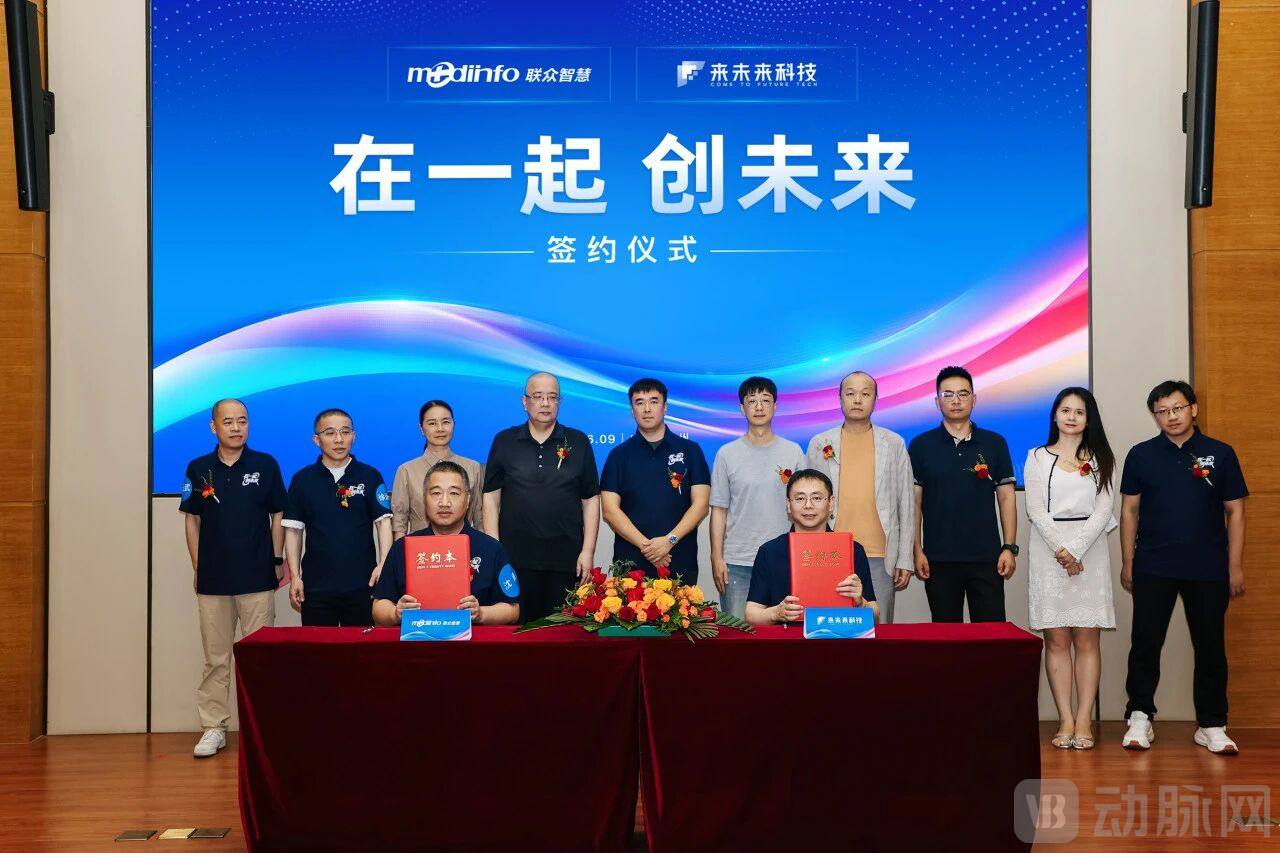
On September 9, 2026, Qiang Hui, Chairman of Come-Future, and Shen Yong, Chairman of Mediinfo, signed a strategic agreement in Hangzhou in the presence of the two companies' shareholder representatives and senior management teams, formally announcing their merger.
In fact, this is not a simple business partnership; it represents a deep paradigm shift in the healthcare IT industry. On one hand, the combination of a 27-year industry "veteran" with an AI upstart achieves precisely the two-way loop of "knowing healthcare" and "knowing technology." On the other hand, the merged entity's business covers 30 provincial-level regions and more than 3,000 medical institutions, making it one of the largest service providers in China's digital healthcare sector and promising greater growth potential in the future.
At a time when capital markets are growing increasingly cautious about "AI + healthcare" and placing unprecedented emphasis on "real cash flow," the merger of Come-Future and Mediinfo is particularly intriguing — while most AI companies are still struggling to find deployment scenarios and most IT companies are still anxious about their growth curves, this merger attempts to answer two questions at once: How can AI truly take root in the healthcare industry? And how can healthcare IT complete its leap to healthcare AI?
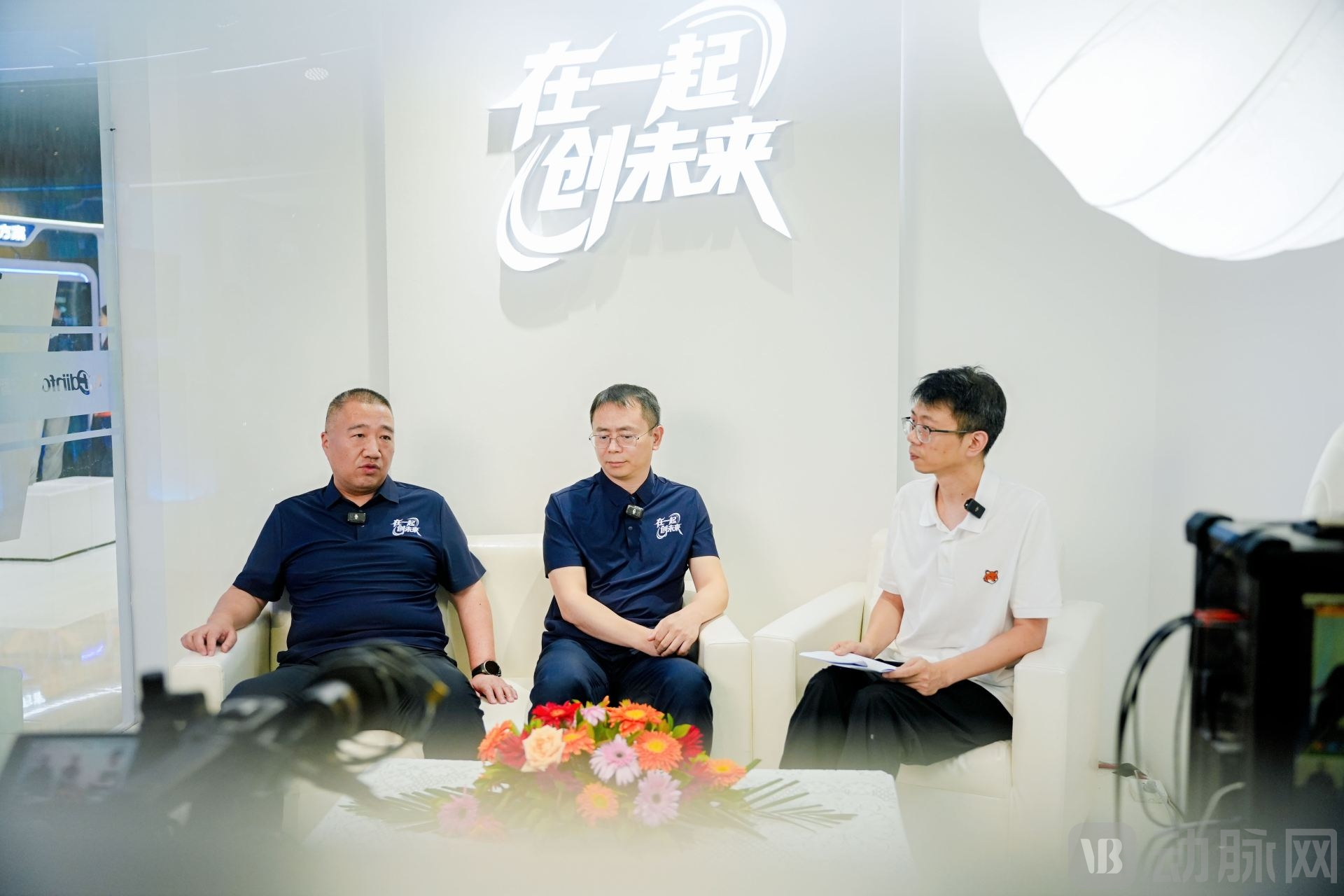 Shen Yong, Chairman of Mediinfo (first from left)
Qiang Hui, Chairman of Come-Future (second from left)
Liu Zongyu, Deputy Editor-in-Chief of VCBeat (first from right)
To that end, during the 2nd Medical Artificial Intelligence Conference (MAIC 2026), VCBeat conducted an exclusive interview with Qiang Hui, Chairman of Come-Future, and Shen Yong, Chairman of Mediinfo, seeking to reconstruct the capital logic and industry outlook behind the merger.
Merger Logic: Not Buying Profits, but the Scarce Closed Loop of "AI Implementation in Healthcare"
From a capital perspective, ordinary M&A usually looks at revenue, profit, customer overlap, and cost synergies. But the core increment of the Come-Future and Mediinfo merger lies not in simple consolidation, but in the "AI + healthcare" service loop formed by the two companies' high complementarity.
Specifically, in Qiang Hui's view, this complementarity is not simple addition but a multiplicative relationship capable of producing fission effects: "With the rapid development of large language models, AI tools are becoming highly homogenized, so the future 'main battlefield' will certainly be vertical industries. Healthcare is a typical data-intensive industry with complex business systems, and without question fertile ground for AI to take root. So the integration of the two companies is not simple addition but a 'multiplication' — Come-Future's rapid technology iteration and AI understanding, layered with Mediinfo's 27 years of accumulated industry knowledge and vast customer base, are what allow AI to truly take root and grow in this fertile ground of healthcare."
This "multiplication" logic is also clearly reflected in the merger structure. Shen Yong revealed that after the merger, the company will use Come-Future as the entity for future securitization — a decision based, of course, on overall strategy and long-term capital market planning. "Come-Future's strategic positioning and shareholder structure are clearly more conducive to the new entity's development. For Mediinfo, this arrangement is in fact an optimization of the shareholder structure and an injection of business advantages, which will help us better serve our existing users."
From a capital perspective, this is precisely the core barrier that distinguishes this merger from ordinary M&A — what is scarcest is never the simple consolidation of revenue and profit, but the chemical reaction within a single entity between "27 years of industry experience + customer assets" and "AI-native capabilities."
Yet a deeper layer of strategic thinking, beyond the merger structure, lies in the company Mediinfo has benchmarked itself against.
Shen Yong acknowledged that before the merger, the team had long benchmarked itself against Palantir, a leading US software company, and had been exploring how to become China's version of Palantir. "Mediinfo is a healthcare IT company with 27 years of industry accumulation. To complete such a transformation and upgrade, we must rely on deep AI reinforcement — using AI to empower more application scenarios, and then letting those scenarios feed back into the technology. So our strategic goal is very clear: merging with Come-Future is about building a Chinese-style leading healthcare AI company."
Post-Merger Value: From Process Support to Ecosystem Restructuring
If the logic of the merger answers "why," then the value after the merger must answer "what it solves." In the interview, the two chairmen laid out a complete value transmission chain.
The first is solving the difficulty of deploying AI. Qiang Hui judges that using AI well requires good data governance, the ability to perform high-level modeling of all data across an enterprise or organization, and the creation of a system that AI can understand, make decisions on, and execute. "This is a historic opportunity for the entire industry. Building a collaboration platform on top of ontology modeling, where AI digital employees work alongside real people, is a huge market that is clearly visible and about to emerge."
The second is solving the growth bottleneck of existing IT systems — the most easily overlooked yet most leveraged link in this chain. Specifically, when AI digital employees truly enter business processes, they in turn place higher demands on underlying systems such as hospital information systems (HIS) and electronic medical record (EMR) systems, driving a new round of upgrades for these traditional systems that have run for many years. Qiang Hui said, "From data governance to AI, and then from AI deployment to the further upgrading of underlying traditional systems — this iteration will keep happening, and the market it unlocks will be far larger than the sum of the past healthcare IT market."
This judgment is also corroborated on Mediinfo's existing-business side. Shen Yong revealed that Mediinfo's HIS has been upgraded to version 2.0, and its existing businesses such as EMR will remain steady, but the real growth engine has changed — driven by genuine demand on the user side. He said frankly, "Since 2024, hospitals at all levels have set AI budgets and increased them year by year, and AI products themselves are deeply coupled with HIS and EMR, because hospital data resides in these systems. So the future business growth of Mediinfo's AI products is certain."
The last is solving the valuation ceiling — that is, the ecosystem. Qiang Hui stressed in particular that after the merger, the new entity values more the ecosystem's weight within the entire healthcare industry and a more open service system. "Healthcare IT used to provide process support, a tool system — it could hardly be called an ecosystem. But with AI, we finally touch the business essence of the industry: AI entering the real business processes of medical institutions, with large numbers of agent-based digital employees thriving in a shared business environment. And the technology foundation supporting this ecosystem must be deeply integrated with all partners and the staff of medical institutions themselves through an open system. Only then can a thriving ecosystem truly be created, and the business value it generates will far exceed that of the previous single healthcare IT business — the two are not on the same order of magnitude."
At this point, the industry logic of the merger is complete: data governance is the entry point, AI applications are the engine, upgrading underlying systems is the return flow, and ecosystem prosperity is the endgame. Meanwhile, the industry effects after the merger are also clear — the new entity holds existing entry points and the data foundation at one end and AI-native technology capabilities at the other, upgrading a "selling products" business into a "building ecosystems" business.
This is precisely the most core valuation increment from a capital perspective.
Future Outlook: Industry Consolidation Is the Trend, and Capital Inflows Will Follow Naturally
Where will the new entity go after the merger? At the end of the interview, the two leaders looked further ahead — to industry consolidation and the capital endgame.
Qiang Hui offered a judgment first, arguing that industry consolidation is an inevitable trend. "The healthcare IT industry today is highly fragmented and in many cases inefficient. With the emergence of AI, the requirement for ecosystem integration is higher, which will push the healthcare IT industry into a new phase of rapid consolidation."
This completed merger gives the new entity a natural first-mover advantage. Qiang Hui said, "For an industry to achieve economies of scale, it must not be an oligopoly. Only when economies of scale are achieved can many of the country's macro policies and requirements for the industry be implemented better and faster. For Come-Future and Mediinfo, we have taken the first step and gained solid integration experience, which gives us a strong capability for participating in more industry consolidation going forward."
Shen Yong found a footnote to this first-mover advantage in the new entity's "résumé." As early as 2024, Mediinfo took part in the restructuring of Peking University Medical Information Technology Co., Ltd. (PKU-HIT) — one of the earliest players in China's healthcare IT sector and an HIS vendor that has truly implemented hospital information platforms and data centers, PKU-HIT has now accumulated nearly 300 tertiary or higher-level hospital users. In his view, this experience is exactly the confidence behind continued industry consolidation: "Going forward, continuing to consolidate peers in the industry will be one of the new entity's strategies, further expanding market share. At the same time, a China-based, globally oriented internationalization strategy will also be a long-term direction — Southeast Asia, Africa, and Belt and Road countries all have demand for Chinese medical software and AI products."
As for financing and listing at the capital level, the two leaders' attitudes were strikingly consistent: do the work well first, and the rest will follow naturally.
Shen Yong revealed that during merger negotiations, investment institutions had already asked when financing would begin, but there is no rush for now. "Formal financing will likely be announced to investors only after we complete all merger procedures. For valuation, we can refer to the market, but we would rather anchor the company's future development goals on being a 'leading healthcare AI player.' Our use of proceeds is also clear: on one hand, continuing to increase R&D investment; on the other, better serving our customers."
Qiang Hui put it even more plainly: "We believe that with a strong product system and service capability, we can create value for customers, and the company's revenue and profit will naturally reach a new level. By then, investors and the capital markets will naturally see our future prospects and offer greater confidence and support, and financing and listing will become a natural outcome."
Looking back at this merger, its significance may lie not in a one-time leap in scale, but in the industry-level answer it demonstrates: when the technology iteration cycle meets the industry transformation window, deep integration of technology and scenarios is the only path for healthcare IT to cross the watershed.
And Come-Future and Mediinfo have already left the first footprint on this path.