Novo Nordisk to Acquire Akero Therapeutics for Up to $5.2 Billion to Gain FGF21-Based MASH Drug Efruxifermin
Novo Nordisk
Insulin Developer and Manufacturer

Akero Therapeutics
Developer of Therapeutic Drugs for Metabolic Diseases
On October 9, 2025, Akero Therapeutics, Inc. (hereinafter referred to as "Akero", NASDAQ: AKRO) announced today that it has entered into a definitive acquisition agreement with Novo Nordisk A/S (hereinafter referred to as "Novo Nordisk") for a transaction valued at up to $5.2 billion in cash.
According to the terms of the agreement, Akero shareholders will receive $54.00 in cash per share at the closing of the transaction, along with a non-transferable Contingent Value Right (“CVR”). Each CVR will entitle the holder to an additional $6.00 cash payment per share if Akero’s lead drug, efruxifermin (EFX), receives U.S. regulatory approval for the treatment of compensated cirrhosis caused by MASH (metabolic associated steatohepatitis) on or before June 30, 2031.
The cash portion of the transaction is valued at approximately $4.7 billion, representing a 19% premium to Akero's 30-day Volume Weighted Average Price (VWAP) and a 42% premium to the closing price on May 19, 2025, prior to market rumors. Including potential CVR payments, the total consideration is valued at approximately $5.2 billion, reflecting a 32% premium to Akero’s 30-day VWAP and a 57% premium to the closing price on May 19, 2025.
Akero's innovative EFX program focuses on developing the best-in-class treatment for Metabolic Dysfunction-Associated Steatohepatitis (MASH), which will complement Novo Nordisk's leading position in the GLP-1 metabolic disease field. Novo Nordisk’s globally leading capabilities in cardiometabolic diseases will further advance the evaluation of EFX in the Phase III "SYNCHRONY" program, accelerating its commercial readiness and global patient accessibility.
Andrew Cheng, M.D., Ph.D., President and Chief Executive Officer of Akero Therapeutics, Inc., stated: "We are extremely pleased to have reached this agreement with Novo Nordisk. This decision was made following a comprehensive review by the Board and provides significant value to shareholders while leveraging Novo Nordisk's industry-leading R&D and commercialization capabilities to bring treatment options to more patients worldwide. I sincerely thank the Akero team for their relentless efforts in advancing EFX and addressing a major unmet global need. We look forward to joining the Novo Nordisk family to accelerate the progress of EFX and make a transformative impact on patients' lives."
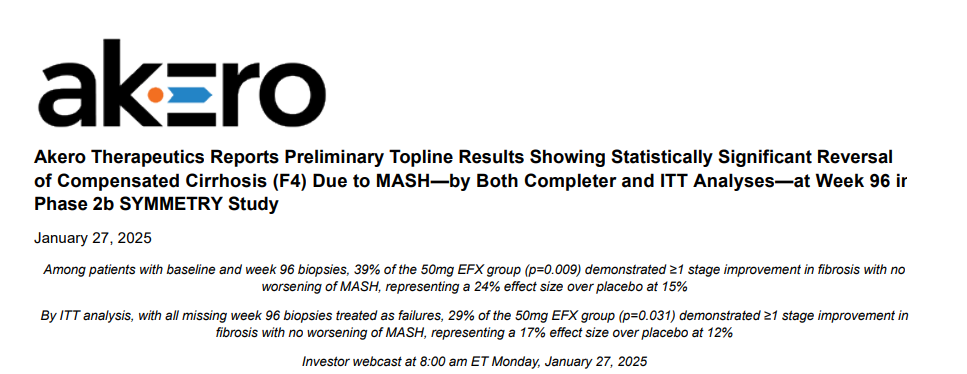
January 27, 2027, Akero Therapeutics AnnouncedSYMMETRY Preliminary Topline Results at Week 96. SYMMETRY is a Phase 2b study evaluating the efficacy and safety of its lead product candidate, efruxifermin (EFX), in patients with biopsy-confirmed compensated cirrhosis (F4) due to metabolically associated steatohepatitis (MASH), Child-Pugh A grade. Among patients who underwent biopsies at baseline and Week 96 (n=134), 39% of patients receiving 50 mg EFX (n=46) (p=0.009) showed cirrhosis regression without worsening of MASH, compared to 15% in the placebo group (n=47). In the intent-to-treat (ITT) population (n=181), where all missing Week 96 biopsies were considered treatment failures, 29% of patients in the 50 mg EFX group (n=63) (p=0.031) experienced cirrhosis regression without worsening of MASH, compared to approximately 12% in the placebo group (n=61).
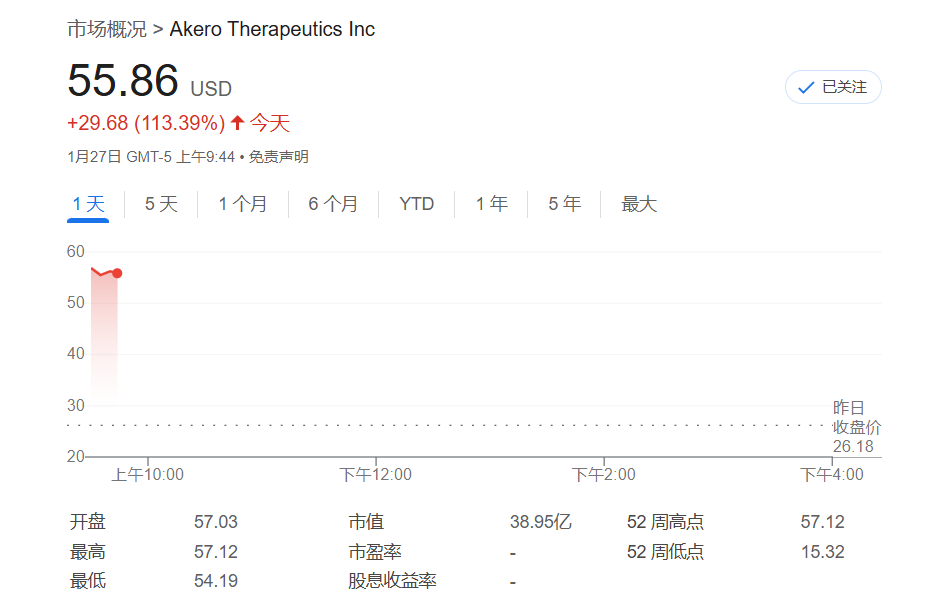
Efruxifermin Requires Longer Follow-Up to Show Significant Benefits in Patients with Severe Metabolic Dysfunction-Associated Steatohepatitis (MASH), and This View Seems to Be Validated. The company stated that in the Phase IIb SYMMETRY study, efruxifermin was able to reverse cirrhosis in MASH patients after 96 weeks, causing the stock price to soar by over 115% at one point.
According to key data, 39% of patients receiving the 50 mg dose of efuxifermin experienced cirrhosis reversal with no worsening of MASH at both baseline and week 96 biopsy results, compared to 15% in the placebo group. Meanwhile, 29% of patients receiving the 28 mg dose of efuxifermin also experienced cirrhosis reversal with no worsening of MASH.
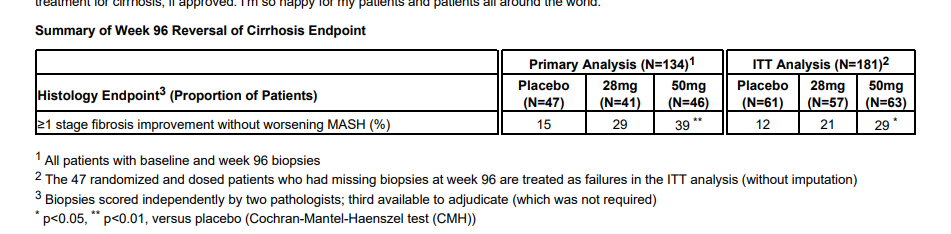
The SYMMETRY study showed that from week 36 to week 96, the efficacy of the 50 mg group more than doubled (from 10% to 24%), highlighting the benefits of longer-term EFX treatment for patients with compensated cirrhosis (F4).
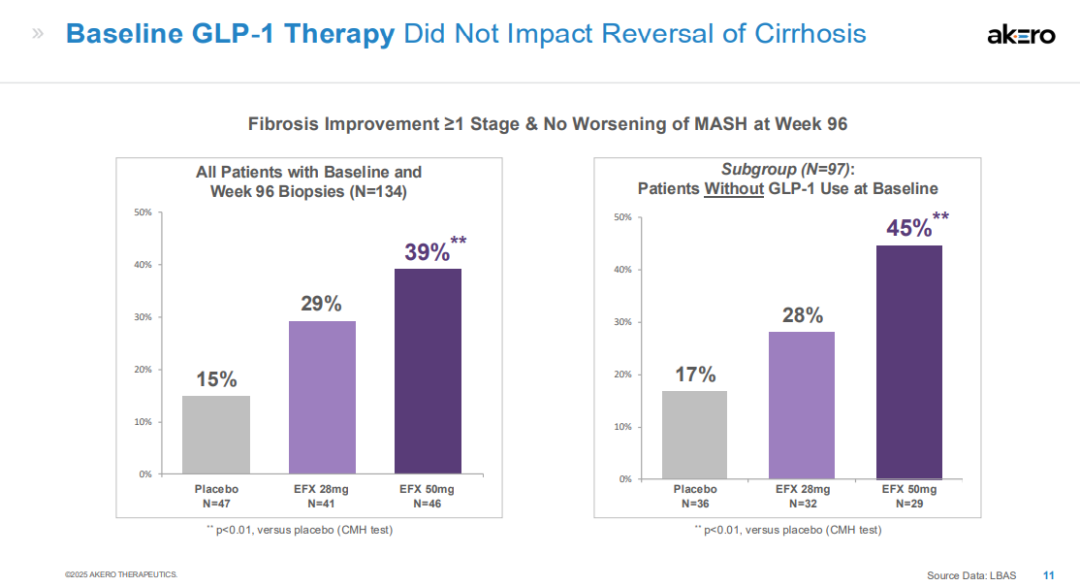
Biopsied at baseline and week 96, and not at baselineIn the subgroup of patients taking GLP-1(n=97), 45% of patients in the 50mg EFX group experienced reversal of cirrhosis without worsening of MASH (n=29) (p=0.009), compared to 17% in the placebo group (n=36), indicating that the observed cirrhosis reversal could not be attributed to GLP-1 therapy.
Mazen Nourredin, MD, Medical Professor at Houston Methodist Hospital, transplant hepatologist, and principal investigator of the SYMMETRY study, stated: "Until now, we have not found an effective treatment for compensated cirrhosis caused by MASH, a condition associated with higher short-term morbidity and mortality. Now, we have reason to be optimistic about the potential of EFX as a much-needed treatment for cirrhosis, if approved. I am delighted for my patients and patients worldwide."
This result far exceeded expectations. Currently, there is only one drug on the market for treating MASH — Madrigal Pharmaceuticals' THR-β selective agonist Rezdiffra (resmetirom), which was approved by the FDA last year. However, it is only suitable for patients with fibrosis who have not developed cirrhosis, meaning a lower degree of scarring.
Akero President and CEO Andrew Cheng, M.D., stated: "We believe that today's first public report of MASH cirrhosis reversal, whether through full analysis or ITT analysis, positions EFX as a compound with transformative potential, distinct from other approved or investigated treatments in the MASH field. We look forward to our ongoing Phase 3 SYNCHRONY trial."ResultsThe study continues to evaluate 50 mg EFX in patients with compensated cirrhosis caused by MASH.
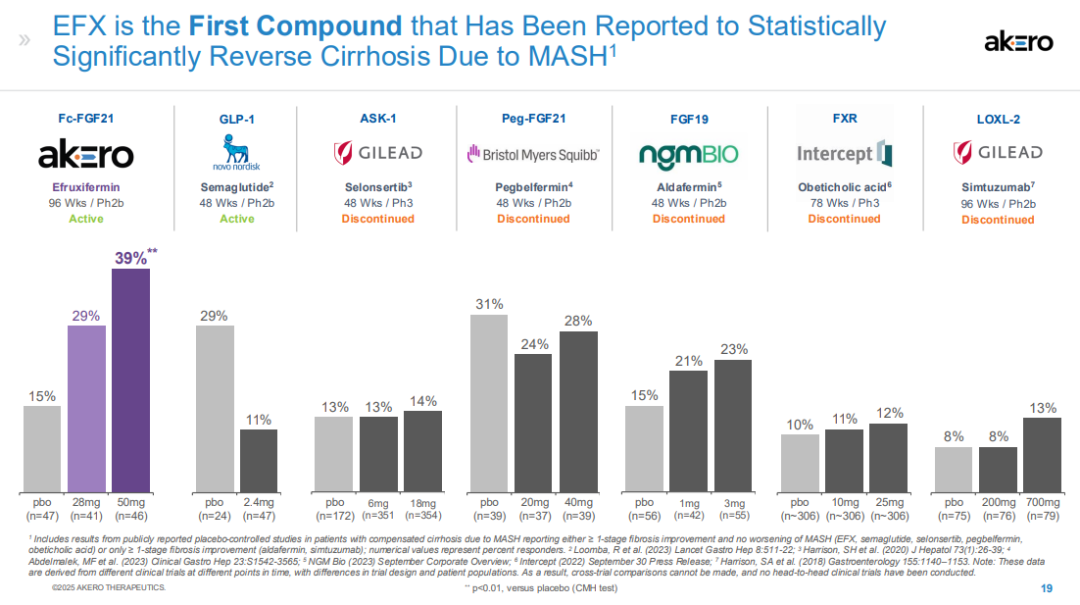
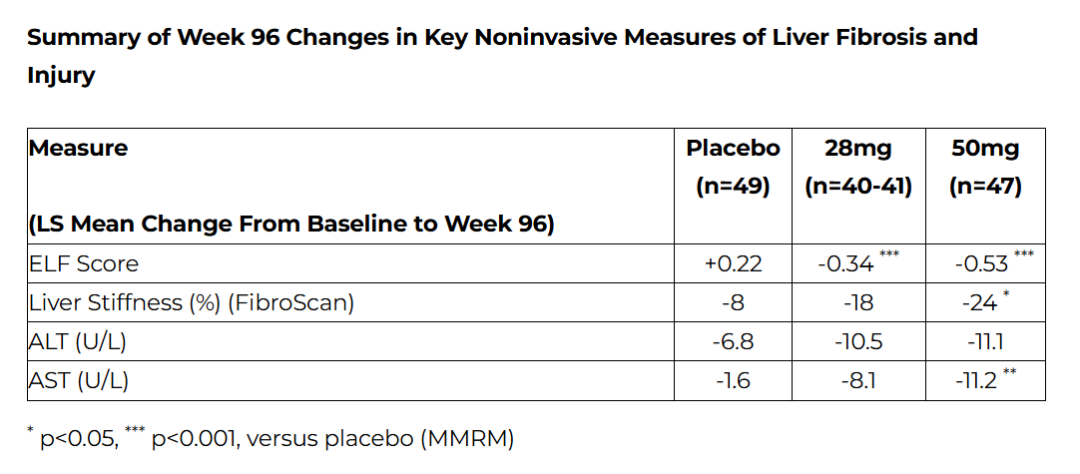
Two histopathologists agreed that the reversal of cirrhosis was supported by improvements in non-invasive measurements of liver fibrosis and injury.
It was reported that EFX was generally well-tolerated. There were no deaths in the EFX group, but one death due to pneumonia occurred in the placebo group. None of the serious adverse events were determined to be related to the study drug. In both EFX groups, the most common adverse events (AEs) were Grade 1 or 2, originating from the gastrointestinal system (diarrhea, nausea, and increased appetite), and were transient in nature.
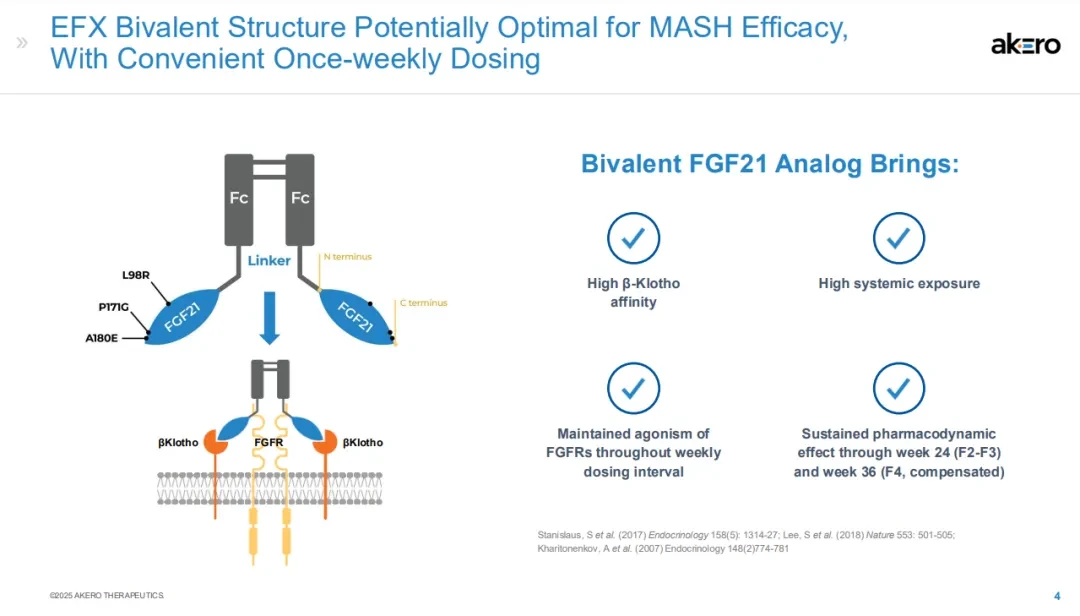
Efruxifermin as an FGF21-FcFusion protein (human IgG1 Fc domain linked to a modified human FGF21). Compared to native human FGF21, Efruxifermin has an extended half-life and enhanced receptor affinity.