


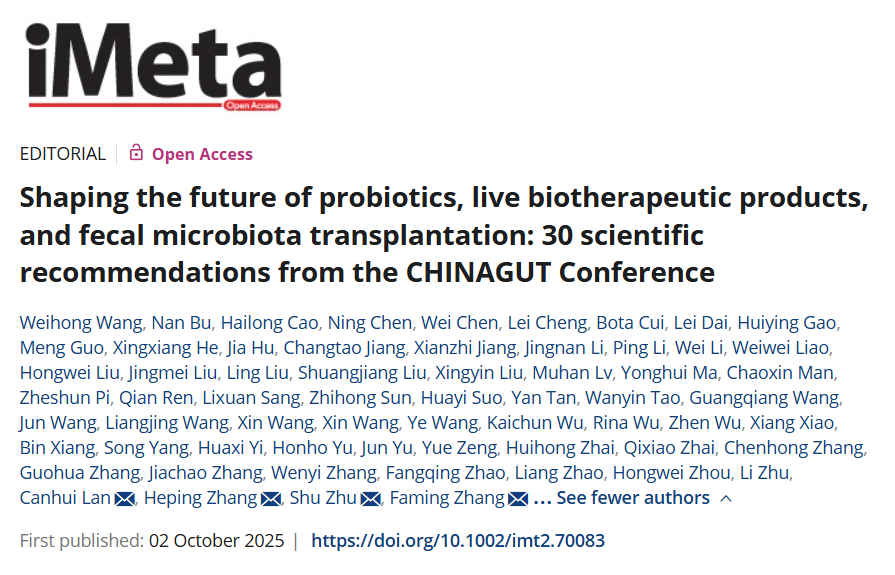
Recently, dozens of experts in the field of microbiota from industry, academia, and research across China jointly published an article titled "Shaping the future of probiotics, live biotherapeutic products, and fecal microbiota transplantation: 30 scientific recommendations from the CHINAGUT Conference."
The article aims to promote the development of probiotics, live biotherapeutics, and fecal microbiota transplantation, focusing on key issues such as standardization, translation, regulation, quality control, and collaboration to provide a standardized development framework for the future of the discipline and industry.Dr. Tan Yan, co-founder and CEO of Xbiome, as a representative of China's microecological pharmaceutical industry, participated in the discussion and co-signed the "Ten Scientific Recommendations for Promoting the Development of Live Biotherapeutic Products Industry."Currently, the article has been published online in the well-known academic journal iMeta.
In recent years, live biotherapeutic products (LBPs) have emerged as a promising therapeutic strategy, garnering significant attention for their potential to modulate the host microbiome and elicit therapeutic effects. However, the mechanisms of action of many LBPs remain unclear, posing challenges for rational drug design, targeted patient selection, and regulatory evaluation. Additionally, the lack of standardized biomarkers for patient stratification and efficacy assessment further complicates the design of LBP clinical trials. Meanwhile, the complex manufacturing processes of LBPs present significant challenges in quality control, with high costs. These challenges are exacerbated by LBP-specific difficulties, such as the cultivation of strict anaerobes, determination of concentration and dosing, and obstacles to achieving efficient production.
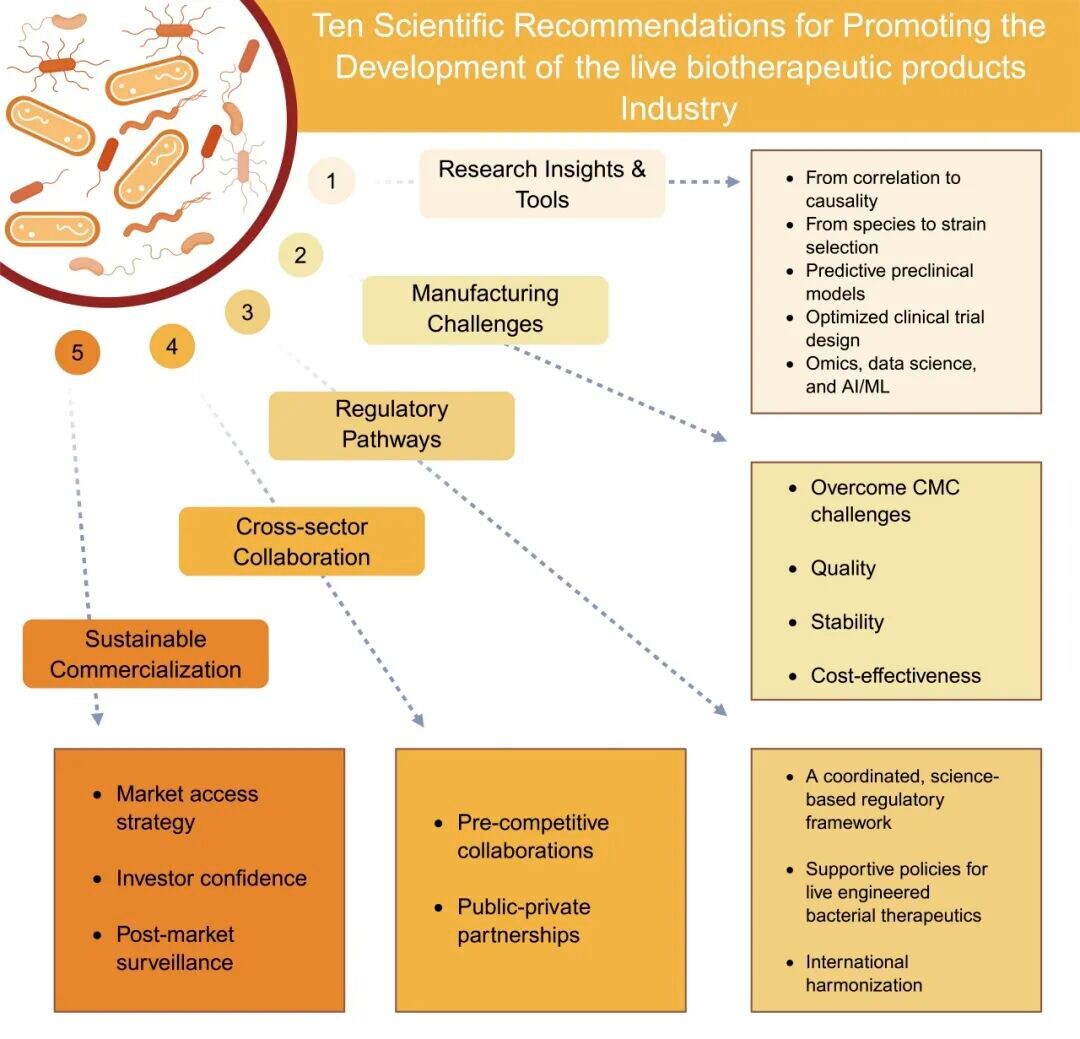
To this end, an expert panel including Dr. Tan Yan proposed ten scientific recommendations aimed at promoting the clinical translation and widespread application of LBPs.
Ten Scientific Recommendations for Promoting the Development of Live Biotherapeutic Products Industry
1. Deepening Mechanism Understanding——From Correlation to Causality, From Species to Strain Selection
Priority: 3-5 Year Long-Term Goals
Future research on live biotherapeutic products (LBPs) should achieve three major shifts: from correlation analysis to mechanistic studies, identifying specific functional factors, metabolic pathways, and host receptors/pathways targeted by LBPs; when human-related mechanisms cannot be fully simulated (e.g., host-microbiota interactions, microbial metabolites and immune regulation), germ-free and gnotobiotic animal models, organoids, multi-omics, and systems biology should be used to elucidate the molecular and cellular mechanisms of LBPs; for low-risk application scenarios, validated alternative approaches such as ex vivo intestinal models should be considered to balance scientific rigor with feasibility. Advancing mechanistic research requires breakthroughs in underlying technologies, including functional prediction and genome-editing techniques for non-model microbes, with particular attention to functional variability among different strains within the same species. Subsequently, mechanistic hypotheses should be validated through actual drug administration in early clinical trials, establishing causal chains by dynamically monitoring patients' microbiomes and host responses. A clear understanding of the mechanism of action (MoA) can reduce R&D risks, enable strain selection based on specific targets, and enhance the predictive power of animal models. Additionally, mechanism-based biomarkers can be incorporated into clinical trials to accelerate regulatory approval, increase physician acceptance, and improve reimbursement possibilities for payers.
2. Innovate and validate preclinical models to facilitate successful translation
Priority: 3-5 Year Long-Term Goals
Due to the differences in microbiota and immune responses among host individuals, traditional animal models often fail to accurately predict the efficacy of LBPs in humans. The lack of predictive preclinical models is a major reason for the high failure rate of LBP clinical trials. Improved models can aid in candidate drug screening, dose optimization, and early safety identification, thereby increasing clinical success rates. Research focus should be on models that allow the study of LBP colonization, persistence, functional activity, and interactions with the host immune system in a human-relevant manner. Advanced ex vivo, in vitro, and in vivo preclinical models should be developed to simulate the physiological state, dysbiosis, and disease conditions of the human gut (or other sites such as the vagina, skin, etc.). Humanized microbiome animal models, gut-on-a-chip systems, and complex co-culture systems have shown promising application prospects in this regard.
3. Strategic Clinical Development —— Optimizing Trial Design, Endpoint Indicators, and Patient Stratification Strategies
Priority: 3-5 Year Long-Term Goals
Adopting a clinically meaningful and objective adaptive innovative double-blind trial design, patient stratification is performed through biomarkers to enhance trial efficiency and success rates. Biomarkers that have been preliminarily validated need to undergo validation of their predictive value through independent clinical cohorts. LBP trials face the dual challenges of microbiome variability and disease complexity, making a "one-size-fits-all" approach ineffective. Endpoint metrics should be robust and genuinely reflect patient benefits. Stratifying patients based on baseline microbiome characteristics, immune response, host metabolism, host genetics, or other biomarkers can help identify subpopulations most likely to respond to LBPs. The development of predictive biomarkers is crucial for achieving personalized LBPs and improving trial outcomes.
4. Integrate omics technologies, data science, and artificial intelligence (AI)/machine learning (ML) to advance the development of next-generation personalized live biotherapeutics.
Priority: 3-5 Year Long-Term Goals
Under permissible conditions, systematically integrate AI and ML with multi-omics technologies to accelerate the discovery of LBPs, optimize development processes, and enable personalized treatment strategies. The diversity of the microbiome and host-microbe interactions generate vast datasets, including genomics, transcriptomics, proteomics, and metabolomics data. AI/ML excels at analyzing these large-scale datasets and can be used to predict the phenotypic characteristics of newly isolated strains, elucidate the molecular and cellular mechanisms of unreported strains, identify novel therapeutic targets, predict LBP efficacy, discover biomarkers for patient stratification, optimize formulation recipes, and streamline production processes. This data-driven approach is crucial for the next generation of LBP research and development. AI/ML represents a potentially transformative tool to address the complexity and variability challenges in LBP development. For instance, machine learning-based modeling can be applied to predict and design butyrate-producing microbial communities for disease treatment.
5. Overcome CMC (Chemistry, Manufacturing, and Control) challenges to ensure quality, scalability, stability, and cost-effectiveness.
Priority: 3-5 Year Long-Term Goals
The core of the CMC strategy for LBPs lies in: For different routes of administration (such as oral, topical, or injectable), it is necessary to develop various formulations using live biotherapeutic products with distinct physiological characteristics. The CMC development strategy should be custom-designed according to the requirements of each stage (including preclinical, early clinical, late clinical, and commercialization stages).
Key challenges in the production process of live microorganisms (often anaerobic bacteria) must be addressed, including fermentation processes, stability, and control of exogenous factors. Research on critical quality attributes should be conducted, and corresponding quality standards established. Strict attention must be paid to strain activity, genetic stability, potency testing, formulation stability, and cost-effective large-scale production under GMP conditions. Innovations in characterization analysis and potency detection methods are crucial. Quality by Design (QbD) and Process Analytical Technology (PAT) help ensure product consistency and quality.
For engineered strains, a genetic stability monitoring system must be established, and biosafety switches should be designed to prevent environmental leakage. Strategies based on homologous recombination (rather than plasmid expression) should be prioritized to reduce mutation rates. It is recommended to integrate environmental sensors (e.g., temperature, pH, metabolites) and design Boolean logic circuits (e.g., AND/OR gates) as practical guidance.
6. Proactively carry out strategic cooperation to promote the coordination and unification of regulatory pathways and process optimization.
Priority: Short-term goals within 1-3 years
Ensure early and continuous communication with global regulatory agencies to obtain clear guidance, participate in guideline development, and advocate for the establishment of a harmonized, science-based regulatory framework suited to the characteristics of LBPs. Live biotherapeutic products (LBPs) pose potential risks of entering the environment and healthy populations; clinical trials must consider the risk of biological leakage and establish biosafety control strategies. The current regulatory system for LBPs is still evolving, with specific requirements yet to be clarified. Engineered bacteria designed based on patient-specific characteristics provide an effective approach for personalized live bacterial therapies, but there is currently a lack of relevant standards for clinical trials involving genetically engineered bacteria, necessitating supporting policies and clear industry standards to advance clinical research on live engineered bacterial therapeutic products. Active dialogue can address unique challenges of LBPs, such as potency assays, stability requirements, safety assessments of new strains, and non-clinical testing strategies. Promoting international harmonization through platforms like the International Council for Harmonisation of Technical Requirements for Pharmaceuticals for Human Use (ICH) can reduce duplication of efforts and facilitate global development. Industry associations and research institutions can play a key role in establishing consensus-based standards and best practice guidelines. A clear and predictable regulatory pathway can help boost investment confidence and accelerate the development process of LBPs.
7. Promote constructive engagement and dialogue among academia, industry, regulatory agencies, and patient groups
Priority: Urgent tasks that need to be addressed within 1 year
The LBP field is particularly unsuitable for traditional isolated research and development models. Collaboration can integrate resources, share risks, and accelerate knowledge accumulation. It is essential to actively establish and participate in pre-competitive collaborations and public-private partnerships, sharing knowledge, resources, and risks to expedite the R&D process of LBPs. The complexity of LBP development requires multidisciplinary expertise — academic institutions driving drug discovery and mechanism research, biotech companies conducting process innovation and early-stage development, large pharmaceutical enterprises providing late-stage trial and commercialization resources, CRO/CDMOs offering specialized services, regulatory agencies providing guidance, and patient advocacy groups offering insight support. Pre-competitive collaboration can address common challenges (such as biomarker validation, standardized analytical method development, or shared database construction) without compromising competitive advantages.
8. Strategically Paving the Way for Market Access: Integrating into the Healthcare System through Value Demonstration
Priority: Long-term goals for 3-5 years
A comprehensive strategy should be formulated at the early stage of research and development to demonstrate the clinical and economic value of LBPs to payers, physicians, and patients, and to promote their integration into the existing healthcare system. Market access is a major barrier for live biotherapeutic products (LBPs), with obtaining reimbursement and clinical adoption posing significant challenges. Value demonstration requires not only robust clinical evidence (efficacy and safety) but also health economic outcomes, clear data on whether they can improve patients' quality of life, and comparative data with existing standard therapies. Educating healthcare practitioners about the mechanism of action, efficacy, safety, and applicable scenarios of LBPs is crucial to dispelling doubts and achieving precise patient selection. It is essential to engage with payers early to understand their evidence requirements and establish a reasonable pricing and reimbursement model. An evidence-based, proactive market access strategy is as important as scientific research and development.
9. Rekindle and Sustain Investor Confidence —— A Two-Pronged Approach of Policy Guidance and Commercial Investment
Priority: Short-term goals within 1-3 years
As an emerging field with disruptive potential, LBP (Live Biotherapeutic Products) research and development faces multiple challenges in technological breakthroughs, industrialization, and commercialization. By constructing a tripartite nested design of "policy-capital-ecosystem," it can not only leverage policy guidance to help early-stage R&D cross the "valley of death," but also identify technology pathways with genuine clinical value. By highlighting scientific breakthroughs, risk mitigation strategies, clear market pathways, and pragmatic commercial expectations, establishing a high-impact mechanism for periodic result announcements will effectively strengthen dialogue between the live biotherapeutic R&D community and the investment community.
10. Build Trust and Recognition through Education, Transparency, and Robust Post-Market Evidence
Priority: 3-5 Year Long-Term Goals
Actively engage in transparent communication and educational efforts targeting healthcare professionals, patients, and the public, supported by robust post-market surveillance and real-world evidence generation. Building trust is crucial for the adoption of any new therapeutic category, especially therapies involving live microorganisms. Clear, accurate, and easily understandable information about LBPs—covering their definition, mechanisms of action, benefits, and potential risks—must be provided to bridge knowledge gaps and address misconceptions among clinicians and patients. Transparency in clinical trial outcomes (both positive and negative) and production processes can enhance public confidence in LBPs. Post-approval, comprehensive real-world evidence can further validate long-term safety and efficacy, supporting the integration of LBPs into clinical guidelines and insurance coverage. Proactive public education and open dialogue can help demystify LBPs and build trust.
Xbiome: Driving Industry Development with Solid Achievements
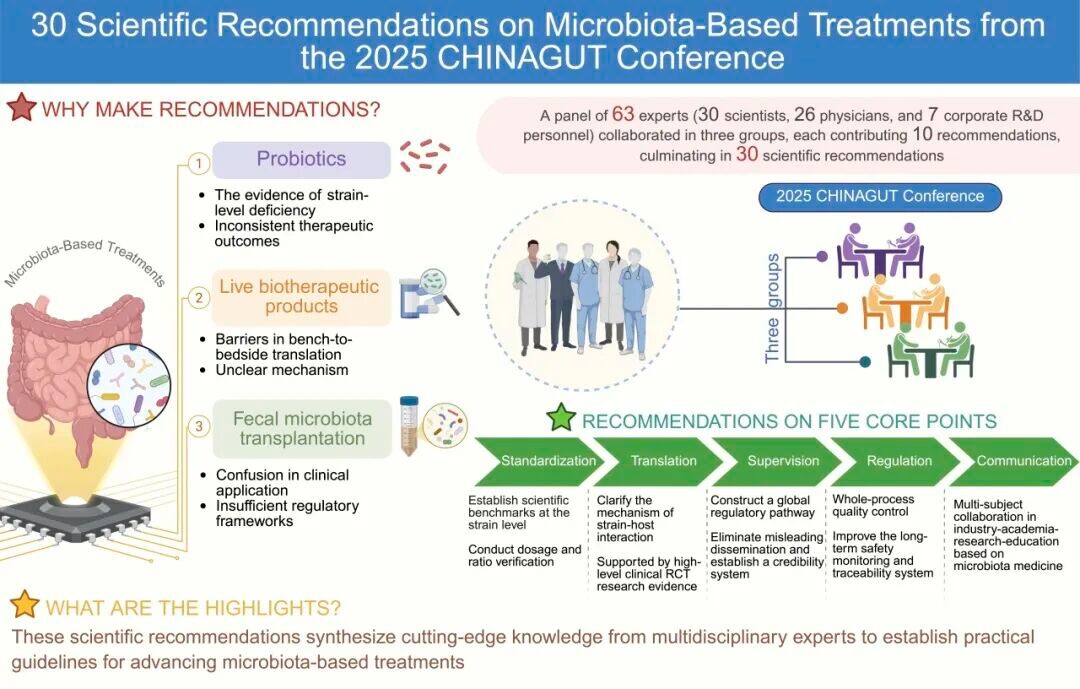
iMeta stated that this article presents 30 scientific recommendations formed by three thematic panels consisting of 63 experts during the 2025 China Gut Conference, aiming to promote the development of probiotics, live biotherapeutics, and fecal microbiota transplantation. Dr. Tan Yan was invited to participate in the discussion and co-signature of the "Ten Scientific Recommendations for Advancing the Live Biotherapeutics Industry," demonstrating the recognition from both the scientific and industrial communities of Xbiome's achievements in microbiome drug research and development.
Xbiome is currently a leading AI pharmaceutical company in China that focuses on gut microbiome therapeutics. It has independently built an AI microbiome research and industrial transformation platform, which combines dry and wet laboratories—through the integration of foundational bioinformatics platforms, AI platforms, and automated, high-throughput wet lab platforms—to achieve more efficient discovery of Live Biotherapeutic Products (LBPs), deeper investigation into drug mechanisms, and a clearer understanding of the Mechanism of Action (MoA).
Currently, Xbiome has four drug pipelines in the clinical stage, two of which have successively entered phase II clinical trials in China and the United States. According to third-party statistics, Xbiome's XBI-302 drug pipeline is the first FMT drug in Asia to obtain an IND clinical approval from the U.S. FDA. LBP01 is the first genetically engineered bacterial drug pipeline in Asia to enter phase I clinical trials and the first in China to enter phase II clinical trials. The KEX02 drug pipeline is one of the first Live Biotherapeutic Products (LBP) in China to obtain clinical approval from the U.S. FDA (Data source: Informa Pharma Intelligence, Center for Drug Evaluation, National Medical Products Administration).
At the same time, Xbiome, based on its pharmaceutical-grade research platform, empowers a wide range of patients with chronic diseases, sub-healthy populations, and partners in the health industry in the application directions of probiotics R&D and FMT (fecal microbiota transplantation) within the microbiome field. In the FMT direction, Xbiome has developed personalized precision treatment projects for gut microbiome, collaborating with hospitals and functional medicine institutions, targeting the broader health market. In terms of probiotics R&D, Xbiome conducts functional strain discovery, efficacy evaluation, and process development, empowering upstream R&D efforts of probiotics and health companies. Currently, Xbiome has completed commercial collaborations with leading domestic and international health, food, and beverage companies such as IFF, Mead Johnson (China), WonderLab, and Chayan Yuese.
Strengthening communication and exchange with top experts in academia and industry across China, promoting the establishment and improvement of industry standards, and building a coordinated and unified regulatory process and standard system has always been Xbiome's industry responsibility and mission. It is expected that this scientific advice will help address the core issues in the current development of LBPs, promote their widespread application and sustainable development in clinical practice, and provide patients with safer and more effective treatment options; offering valuable reference for the scientific, healthy, and efficient development of the industry.
-End-