

First-in-Human Trial of a Novel Focal Pulsed Field Ablation Catheter for Point-by-Point Atrial Fibrillation Ablation: The FIELD-PULSE Study

Field Medical
Developer of Pulsed Electric Field Catheter Ablation Technology

In September 2026, JACC: Clinical Electrophysiology published the first-in-human trial results of FIELD-PULSE, a catheter-based PFA product developed by Field Medical.Unlike conventional basket-type or petal-type pulsed field ablation (PFA) devices, this product is a catheter-based PFA system designed to evaluate the safety and feasibility of point-to-point ablation.The results showed that acute pulmonary vein isolation (PVI) was achieved in all 35 patients. In the waveform C group, the durable isolation rate per vein was 94.2%, the 12-month freedom from atrial arrhythmias was 73.9%, and no major safety events occurred.
——Long-press the QR code of Field Medical’s editor to request the original article——
Research Background
Pulsed Field Ablation (PFA) is becoming the preferred energy source for atrial fibrillation ablation. However, existing PFA systems are predominantly basket- or petal-shaped, requiring stable contact for 4 to 12 seconds at each position, which limits efficiency. The FIELD-PULSE team has developed aNovel Catheter-Based PFA Catheter, aiming to balance flexibility and efficiency through a single application of high-voltage pulsed field ablation lasting less than 200 milliseconds. Preclinical and VCAS studies suggest that this technology can be used for atrial ablation.
Study Design
FIELD-PULSE (NCT06452589) is a prospective, non-randomized, single-arm, first-in-human clinical trial conducted at a single center, Motol and Homolka University Hospital in the Czech Republic. The study enrolled 35 patients scheduled to undergo catheter ablation for atrial fibrillation (mean age 63 years, 34% female, 77% with paroxysmal atrial fibrillation). The study evaluated three sequential waveform/electrode configuration cohorts: Waveform A (n=15), Waveform B (n=5), and Waveform C (n=15). Waveform C utilized an updated catheter design (three external electrodes) aimed at optimizing lesion durability.
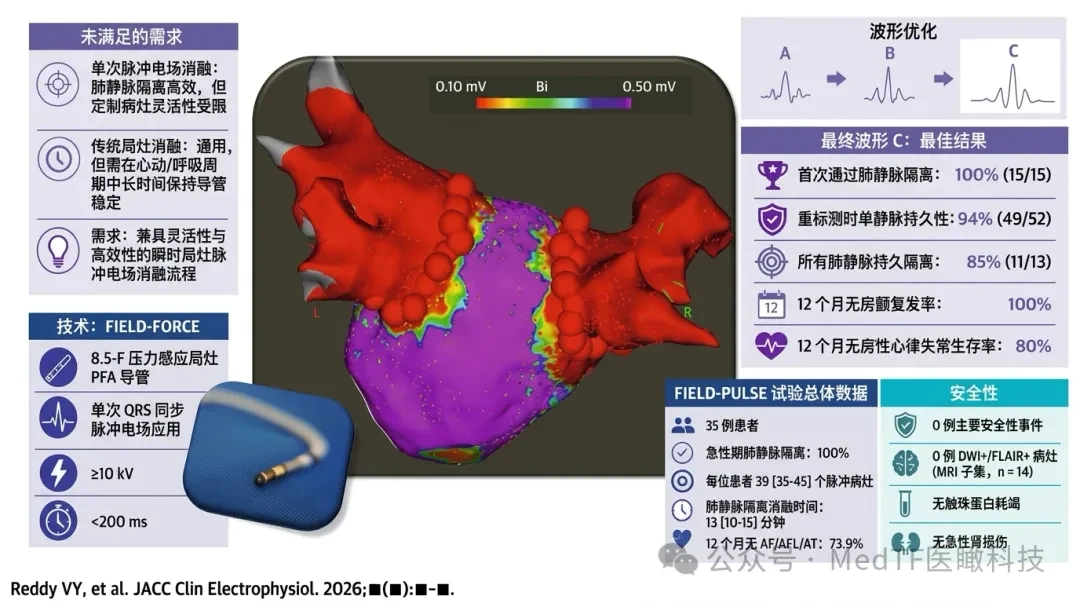
Figure 1. Schematic Overview of the Study
The catheter is an 8.5F bidirectional force-sensing catheter, equipped with a saline irrigation lumen (6 mL/min). Each pulse field ablation consists of a single QRS wave-synchronized application, lasting less than 200 milliseconds, with an amplitude of approximately 10 kilovolts. Despite the high voltage, the short duration results in total Joule energy being about one order of magnitude lower than conventional radiofrequency ablation, thereby minimizing near-field heating.
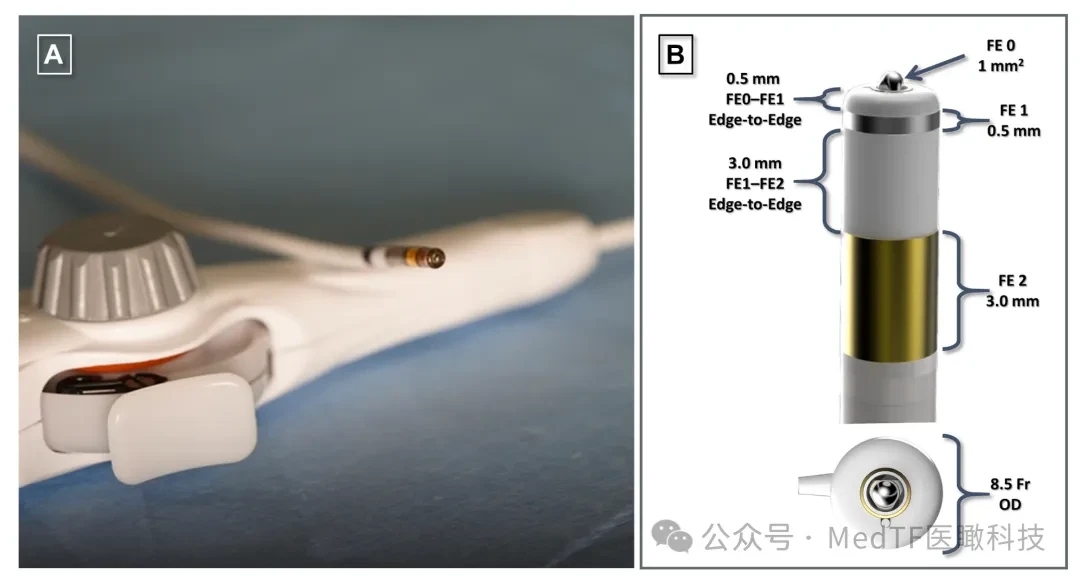
Figure 2. Photograph of the catheter and electrode configuration
The procedure was performed under general anesthesia, with pulmonary vein isolation (PVI) guided by conventional electroanatomic mapping and impedance-based catheter localization. Some patients underwent postoperative brain magnetic resonance imaging (MRI), and invasive mapping was performed at approximately 90 days to assess lesion durability.
Primary Outcomes
Surgical Efficiency:Acute pulmonary vein isolation (PVI) was achieved in all 35 patients (100%). Each patient received an average of approximately 39 pulsed field ablation applications (range: 35–45), with a mean ablation time of approximately 13 minutes (range: 10–15 minutes); the shortest ablation time was 7.7 minutes. The mean total skin-to-skin procedure time was 76 minutes (range: 62–105 minutes), the mean fluoroscopy time was 3.8 minutes (range: 1.7–6.0 minutes), and the mean saline irrigation volume was 131 mL (range: 102–225 mL).
Lesion Persistence:32 patients (91%) returned for protocol-mandated invasive mapping at a mean of 74 days postoperatively (range, 52–85 days). In the overall cohort, the durable isolation rate per pulmonary vein was 60.9%, with 47% of patients achieving durable isolation of all pulmonary veins. Durability was significantly improved in Waveform C, with a durable isolation rate of 94.2% per pulmonary vein and 84.6% of patients achieving durable isolation of all pulmonary veins.In waveform group C, the initial PVI success rate was 100% in 15 patients.
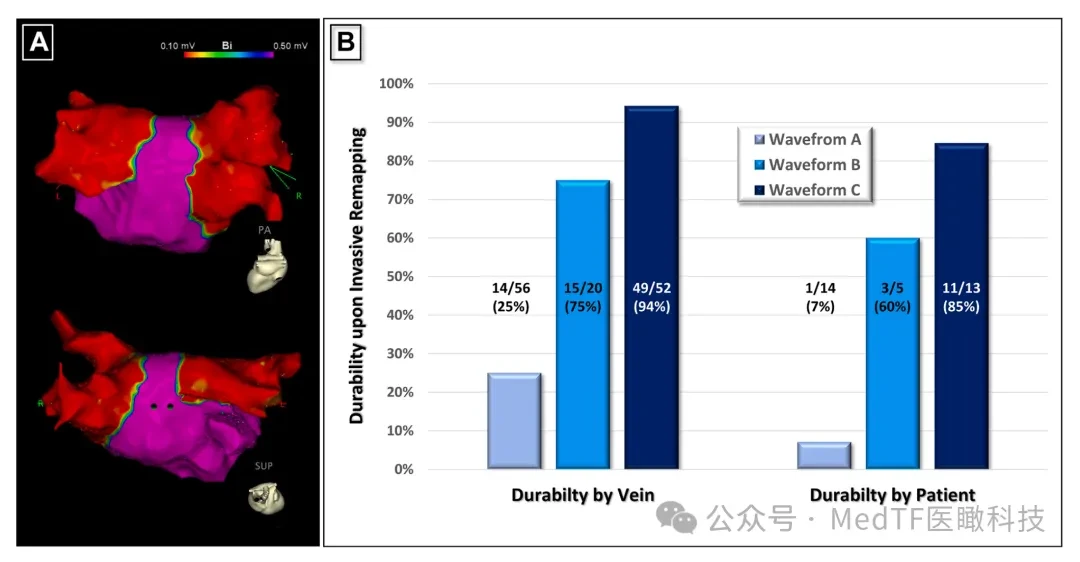
Figure 3. Persistence Bar Chart
Additional Lesion Set:49% of patients (17/35) underwent ablation beyond pulmonary vein isolation (PVI), including the cavotricuspid isthmus (n=11), mitral isthmus (n=3), left atrial roof line (n=4), left atrial bottom line (n=2), and focal atrial tachycardia (n=1). Acute conduction block was achieved in all targeted lesion sets. Notably, three patients developed coronary artery spasm following cavotricuspid isthmus ablation, which resolved after additional nitroglycerin administration; none exhibited ST-segment elevation or ventricular arrhythmias.
Safety:No major device- or procedure-related adverse events occurred. Fourteen patients underwent brain MRI screening; none had asymptomatic cerebral embolic lesions that were positive on both diffusion-weighted imaging (DWI) and fluid-attenuated inversion recovery (FLAIR), and two (14%) had DWI-positive/FLAIR-negative lesions. There were no cases of phrenic nerve injury, clinical pulmonary vein stenosis, haptoglobin depletion, or acute kidney injury. Changes in blood biomarkers were consistent with transient perioperative hemolysis and hemodilution, with return to baseline by day 90.
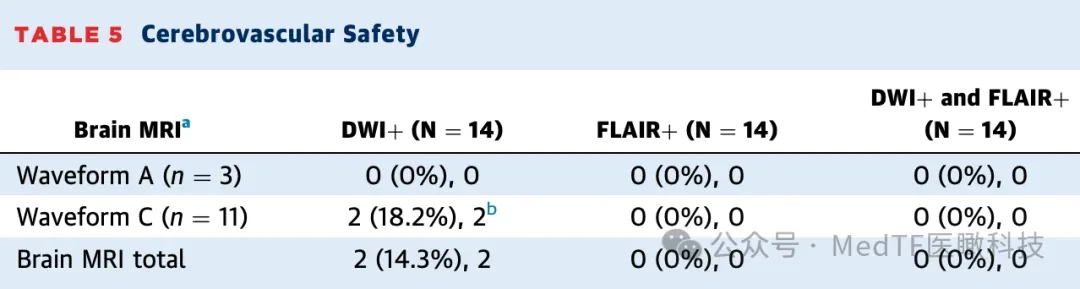
Figure 4. Cerebrovascular Safety
Long-term Efficacy:With a median follow-up of 364 days, all patients completed follow-up and rhythm monitoring. At 12 months, 73.9% of patients remained free from recurrence of atrial fibrillation, atrial flutter, or atrial tachycardia (95% confidence interval: 60.6%–90.2%), with a total of 9 recurrences. In Waveform Group C, the 12-month atrial fibrillation-free rate was 100%; however, three supraventricular tachycardia events resulted in an arrhythmia-free survival rate of 80.0%.
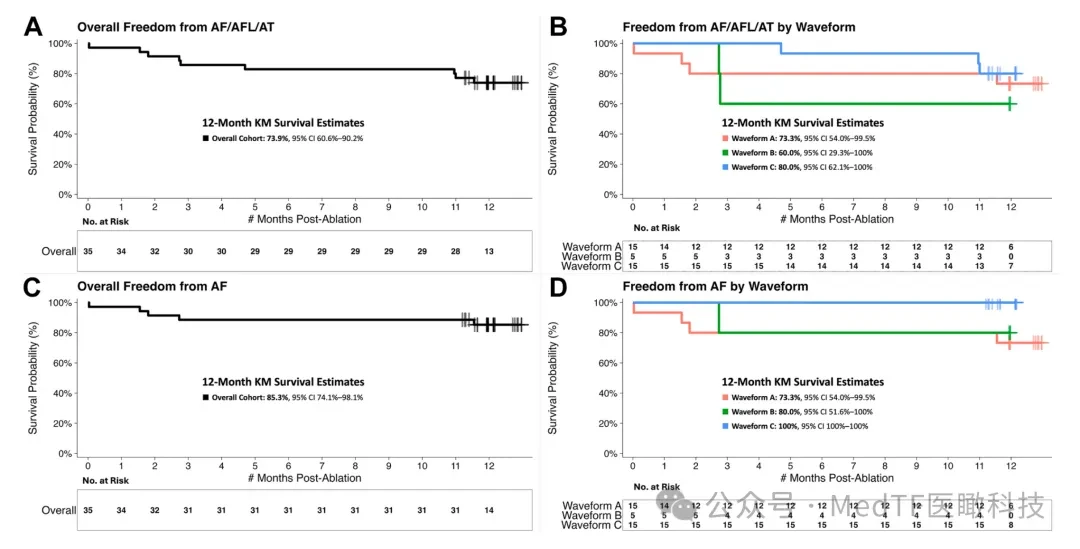
Figure 5. Recurrence-Free Survival Curve
Clinical Significance and Limitations
FIELD-PULSE is the first to combine the flexibility of a focal catheter with the efficiency of a single-shot ablation catheter—forming durable lesions in less than 200 milliseconds per application, thereby eliminating the need for prolonged catheter stability. Waveform C achieved a 94.2% durable isolation rate per pulmonary vein, with an ablation time of only 13 minutes and fluoroscopy time of just 3.8 minutes. Future integration with magnetic navigation is expected to further enhance efficiency.
This study was a single-center, small-sample first-in-human study; the catheter was not magnetically integrated with the mapping system; waveforms were used sequentially rather than in concurrent control; heart rhythm monitoring was intermittent, potentially missing asymptomatic recurrences; some patients continued antiarrhythmic medication during follow-up, which may have overestimated efficacy; esophageal safety requires validation in larger-scale studies.
END
This article concludes

Further Reading:
Smith & Nephew Launches Next-Generation Blade: Empowering Intelligent Hip Arthroscopic Ablation Shenzhen Beixin—Nanosecond Pulsed Electric Field Ablation System Approved for Market Launch Medtronic Invests $37 Million in Atrial Fibrillation Ablation and Mapping Company Medtronic Invests $37 Million in Atrial Fibrillation Ablation and Mapping Company
——You can long-press the QR code of the Field Medical editor to request the original article——

References
Reddy VY, Petru J, Koruth JS, et al. High-voltage focal PFA catheter for "instant" point-by-point ablation: the first-in-human FIELD-PULSE trial to treat AF. JACC Clin Electrophysiol. 2026;12(9)