Abbott's TactiFlex Duo Sensor-Enabled Dual-Energy Ablation Catheter Receives FDA Breakthrough Device Designation for Ventricular Tachycardia Treatment

Abbott
Diagnostic and pharmaceutical product manufacturers

On October 10, 2025, Abbott announced that itsTactiFlex Duo Sensor-Enabled Dual-Energy Ablation CatheterReceived FDA "Breakthrough Device" designation in the United States for treatmentVentricular Tachycardia (VT). This is the world's first design specifically targeting ventricular tachycardia.Pulsed Field Ablation (PFA) + Radiofrequency (RF)Dual-mode catheter system.
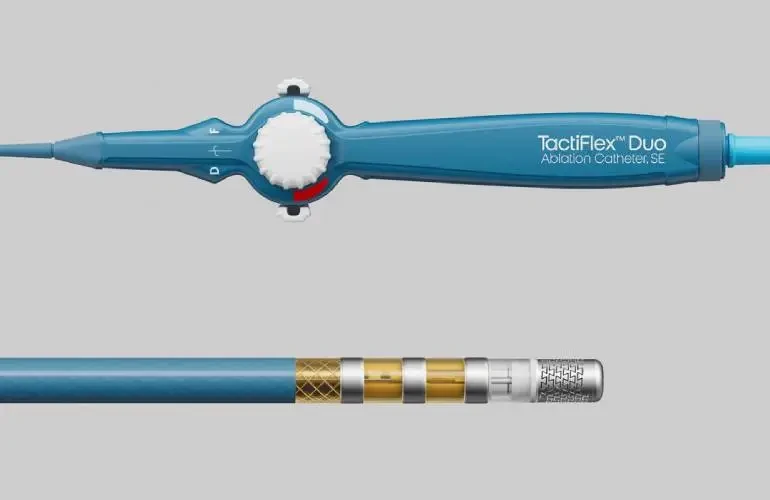
This news was shared by Uri Yaron, Senior Vice President of Abbott's Structural Heart Division, on LinkedIn, who described this advancement as "a testament to years of accumulated R&D and clinical collaboration, marking another step forward for Abbott in the field of complex arrhythmia treatment."
01 Dual Energy: Exploration of PFA and RF Integration
Traditional RF Ablation destroys myocardial lesion tissues through thermal energy. While the technology is mature, risks include thermal injury and damage to adjacent structures. In contrast, PFA uses high-voltage short electrical pulses to create an "electroporation" effect on cell membranes, selectively destroying myocardial cells while avoiding vascular and nerve injuries, and is regarded as the "next-generation ablation technology."
TactiFlex DuoThe key lies in:
● Can be achieved on the same catheterPFA and RF Dual-Mode Energy Output;
● AdoptFlexible Catheter Tip, achieving "point-to-point" (focal) precise energy release;
● Equipped withSensor-Enabled`, which can provide real-time feedback on contact force and tissue response, improving surgical safety and control precision.`
This design allows doctors to flexibly switch energy modes based on tissue characteristics:PFA is used in areas requiring rapid, non-thermal ablation; while RF can be utilized in fibrotic or anatomically complex regions, achieving a "precise and personalized" arrhythmia treatment strategy.
02 Conquering the "Final Frontier" of Ventricular Tachycardia Treatment
Currently, multiple pulsed field ablation systems globally have been used forAtrial Fibrillation (AF), such as Boston Scientific'sFarapulse, Medtronic'sPulseSelect, Johnson & Johnson'sVaripulsehave been approved. However,The application of PFA for ventricular tachycardia remains a blank area.。
The foci of ventricular tachycardia are often located in the deep myocardium or scar tissue areas, where energy penetration and positioning control are more challenging. Abbott's dual-energy solution offers new possibilities for this clinical challenge:
"By integrating two energy mechanisms, TactiFlex Duo is expected to achieve more stable and safer ablation outcomes in deep lesions and scar tissue areas."
If clinical validation is successful, this will become one of the world's first to enterVentricular Arrhythmia PFA TreatmentOne of the systems.
03 Abbott's PFA Layout: From Volt to TactiFlex Duo
Abbott has previously launchedVolt Single-Shot System, mainly for atrial fibrillation surgery scenarios, and has obtained CE certification in Europe.AndTactiFlex DuoThis represents its second technical path:
● Volt system is positioned for rapid full-chamber ablation;
● TactiFlex Duo Highlights Point-to-Point Precision Energy Control.
These two paths together constitute Abbott'sDual-platform Strategy: On the one hand, it competes head-on with Johnson & Johnson and Medtronic in the atrial fibrillation field, and on the other hand, it enters the ventricular tachycardia market that has not yet been fully developed.
04 Competitive Landscape: The "Second Round" of the PFA Track
As mainstream manufacturers' products have been successively approved, the PFA market is transitioning from the "technological breakthrough phase" to the "differentiated competition phase."
● Johnson & Johnson MedTech: ItsVaripulse PFAThe system has beenExpected to receive FDA approval by the end of 2024, used for atrial fibrillation (AF) treatment, is one of the first PFA systems to be launched in the U.S. The company later suspended and then restarted its marketing efforts in the U.S., with the focus still remaining on atrial fibrillation indications; targetingVentricular Tachycardia (VT)No publicly registered projects are currently available for this research direction.
● Medtronic:PulseSelectThe system continues to expand clinical application scenarios after approval, including different types of atrial fibrillation and new energy control modes. Medtronic is exploring higher-precision PFA catheter technology through multiple studies, such as the Sphere-360 program.
● Boston Scientific:FarapulseThe system has been fully commercialized in the European and American markets, andObtain FDA Expanded Label Approval by Mid-2025——Means that its clinical indications are originallyParoxysmal Atrial Fibrillation, expanded toPersistent Atrial FibrillationA broader patient population. This progress enablesFarapulseBecome one of the fastest-growing systems in the global PFA market with the widest range of indications.
● Abbott: Currently, two technical routes are laid out——VoltSystem (single-pulse PFA) has received CE certification and is being promoted in Europe, whileTactiFlex DuoStill in the clinical research stage. WithPFA + RF Dual Energy Fusion's differentiated path, Abbott is moving from "energy innovation" to "strategic innovation," seeking breakthroughs in the treatment of complex arrhythmias.
According to industry forecasts,The global market size of PFA is expected to exceed 3 billion US dollars before 2030., among which the treatment of complex ventricular tachycardia will be the fastest-growing segment.
05 Heart Future Observation: From "Energy Revolution" to "Strategy Revolution"
The rise of PFA technology not only represents a shift in energy forms but also signifiesReconstruction of Ablation Strategies——From "Thermal Ablation" to "Electrical Precision"; From Single Energy to Multi-Modal Matching.The emergence of TactiFlex Duo signifies that manufacturers are shifting from "technological breakthroughs" to "strategic integration," seeking a balance between safety, versatility, and personalized treatment.
This also reflects the current development trend in the treatment of arrhythmia:
● Multi-energy Fusion(Hybrid energy);
● Intelligent Monitoring Feedback(Sensor-enabled system);
● Anatomical Individualized Path Planning(Personalized lesion set);
● Extending to more complex arrhythmias(Beyond AF, into VT)。
HeartWill continue to follow up on subsequent developments in the future.。

Recent Article Recommendations


GCC2025