

Medtronic Invests $700 Million in Cornerstone Robotics to Expand Global Surgical Robotics Portfolio

Cornerstone Robotics
Innovative Surgical Robot Developer
A $700 million deal is revealing the deep-seated shifts in the global medical device industry.
On September 1, 2026, Medtronic announced a strategic partnership with domestic surgical robotics company Cornerstone Robotics: Medtronic made a strategic investment of approximately $700 million in Cornerstone Robotics and secured the rights to distribute Cornerstone’s Sentire® laparoscopic surgical robot system in certain approved markets outside the United States.
The $700 million investment by Medtronic in innovative medical devices is a significant move, clearly demonstrating the company’s emphasis on its surgical robotics business. This reflects a strategic breakthrough for Medtronic’s surgical division amid multiple pressures. For Cornerstone Robotics, this marks a landmark event in which Chinese innovative medical devices transition from product export to deep capital and channel integration. In a broader industrial context, this deal, together with previous cases such as Johnson & Johnson’s investment in Ronovo, Cordis’s distribution agreement with BrosMed Medical, and Boston Scientific’s acquisition of Acotec, collectively outlines new trends in business development (BD) transactions within China’s medical device industry.
In the global surgical robotics arena, Cornerstone Robotics is not the most prominent player. However, Medtronic’s choice of Cornerstone over other Chinese companies is underpinned by clear technological and commercial rationales.
Medtronic’s primary focus was on Cornerstone Robotics’ full-stack in-house R&D and technological barriers. Surgical robots represent one of the most technologically complex categories within the medical device industry, encompassing multiple core modules such as mechanical structures, electronic systems, control software, sophisticated algorithms, and visual imaging. Many companies in the sector adopt a “partial in-house development + external procurement” model to accelerate time-to-market. However, Cornerstone Robotics has chosen a more challenging path: developing everything from master-slave control algorithms and core motor drivers to instrument structures, imaging systems, and image processing platforms. Fully independently designed and optimized, with a 99% self-developed and self-manufactured ratio for core components.
Since its inception, Cornerstone Robotics has consistently adhered to a vertical integration strategy, achieving full independent mastery of core technologies, including mechanical structures, electronic systems, control software, complex algorithms, and visual imaging. This end-to-end autonomy, spanning from underlying hardware to upper-layer software, grants the company a high degree of control over product integration, quality assurance, and supply chain resilience. For multinational giants such as Medtronic, partnering with an enterprise that possesses complete independent intellectual property rights minimizes the risks of technological dependence and supply chain disruption to the greatest extent.
At the specific product level, Sentire® boasts multiple pioneering and leading technologies:
World’s First 5mm Micro Wristed Instrument: Breaking Through the Size Limitations of Traditional 8mm Instruments, Achieving Equivalent Full 8-Degree-of-Freedom Mobility in Confined Spaces Without Compromising Force Output, Extending Accessibility to Patients with Special Body Types and Those Requiring High-Precision Minimally Invasive Procedures.
Two-Stage Force Closure Feedback Technology: Provides force feedback during vessel sealing to enhance surgical safety.
8mm 4K 3D Fluorescence Imaging System: Ensures clear identification of tissue structures by the surgeon in complex surgical fields.
Intelligent Direct-Drive Technology: Delivers a smooth, responsive "what-you-see-is-what-you-get" experience, with ultra-low latency enhancing the tracking performance of both the master and slave manipulators.
Cornerstone Robotics’ second major advantage lies in its differentiation from Hugo, with the two platforms offering complementary capabilities.
Medtronic already has its own surgical robot, Hugo™. Why is it still investing in Cornerstone Robotics? The answer lies in the differentiated positioning and complementary relationship between the two.
Hugo™ is Medtronic’s proprietary modular surgical robot system, featuring a split architecture with separate surgeon console, patient-side cart, and vision cart, targeting the mid-to-high-end market. Hugo received FDA approval for urological surgeries in December 2025 and is currently deployed in over 35 countries and regions worldwide. Its surgical volume growth rate exceeds twice the overall growth rate of the robot-assisted surgery market, with cumulative global procedures expected to surpass 50,000 by the end of Medtronic’s current fiscal year.
The Sentire® laparoscopic surgical robot by Cornerstone Robotics is an integrated laparoscopic surgical robot. Modular architectures and integrated laparoscopic surgical robots, represented by the da Vinci Surgical System, each have their own preferred indications.
Integrated endoscopic surgical robots are more suitable for urological and gynecological surgeries, urological surgeries feature a narrow surgical field and limited operative space. These characteristics allow integrated surgical robots, such as the da Vinci system, to leverage their advantages in performing delicate maneuvers within the deep pelvis. This has made robot-assisted radical prostatectomy (RARP) the procedure with the highest penetration rate for surgical robots, while hysterectomy also demonstrates a relatively high penetration rate.
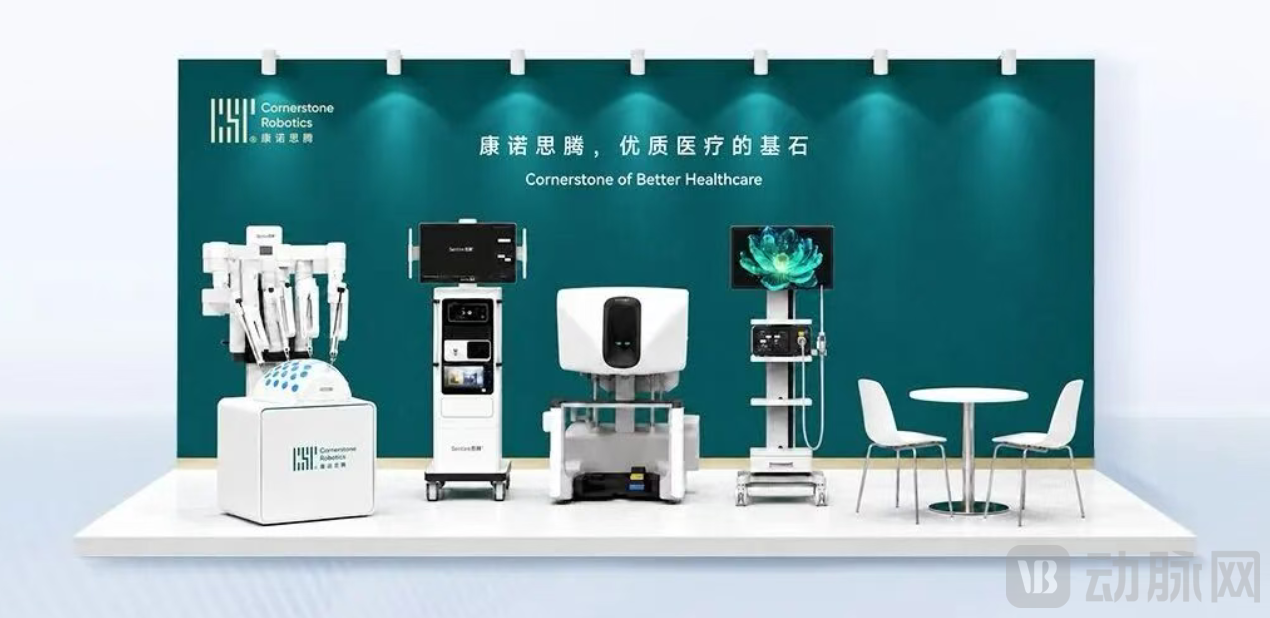
Cornerstone Robotics Laparoscopic Surgical Robot
Modular surgical robots are theoretically better suited for large organs such as the stomach, liver, and breast, as well as for colorectal procedures spanning the entire abdominal cavity. Malignant tumor resections in these areas impose higher demands on the multi-quadrant operational capabilities of surgical robots. Independent robotic arms may enhance surgeons’ willingness to adopt surgical robots for general and gastrointestinal surgeries, as the independent design allows for better abdominal access. Flexible positioning facilitates the selection of optimal insertion points and angles for instruments, while the distributed placement of robotic arms reduces the risk of collisions. This configuration is expected to enable smoother execution of procedures requiring larger operative spaces, such as those in general and thoracic surgery, thereby boosting the overall penetration rate of laparoscopic surgical robots.
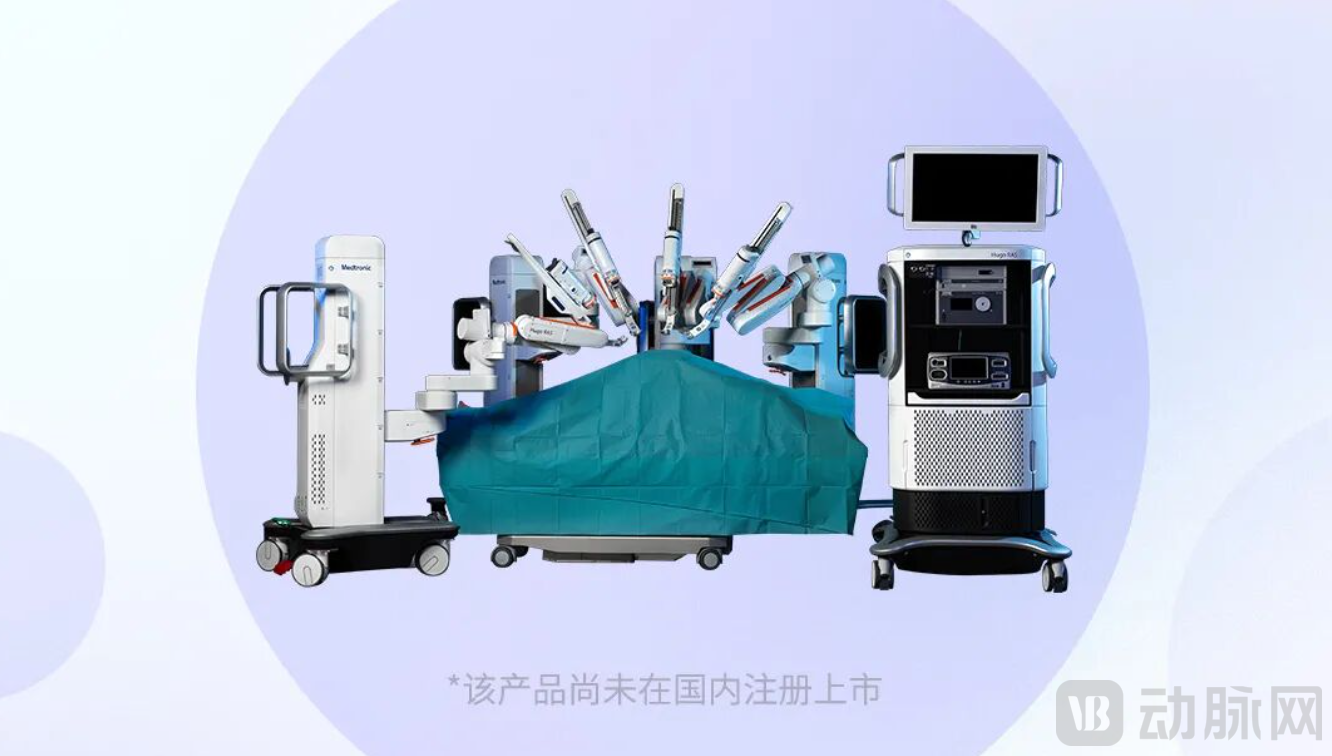
Medtronic Hugo™ Robotic-Assisted Surgery System
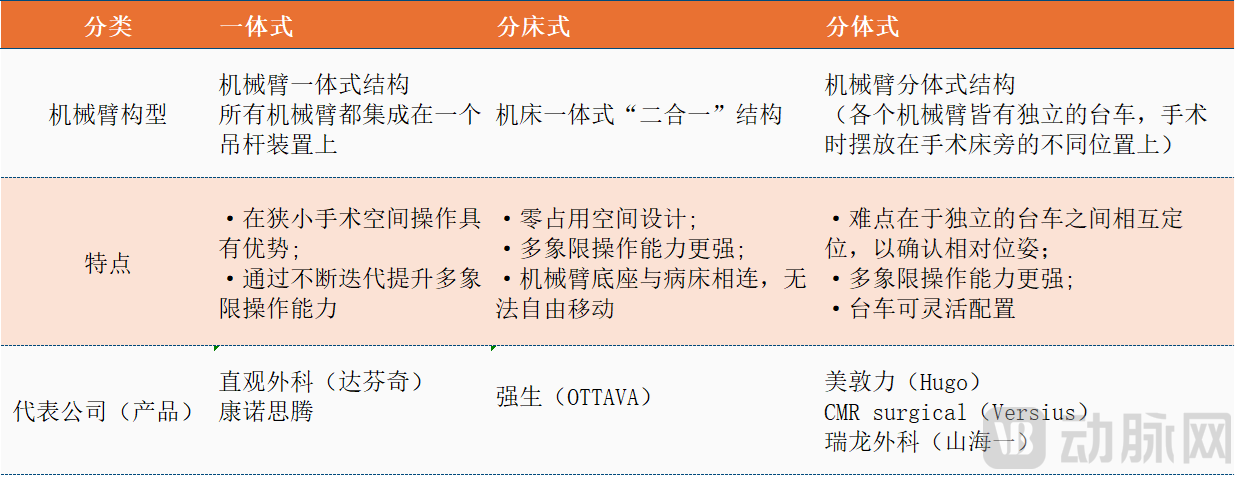
Following its partnership with Cornerstone Robotics, Medtronic now boasts dual‑surgical‑robot platforms, enabling it to better cater to the needs of physicians across various clinical departments.
In terms of pricing strategy, Sentire, as a product independently developed in China, offers more significant cost advantages and may potentially capture the value-for-money market segment that Hugo struggles to reach.
Matt Anderson, Senior Vice President of Medtronic and President of the Surgical Business Operating Unit, stated that Sentire is a “strong complement” to the Hugo platform. With this dual-platform portfolio—“Hugo as the core, Sentire as the extension”—Medtronic has become the only company in the industry with a multi-port robotic product portfolio across two platforms, offering customers more flexible options tailored to different clinical scenarios, procedural needs, and economic models.
Understanding the technological value of Cornerstone Robotics also requires understanding why Medtronic chose to act at this particular juncture and in this specific manner. This move reflects a strategic decision by Medtronic, grounded in its surgical business portfolio.
Cornerstone Robotics has secured approvals in multiple markets; what Medtronic purchased was time. The commercialization of surgical robots involves a lengthy cycle: from R&D to clinical trials and regulatory approval, it typically takes 5–8 years. Medtronic’s in-house developed Hugo system also took nearly a decade from project initiation to FDA urology clearance.
Meanwhile, Cornerstone Robotics’ Sentire system has already cleared the most challenging regulatory hurdles: it received approval from China’s National Medical Products Administration (NMPA) in 2024 and obtained dual CE marking and Singapore Health Sciences Authority (HSA) certification in May 2026, covering four major clinical departments. Medtronic has secured rights to distribute the product in certain approved markets outside the United States, meaning it can commence sales immediately without waiting several more years for regulatory approvals. By avoiding the need to bear regulatory risks and clinical validation costs from scratch, Medtronic can directly integrate the system into its global distribution network, achieving a “plug-and-play” rollout.
The core asset acquired through this deal is not a product, but time. Amidst the competitive landscape where da Vinci continues to expand its leading advantage and Johnson & Johnson’s Ottava has received approval, Medtronic cannot afford to wait for Hugo to slowly expand its indications and gradually penetrate the market. By partnering with Cornerstone Robotics, Medtronic can rapidly capture market share in its surgical robotics business outside the United States.
To understand Medtronic’s urgency, it is essential to clearly recognize the position of its surgical business within the Medtronic system and the pressures it currently faces.
Medtronic’s business is divided into four major segments: Cardiovascular (approximately 38%), Neuroscience (approximately 29%), Medical Surgical (approximately 24%), and Diabetes (approximately 8%). Although the Medical Surgical segment ranks third, with full-year fiscal year 2026 (FY26) revenue of approximately $8.82 billion, its strategic significance far exceeds its revenue share. It is Medtronic’s most mature segment for its “devices + consumables” closed-loop model, characterized by a high proportion of recurring revenue and stable cash flow.
Among these, the Surgical & Endoscopy sub-division is the core, encompassing products such as the LigaSure vessel sealing system, Harmonic ultrasonic scalpel, advanced staplers, and hernia repair products. Since its launch 25 years ago, LigaSure has been used in over 35 million surgeries worldwide, establishing it as the absolute leader in the global market for large-vessel sealing devices.
But this “cash cow” business is facing multiple pressures:
First, robotic surgery achieves a paradigm-shifting replacement of traditional consumables. This is the most core and long-term challenge. In its FY26 Q2 financial report, Medtronic explicitly stated that growth in advanced staplers was partially offset by the “shift to robotic surgery,” primarily in the U.S. market. The full-year FY25 financial report similarly noted that net sales in the Medical Surgical segment remained flat, mainly due to the shift to robotic surgery.
Taking surgical staplers as an example, in the overseas market, Intuitive Surgical has leveraged its da Vinci robotic platform to achieve a U.S. market share of over 51% for laparoscopic staplers, surpassing the combined shares of Johnson & Johnson and Medtronic.
The underlying logic is harsh: in traditional laparoscopic surgery, physicians use single-use consumables such as Medtronic’s LigaSure devices and staplers; whereas in da Vinci robotic-assisted surgery, they employ Intuitive Surgical’s proprietary EndoWrist instruments and consumables, which are deeply integrated with the da Vinci system and incompatible with Medtronic products. As the penetration rate of robotic surgery increases, Intuitive Surgical has captured the incremental market for Medtronic’s traditional surgical consumables.
In the domestic market, traditional giants of minimally invasive surgery such as Medtronic and Johnson & Johnson are facing dual pressures from centralized procurement and the rise of domestically produced alternatives.
Under mounting pressures, Medtronic’s surgical business has reached a crossroads in its traditional growth model. With conventional consumables being replaced by robotic systems, the company must develop its own robotics capabilities—this is the core rationale behind Medtronic’s all-in strategy on surgical robots. The $700 million strategic partnership with Cornerstone Robotics represents a critical move in executing this strategy.
Medtronic’s investment in Cornerstone Robotics is not an isolated case. Over the past year, collaborations between multinational medical device giants and innovative Chinese medtech companies have emerged as a new paradigm.
In the field of surgical robotics, there was previously another similar major partnership: Johnson & Johnson collaborated with Ronovo.
In September 2025, Johnson & Johnson Innovation led a $67 million Series D financing round for Ronovo, while Johnson & Johnson MedTech signed a strategic cooperation agreement with Ronovo. The two parties will leverage the modular advantages of Ronovo’s Haishanyi® laparoscopic surgical robot and Johnson & Johnson’s technical expertise in minimally invasive surgery to jointly promote commercialization in select regions of China.
Haishan Yi® is China’s first modular laparoscopic surgical robot. It received approval from the National Medical Products Administration (NMPA) in March 2025 and, upon market launch, immediately covered indications in four major specialties: general surgery, thoracic surgery, gynecology, and urology. At the China International Import Expo (CIIE) in November 2025, Johnson & Johnson and Ronovo jointly showcased Haishan Yi®, marking their first joint appearance since establishing a strategic partnership. Zhou Mintao, President of Johnson & Johnson MedTech China, explicitly stated, “We are no longer relying solely on our own innovation; instead, we are fully integrating into China’s innovation ecosystem.”
Comparing Medtronic × Cornerstone Robotics with Johnson & Johnson × Ronovo clearly reveals the strategic shift of multinational giants:
The common logic behind the two transactions is that multinational giants rapidly integrate into China’s innovation ecosystem through capital ties and channel partnerships. Chinese companies provide technology and products, while multinational giants offer global commercialization networks and brand endorsement. By leveraging their complementary strengths, both parties work together to expand the market.
But Medtronic’s move is significantly bolder: $700 million vs. $67 million, and global distribution vs. select regions in China. This reflects the greater pressure Medtronic faces in its surgical business and its more urgent desire to catch up with the da Vinci system, as well as Cornerstone Robotics’ more advanced product maturity and progress in global regulatory approvals.
The partnership between Medtronic and Cornerstone Robotics is a landmark event in the surge of business development (BD) transactions within China’s medical device industry.
In the past, business development (BD) transactions among Chinese medical device companies primarily involved “bringing in” innovative overseas devices for application and promotion in the Chinese market. Today, leading enterprises are increasingly “going global,” licensing their independently developed products and technologies to overseas partners.
In the field of innovative medical devices, in addition to Medtronic × Cornerstone Robotics and Johnson & Johnson × Ronovo, global vascular intervention company Cordis has signed an agreement with BrosMed Medical to exclusively distribute its new-generation drug-coated peripheral balloon dilation catheter; multinational giants are embracing Chinese innovation with an open mindset.
As more Chinese medical device companies go global through business development (BD) collaborations, the value chain of the global medical device industry will ultimately be rewritten.