

Half-Year Revenue of RMB 500 Million, RMB 4 Billion in BD Upfronts: The AstraZeneca-Incubated Biotech Sprints Toward an A+H Listing

Dizal
Innovative Biopharmaceutical R&D Developer

AstraZeneca
Biopharmaceutical Manufacturer
In August 2026, Dizal Pharmaceutical submitted an H-share listing application to the Hong Kong Stock Exchange.
As early as 2021, the company had already listed on the STAR Market of the Shanghai Stock Exchange, raising approximately RMB 2.1 billion in total IPO proceeds. For a biotech founded only four years earlier, this was a remarkably high starting point, enabling Dizal to enter the secondary market before it had any commercialized products.
Four years later, Dizal is heading to Hong Kong to complete its A+H dual-listing structure. The company, which emerged from AstraZeneca's internal R&D center, now holds two marketed products and generated RMB 523 million in revenue in H1 2026.
Shortly after submitting its Hong Kong prospectus, Dizal announced that the record-breaking licensing agreement signed with AstraZeneca took effect on August 31. Under the agreement, Dizal will receive a one-time, non-refundable upfront payment of USD 600 million (approximately RMB 4 billion), up to USD 400 million in clinical development milestone payments, and up to USD 500 million in sales milestone payments.
AstraZeneca will commercialize Zegfrovy® in the United States in the fourth quarter of this year.
Currently, Dizal has not yet achieved overall profitability, and multiple pipelines are still awaiting clinical data validation. Perhaps we can understand this company through its business transformation over the past four years.
Dizal's starting point was higher than that of many biotechs.
Its predecessor was AstraZeneca's iMED Asia oncology translational science center — AstraZeneca's early-stage drug R&D institution based in Asia.
In 2017, this R&D unit was spun off, and Dizal Pharmaceutical was formally established, with Dr. Zhang Xiaolin taking the role of CEO.
Dr. Zhang Xiaolin previously served as a global vice president at AstraZeneca for many years, while also acting as vice president and head of iMED Asia. He was deeply involved in the early R&D of blockbuster lung cancer drugs such as Iressa and Tagrisso, and is one of the inventors of zorifertinib. Accompanying him out of AstraZeneca was a complete R&D team, many of whose members also had MNC work experience.
This background brought very practical benefits. At the founding of the company, AstraZeneca directly injected a batch of preclinical assets, while its AZAB and the Advanced Manufacturing Industry Investment Fund provided working capital. In the end, Dizal developed smoothly and successfully entered the secondary market.
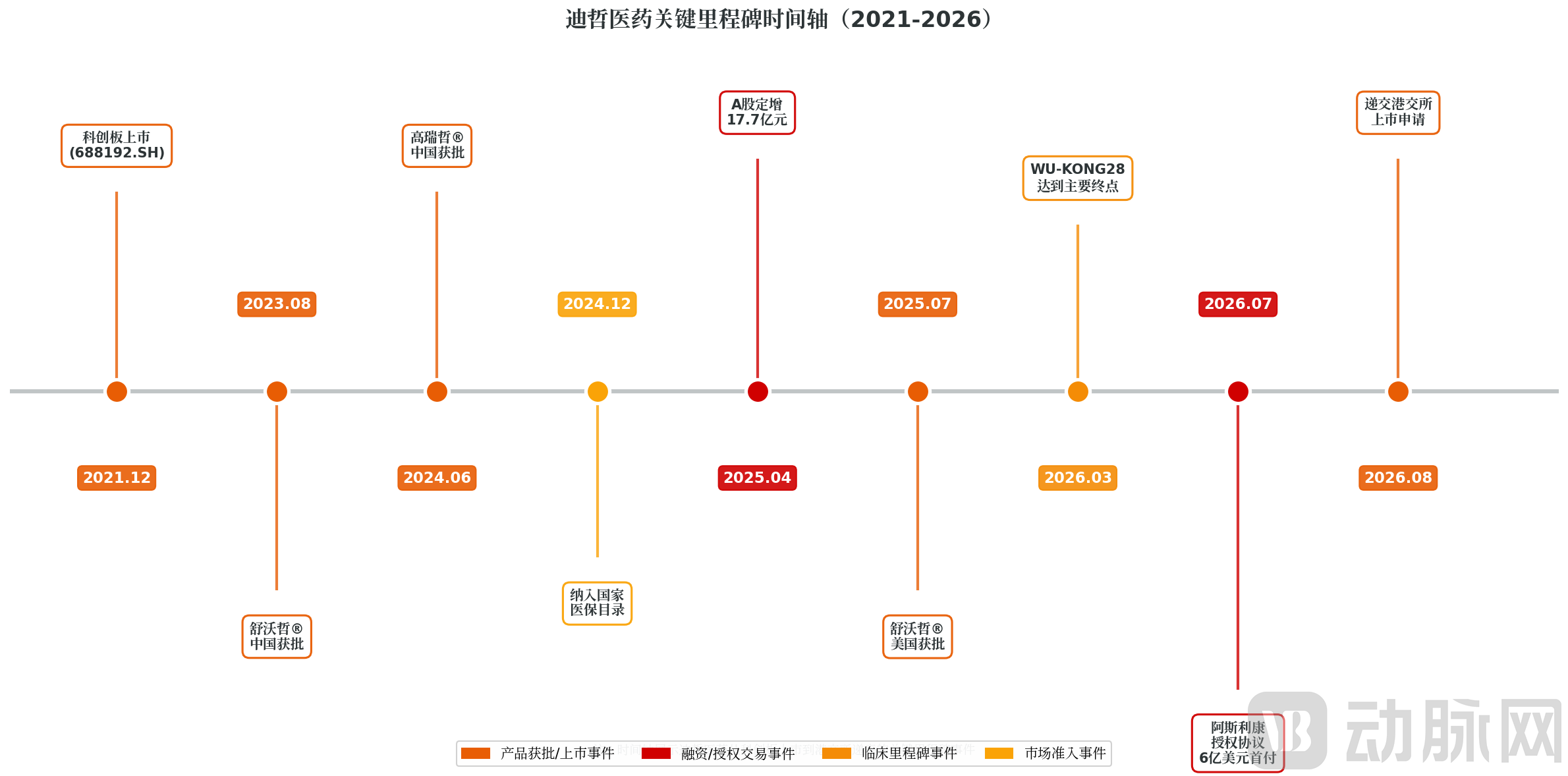
Key milestones in Dizal's development in recent years. Source: compiled from the prospectus
At the time of its STAR Market listing, only two candidates in Dizal's pipeline — Zegfrovy (DZD9008) and Gao Ruizhe (DZD4205) — had entered late-stage clinical development, with the rest still in early stages.
In August 2023, Zegfrovy received approval from the NMPA, becoming China's first innovative drug approved for the treatment of non-small cell lung cancer (NSCLC) harboring EGFR exon 20 insertion mutations (exon20ins).
The early molecular design of this drug can be traced back to the research accumulation of the founding team during their AstraZeneca years, while all subsequent clinical development and regulatory strategies were completed independently by the company. The WU-KONG6 study achieved a 60.8% objective response rate (ORR) in Chinese patients — data that also laid the foundation for its subsequent global expansion.
In June 2024, Gao Ruizhe was approved, becoming the world's first and, to date, only approved JAK1-selective inhibitor for the treatment of relapsed or refractory peripheral T-cell lymphoma (r/r PTCL).
This drug has a more precisely defined market positioning: PTCL accounts for about 20% of all non-Hodgkin lymphomas in China, far higher than the 5% in the US, meaning Gao Ruizhe's China-first launch strategy follows a clear local market logic.
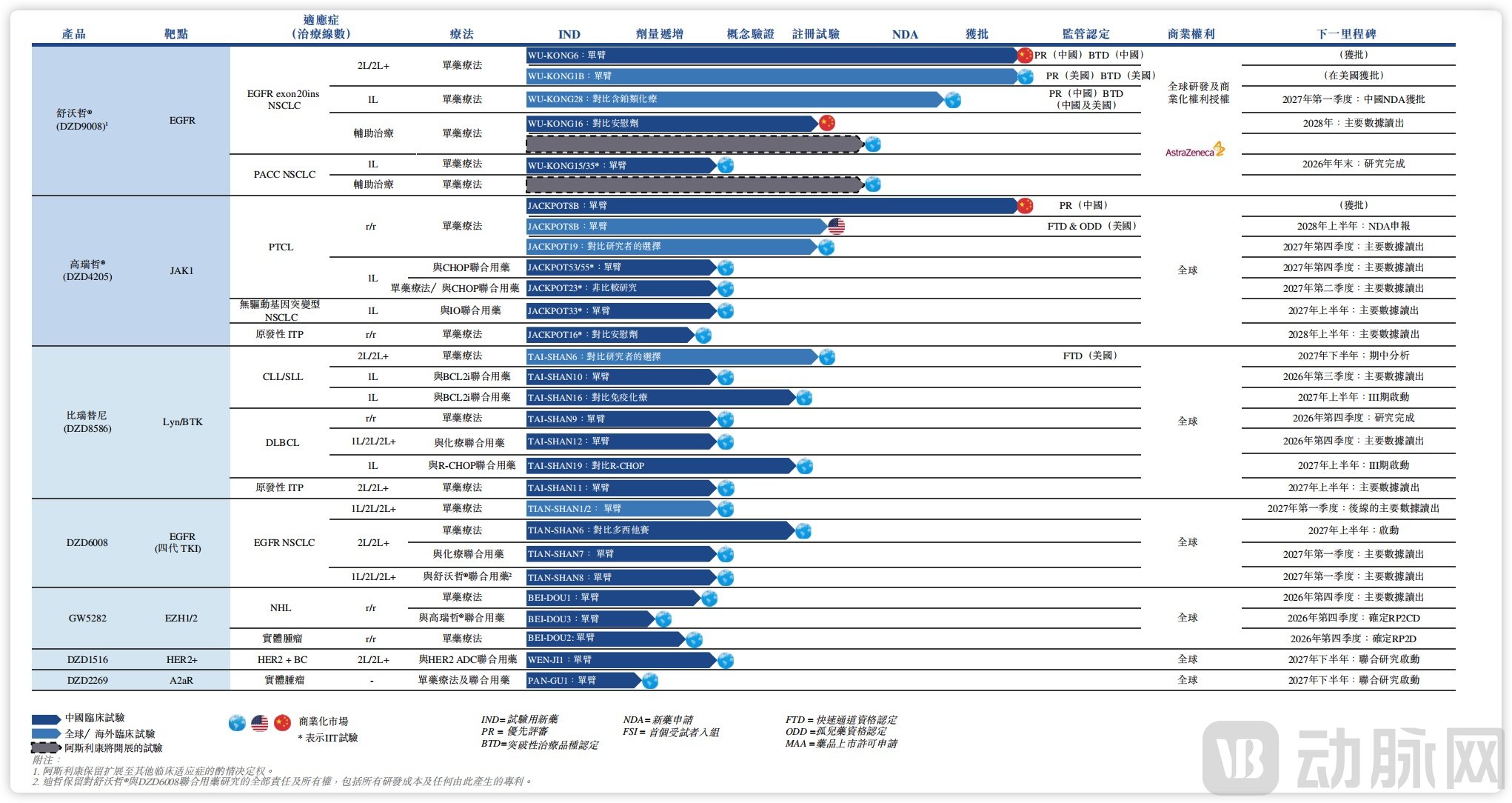
Pipeline layout. Source: prospectus
Beyond its marketed products, Dizal's next major candidate in hematological oncology, birelentinib (DZD8586), is the first and only LYN/BTK dual inhibitor in Phase III clinical development. In the EGFR field, in addition to Zegfrovy, it is advancing DZD6008, a fourth-generation EGFR TKI specifically designed to address resistance after failure of third-generation drugs such as osimertinib.
There are also early-stage programs: GW5282, an EZH1/2 dual inhibitor targeting relapsed/refractory NHL and solid tumors; DZD1516 for HER2-positive breast cancer; and DZD2269 for tumor immunology.
The launch of the two products quickly translated into financial results. In 2023, Zegfrovy generated RMB 91.3 million in revenue in its first year on the market; in 2024, with Gao Ruizhe joining, total revenue rose to RMB 360 million; in 2025, after both products were included in the National Reimbursement Drug List, total revenue jumped to RMB 801 million, up 122.6% year over year. In H1 2026, revenue reached RMB 522 million, surging 47% year over year.
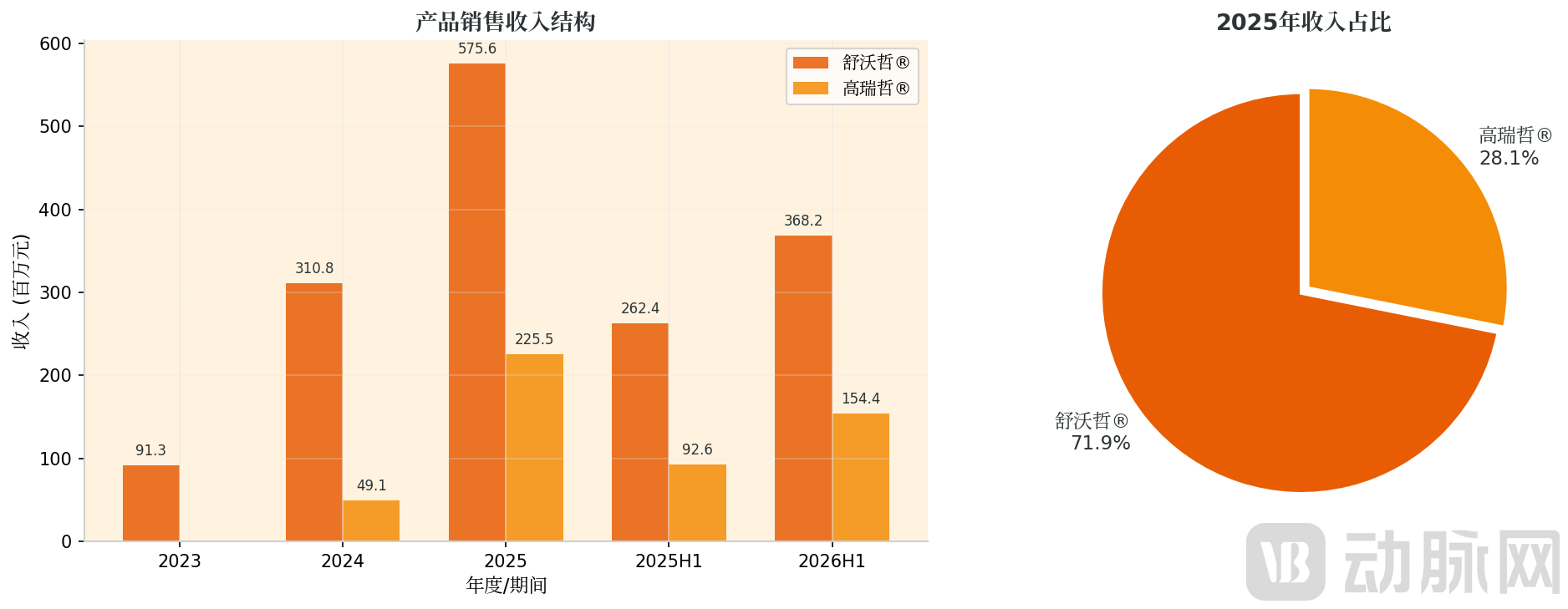
Product sales revenue structure. Source: compiled from prospectus data
However, R&D investment has continued. From 2023 to H1 2026, Dizal's R&D expenses remained at RMB 700–850 million per year, accounting for more than half of operating expenses.
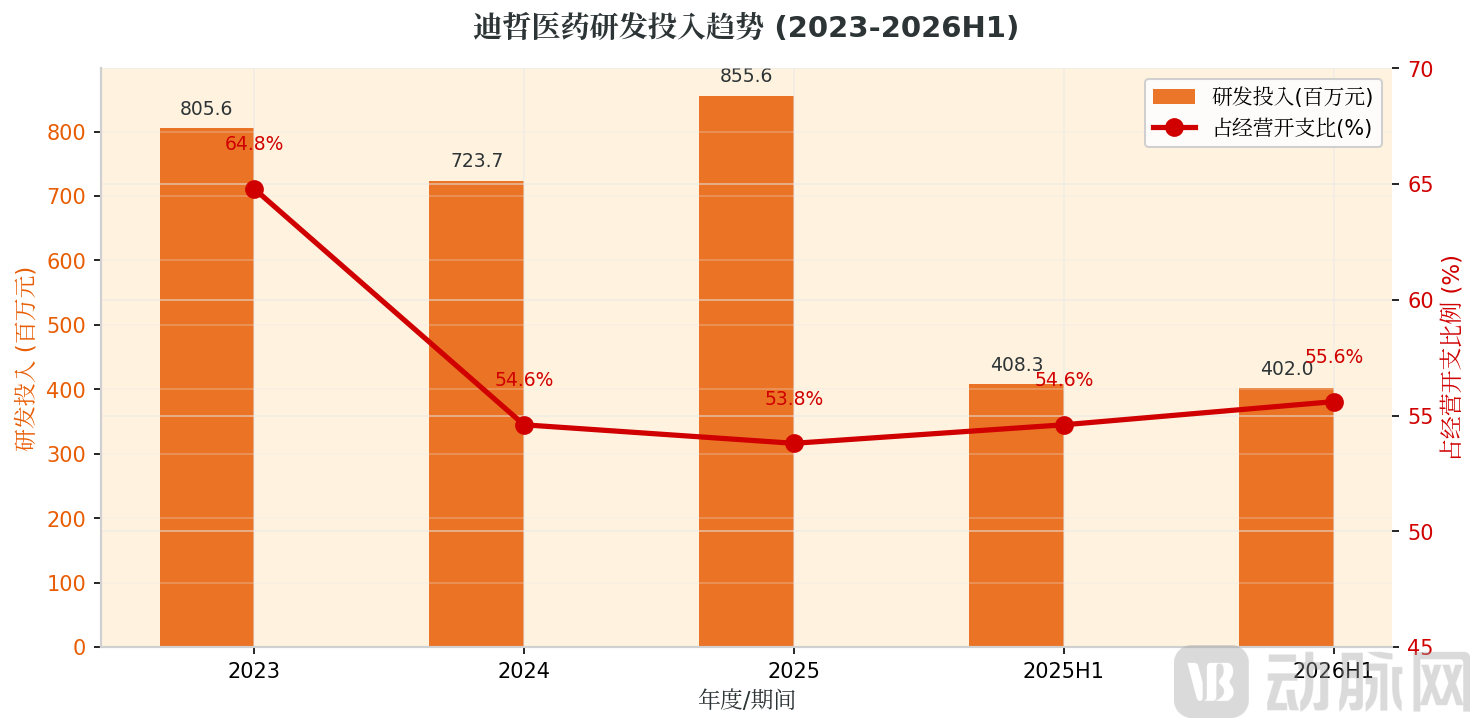
R&D investment. Source: compiled from prospectus data
As products commercialized, the company's losses began to narrow. Net loss was RMB 1.108 billion in 2023, RMB 940 million in 2024, RMB 769 million in 2025, and only RMB 213 million in H1 2026 — a marked narrowing from the RMB 377 million loss in the same period a year earlier.
In four years, Dizal completed the leap from expectation-driven to performance-driven.
Dizal's decision to apply for an H-share listing at this moment stems from the R&D rhythm of its pipeline.
Although oncology drug markets globally, including China, continue to expand, the situation varies by segment. Both Zegfrovy and Gao Ruizhe target niche mutational subtypes, and the scale of the corresponding patient populations inherently has a ceiling. Even with full market share, the overall sales space will be naturally limited.
Even drugs positioned as first-in-class cannot escape competition from peers.
In the EGFR exon 20 insertion mutation track, overseas large-molecule drugs have already been approved, and seven candidate drugs are in Phase II clinical trials in China. In the r/r PTCL track where Gao Ruizhe operates, multiple traditional chemotherapy drugs and other JAK inhibitors are competing on the same stage. The fourth-generation EGFR-TKI track of DZD6008 is crowded with domestic and international biotechs.
In March 2026, the international multicenter Phase III trial WU-KONG28 met its primary endpoint, validating the efficacy of Zegfrovy as a first-line treatment for EGFR exon20ins NSCLC. Based on these results, the supplementary new drug application (sNDA) for Zegfrovy as a first-line treatment has been accepted and granted priority review by China's NMPA, and the sNDA has also been submitted to the US FDA.
If ultimately approved, it will become the world's first small-molecule targeted drug for first-line treatment of this indication — one of the core expectations underpinning Dizal's valuation in Hong Kong.
Four months later, Dizal and AstraZeneca signed a global exclusive license agreement. Dizal granted AstraZeneca the rights to develop and commercialize Zegfrovy worldwide, receiving a USD 600 million one-time upfront payment plus up to USD 900 million in combined development and sales milestone payments, along with tiered royalties in the low double digits as a percentage of global sales.
According to CIC, this is the largest upfront payment in a single-asset licensing transaction of Chinese small-molecule drugs.
The deal means Zegfrovy's global commercialization path shifts from Dizal's self-built team to AstraZeneca's global network. In its H-share prospectus, Dizal emphasized the leap from second-line to first-line use, hoping it will become the core support of its valuation.
On the other hand, Dizal's remaining pipeline has also reached new stages.
Among the seven PTCL drugs approved globally, Gao Ruizhe is the only oral JAK1-selective inhibitor. Its greatest feature is high selectivity: it can effectively inhibit JAK1-mediated tumor signaling while minimizing off-target toxicities such as anemia that JAK2 inhibition may cause, balancing efficacy and safety in PTCL treatment.
In key clinical studies, Gao Ruizhe's 44% objective response rate, 24% complete response rate, and 20.7-month median duration of response all outperform traditional HDAC inhibitors and anti-folate drugs. More importantly, the treatment discontinuation rate is only 7.3%, meaning patients can take the drug long-term without stopping due to side effects.
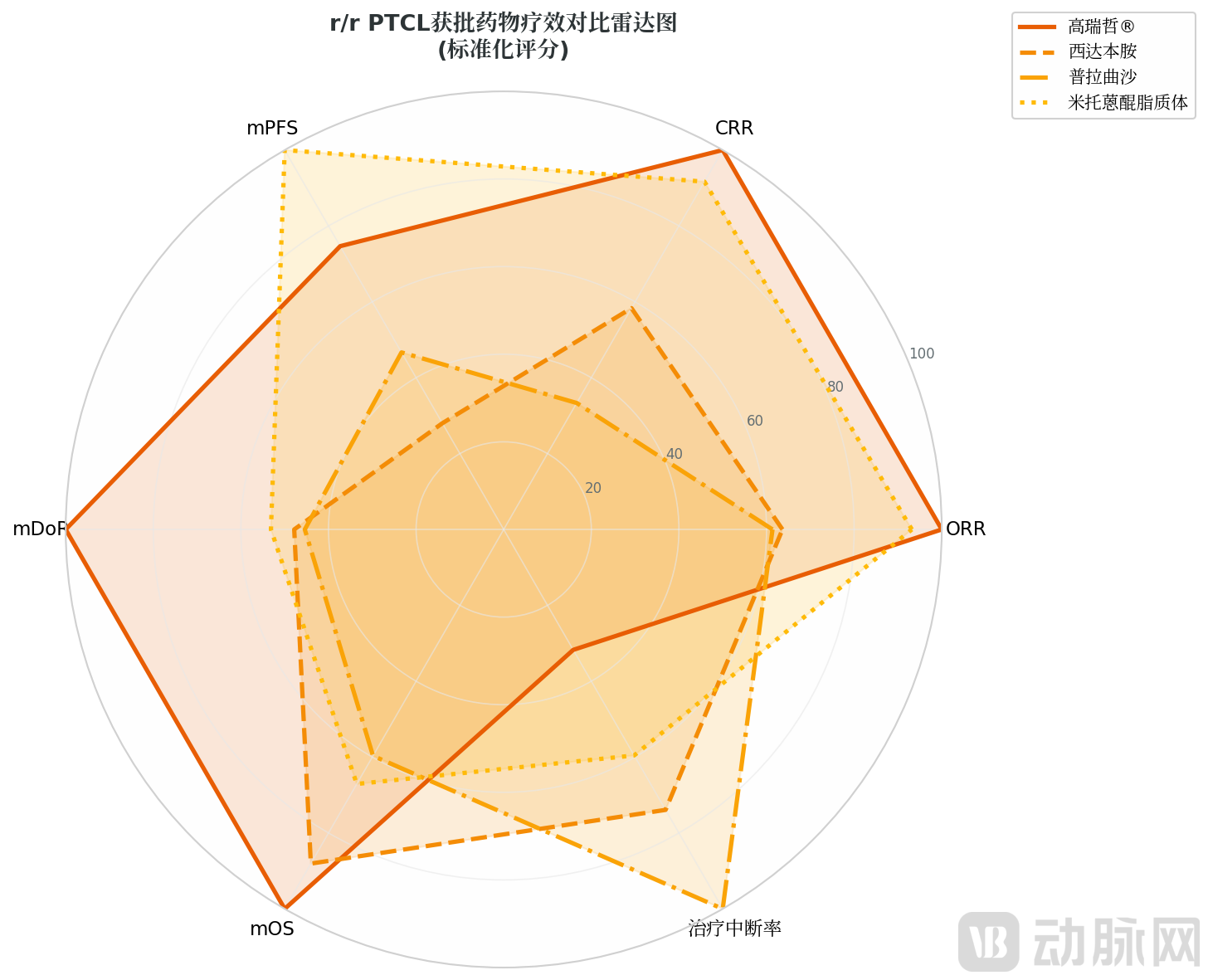
Efficacy comparison of approved r/r PTCL drugs (not head-to-head). Source: compiled from prospectus data
In addition, the Phase III clinical trial of birelentinib (DZD8586) in r/r CLL/SLL is progressing, and early data for DZD6008 as a fourth-generation EGFR TKI show coverage of the C797S resistance mutation. The value of these pipelines must be assessed and priced within the coordinates of global clinical development.
According to the prospectus, Dizal will use the proceeds primarily for the clinical development of Gao Ruizhe, DZD6008, and birelentinib.
From this, Dizal's strategy for the coming period is clear: use the mature asset Zegfrovy for out-licensing to generate cash flow, shifting capital allocation toward Gao Ruizhe and later-stage pipelines.
Choosing Gao Ruizhe as the focus of a key breakthrough reflects Dizal's expectation of it as the next growth engine. It is currently approved for r/r PTCL but is expanding into multiple indications, including first-line PTCL, NSCLC without driver mutations, and primary immune thrombocytopenia (ITP).
If these expansions succeed, they will significantly broaden Gao Ruizhe's patient coverage and commercial ceiling.
DZD6008, as a fourth-generation EGFR TKI, has been given strategic importance equal to that of birelentinib (Phase III). This choice reflects strategic considerations: it is a blank market where no oral targeted drug has been approved globally.
If DZD6008 can achieve a breakthrough first in this field, it will not only be a late-line rescue drug, but may also enter front-line treatment through combination strategies, replicating the Zegfrovy path from second-line to first-line. Whether it is Zegfrovy's future growth or the global pricing of other pipelines, the Hong Kong market is needed to support them — which may be the main reason Dizal set up its A+H structure four years after its STAR Market listing.