

Six Months to Clinical Trials: IIT Data Shines as In Vivo CAR-T Emerges as a Dark Horse
Circunited BioPharma
--
Established in November 2025, the company completed IIT ethical filing in March 2026 and enrolled and dosed two patients with refractory relapsing systemic lupus erythematosus (SLE) in April 2026. Circunited BioPharma completed the first phase from laboratory to clinical research within six months.
This was not only a race against time, but also a significant victory achieved amidst a complex and severe situation.
Over the past 18 months, multinational corporations (MNCs) have actively entered the in vivo CAR-T sector through mergers and acquisitions (M&A) and business development (BD) deals, with total transaction values approaching $20 billion. However, this field remains in its early stages globally. Currently, there are only a handful of in vivo CAR-T products based on the mRNA-LNP platform with investigator-initiated trial (IIT) clinical data, while the vast majority of pipelines are still confined to early-stage animal validation.
Even in M&A transactions involving targets valued at billions of dollars, most had not yet initiated clinical validation at the time of the deal. It was only recently that the FDA approved the first Investigational New Drug (IND) application under this pathway. Although the regulatory channel has just opened, there is still a long road ahead before pivotal clinical data for registration purposes can be obtained.
At this stage, the scarcest resource is not stories, but reliable and authentic human data.
Circunited BioPharma’s IIT results are straightforward: Two patients with severe systemic lupus erythematosus (SLE) and a disease course of more than 15 years completed dosing, achieving profound B-cell depletion, clear signs of immune reconstitution, and an excellent safety profile at the highest dose. With this data, the company, which was established less than a year ago, has already entered the global first tier.
The Sector Continues to Heat Up as In Vivo CAR-T Faces a Major Test in Druggability
“Friends often ask, ‘There are already hundreds of companies in the in vivo CAR-T sector in China, so why are you still pursuing this?’” said Yang Muyizi, founder of Circunited BioPharma.
Her response did not shy away from the topic of competition: The large number of market entrants indicates that the direction has already gained industry recognition; however, this sector is far from reaching its endgame. Over the next one to two years, a critical validation period for technological pathways and clinical data will unfold. Ultimately, the companies that succeed will not be those with the most compelling narratives, but rather those that can effectively demonstrate and execute on delivery efficiency, safety, CMC processes, and regulatory approval pathways.
In Yang Muyizi’s view, the value of in vivo CAR-T was first “validated” by the substantial financial investments from multinational corporations (MNCs).
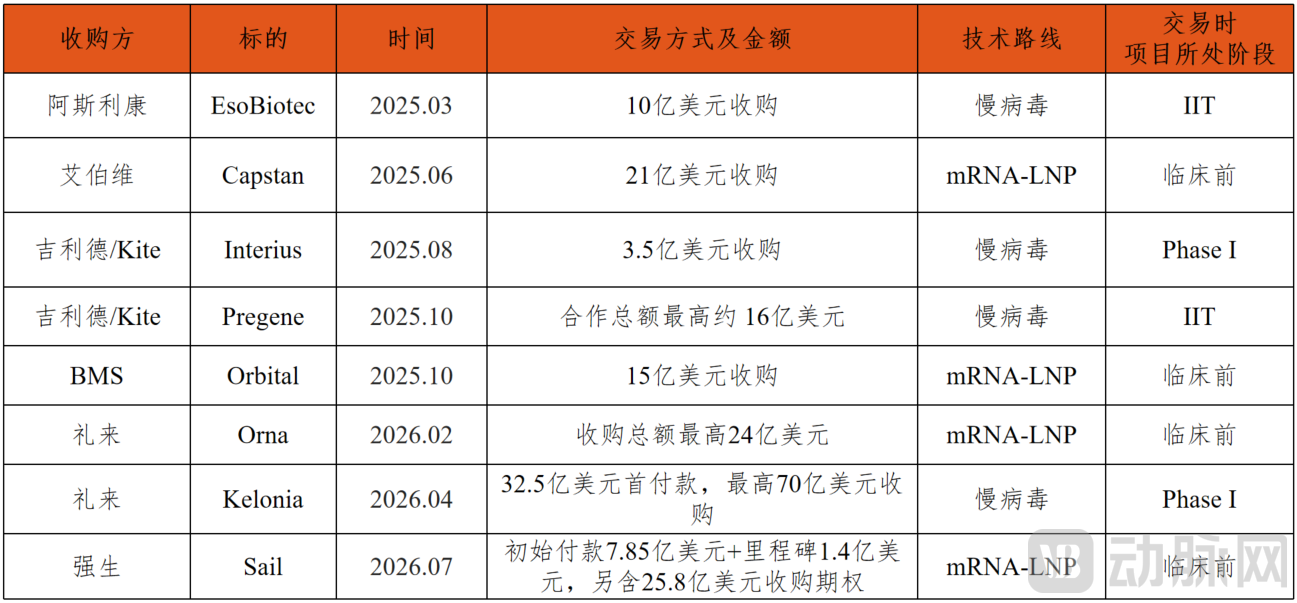
Overview of In Vivo CAR-T M&A Transactions
Why Are MNCs Frequently Betting? The Answer Is Straightforward: The industrial bottlenecks of traditional CAR-T therapy—“slow, expensive, and difficult”—have shown hope for systemic resolution through the in vivo approach.
Traditional autologous CAR-T therapy involves multiple steps, including blood collection, T-cell isolation and activation, ex vivo genetic modification, expansion, quality control release, and reinfusion. The waiting period for treatment often extends to several weeks, with pricing at the million-yuan level. Lymphodepletion preconditioning is typically required prior to reinfusion, resulting in a high burden for patients and significant entry barriers for medical centers.
In vivo CAR-T therapy seeks to fundamentally rewrite this paradigm: by administering delivery vectors directly into patients via intravenous infusion, it enables in situ T-cell programming within the body. This approach transforms CAR-T from a personalized, "one-patient-one-batch" cellular manufacturing process into a pharmaceutical product capable of mass production, standardized release, and repeat dosing, thereby substantially reducing the high costs associated with customized preparation.
Amidst the hype, the challenges cannot be ignored. To date, only a handful of companies worldwide have publicly released clinical IIT data for in vivo CAR-T therapies utilizing the LNP-mRNA approach.
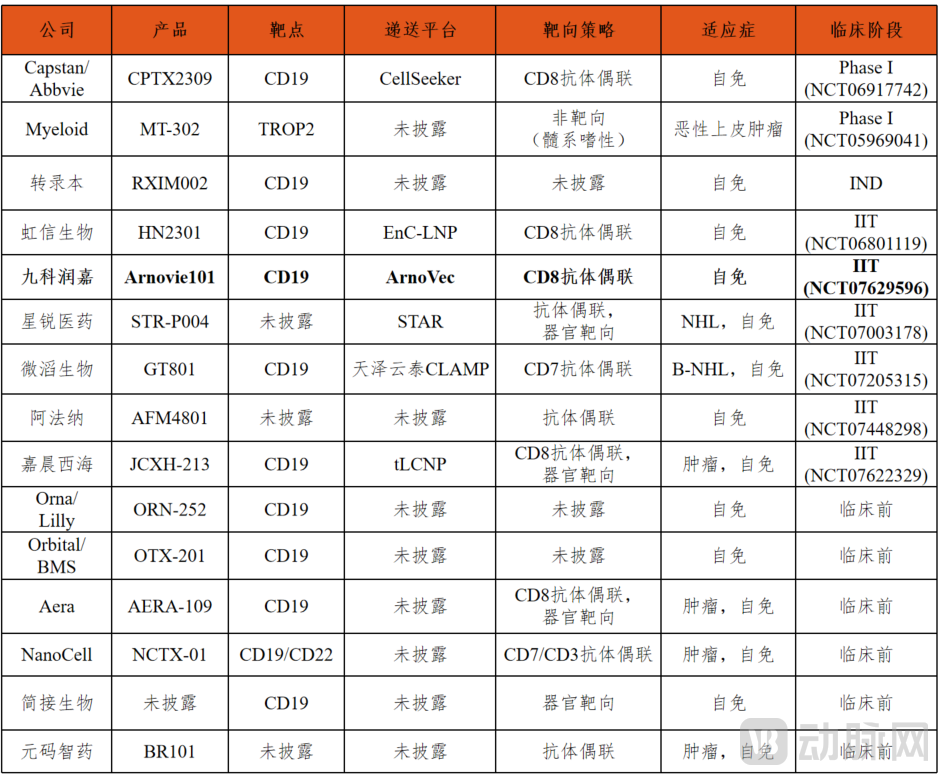
Overview of Select In Vivo CAR-T Companies
Severe adverse events observed in some investigator-initiated trials (IITs) serve as a reminder to the industry that in vivo immune activation, cytokine release, and neurotoxicity still require cautious management. Site-specific conjugation of targeting antibodies to LNPs, process scale-up, batch-to-batch consistency, raw material and excipient supply chains, and GMP release are becoming more stringent CMC hurdles than in vivo efficacy.
In Yang Muyizi’s view, this precisely indicates that it is not “too late,” but rather that the industry has just entered the phase that most rigorously tests drug development capabilities. The next stage of competition will not be about who has the newer concepts, but about who can first present a complete chain of evidence demonstrating “clinical efficacy, safety and controllability, scalable manufacturing processes, and effective regulatory communication.”
“We chose this direction not because the sector is hot, but because the technology is feasible, there is an urgent clinical need, and our team has accumulated relevant expertise,” said Yang Muyizi.
The team at Circunited BioPharma has long been deeply engaged in nucleic acid therapeutics and in vivo delivery platforms, accumulating sustained expertise in mRNA drug design, vector engineering, targeted modifications, and CMC manufacturing. Meanwhile, there is a substantial unmet need in autoimmune diseases; the pathogenic mechanism of B cells in conditions such as systemic lupus erythematosus (SLE) is well-defined, and the pathway for efficacy validation is relatively straightforward.
Therefore, Circunited BioPharma set its goals clearly from the outset: Develop Next-Generation Cell Therapy Drugs with High Accessibility and Controllable Costs, making innovative cell and gene therapies no longer a “luxury” confined to top-tier medical centers, but rather standard treatments accessible to more patients.
Non-Chemical Conjugation Platform: Breaking the Precision Dilemma of LNPs
A direct product of this philosophy is ArnoVec.TM,a non-chemical site-specific antibody conjugation platform.
Traditional LNPs resemble unguided transport vehicles, tending to accumulate in the liver after entering the body. Conjugating antibodies to the LNP surface is akin to equipping them with a navigation system. However, traditional chemical conjugation is random, making it difficult to fully control the orientation of antibody attachment. As a result, some antibodies fail to adequately expose their recognition regions, rendering them ineffective despite being attached. More problematic still, the chemical conjugation process often compromises the structural stability of LNPs, making it challenging to ensure batch-to-batch consistency.
Circunited BioPharma’s solution is to equip the LNP surface with a “lock” and pair the antibody terminus with a “key.” Antibodies can be site-specifically anchored to designated locations on LNPs only when the “key” and “lock” are correctly paired. This non-covalent conjugation strategy ensures an orderly arrangement of antibodies on the LNP surface while completely avoiding the additional toxicity risks associated with residual chemical reagents.
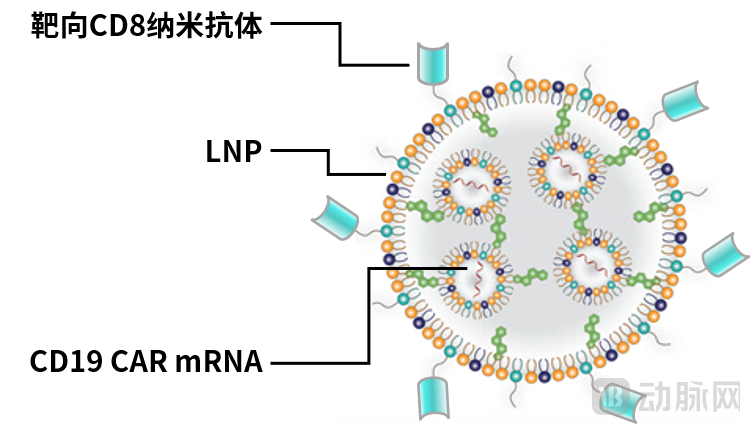
Circunited BioPharma ArnoVecTMSchematic Diagram of the Principle of Non-Chemical Site-Specific Antibody Conjugation Technology Platform
“The core of this design lies in Circunited BioPharma’s ability to transcend the inherent limitations of traditional antibody-drug conjugation technology. It enables site-specific conjugation, maintaining efficient targeted transfection of T cells, while also allowing for the large-scale production of high-purity in vivo CAR-T therapeutics through a streamlined manufacturing process,” stated Yang Muyizi.
More importantly, this conjugation technology is not tailored for a single product, but rather A Universal Technology Platform Compatible with All LNP-Based Targeted Drug Delivery Therapeutics by switching to different targeted antibodies, it is possible to achieve the identification and delivery to various target cells, which can be widely applied in areas such as immune resetting in vivo, clearance of senescent cells, and neuroinflammation.
“We are a technology-driven, international platform company,” Yang Muyizi defined Circunited BioPharma. Since its establishment, the company has simultaneously advanced multiple delivery systems and drug designs for in vivo CAR-T therapy, while validating key metrics including transfection efficiency, B-cell killing, toxicology, and immune reconstitution.
“For most R&D-driven companies, such a choice is not necessarily made,” said Yang Muyizi. Running multiple experiments in parallel entails higher investment, but it enables more efficient validation of whether the technical approach and candidate drugs hold further development potential, especially amid the current surge of interest in in vivo CAR-T therapies.
In addition to enhancing delivery precision, Circunited BioPharma has also incorporated the industrialization of in vivo CAR-T into the design considerations of its platform technology.
“ArnoVecTM platform technology not only addresses the challenges of precise targeting and industrialization, but also leverages the mature mRNA production system in its manufacturing process. By avoiding the need to develop numerous new technologies and reagents, it fully realizes the reuse of established technologies, significantly reducing development costs. This has substantially lowered the cost of in vivo CAR-T therapy, making it an accessible treatment for patients rather than a prohibitively expensive therapy as it was in the past,” said Yang Muyizi.
IIT Data Stuns
“For investors, the most challenging aspect is interpreting data, while the most critical task is understanding the drug development signals behind the data,” stated Yang Muyizi. “The investigator-initiated trial (IIT) data for Arnovie101 indicate that this drug has a sufficiently wide safety window, robust efficacy signals, and a clearly defined manufacturing process. These three ‘sufficiencies’ are what investors truly need to grasp.”
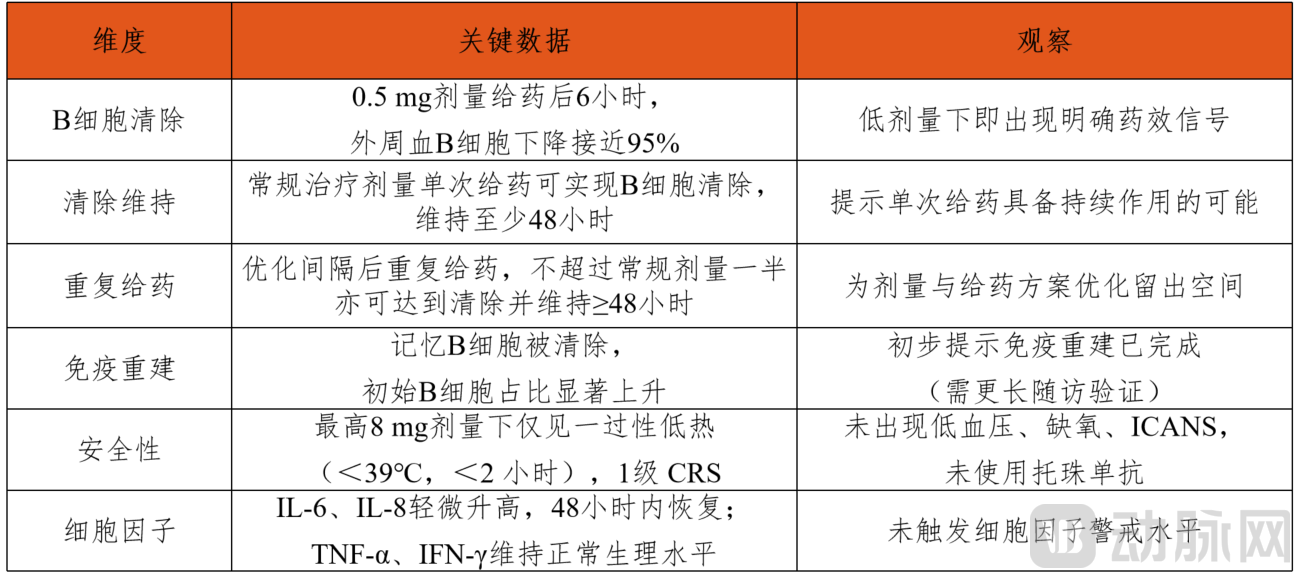
Arnovie101 Clinical Key Data
In terms of pharmacodynamics, at a dose of 0.5 mg, peripheral blood B cells in patients decreased by nearly 95% within 6 hours after administration. A single dose at the conventional therapeutic regimen achieves complete depletion of peripheral blood B cells, with the depleted state maintained for at least 48 hours. With optimized dosing intervals, repeated administration at no more than half the conventional dose also achieves complete B-cell depletion sustained for at least 48 hours.
Following treatment, the patient’s memory B cells were completely depleted, and the proportion of naïve B cells increased significantly, suggesting that immune reconstitution has been achieved. As of this interview, the patient has completed two months of follow-up without disease relapse, and peripheral blood B cells remain substantially suppressed, preliminarily indicating the potential for “single-dose administration with long-term remission.”
In terms of safety, the research team adopted an individualized dose-escalation design, with the maximum dose reaching 8 mg—twice the upper limit of doses reported in publicly available in vivo CAR-T studies. Throughout the entire treatment cycle, treatment-related adverse events were primarily manifested as transient fever, with body temperature below 39°C and duration less than 2 hours. Symptoms resolved following ibuprofen administration, and the event was recorded as Grade 1 CRS. No hypotension, hypoxia, or ICANS occurred during treatment, and no tocilizumab intervention was required.
Cytokine monitoring revealed only slight elevations in IL-6 and IL-8, which did not reach alert thresholds and returned to baseline within 48 hours; TNF-α and IFN-γ remained within normal physiological ranges throughout. In short, at the highest dose in the industry, Circunited BioPharma delivered the best-in-class safety data.
CMC Validation: Integrating Industrialization into Platform Design
CMC is not a remedial exam after clinical trials, but rather the watershed moment for in vivo CAR-T transitioning from the laboratory to becoming a drug.
“For many companies, it is common practice to enter clinical trials or even advance to later stages before going back to address CMC requirements,” said Yang Muyizi. “But we are different. Our CMC strategy was designed into the platform from day one. While many companies focus first on proving efficacy, we simultaneously demonstrate our ability to achieve stable manufacturing, scalability, and regulatory acceptance.”
It is precisely this logic that determines ArnoVecTM: From its inception, it was not a product of small-scale laboratory craftsmanship but an industrial-grade platform capable of direct integration with GMP-compliant manufacturing. By fully leveraging the mature mRNA production system, there is no need to develop extensive new reagents or processes; the reuse of established technologies directly reduces development costs and mitigates challenges associated with scale-up.
Following its establishment, the team concurrently advanced validation across multiple dimensions for in vivo CAR-T therapy—including delivery systems, drug design, in vitro and in vivo pharmacodynamics and pharmacokinetics, and safety—rather than proceeding sequentially.
In terms of process validation, ArnoVecTM's non-chemical site-specific conjugation method ensures the ordered arrangement of antibodies on the LNP surface and batch-to-batch consistency, which is a prerequisite for scale-up production. Currently, the team has completed the preparation of dozens of batches of samples, covering various types of antibodies, with scales ranging from laboratory level to over 200-fold scale-up production. Apart from equipment updates, no substantial adjustments were made to the process, achieving a 100% success rate in scale-up. The key quality parameters of LNPs and the surface antibody density are both effectively controlled.
“The scale of future batches for clinical trial applications is expected to be 1–2 grams, representing only a roughly five-fold increase over the current Investigator-Initiated Trial (IIT) batches, with virtually no scale-up challenges,” said Yang Muyizi. The target yield per batch can meet the needs of hundreds of patients, fully covering the requirements for Phase I and Phase II clinical trials. As clinical development progresses to later stages and production scales up further, there remains room for continued reduction in unit costs. This could facilitate inclusion in the national medical insurance scheme, thereby expanding the population benefiting from the treatment.
For Circunited BioPharma, CMC is not a remedial measure after clinical trials, but an inevitable outcome of platform design.
Product Pipeline: From Immunology to Anti-Aging
Powered by the Scalability of ArnoVecTM , Circunited BioPharma is expanding the application scope of in vivo CAR-T from a single indication to a broader range of immune diseases, and even into anti-aging.
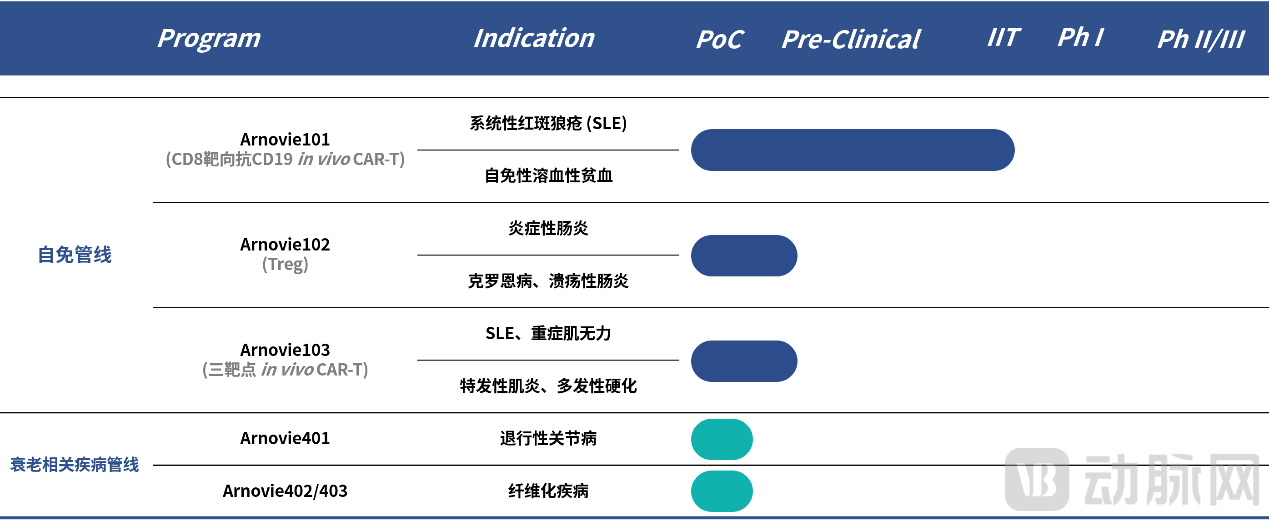
Overview of Circunited BioPharma’s R&D Pipeline
The Versatility of Platform Technology Determines the Efficiency of Pipeline Expansion: Switching indications is as simple as replacing the target-specific antibody, a modular capability that offers potential advantages in cost control and development speed. This is also one of the core dimensions considered when evaluating the value of platform-based biotech companies in the market.
Behind the MNC Spotlight: Circunited BioPharma’s “Delivery Capability” and Its Next Chapter
According to the company’s disclosure, Circunited BioPharma is currently engaged in in-depth discussions with multiple domestic and international pharmaceutical companies (including MNCs) regarding strategic business development (BD) collaborations on its product pipeline and technology platforms.
For a company that has been in existence for less than a year, receiving unsolicited outreach from multinational corporations (MNCs) without having obtained formal Investigational New Drug (IND) approval can objectively be regarded as an external signal of interest in the value of its technology platform and the robustness of its investigator-initiated trial (IIT) data. However, whether this interest ultimately translates into concrete collaboration will still depend on the subsequent interpretability of the data and the progress of negotiations.
Regarding the development timeline, the company has provided a relatively clear schedule for Arnovie101: CMC and GLP toxicology studies, as prerequisites for IND filing, are planned to commence in Q4 2026, with the aim of completing dual regulatory submissions in China and the United States approximately one year later.
Circunited BioPharma demonstrated team efficiency within six months, validated platform strength through IIT data, and avoided the industry’s most common commercialization pitfalls by employing a CMC-forward reverse R&D strategy.
It is not a company that merely spins platform narratives. Advancing into clinical trials within six months and being the first to deliver competitive safety and efficacy signals are, in themselves, the most direct benchmarks for assessing the true value of an early-stage biotech.
Of course, the sector remains in its early stages, with objective risks present. Clinical sample sizes are limited, long-term follow-up is ongoing, and the transition of CMC from investigator-initiated trials (IITs) to scaled-up registration-enabling clinical manufacturing, along with the execution of IND filings in both China and the United States, still needs to be realized.
But for a direction validated by an M&A deal worth nearly $20 billion involving multinational corporations (MNCs), what is truly scarce is no longer the concept, but companies capable of consistently delivering data, manufacturing processes, and business development (BD) milestones.
Circunited BioPharma is becoming such a company.