

Johnson & Johnson Plans to Spin Off or Sell Underperforming Orthopedics Unit DePuy Synthes Amid Strong Overall Revenue Growth

Johnson & Johnson
Medical Device R&D and Manufacturer

AstraZeneca
Pharmaceutical Technology Research and Development Provider

Smart Medical Device Network News Recently,MedicalMedical Device GiantJohnson & Johnson(JNJ.US) Announces Better-than-Expected Q3 Sales and Earnings Data: Revenue of $24 billion, up 6.7% year-over-year, surpassing analysts' average estimate of $23.7 billion; earnings per share were $2.80, higher than the expected $2.76. The company also raised its full-year revenue guidance, increasing the midpoint of its estimated 2025 sales by $300 million to $93.7 billion.
Another major decision was also announced, with plans toThe orthopedic business, which is expected to grow slowly within 18 to 24 months, will be spun off from the main body of the company (named DePuySynthes) and seek...RequestSolutions to create greater value, including sale or other forms of transactions.
Johnson & Johnson statedUndertaking orthopedic businessDePuySynthes mainly involves hip and knee replacements and spinal instruments.The reason for the removal isThe growth rate and profitability are no longer as strong as other sectors of the company, and independent operation may be more beneficial for development.DePuy Synthes' sales in 2024 are approximately $9.2 billion.Accounts for approximately10% share.
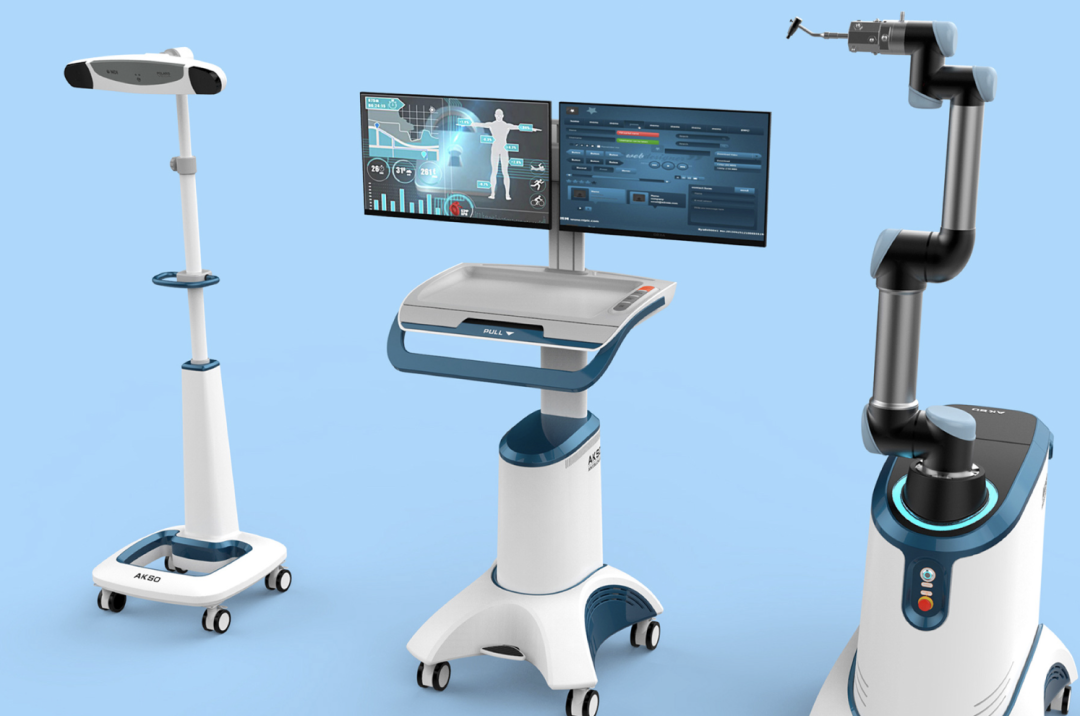
Johnson & JohnsonDePuySynthesTheThe Velys surgical robot platform is used for both unicompartmental knee arthroplasty and total knee arthroplasty (TKA).Already obtainedFDA Approved for Marketing,But sinceIn 2023, the growth of trauma medicine and spine departments slowed down, and the overall orthopedic business fell into a dilemma of weak performance growth.Johnson & Johnson believesDePuySynthes will remain the largest company in the global industry after the spin-off.
The split willIs aA highly time-consuming and labor-intensive plan, thus Johnson & Johnson appointed Namar, a senior executive in the medical technology industry.· Navana assumes the position of Head of Orthopedics immediately,DirectTo Johnson & JohnsonThe CEO report states that he is responsible for leading the spin-off process and is expected to continue overseeing the business after the spin-off. Namal Nawana, who has served as the CEO of both Elucent Medical and Smith & Nephew, brings extensive operational experience.
The healthcare industry is facing the shadow of President Trump's tariff threats. It is reported that Johnson & Johnson isOne of the 17 pharmaceutical companies that received a letter from Trump in July, in which they were asked to lower drug prices to the levels of other affluent nations.
President Trump warned in a letter that tariffs would be imposed on companies that fail to take action to reduce U.S. medical costs, marking this as a key policy focus during his second term. CurrentlyAmong the 17 pharmaceutical companies, Johnson & Johnson'sCompetitor Pfizer and AstraZeneca have agreed to significantly cut prices on some drugs, unify drug prices with other wealthy nations, and commit to reducing prices for low-income and disabled individuals covered by medical assistance programs. They will also offer direct discounts to consumers in exchange for a three-year tariff exemption. Therefore, Johnson & JohnsonCurrentlyFacing relatively high pressure.
Johnson & JohnsonThe spin-off of the orthopedics business is also forInnovative drugs and devices business strives for greater development space,The withdrawal of some legacy products with expiring patents and intense competition, shifting focus to...Higher Growth, Higher Profit Market Transformation。
Such asTREMFYA Subcutaneous Formulation Approved by FDA for Inflammatory Bowel Disease Indication, Becoming the First and Only Full IL-23 Subcutaneous Regimen; This Differentiated Advantage Expected to Help Product Gain Larger Market Share in Competitive IBD Market. TREMFYA Sales Reached $1.42 Billion This Quarter, a Year-over-Year Increase of 41.3%.
In addition, itsINLEXZO has also been approved for the treatment of high-risk non-muscle-invasive bladder cancer, a relatively niche but high-value indication. Johnson & Johnson has submitted a marketing application for icotrokinra for the treatment of psoriasis. Clinical data shows that this product outperformed deucravacitinib in head-to-head trials, and its approval would provide the company with an important adjunctive tool in the dermatology field.
Johnson & Johnson at the same timeStill worried aboutRespond to Trump"Local Pharmaceutical Production" Requirements, Expand U.S. Production Layout. In March this year, Johnson & Johnson announced a $55 billion investment in U.S. manufacturing, R&D, and technology over the next four years; subsequently, to meet Trump'sGovernance needs,In August, another commitment was made to invest $2 billion in the Holly Springs production base in North Carolina over the next decade.
With the advancement of technology, orthopedic surgeries are becoming increasingly precise and minimally invasive, while competition in the orthopedic field is intensifying, especially in robot-assisted surgical technologies. Large companies such as Johnson & JohnsonDePuySynthes, Stryker, and ZimmerBiomet have excelled in technological innovation and market expansion, driving the growth of the entire industry and maintaining their leading positions in the market. Together, the three companies account for more than half of the global market share.
But these companies also face the pursuit of Chinese competitors and cost pressures,China'sChinese manufacturers such as Sanyou Medical, Wego Orthopedics, Chunli Medical, Double Medical, Kailite Medical, Hope Medical, Akcome Medical, MicroPort Medical, Mindray Medical, and AVIC High-tech are also actively expanding into the orthopedic market, leveraging the complete capabilities of Made-in-China.、EfficientThe advantage of the entire industrial chain has brought down the costs of orthopedic surgical robots, orthopedic implants, and other consumables, continuously.In the international marketExpand Market Share。
In response to market changes, not only has Johnson & Johnson begun to spin off and sell its orthopedic business, but another orthopedic giantZimmer Biomet cited the impact of global supply chain risks last year, last year4Month split outOrthopedics IndustryZimvie, fully exited the spinal market; in December last year, withdrew certain product lines such as the CPT hip system from the market again.
AnotherOrthopedic GiantSmith & Nephew, in fact, also reorganized its sports medicine and orthopedics division in China at the end of last year, andAnd now they are also preparing toOrthopedic Business to Be Split and Sold.
Overall, orthopedic surgeries are relatively more statically handled compared to other departments, thus presenting a lower processing difficulty for surgical robots. Coupled with the centralized procurement policy in China, the market price of orthopedic consumables has generally decreased. The revenue scale and growth rate of the orthopedic sector have fallen short of the expectations of overseas giants and capital market investors.
FutureMore medical device giants may exit the orthopedics sector to focus on higher-profit new pipeline markets. Meanwhile, driven by the robotic automation of surgeries and the standardized bulk procurement of consumables, competition in the orthopedics field will become even more intense.

Editor's Express
1
Enterprise interviews, in-depth reports and promotion of products and technologies, industry report consulting, contributions;
2
Contact: 13714842321 (Same on WeChat)

Previous Review
1
2
3
4