The Era of 'Boundless' Robotic Surgery: Consensus MedTech Empowers IRCAD Taiwan to Pioneer a New Paradigm in Remote Robotic Surgical Training

Cornerstone Robotics
Innovative Surgical Robot Developer

As robot-assisted surgery accelerates its development, overcoming geographical and training-site limitations to provide more healthcare professionals with high-quality, standardized robotic surgery education has become a critical issue in promoting the wider adoption of robotic surgery.
On August 19, IRCAD Taiwan officially launched the “Democratizing Robotics: Impact & Validation in Education (DRIVE)” research program.As the largest and internationally renowned training center for remote minimally invasive surgery in Asia, IRCAD Taiwan has long been committed to the education and promotion of cutting-edge minimally invasive techniques.The DRIVE initiative aims to leverage technology to bridge geographical distances and connect expertise, explore remote robotic surgery training models, and establish objective, quantifiable training evaluation standards, thereby further promoting strategic collaboration among the medical, academic, and industrial sectors.The international thematic forum held concurrently focused on remote robotic surgery training, real-time connectivity, quantitative assessment, and data application, jointly exploring new-generation educational models for robotic surgery.
(Video has been obtainedAuthorized for use by IRCAD Taiwan)
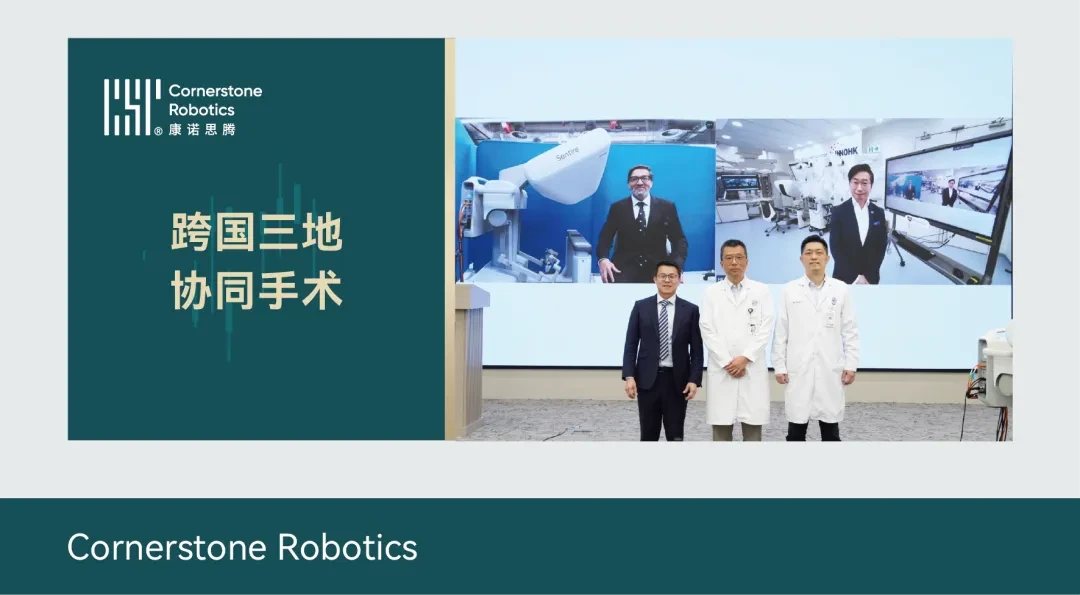
At the launch ceremony, Cornerstone Robotics’ Sentire® laparoscopic surgical robot, serving as the core technology platform, facilitated real-time connections between Changhua Show Chwan IRCAD Taiwan and Kaohsiung Show Chwan Memorial Hospital, enabling on-site and remote ribbon-cutting ceremonies as well as group photographs. This vividly demonstrated the application potential of robotic surgical systems in scenarios involving cross-regional real-time connectivity and remote training.

Traditional robotic surgery training often relies on specific training venues and on-site expert guidance, whereas the development of remote technology offers new possibilities for overcoming spatial limitations and expanding the reach of high-quality training resources.
In recent years, Cornerstone Robotics has continuously advanced the development of remote robotic surgery and remote training technologies, gradually building a remote training network covering different regions around its global physician training program. Leveraging the Sentire® laparoscopic surgical robot and highly stable remote connectivity, Cornerstone Robotics continues to expand the connection between expert guidance, training equipment, and practical scenarios, providing more flexible training support for physicians in different geographic locations.
Currently, Cornerstone Robotics has gradually established a remote surgical training network characterized by extensive coverage and strong interactivity. Through remote connectivity, young doctors can participate in live animal practical training that closely simulates real clinical scenarios at local remote consoles, without the need for long-distance travel. They can continuously practice under the real-time demonstration, guidance, and feedback of senior experts.This model helps provide young physicians with highly accessible, high-fidelity, and frequent training opportunities, enabling the cultivation of robotic surgery skills to gradually shift from sporadic intensive training to more continuous and flexible practical training.
This collaboration with IRCAD Taiwan has also infused new professional resources and practical scenarios into Cornerstone Robotics’ existing remote training network. As a key platform for international minimally invasive surgical education, IRCAD Taiwan boasts extensive professional training experience and international teaching resources.Through remote connectivity, the two parties have established a collaborative framework. This integration not only further embeds Cornerstone Robotics’ remote training system into international surgical education scenarios but also creates new opportunities for incorporating additional experts, courses, and practical resources into the remote training network.

While expanding the coverage of remote training, enhancing the scientific rigor and standardization of remote teaching is also a core focus of the collaborative exploration between both parties.
Traditional robotic surgery training has largely relied on instructors’ on-site observations, experiential judgments, and subjective evaluations. In contrast, the DRIVE research program integrates remote training with quantitative assessment and data analysis. By establishing a remote instruction group and a classroom-based instruction group, and standardizing core training content and objective assessment methods, the program investigates the feasibility and effectiveness of remote robotic surgery training. Furthermore, it records and analyzes training performance using objective evaluation criteria, gradually forming a closed loop of “standardized content training–objective metric assessment–data-driven feedback for improvement,” thereby providing references for curriculum optimization, competency assessment, and the development of future standards.This exploration will drive robotic surgery training to gradually move away from reliance on subjective experience, toward a new digital teaching model that is more reproducible, measurable, and data-driven.
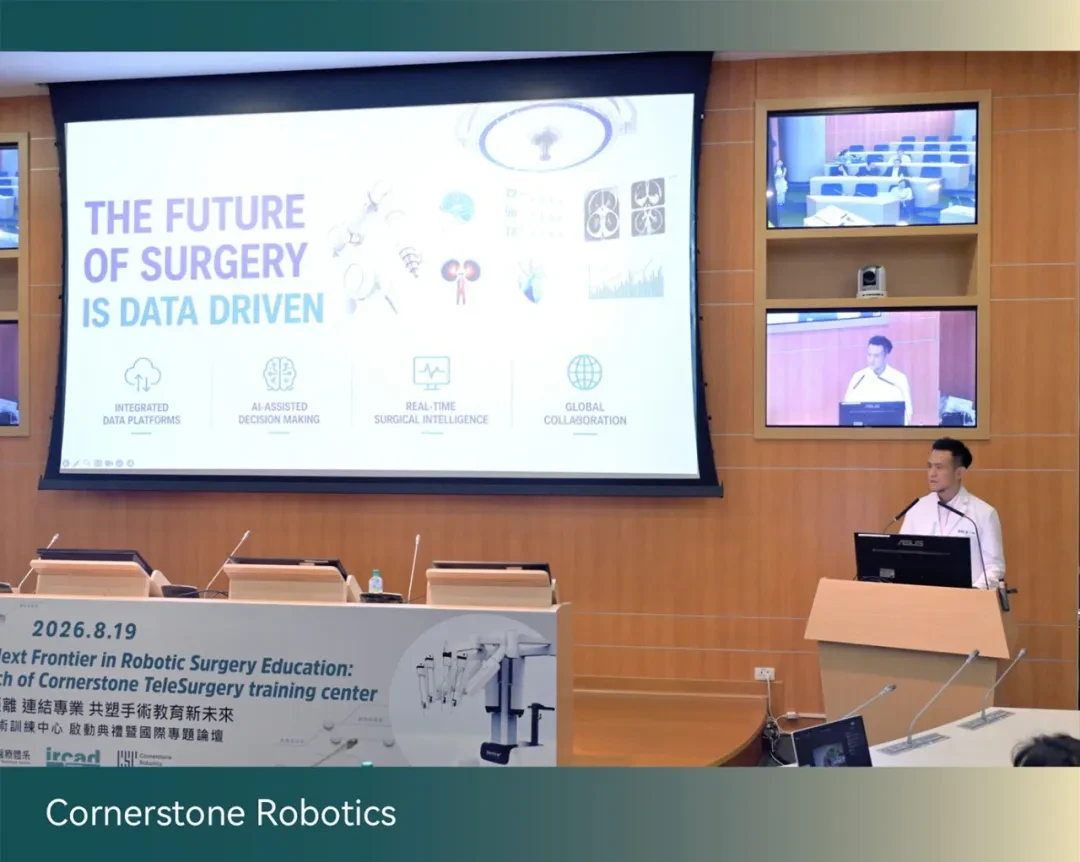
For Cornerstone Robotics, the value of the DRIVE research program lies not only in exploring a new model of remote training but also in providing new research perspectives and data references for the existing remote teaching system and curriculum development.The training data, evaluation methods, and frontline teaching feedback generated during the research process are expected to further help Cornerstone Robotics optimize the design of remote training courses, training content, and instructional collaboration methods, promoting the existing training network to move from “connecting more resources” towards “more scientifically evaluating and improving training effectiveness.”
Connectivity enables broader access to high-quality resources, while data allows for the continuous optimization of training capabilities. The integration of both holds promise for establishing a more comprehensive “resource connectivity–practical training–objective assessment–continuous optimization” system for cultivating robotic surgery talent.
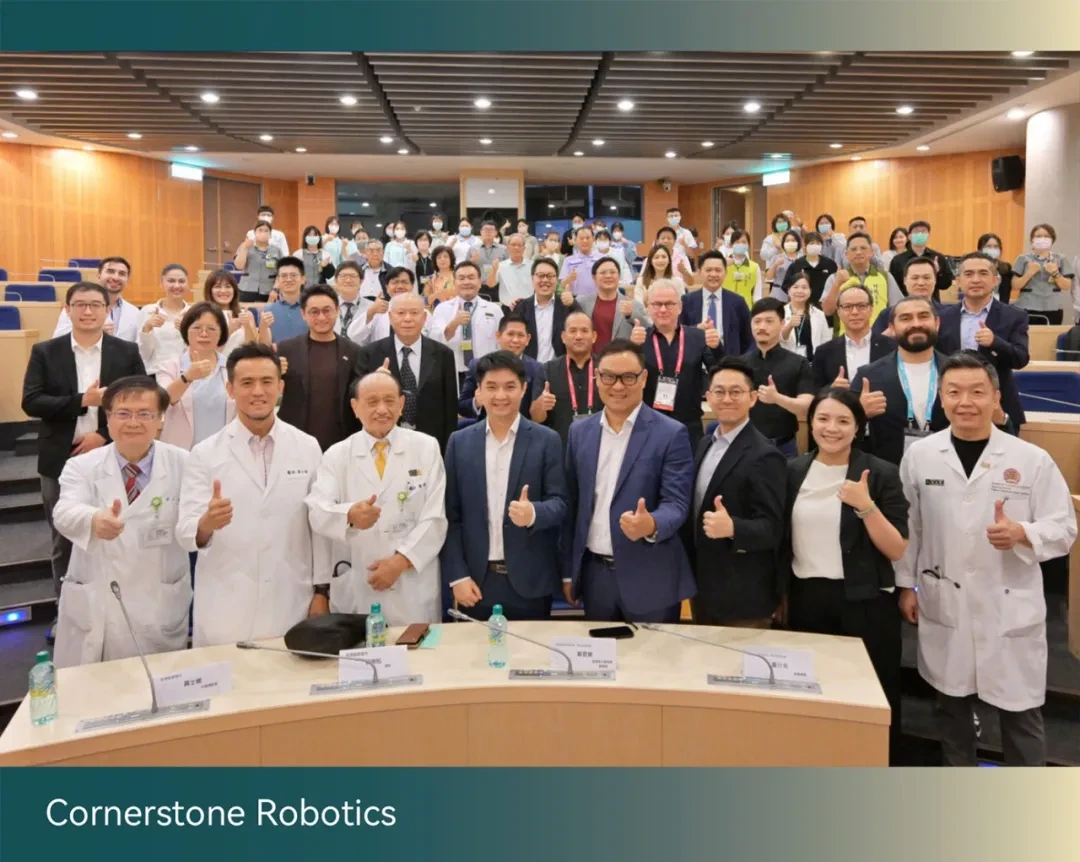
The broader clinical adoption of robotic surgery relies on the synergistic efforts of technological equipment, talent development, and deep collaboration among industry, academia, research, and healthcare institutions. The DRIVE study initiative leverages remote robotic surgery training as an entry point to integrate clinical, academic, and industrial resources, exploring a new model for robotic surgery education that is cross-regional, data-driven, and standardized. This also provides new practical insights and considerations for Cornerstone Robotics to further refine its global physician training system. Looking ahead, Cornerstone Robotics will continue to collaborate with global clinical, academic, and industry partners to explore the greater potential of remote connectivity, digitalization, and intelligent technologies in the field of robotic surgery, making high-quality training resources more inclusive and professional competencies more accessible, thereby jointly advancing toward the future of intelligent surgery.