

Behind Global Executives’ Visits to China: How Novo Nordisk Integrates Early-Stage R&D in China into Its Global Innovation Landscape
Novo Nordisk
Insulin Developer and Manufacturer
In mid-June, Lars Rebien Sørensen, Chairman of the Novo Nordisk Foundation and Chairman of the Board of Directors, and Maziar Mike Doustdar, Global President and Chief Executive Officer, along with other members of the global senior management team, collectively visited China.
In Maziar Mike Doustdar’s view, the signal from this trip could not be clearer. In an exclusive interview with Xinhua News Agency, he stated, “No one can ignore China and the innovation taking place here. We aim to bring the valuable experience accumulated by Novo Nordisk in the research and development of innovative drugs in China to other markets and integrate it into the group’s global strategy.”
This “integration” is far from being a mere slogan. China is becoming one of the most dynamic “accelerators” of global innovation, combining robust scientific research capabilities with advantages in speed and cost efficiency. The rapid rise of Chinese innovative assets, along with their structural efficiency advantages in the early stages of R&D, is prompting multinational pharmaceutical companies to reassess China’s position within the global R&D landscape. Judging by Novo Nordisk’s recent moves, this MNC has chosen to strengthen external collaborations in the stage spanning early research to preclinical candidate compound development, incorporating Chinese innovations into its global R&D pipeline—to jointly pursue initiatives that are “faster and more substantial.”
Why is Novo Nordisk Doubling Down on Early-Stage R&D in China?
According to data from the National Medical Products Administration (NMPA), the total value of outbound licensing deals for innovative drugs in China reached approximately $110 billion from January to June 2026, accounting for 80% of the full-year total in 2025 and setting a new historical high. Among the top ten global pharmaceutical transactions, Chinese pharmaceutical companies occupied eight spots.
Meanwhile, multinational pharmaceutical companies are positioning themselves in China’s innovative assets at an unprecedented pace, with their focus expanding from clinical-stage assets to early-stage innovation collaborations.
A Common Trait Behind Mega-Deals by MNCs Such as Eli Lilly, AstraZeneca, Pfizer, and BMS: A Heavy Concentration of Transactions in Early-Stage Assets, from Preclinical to Phase I Clinical Trials. AstraZeneca’s $18.5 billion deal with CSPC Pharmaceutical Group includes eight innovative long-acting peptide drug projects, most of which are in the preclinical stage; BMS’s $15.2 billion transaction with Hengrui Pharma covers 13 early-stage innovative projects; Pfizer’s $10.5 billion deal with Innovent Biologics encompasses 12 innovative oncology drugs—these bundled transactions increasingly feature assets at earlier development stages.
China’s unique advantages in the early stages of R&D are precisely the fundamental reason attracting multinational corporations (MNCs) to focus on China’s early-stage pipeline.
According to a report by the McKinsey Global Institute (MGI), in the biopharmaceutical sector, China’s discovery phase takes approximately 36 months, compared to 54 months globally; the development phase takes about 87 months, versus 100 months globally. This structural efficiency advantage has led multinational pharmaceutical companies to move beyond merely “gold-rushing” for individual mature assets, and instead strategically invest in the foundational capabilities of Chinese innovative drug developers to consistently produce high-quality molecules.
The latest "Annual Report on the Progress of Clinical Trials for New Drug Registration in China (2025)," released by the National Medical Products Administration, shows that the number of new drugs under development in China accounts for approximately 30% of the global total, ranking second worldwide; the innovation efficiency of China's pharmaceutical industry is among the highest globally. At the clinical trial level, the total number of drug clinical trials conducted domestically exceeded 5,000 for the first time in 2025, with 2,997 being new drug clinical trials, accounting for 57.5%. The R&D activity in indigenous original innovation continues to rise.
As the global landscape of pharmaceutical innovation is being redrawn, China has transformed from a significant “market” into a key source of innovation.
In fact, this is a natural outcome of market dynamics. As the patent protection periods for multiple blockbuster drugs worldwide come to an end, multinational pharmaceutical companies face revenue gaps and need to replenish their pipelines. Meanwhile, China has ascended to the global first tier in fields such as ADCs, bispecific antibodies, and GLP-1 therapies. The high alignment between supply and demand has naturally led to a surge in transactions.
“It is precisely for these reasons that China’s strategic importance within Novo Nordisk’s global R&D system is increasingly rising,” said Dr. Cecilie Heerdegen Jepsen, Vice President of External Innovation and Assessment in Global R&D at Novo Nordisk. “We look forward to Chinese innovations helping our teams efficiently advance global R&D processes and play an even more critical role.”
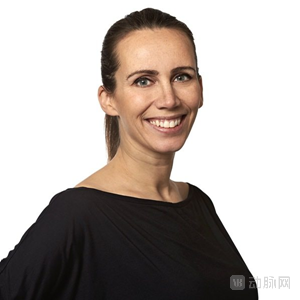
Dr. Cecilie Heerdegen Jepsen, Vice President of External Innovation and Assessment, Global R&D, Novo Nordisk
From Discovery to Pipeline: Novo Nordisk’s End-to-End Collaboration Logic
Multinational pharmaceutical companies have a long history of conducting clinical development in China, but large-scale investment in the preclinical research phase is a trend that has only emerged in recent years.
A McKinsey research report highlights that China’s most significant advantage lies in its R&D speed. Driven by parallelized workflows, a dense CRO ecosystem, and efficient execution, China’s timeline from early discovery to filing an Investigational New Drug (IND) application is 50% to 70% faster than in other parts of the world. This unique advantage in the early stages of R&D is being reassessed globally.
Novo Nordisk’s message is clear: it is increasing its investment in the stage spanning from early-stage research to preclinical candidate (PCC) co-development, seeking out Chinese early-stage innovative assets through external collaborations and integrating them into its global R&D pipeline. The scope of collaboration covers a wide range of opportunities, from early target discovery to PCC co-development, including partnerships on technology platforms and the in-licensing of novel target assets.
A key element underpinning this strategy is the systematic capabilities accumulated over nearly 30 years by Novo Nordisk’s China R&D Center.
In 1997, Novo Nordisk established its R&D center in Beijing, the first such facility set up by a multinational pharmaceutical company in China. Over the past nearly 30 years, the center has developed comprehensive early-stage R&D capabilities, covering the entire chain from target discovery and validation to preclinical studies.
Dr. Han Dan, President of Novo Nordisk’s China R&D Center, stated that Novo Nordisk will fully mobilize its global external innovation teams and the team at its China R&D Center to establish a synergistic and efficient mechanism. This will accelerate the implementation of collaborations, enhance project advancement efficiency, and expedite the translation of innovations into actionable R&D projects.

Dr. Han Dan, President of Novo Nordisk China R&D Center
The core strategy involves external innovation teams identifying cutting-edge scientific breakthroughs and innovative assets within China, while the R&D center contributes nearly three decades of accumulated early-stage research and development capabilities—spanning target discovery, validation, and preclinical studies. Together, they rapidly translate external innovations into actionable research projects and integrate them into Novo Nordisk’s global R&D pipeline.
Dr. Han Dan summarized it as: “Not gradual exploration, but rapid value realization.” The core of this mechanism lies in identifying valuable innovations, accelerating their development, and integrating them into the global pipeline, with each step pursuing efficiency rather than remaining at the stage of academic exchange or early-stage exploration.
This may be regarded as the underlying logic of Novo Nordisk’s external collaborations in early-stage research.
Launched in 2019, the INNOVO® Open Innovation Platform epitomizes this capability. To date, the INNOVO® platform has facilitated approximately 50 collaborative projects, focusing on key therapeutic areas including diabetes, obesity, cardiovascular diseases, and metabolic‑associated steatohepatitis (MASH), alongside AI‑aided drug R&D and cutting‑edge technology exploration. More importantly, two projects have successfully advanced into Novo Nordisk’s global R&D pipeline.
In other words, this is a continuously expanding collaborative network. This means that innovation no longer occurs in isolation but is amplified and accelerated within the ecosystem.
From Target to PCC Development: What Kind of Innovative Partners Is Novo Nordisk Seeking?
With a clear strategic direction in place, a more specific question arises: What types of projects is Novo Nordisk specifically seeking?
Novo Nordisk’s External Innovation China team focuses on early-stage innovative collaborations, prioritizing breakthrough projects in obesity, diabetes and related conditions (cardiovascular diseases, chronic kidney disease, and metabolic dysfunction-associated steatohepatitis), as well as rare diseases. The team is also actively building capabilities in small molecules, peptides/proteins/antibodies, siRNA therapies, gene therapies, and novel drug discovery and delivery platforms.
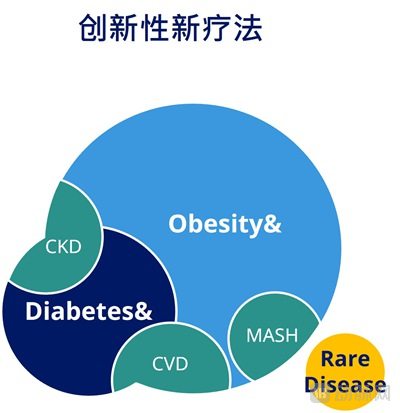
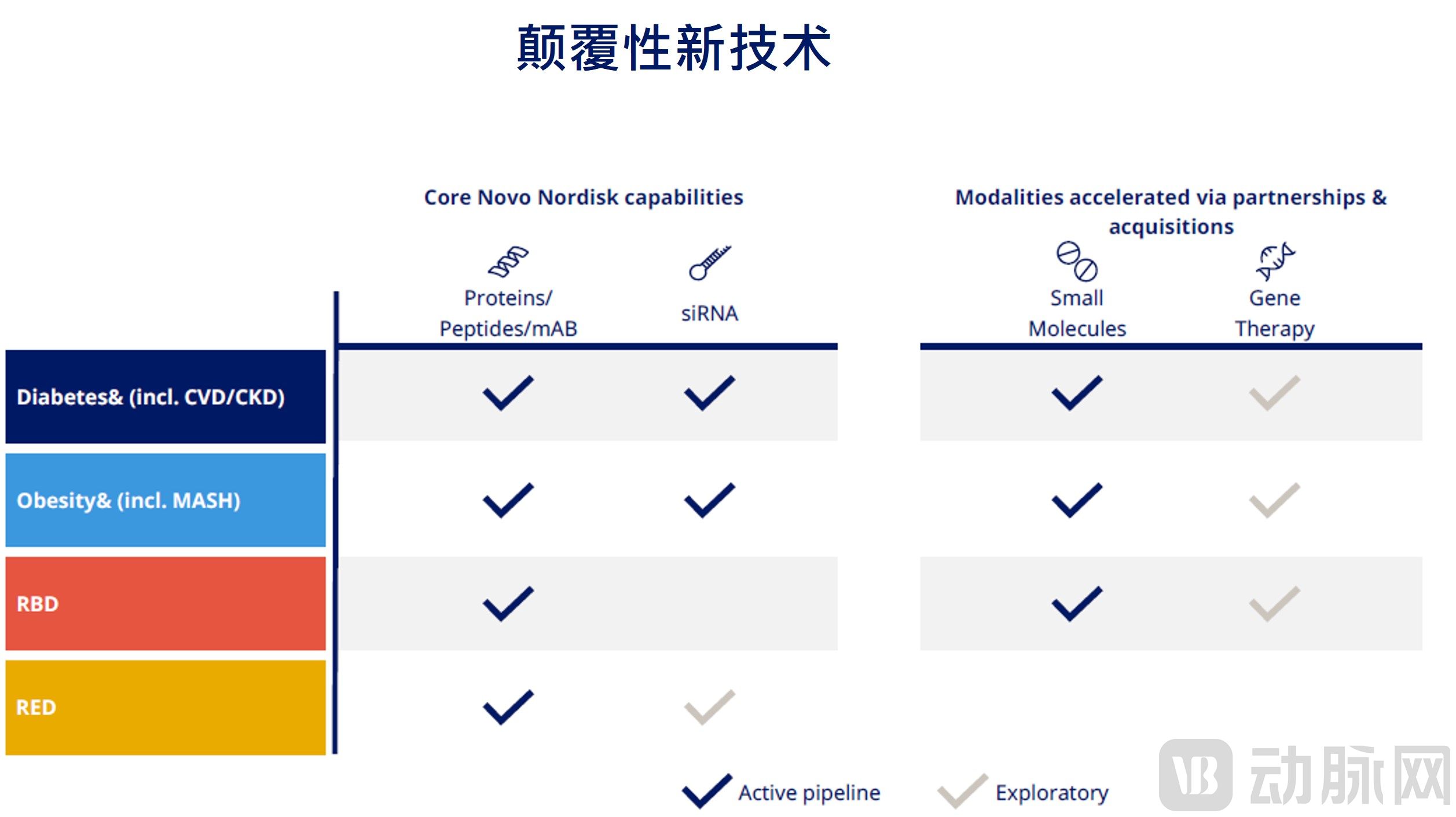
The logic behind this strategy is to start with disease biology and innovative technologies, rather than beginning with the commercial opportunity assessment of clinical-stage assets. Novo Nordisk aims to collaborate with partners in the early stages—from target discovery and validation to preclinical candidate (PCC) development—to jointly cultivate and build its future pipeline, thereby driving the emergence of transformative innovative therapies.
Dr. Zhou Jian, Head of Global R&D External Innovation Collaboration at Novo Nordisk China, has stated that Novo Nordisk has currently established connections with a diverse range of partners, including universities, hospitals, biotechnology and pharmaceutical companies, as well as incubators, venture capital firms, and startups.
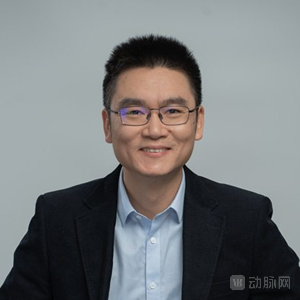
Dr. Zhou Jian, Head of External Innovation Collaboration for Novo Nordisk Global R&D in China
This means that Novo Nordisk will seek out technological platforms and R&D capabilities in China that can continuously generate innovative molecules. Building on the traditional business development (BD) approach of “acting only after clinical data are available,” Novo Nordisk aims to further expand its strategy by establishing connections at the source of innovation, leveraging the capabilities of its global R&D system to catalyze and amplify local Chinese innovation.
Co-creating and Sharing, Growing Together
Returning to the executive visit to China mentioned at the beginning, this trip has elevated China to a strategic priority within Novo Nordisk’s global framework.
China is evolving from being a market within Novo Nordisk’s global pipeline to becoming an integral part of its global R&D operations. Maziar Mike Doustdar’s remarks perhaps offer the most precise summary of this shift: “No one can ignore China and the innovation taking place here.”
For Novo Nordisk, this signifies that its partnerships with Chinese collaborators are evolving from simple “in-licensing” to “co-creation and shared value.” This co-creation and sharing is not a one-way street. Novo Nordisk brings not only capital but also years of accumulated global R&D expertise, a mature clinical development system, and a worldwide regulatory and commercialization network. Meanwhile, its Chinese partners contribute cutting-edge academic insights, efficient R&D execution capabilities, and a deep understanding of the local disease spectrum.
Each party brings unique strengths and mutual needs, sparking greater innovation by supporting startups and the commercialization of scientific achievements, truly realizing “not just collaboration, but growing together.”
After 32 years of deep commitment to China, Novo Nordisk is entering a new phase: evolving from serving China to connecting with the world, and from introducing innovations to co-creating them.
This may well be the most authentic posture of a company that has weathered multiple economic cycles.