

Making Metabolism As Real-Time Visible As Heart Rate: Oxford Team Secures Foothold In Next-Generation Health Data Gateway

OxSyns
Cell-Free Synthesis Technology Developer
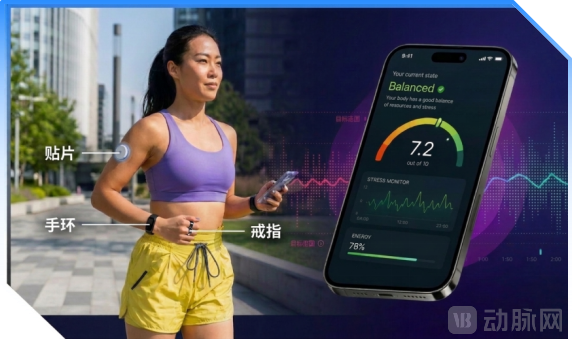
From smartwatches to smart rings, wearables come in increasingly diverse forms. The measurable metrics have expanded from step count and heart rate to multi-dimensional physiological signals including blood oxygen, sleep activity, exercise and skin temperature. People can now continuously track their physical conditions via a smartwatch or smart ring.
However, "recording more" does not equate to "understanding more."
This July, Google unveiled SensorFM, a foundational model for wearable health applications. Pre-trained on wearable sensor data equivalent to over 10,000 billion minutes collected from more than 5 million users, the model covers multi-dimensional signals including heart rate, activity, skin temperature, blood oxygen and sleep. It aims to identify patterns governing shifts in human physical conditions based on long-term continuous wearable readings. Data gathered via wearable devices is emerging as a critical foundation enabling AI to understand the human body.
It is worth noting, however, that SensorFM mainly learns physiological and behavioral signals such as heart rate, activity and sleep. Such data can describe "what physical state the body is in", yet barely further explain "how the body functions internally".
What truly sustains human bodily function is the metabolic network underlying physical signals. Glucose utilization, fat breakdown, along with dynamic fluctuations of metabolites such as lactate and ketone bodies, continuously take place inside the human body yet can hardly be directly sensed.
In 2025, a team from Fudan University leveraged plasma metabolomic data of 274,000 adults from UK Biobank to systematically map trajectories of metabolite alterations up to 15 years prior to disease onset. The study revealed that over 50% of metabolic markers become abnormal 10 years or even earlier before formal disease diagnosis.[1]
The core challenge lies in the long-standing lack of means for continuous, dynamic acquisition of metabolic data. While conventional blood testing yields abundant metabolic indicators, it functions merely as a single "snapshot" and fails to meet demands for routine continuous monitoring. Even the relatively mature continuous glucose monitoring (CGM) only covers one dimension within the extensive metabolic network.
Therefore, multi-parameter, continuous, and non-invasive metabolic monitoring is emerging as a new frontier for exploration in both industry and academia.
The industry has begun to make its move. In May, Abbott's Libre Duo received CE marking, enabling continuous monitoring of both glucose and ketone bodies within a single sensor, making it the world's first CE-certified dual-analyte continuous monitoring product for glucose and ketones.
The academic community is also advancing further exploration. On July 23, a team from the University of California, San Diego published research in "Nature Communications", showcasing a smart ring capable of continuously detecting multiple molecules in sweat, including glucose, ketone bodies, lactate, uric acid, vitamin C, and alcohol. Wearable devices are thus advancing from vital signs monitoring to biochemical information reading.
As metabolite detection evolves from "being detectable" to "enabling continuous monitoring of more indicators," competition will further penetrate down to the foundational layer of sensors. Only those who can achieve long-term, stable multi-analyte monitoring and transform continuously generated metabolic signals into high-quality data suitable for AI analysis will be positioned to control the gateway to next-generation health data.
This is precisely OxSyns the direction to cut in.
The challenge of multi-parameter monitoring lies not merely in adding a few more test items, but in whether the underlying sensing system can support the simultaneous detection of different metabolites.
Most existing mature solutions adopt second-generation enzymatic electrochemical sensing technology: enzymes are responsible for recognizing target molecules, but direct electron transfer between the enzyme and the electrode is not possible, requiring chemical mediators to act as "messengers" for relay — known as the "wired enzyme" approach. This architecture has been thoroughly validated in single-analyte scenarios, and the widespread adoption of continuous glucose monitoring (CGM) is built upon this foundation.
However, as the scope of detection expands from a single indicator to multiple indicators, new challenges arise. For each additional metabolite monitored, it is necessary to re-screen enzyme and mediator combinations compatible with that specific indicator, redesign the chemical modification strategy for the electrode surface, and individually address signal crosstalk issues among different mediators. The entire process is tantamount to developing a complete sensor system from scratch for each new biomarker, a challenge no less formidable than the development of novel targeted therapeutics.
Attempting to simultaneously run multiple metrics on a single sensor would cause engineering difficulty and costs to rise exponentially. Meanwhile, there is a natural upper limit to the number of indicators that this route can support — this is not a matter of how much is invested, but rather the inherent ceiling of the technical architecture itself.
What breaks through this ceiling is the third-generation enzyme-electrode technology — Direct Electron Transfer (DET). Enzymes directly exchange electrons with the electrode, eliminating the need for any mediators. Signals from different metabolites travel through distinct potential channels without mutual interference, effectively establishing an independent signal highway for each metabolite.
Globally, the most profound expertise in this area resides within the bioelectrochemical systems at the University of Oxford. In the 20th century, scholars such as Allen Hill pioneered the early development of enzyme electrochemistry in the field of biosensing at Oxford. Over the past decade, Academician Fraser Armstrong has continued to conduct in-depth fundamental research on direct electron transfer of enzymes, providing crucial theoretical support for third-generation enzymatic electrochemical sensing technologies.
The founding team of OxSyns hails from the laboratory of Academician Armstrong. After securing first place in the University of Oxford's entrepreneurship competition in 2022, the team returned to China to launch their venture. Globally, teams possessing the triple capabilities of enzyme engineering, nanomaterials, and electrochemical interfaces are few and far between; this is precisely the foundation that gives OxSyns the confidence to venture into this field.
For practical implementation, OxSyns' core technology is "enzyme-electrode coupling". Nanomaterials are employed for enzyme immobilization to construct high-speed electron transport channels between the enzyme's active center and the electrode. This converts recognition signals of various metabolites into electrical signals, enabling simultaneous continuous monitoring of multiple metabolic indicators including blood glucose, blood ketones, lactate and NAD⁺ using a single sensor.
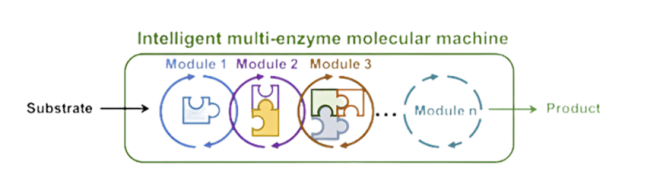
More critically, this technology enables platform-based capabilities. Although different metabolic molecules require distinct enzymes for recognition, the "enzyme-electrode coupling" system converts them into standardized electrical signals as the final output. This means that expanding the monitoring indicators no longer requires "redesigning an entire system," but merely replacing the front-end "molecular recognition module." — Just like swapping lenses on the same camera, replacing the front-end enzyme enables a switch from glucose monitoring to blood ketones, lactate, or NAD⁺, truly achieving platform-based expansion for continuous multi-analyte monitoring.
This innovation has also led to a leap in commercial efficiency. Under the traditional model, adding a new metabolic indicator typically requires a research and development cycle spanning several years, whereas OxSyns compresses this process to just a few months. For indicators already included in its library, the timeline is even shorter: wearable device manufacturers no longer need to develop sensors from scratch. Instead, they can select monitoring indicators as needed, with OxSyns providing standardized sensing modules and completing enzyme combination configuration and calibration within a matter of weeks.
Within OxSyns' portfolio, multi-parameter metabolic monitoring serves as the "data probe" for decoding the biochemical world of the human body.
Detecting metabolic changes with devices is merely the first step in data acquisition; readings from a single time point have limited value. What truly matters is connecting these discrete data points into a continuous, dynamic metabolic trajectory, and further understanding the temporal interplay among different biochemical indicators.
The leap from "reading measurements" to "understanding the person" hinges precisely on this layer of AI interpretation. For this interpretation to be sufficiently accurate, the input metabolic data must offer adequate dimensionality and continuity. Snapshot data of a single biomarker cannot support full inference of the body's intricate metabolic network. Only the synchronized interplay of multiple markers including glucose, ketones and lactate along the timeline can reconstruct the authentic internal operational landscape of the human body.
This is also why high-quality, continuous metabolic data is becoming a critical foundation for AI-driven exploration in life sciences.
Currently, AI companies worldwide are racing to build "virtual cells" and "biological world models". They aim to reconstruct digital twins capable of simulating authentic physiological processes within the digital realm, to predict how diet, exercise and pharmaceuticals affect the human body. Nevertheless, all these models face a shared bottleneck: the lack of authentic, dynamic and continuous human biochemical data to serve as the foundation for model training and validation.
Static, single-point health checkup data cannot reconstruct the temporal dimension of metabolic networks. OxSyns is currently one of the few companies worldwide capable of providing high-quality biochemical data infrastructure at scale.
OxSyns' multi-metabolite monitoring platform can theoretically measure more than ten metabolic indicators simultaneously and continuously, enabling multidimensional metabolic data to truly flow. With this as the fulcrum, the data flywheel began to spin rapidly:
At the acquisition end, OxSyns output standardized underlying sensing modules to wearable device manufacturers, also in promote proprietary complete device terminals, bringing multidimensional metabolic data, originally confined to laboratories or professional medical devices, into everyday scenarios;
On the application side, these continuous metabolic data can serve wearable device companies, research institutions, AI-driven pharmaceutical companies, and AI for Science platforms, providing new data dimensions for observing life processes;
On the feedback side, AI's analysis of metabolic data can further help optimize the combination of sensing indicators and sensor design, promoting the accumulation of more data.
This established data flywheel constitutes the core source of OxSyns' competitive moat: Sensors deployed to market → continuous inflow of multi-dimensional metabolic data → AI analysis of metabolic mechanisms underlying the data → algorithm feedback to optimize sensors → enhanced predictive capability driving wider market rollout of additional sensors.
As the cycle radius continues to expand, OxSyns' foundational technological barriers and upper-layer data assets are simultaneously strengthening. An infrastructure centered on the generation, accumulation, and application of metabolic data is taking shape.
Supporting this massive data ecosystem is a tiered commercialization pathway.
In its early stage of development, OxSyns delivers underlying capabilities centered on standardized sensing modules for overseas wearable manufacturers, research institutions and AI-for-Science automated experimental platforms to monetize its technology. After its end products gradually obtain relevant regulatory certifications, the company will further launch complete device sales.
Its longer-term value stems from the continuous accumulation of metabolic data. Once sensing devices achieve large-scale deployment, the established database of continuous metabolic data can further support scenarios including drug R&D, insurance, personalized health management and AI model training, unlocking the value of data assets.
At a time when continuous biochemical data remains globally scarce, OxSyns chooses to start from fundamental sensing technology, building foundational capabilities to capture and interpret human metabolic information and driving the establishment of its first critical foothold in the industry.
Over the past decade, wearable devices have enabled humans to visualize their heartbeats and sleep patterns in real time for the first time; in the next decade, OxSyns aims to make hidden biochemical metabolism continuously perceptible, just like vital signs.
From observing physical metrics to deciphering biochemical signals; from focusing on outcomes after disease onset to exploring bodily changes at much earlier stages. Metabolic sensing technology is unlocking the body's internal "information black box", establishing an underlying data pipeline connecting to the human internal biochemical realm for the upcoming era of Health AI.
References:
[1] "Yu Jintai's Team Creates the First Metabolomic Atlas of Human Health and Disease," Fudan University Official Website