

Beyond $100 Billion in Overseas Sales of Innovative Drugs: A Conversation with Wu Ming of TYK Medicines on a Chinese BD Leader’s Decade-Long Global Journey

TYK medicines
Innovative Drug Developer for Tumors and Immuno-Oncology
To support the global expansion of Chinese pharmaceutical and medical device enterprises, VCBeat, as the permanent secretariat of the Global Medical Product Collaboration (GMPC) platform, has specially launched the “Going Global ING” series. In this fifth installment, we interview Wu Ming from TYK Medicines, seeking to reconstruct the authentic landscape of Chinese innovative drugs going global from the perspective of a frontline Business Development (BD) leader.
$135.6 billion.
This marks a new high for the total value of Chinese innovative drug license-out deals in 2025.
If we take a longer-term view, we find that ten years ago, the key themes for Chinese pharmaceutical companies going global were license-in, cross-border M&A, and technology introduction; today, an increasing number of multinational pharmaceutical companies are proactively coming to China to seek the next blockbuster product, new technology platforms, and innovative assets capable of filling patent cliffs.
The many players at the table are assuming new identities.
Explaining such changes through a set of transaction data may seem dry, but clear footnotes can be found in an individual’s career trajectory—
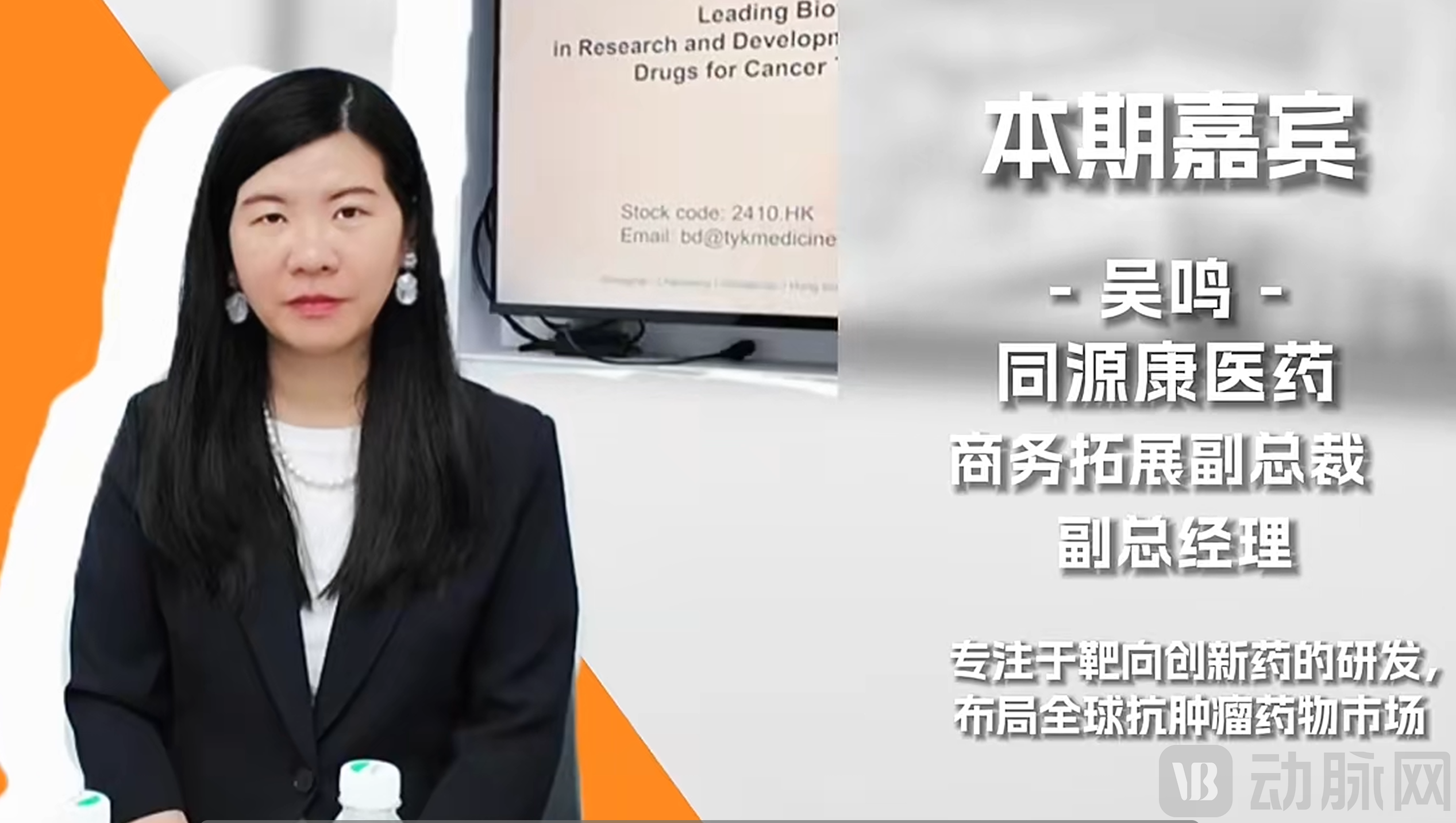
Wu Ming, Vice President and Head of Business Development at TYK Medicines. She holds a Master’s degree in Biochemistry, a Master’s degree in Law, and a Doctorate in Management. Her professional experience spans R&D, intellectual property management, cross-border M&A, and business development. A decade ago, she sat on the buy-side of the negotiation table, representing domestic pharmaceutical companies in their search for overseas technologies; ten years later, she stands on the other side, leveraging China’s innovative drug assets to engage global pharmaceutical companies in License-out deals and international collaborations.
An individual’s career path and a company’s development trajectory also reflect the decade-long evolution of an industry’s global expansion.
1Timing
In Wu Ming’s view, the most critical yet uncontrollable factor in closing a BD deal is timing.
This judgment stems from her distinct experiences on both the buyer and seller sides.
Around 2016, Wu Ming joined a major domestic pharmaceutical company, where she was involved in cross-border mergers and acquisitions and License-in transactions. This period marked a phase of rapid transformation for China’s innovative drug industry. With the continuous advancement of the generic drug consistency evaluation and reforms to the regulatory review and approval system, large pharmaceutical companies actively pursued internationalization strategies, supplementing their own innovation pipelines by introducing overseas technologies.
At that time, Chinese companies primarily played the role of buyers.
Wu Ming’s team advances cross-border projects annually, with partners spanning markets in Germany, Australia, Canada, and beyond. From technical due diligence to intellectual property review, and from transaction structure design to post-investment integration, she has comprehensively navigated the entire lifecycle of numerous international deals.
Looking back, that period also marked a phase in which China’s innovative drug industry proactively learned from the global innovation ecosystem. International interest in Chinese innovative assets was limited, and Chinese companies relied more on capital to facilitate technology in-licensing rather than exporting innovation. The focus of business development (BD) discussions was often on who could acquire better products, rather than on who could command higher value for their offerings.
Ten Years Later, the Perspective Has Shifted.
In 2024, TYK Medicines listed on the Hong Kong Stock Exchange. As a biotech company on the cusp of commercialization, it began to actively pursue global collaborations centered around its core innovative assets. Wu Ming’s role also shifted from being a buyer’s representative in the past to becoming the head of the sell-side at the negotiating table.
This shift in identity also precisely reflects the evolving logic behind the global expansion of China’s innovative drugs.
Data shows that in 2025, Chinese innovative drugs completed 157 overseas licensing deals, with the total transaction amount reaching $135.655 billion, continuing to break historical records. Among the top 20 global multinational corporations (MNCs), more than half have entered into in-depth discussions with TYK Medicines following the signing of non-disclosure agreements.
However, beneath the sustained surge in transaction activity, Wu Ming saw a different reality: a large number of projects ultimately failed to reach the signing stage. The root cause, in most cases, was the same issue: poor timing.
Wu Ming first emphasized the importance of “Timing” in BD (Business Development) transactions. For the same product, launching it a year earlier might lead the counterparty to deem the data insufficient; launching it a year later could allow competitors to seize the market position first. She recounted a specific deal: the initial call was made at 4 p.m. on a Friday, and the counterparty provided feedback that very evening, finalizing the core framework. By that Sunday, the chairmen/CEOs and management teams from both sides had already met face-to-face for discussions. “Making the call a day earlier wouldn’t have worked, and delaying it by a day might not have yielded such favorable results,” she said.
Why Did the Deal Close at That Specific Moment? From the dealmaker’s perspective, the rapid progression was merely the outcome. What truly facilitated the transaction was the convergence of multiple variables at the same point in time. The buyer was in a window period for pipeline supplementation, the seller’s core product had just reached the value-validation milestone with its clinical data, and the long-established communication foundation between both parties further reduced decision-making costs.
Cases of suspended transactions are even more illustrative. Wu Ming summarizes that common reasons for the termination of BD (Business Development) deals include changes in the buyer’s internal strategy, budget adjustments, and shifts in the competitive landscape. In other words, product maturity, the buyer’s strategic cycle, the industry’s competitive structure, and the capital market environment collectively create a “window of opportunity.” When this window is open, an asset can rapidly gain global attention; however, when it closes, even if the product itself remains unchanged, one may have to wait for the next round of opportunities.
She drew an analogy using Leo Tolstoy’s quote: “All happy families are alike; each unhappy family is unhappy in its own way.” The same holds true for BD transactions: only when every step proceeds without issue can the deal reach the handshake and contract signing stage; any deviation at any intermediate step may lead to a suspension or termination.
Therefore, for sellers, the ability to seize windows of opportunity and proactively structure the pace of global collaborations is becoming a core competency; for buyers, the ability to complete strategic positioning before intensifying competition for global innovative assets equally tests their strategic judgment.
2Partner
BD Deals Are a “People” Business. If timing determines whether a deal has the opportunity to occur, then partners determine whether it can truly reach completion.
Wu Ming’s resume boasts an impressive array of credentials: a Master’s in Biochemistry, a Master’s in Law, and a Doctorate in Management; fluency in English, German, and French; and professional experience spanning R&D, intellectual property management, and currently, business development (BD). This cross-disciplinary trajectory was not the result of deliberate planning. During her graduate studies in the United States, she participated in an entrepreneurship management training program for scientists offered by the business school, where she transformed a university-held short peptide patent into a business plan and pitched it to investors at an incubator.
That experience made her realize that to truly bring a drug to market, it takes not only science but also protection through intellectual property rights and commercialization to generate tangible social impact.
This also pulled her off the pure scientific research track. Since then, her career path has remained within the pharmaceutical industry: she started as a buyer at a large pharmaceutical company and now works as a seller in a biotech firm. She studied law because “the core of transactions is IP,” and pursued management studies because the chairman of her first employer, a pharmaceutical company, encouraged his employees to become “entrepreneurial investors”—acting as both entrepreneurs and investors.
She believes that the skill set required for business development (BD) is highly comprehensive, encompassing science, clinical regulatory affairs, law, finance, and management, with each element being indispensable. Yet even more important than knowledge itself is trust.
Wu Ming mentioned another word: Reputation. One’s working style, product reputation, and personal and professional credibility are not built in a day but gradually accumulated through repeated collaborations. “Without those thousand phone calls, this one might never have happened,” she said. The deal whose framework was finalized in a single evening was underpinned by long-term information exchange, iterative communication, and mutual recognition of each other’s capabilities.
Among these factors, cultural differences represent one of the most significant variables in building trust. In her collaborations with German teams, Wu Ming was most impressed by their rigor and highly structured approach. During the technology transfer process, the energy expended on communication and coordination far exceeded that required to address the technical issues themselves. With one to two acquisitions per year, she and her corporate group have devoted substantial time to cross-cultural integration.
Choosing the type of buyer is, in essence, about selecting “the right person.”
The advantages of multinational corporations (MNCs) are evident: they possess robust global clinical registration and commercialization systems, meaning that partnering with an MNC effectively provides access to major markets in Europe, the United States, and Japan. Furthermore, drug pricing exhibits a spillover effect; setting a low price in one region may undermine price negotiations in other regions. However, MNCs are characterized by lengthy decision-making cycles and high entry barriers. At times, even a minor wording issue flagged by the compliance department can stall processes for up to three months.
Local pharma companies offer greater flexibility, and in certain markets, their sales teams are even stronger than those of multinational corporations (MNCs); however, their sales capabilities and distribution channels require careful evaluation. The company has engaged with leading local pharma players in Southeast Asia, the Middle East, Europe, and other regions, achieving some phased progress.
Biotech-focused acquirers possess strong financing capabilities and ample cash reserves but lack product pipelines. Wu Ming noted that all four drug candidates of Avenzo, a U.S. company recently acquired, originated from Chinese biotech firms. Its founding team consists of former Turning Point Therapeutics executives who re-entered entrepreneurship after selling their company to Bristol Myers Squibb (BMS) for $4.1 billion. After securing substantial funding, they have been actively acquiring assets globally, with a particular focus on sourcing from China.
The increasing diversification of buyer types also necessitates that sellers develop more refined collaboration strategies.
For the same product, multinational corporations (MNCs) focus on global strategic synergy and long-term commercial value; local pharmaceutical companies prioritize competitive advantages in regional markets; while biotech firms tend to place greater emphasis on cash flow and commercialization sales capabilities.
Depending on the partner, the transaction structure, payment terms, and future resource allocation models will vary accordingly. Therefore, in actual project execution, while financial terms of the deal are important, Wu Ming places greater emphasis on evaluating partner compatibility from a long-term collaboration perspective. A regional pharmaceutical company with mature commercialization capabilities may be better suited for a specific market than a global giant that has not yet established a sales system in the relevant therapeutic area; similarly, a partner willing to engage in co-development and share risks may align better with the product’s long-term value than a buyer merely acquiring rights.
In the interview, Wu Ming also repeatedly emphasized a point: “Find the most compatible partner—the one with the strongest complementarity or strategic synergy.”
3Assets
From the seller’s perspective, a BD deal revolves around a product; from the buyer’s perspective, however, what is truly being evaluated is an asset.
In her early career in cross-border M&A, Wu Ming needed to assess whether an overseas technology was worth introducing; now, as head of global business development, she must answer the recurring questions from foreign pharmaceutical companies: Why is this product worth an investment of hundreds of millions of dollars?
Although the issues may appear similar, the underlying evaluation framework is far more complex than a single set of clinical data. For global pharmaceutical companies, if a drug demonstrates competitive intracranial efficacy in head-to-head studies against standard-of-care therapies, it signifies that the product has the potential to enter the existing treatment landscape.
But this is merely the starting point for transaction discussions.
As outbound licensing of innovative drugs from China has continued to rise in recent years, international buyers’ frameworks for asset valuation have become increasingly sophisticated. Beyond clinical data, intellectual property portfolio strategy, CMC systems, clinical regulatory registration strategies, market potential, and future lifecycle management have all become key components of due diligence.
Among these factors, intellectual property (IP) is often the most overlooked, yet it is frequently the decisive factor in determining the success or failure of a transaction. Wu Ming once participated in a cross-border deal where the target product had already secured multiple core patents. However, during in-depth due diligence, the team discovered that its technical solution was still constrained by earlier-generation foundational patents. Although the transaction was ultimately completed successfully, both parties subsequently invested significant time in resolving related ownership issues.
She cited a well-known patent case: due to disputes over inventorship, the patent was granted in some countries while lapsing in others, triggering multiple rounds of patent litigation.
Therefore, FTO (Freedom to Operate) analysis, core patent stability, global geographic coverage, and clarity of technology origin have become standard procedures in international business development (BD). This also implies that BD is increasingly less akin to post-clinical commercial activities and more resembling a systematic engineering endeavor spanning the entire product lifecycle.
From the inception of a project, companies must consider who their potential future buyers are, what data they seek to obtain, which markets they aim to cover, and what Target Product Profile they wish to present. These decisions will directly influence the likelihood of subsequent transactions.
Wu Ming observed that an increasing number of overseas partners are no longer simply purchasing individual products, but are instead seeking platforms and capabilities capable of delivering sustained value creation. This shift is also driving the continuous evolution of transaction structures.
In recent years, license-out has remained the dominant model for Chinese biotech companies expanding globally. Through upfront payments, milestone payments, and sales royalties, companies can rapidly secure funding to accelerate their R&D processes. “In the past few years, when capital markets were sluggish, some biotechs, in order to survive, even sold off early-stage assets at a discount,” said Wu Ming. “While they secured short-term upfront payments, the subsequent sales royalties accounted for only a small portion.” So, is it possible to capture a larger share?
She mentioned asset swaps, citing the collaboration between BeOne and multinational corporations (MNCs) as a typical example: MNCs acquire overseas rights to BeOne’s products, while BeOne obtains Chinese rights and sales teams for MNCs’ products, allowing both parties to meet their respective needs. Other models include co-promotion, co-development, and equity investment. The recent series of collaborations between Hengrui Medicine and Bristol Myers Squibb (BMS) were also regarded by her as more flexible partnership samples that better align with the capabilities of both parties. Legend Biotech offers another path: the company licensed the overseas rights of its core product, cilta-cel, to Johnson & Johnson, while retaining deep involvement in joint development and commercialization.
The common feature of the aforementioned models is that they enable both parties to gradually transition from a one-time licensing relationship to long-term benefit sharing.
In actual negotiations, the “BD + Capital” combination model is increasingly gaining practical significance. For buyers, converting part of the licensing fees into equity investment offers advantages in financial net present value (NPV) modeling, thereby facilitating internal decision-making and enhancing return on investment. For sellers, introducing industrial capital not only signifies financing but also reflects recognition of innovative assets by the capital market, which helps further elevate corporate value.
This “BD + Capital” combination structure offers a new compromise when the two parties disagree on pricing for pure licensing deals. By flexibly leveraging capital market instruments, negotiations can often identify breakthroughs that deliver win-win outcomes.
However, from the buyer’s to the seller’s perspective, the most significant change observed by Wu Ming is that Chinese innovative drugs have begun to possess genuine asset-pricing power. As the global market shifts from purchasing merely a single product to acquiring an entire suite of capabilities for sustained value creation, the overseas expansion of Chinese biotech companies will enter a new phase.
4Waves and Hidden Reefs: A Two-Way Revelation
The $135.6 billion figure is encouraging, but underlying concerns within the industry persist.
Wu Ming’s stance is one of cautious optimism. The demands of both buyers and sellers are structural, not temporary. Multinational corporations (MNCs) are facing patent cliffs and need to replenish their pipelines, while the quality of innovation among Chinese biotech firms is indeed improving. This alignment is expected to persist for some time.
Yet she does not shy away from the issue. Empty promises in the biopharmaceutical sector, often referred to as “biobucks,” have become commonplace. Given the inherently high risks and long development cycles associated with new drug R&D, only a minority of such endeavors ultimately culminate in successful transactions.
Wu Ming’s former employer, a major pharmaceutical company, achieved M&A deal success rates far exceeding the industry average. She stated that the team conducted extensive scenario-based simulations spanning from strategic planning and due diligence to transaction structure design. When selecting partners, the company prioritized long-term strategic fit rather than pursuing deals solely for the sake of signing contracts.
Geopolitics represents another hidden reef. Wu Ming cited an observed case: a multinational corporation (MNC) was in the midst of negotiating a blockbuster deal when it suddenly began to reevaluate the transaction due to a single post on X (formerly Twitter). This factor has now been incorporated into the team’s assessment framework.
Yet geopolitics also presents new opportunities. In recent years, sovereign wealth funds in the Middle East and pharmaceutical companies in Belt and Road Initiative (BRI) regions have intensified their collaboration with Chinese pharmaceutical firms. Although the current volume remains modest, it represents an upward trend.
In this regard, Wu Ming offers a core piece of advice to biotech founders preparing to expand overseas: Business development (BD) is not a skill that can be prepared for at the last minute, but rather a systematic engineering effort that must be embedded into the product lifecycle from the very beginning.
So-called systematic engineering means adopting a business development (BD) mindset from the very inception of a project. Key considerations include, but are not limited to: Is this product being developed for BD purposes or to bolster an initial public offering (IPO)? If for BD, what type of product do potential buyers require? What is the target product profile? To what development stage must the product advance? And who are the prospective buyers?
Therefore, factors such as IP protection, CMC, clinical trial design, legal and regulatory compliance, and the integrity of data packages must be planned and designed from the outset. Furthermore, “the timing for initiating contact with counterparties is critical, requiring precise judgment.”
The same holds true for the buyer.
MNCs remain the primary drivers of deal value, with a continued focus on blockbuster therapeutic areas; however, there is a significant volume of “under-the-radar” deals involving Local Pharma and Biotech firms. These transactions are rarely disclosed due to their smaller deal sizes, yet their actual frequency is far higher than what is visible to the outside world.
As an increasing number of innovative Chinese assets enter the global competitive landscape, relying solely on public information has made it difficult to identify truly competitive projects. A growing share of collaborations is occurring in the early clinical stages, or even at the proof-of-concept phase. This means that global pharmaceutical companies need to gain a deeper understanding of China’s innovation ecosystem and establish long-term partnership networks, rather than merely competing when transaction windows open.
Meanwhile, the surge in transaction volume does not imply a lowering of entry barriers. Although process standardization is improving and the pool of professional talent is expanding, the demand for composite competencies in Business Development (BD) remains unchanged. Factors such as scientific judgment, global perspective, legal acumen, financial modeling, and cross-cultural communication continue to be the key differentiators between exceptional BD professionals and their average counterparts.
Wu Ming stated, “We can now proudly say that Chinese pharmaceutical companies have transformed from technology importers to technology innovators.”
5Epilogue
On Wu Ming’s desk sits a piece of Suzhou embroidery.
It was one of her hobbies unrelated to work. Yet perhaps the patience, foresight, and attention to detail required in this pursuit resonated with her professional role. Closing a business development (BD) deal is akin to sketching out and threading through a vast industrial landscape, then making the decisive move at the most opportune moment.
A decade ago, she sat on the buyer’s side, scouring the globe for technologies. Ten years later, she sits on the seller’s side, negotiating with global pharmaceutical companies while representing China’s innovative drug assets. Over these ten years, China’s innovative drug sector has undergone a role reversal. Wu Ming’s assessment is that business development (BD) is becoming a core competency indicator for biotech firms. Previously, BD capabilities were merely a plus; now, they are a necessity. Biotech companies that fail to prioritize BD may even struggle to survive.
A Wave Brewing for Over a Decade Continues to Propel the Industry Toward New Horizons. The Deals That Truly Weather Economic Cycles and Endure Are Not Merely Due to Impressive Figures, But Rather Stem from Seizing the Right Timing, Identifying the Right Partners, and Pinpointing the Right Assets.
As the old saying goes, it is the convergence of favorable timing, advantageous location, and harmonious human relations. At the moment these three elements intersect, new possibilities naturally emerge.