

Exclusive: Futong Huizhi, Creator of China's First Closed-Loop Ultrasound BCI, Attracts New Investment Worth Tens of Millions of Yuan

FUTONGHUIZHI
Transcranial Magnetic Stimulator Developer

Vision Capital
Technology Sector Investment Firm

Yosenai
Developer of Next-Generation Smart Healthcare Service Systems
As of mid-2026, the pace of financing in China's brain-computer interface (BCI) sector shows no signs of slowing. In the first half of the year alone, the sector recorded over 60 financing deals, with the total amount exceeding RMB 7 billion.
The latest financing deal was closed recently — Futong Huizhi announced the completion of a tens-of-millions-yuan angel round financing. The round was led by Vision+ Capital, with Yosen AI as a participant. The proceeds will be mainly invested in the R&D of products including the tFUS-Mind system, registration-enabling clinical trials, team expansion, and sales channel development.
tFUS-Mind is the domestically developed first transcranial ultrasound brain-computer interface product independently developed by Futong Huizhi, and also one of the world's pioneering ultrasound brain-computer interface solutions deployed globally. The system consists of four core components: the main control module, the electroencephalogram (EEG) signal acquisition, decoding and analysis module, the focused ultrasound stimulation module, and the personalized stereotactic helmet precision positioning module. It forms a complete technical workflow of "Precise Positioning — Signal Acquisition — Real-Time Decoding — Closed-Loop Modulation".
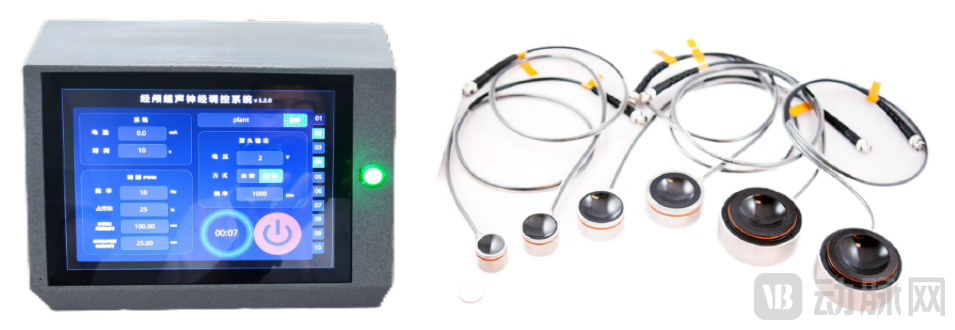
Transcranial Focused Ultrasound (tFUS) is regarded as the "third pathway" for neuromodulation — it delivers deeper penetration than transcranial magnetic stimulation and causes less trauma than implanted electrodes.
However, the technology faces a core engineering challenge. As ultrasonic waves traverse the skull, they undergo refraction, scattering and attenuation, which causes the intracranial focal spot to deviate severely from the predefined target. Such deviation often reaches several millimeters or even centimeters. This imprecise targeting leads to non-reproducible therapeutic outcomes, preventing the technology from evolving into a standardized medical device.
Futong Huizhi's solution relies on patient CT/MRI data to fabricate a personalized stereotactic helmet via 3D printing. The helmet is equipped with slots corresponding to specific brain regions and stimulation targets for securing EEG electrodes and tFUS probes. Around this technology, Futong Huizhi has built a global patent portfolio covering China, the United States and Germany.
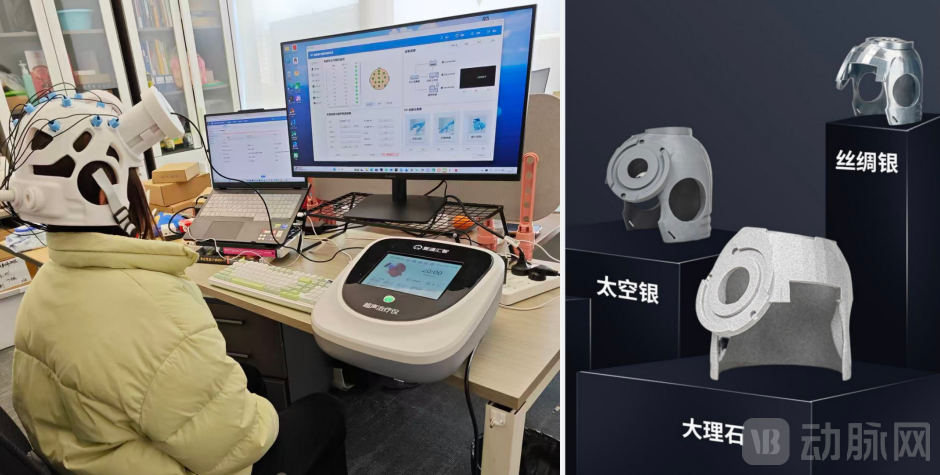
Built upon the hardware foundation, the company's self-developed AI skull acoustic compensation algorithm enables precise modeling and reverse correction of the tFUS propagation path, further constraining the focal shift caused by skull distortion to approximately 1 millimeter. Driven by the dual engines of stereotactic helmet spatial navigation and skull acoustic compensation, every ultrasonic beam can accurately reach the target brain region, laying a physical foundation for precise neuromodulation.
This solution has undergone head-to-head clinical validation involving 57 cases. Compared with world-leading optical navigation systems, its spatial localization error is controlled at approximately 1 mm, and relevant data has been accepted by an international journal.
2026 is regarded as the "first year of closed-loop" for ultrasonic brain-computer interfaces. A consensus has formed within the industry: standalone ultrasonic stimulation is far from sufficient. A complete closed-loop system comprising signal readout, real-time decoding, stimulus modulation, and effect feedback must be established.
This is one of the key factors that set tFUS-Mind apart from its competitors.
tFUS-Mind is the first domestically developed product to realize closed-loop control. It senses and decodes motor intentions in real time via EEG, drives tFUS to deliver precise stimulation to the motor cortex, further detects changes in neural activity through EEG, and dynamically optimizes stimulation parameters to form a complete closed-loop regulation pipeline. For the GEN 3 product, the company will introduce functional ultrasound imaging (fUSI) to replace EEG as the decoding signal source, enabling an "all-ultrasound" closed-loop system with higher spatiotemporal resolution.
AI runs through every link of this technological evolution pathway. At the closed-loop regulation level, AI reinforcement learning algorithms continuously monitor electroencephalogram feedback signals and adaptively adjust the frequency, intensity, pulse width and target combination of ultrasonic stimulation in real time, enabling precise neuromodulation with personalized strategies tailored for each individual.
Meanwhile, AI capabilities are deeply integrated across the full product line: GEN 1 is equipped with an AI-EEG decoding engine and an AI acoustic field optimization algorithm; GEN 2 introduces deep learning-driven AI for coordinated four-target modulation; GEN 3 will establish a fully closed-loop adaptive neuromodulation system based on reinforcement learning, enabling devices with autonomous learning and continuous optimization capabilities. The company is building an end-to-end AI technology stack covering the workflow of “EEG decoding → acoustic field calculation → strategy optimization → closed-loop self-learning”, advancing ultrasonic brain-computer interfaces from functional availability to intelligent usability.
The clinical value of this closed-loop ultrasound brain-computer interface targets a large population with critical unmet needs—stroke patients.
Against the backdrop of population aging, millions of new stroke patients emerge in China every year. Approximately 75% of survivors suffer varying degrees of functional impairment, among which motor dysfunction stands as the most prevalent sequela. According to articles published in "Chinese Circulation Journal", the total incidence of ischemic stroke in China surged by 201.13% from 1990 to 2021, far exceeding the global average growth of 27.05% over the same period. Projections indicate that the age-standardized incidence rate of ischemic stroke in China will keep rising through 2040.
Dr. Chen Jiangang, Founder and Chairman of Futong Huizhi, stated: "China registers millions of new stroke patients each year. In addition, there are over 10 million patients with Alzheimer's disease and tens of millions suffering from depression. Behind these figures lie genuine unmet medical needs. It is this profound understanding of patient demands that drives us to continuously push technological boundaries — from the world-first 3D-printed stereotactic helmet to tFUS-Mind, China's first closed-loop ultrasonic brain-computer interface system. Every milestone embodies the team's relentless pursuit of precise neuromodulation technology."
Dr. Chen Jiangang is a Research Fellow at East China Normal University, a Scholar under the Ministry of Education's "Chunhui Programme", and a Shanghai Oriental Talent. He boasts distinguished academic training from the University of Oxford, Columbia University and The Hong Kong Polytechnic University. He studied under Professor Elisa Konofagou, Member of the National Academy of Medicine and pioneer of ultrasound-mediated blood-brain barrier opening technology, and has devoted over 20 years to research in the field of ultrasound.
Co-founder Professor Yang Guoyuan is a Fellow of the American Institute for Medical and Biological Engineering (AIMBE) and a Distinguished Professor at the Med-X Research Institute, Shanghai Jiao Tong University. He has long engaged in research on brain science and cerebrovascular diseases. CEO He Guohua possesses years of experience in marketing and sales management within the medical industry and oversees the company's overall operations. In addition, the team includes senior engineers specializing in ultrasound systems, ultrasound algorithms and AI algorithms, forming a diversified workforce covering R&D, marketing, sales, production and other key functions.
Led by the founding team, Futong Huizhi's foundational product, the 3D-printed stereotactic helmet, has obtained the Medical Device Registration Certificate and Production License, acquired a charging code from the National Healthcare Security Administration, and generated actual operating revenue. The company recorded revenue of several million RMB in the first half of 2026, mainly stemming from helmet product sales and research cooperation income, with full-year revenue projected to exceed 10 million RMB. tFUS-Mind (GEN 1) has been developed in strict compliance with standards set by the National Medical Products Administration (NMPA). The product has entered the green channel for application and initiated clinical registration procedures.
At present, Futong Huizhi has established clinical cooperation with multiple Grade A tertiary hospitals, including Beijing Tiantan Hospital, Shanghai Sixth People's Hospital, Shanghai Shuguang Hospital and Wuhan Union Hospital. The company plans to complete the registrational clinical trials for the single-target tFUS product between 2026 and 2027, secure marketing approval for tFUS-Mind for commercial launch in 2027–2028, and initiate registration filing for the four-target tFUS system.
The core reason Futong Huizhi secured backing from Vision+ Capital lies in its 3D-printed precision positioning helmet technology. By adopting an accessible model, the technology solves the bottleneck of millimeter-level precise intracranial positioning for non-invasive brain therapeutic devices and improves the accessibility and long-term sustainability of treatments for related diseases.
Wuchuang Group stated that the investment in Futong Huizhi through its subsidiary Yosen AI can not only improve the Group's upstream industrial layout in the brain-computer interface industry. Furthermore, the Group can rely on Yosen AI's channels to carry out nationwide promotion and accelerate the layout of products in the terminal medical market.
The reason why ultrasound-based brain-computer interfaces became the focus of capital pursuit in 2026 lies fundamentally in the fact that their market potential extends far beyond a single disease.
Compared with invasive brain-computer interfaces featuring high technical barriers and limited patient populations, non-invasive ultrasonic brain-computer interfaces target an enormous patient base suffering from central nervous system disorders including stroke, Alzheimer's disease, chronic pain and depression, boasting broader market potential.
Dr. Chen Jiangang stated, "The completion of this round of financing is a strong endorsement of our technological approach and industrialization capabilities. Moving forward, we will use stroke rehabilitation as our starting point to accelerate expansion into the fields of various brain disorders, including pain, depression, Alzheimer's disease, autism, and Parkinson's disease, thereby allowing this breakthrough technology to benefit a broader patient population and safeguarding human brain health with innovative Chinese medical technology."
In the face of the technical extensibility of the ultrasonic brain-computer interface on multiple indications, Vision+ Capital is also full of expectations. "I am optimistic that under the leadership of Dr. Chen Jiangang and Mr. He Guohua, the company will explore the treatment of stroke rehabilitation, ADHD, autism, AD, pain, depression and other brain-related diseases with the help of unique positioning technology and the combination of TMS and focused ultrasound."
Currently, transcranial focused ultrasound (tFUS) brain-computer interfaces are still in the early stage of industrialization. A single enterprise or product is unable to cover clinical validation and product development for all indications. Futong Huizhi adopts an open strategy for tFUS technology modules. It provides underlying hardware and positioning solutions to industry partners, jointly develops products targeting different indications, and collectively fosters a mature and thriving ecosystem within this sector.
In the long journey bringing brain-computer interface, this cutting-edge technology from laboratories to patient beds, the player that can be the first to pass the rigorous medical device registration and approval barrier, accumulate therapeutic efficacy data in real clinical settings, and establish a sustainable commercial closed loop will seize the initiative amid the next round of industry reshuffling.