

Securing a Seat at the MNC Decision-Making Table: China BD Team Officially Upgraded

Sanofi
Pharmaceutical R&D Developer

Merck Group
Pharmaceutical R&D Developer

Boehringer Ingelheim
Developer of Innovative Drugs and Therapies

AstraZeneca
Biopharmaceutical Manufacturer
Bayer
Pharmaceutical Product R&D Developer

Roche
Oncology Drug Research, Development, and Manufacturing

MSD
Pharmaceutical R&D and Manufacturer

Bristol-Myers Squibb
Biopharmaceutical and Nutritional Product R&D and Sales
Over the past three years, multinational pharmaceutical companies (MNCs’ positioning of China is undergoing a profound shift.
If the core narrative of multinational corporations (MNCs) in China over the past decade was “introducing global innovative drugs to the Chinese market,” this logic has been rewritten since late 2022: China is no longer merely a single sales market but has become a source of global pharmaceutical innovation. The corresponding changes are as follows: The function of the BD department in China has shifted from back-office support to the forefront of the group's strategic decision-making.
This transformation is not merely rhetorical posturing by executives in public statements. Over the past two years, multiple business indicators have concurrently corroborated these changes, ranging from the delegation of asset transaction approval authority at the group level and sweeping adjustments to the local organizational structure, to the expansion of specialized Business Development (BD) teams and the restructuring of the integrated “BD plus commercial sales” synergy model. The China BD team has successfully secured a seat at the global decision-making table of MNCs.
MNC China BD Team's Responsibilities and Authority Undergo Changes
In response to the surge in business development (BD) transactions in China, multinational corporations (MNCs) have simultaneously restructured their BD organizational frameworks in the country, with three distinct adjustment paths currently emerging as the mainstream approaches.
Prior to this round of adjustments, the China-based business development (BD) teams of multinational pharmaceutical companies had long been in a position of limited authority and responsibility. With constrained team sizes, their functions were restricted to identifying local projects and supporting due diligence, while core evaluation and decision-making power over pipeline acquisitions remained firmly held by global headquarters.
Sanofi has never delegated the authority for early-stage pipeline in-licensing to any regional market; previously, Merck China’s business development deals had to pass through two layers of management—Greater China and Asia-Pacific—before being submitted to global headquarters, a cumbersome process that significantly slowed down transaction pace.
As the value of domestic innovative assets continues to become more prominent and the scale of BD transactions rapidly expands, many MNCs have implemented a “vertical direct-connect” structure, eliminating intermediate reporting layers. This allows China-based BD teams to interface directly with the global BD system, with some companies even achieving zero-intermediary reporting, significantly enhancing the efficiency of local project advancement.
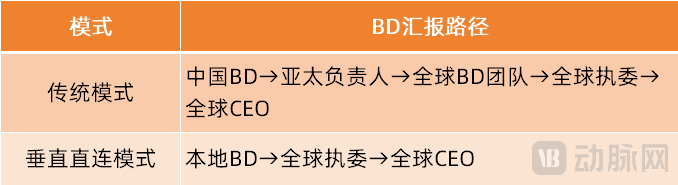
Sanofi was the first company to implement decentralized authority. At the end of 2022, Sheng Wang, President of Greater China, spearheaded an initiative with headquarters to decentralize authority for independent pipeline procurement, thereby granting China the autonomy to make independent license-in decisions. In July 2026, the organizational structure was further upgraded, with Thomas Triomphe, a member of the Global Executive Committee and Global Head of Vaccines, assuming direct oversight of all operations in China, ensuring that local business development (BD) strategies have direct access to core global management.
Merck and Boehringer Ingelheim also completed their organizational restructuring in early 2026.
Merck has restructured its global operations into four major divisions, elevating China to an independent region on par with North America and integrating the business ecosystems of Hong Kong and Macau. In February 2026, Andreas Mueller was appointed Managing Director of Merck’s Pharmaceutical Health Business in China. Local business development (BD) projects can be reported directly to the Global CEO of Pharmaceutical Health upon completion of due diligence, thereby shortening the decision-making chain.
Boehringer Ingelheim spun off Greater China from its Human Pharmaceuticals Emerging Markets division in December 2025, with the unit now reporting directly to the global regional head.
The second approach is to upgrade China into an innovation hub for the Asia-Pacific region and even globally, elevate the hierarchy of the local business development (BD) system, shift focus toward preclinical and early-stage pipelines, with the core objective of uncovering high-quality domestic assets and promoting the global licensing-out of Chinese innovations.
AstraZeneca is a typical representative of this model.
In October 2025, AstraZeneca established its Global Strategic R&D Center in China, building a collaborative incubation network by partnering with local hospitals, universities, and biotech firms. Additionally, AstraZeneca had previously set up the iBD Hub, led by Chen Bing, who specializes in local strategic collaborations. The hub’s core function is to facilitate two-way cooperation: on one hand, it introduces global pipelines into the Chinese market; on the other, it supports domestic innovative enterprises in securing overseas licensing deals, serving as a standardized channel for Chinese innovations to go global.
The core of the third pathway lies in the deep integration of business development (BD) with industrial incubation and venture capital: it relies on accelerators and innovation centers to proactively identify early-stage startup assets, followed by the implementation of composite BD collaborations such as pipeline licensing and equity investments, resulting in more diversified transaction structures.
Bayer, Roche, MSD, and BMS have all implemented this system: Roche launched its China Accelerator in 2023, providing startups with equipment, R&D expertise, and industry resources; MSD established the Merck China Innovation Collaboration Center (MCICC) in 2024, focusing on high-potential preclinical pipelines and opening up global clinical resources to support local innovations in going global; in April 2026, BMS established its first innovation center in China, accelerating the translation of local source innovations.
Compared to the previous two models, this system imposes higher entry barriers for BD (Business Development) professionals. Practitioners must thoroughly master the transaction logics of both pipeline licensing and equity investment, while possessing the capability to handle complex asset restructuring.
The collaboration between AstraZeneca and Syneron Bio serves as a typical example, wherein the parties jointly developed a globally first-in-class macrocyclic peptide drug for chronic diseases. The transaction structure incorporated multiple layers of terms, including an upfront payment, tiered milestones, sales royalties, and equity investment.
In addition, the division of labor among business development (BD) professionals in the industry is becoming increasingly distinct. Currently, multinational corporations (MNCs) place greater emphasis on R&D-focused BD specialists who specialize in preclinical and early-stage pipelines, aligning with the trend of advancing industry transactions to earlier stages. Meanwhile, another category of commercialization-focused BD professionals concentrates on marketed products or those nearing the filing stage, resulting in a clear delineation of roles between these two types of talent.
The Differentiated BD Chessboard Under the New Organizational Structure
Delegation of organizational authority and reshaping of local business development (BD) structures will ultimately be reflected in individual pipeline transactions. In the race for domestic innovative assets, multinational pharmaceutical companies have adopted distinctly divergent strategic approaches, with each company’s trade-offs and priorities bearing clear, unique imprints.
AstraZeneca is one of the multinational pharmaceutical companies that collaborates most frequently with innovative drug enterprises in China. As early as 2023, the management team in its China region established a long-term goal: to promote the two-way circulation of local innovations, ensuring they are not only implemented domestically but also expanded globally.
This highly efficient business development (BD) system is built upon a three-tiered collaborative framework: the General Manager for China oversees the overall local strategy, the local iBD team focuses on frontline project sourcing, and the global BD team simultaneously manages global commercialization and M&A execution. These three parties work in synergy to streamline the entire process from due diligence to global BD/acquisition. Previous achievements under this mechanism include the acquisition of Gracell Biotechnologies and the collaboration with Chengyi Biopharma on its long-acting metabolic pipeline.
Since 2023, AstraZeneca has entered into 17 collaborations with 15 local Chinese companies, covering cutting-edge therapeutic areas such as antibody-drug conjugates (ADCs), cell therapy, differentiated small molecules, and fully human antibodies. The value ceiling for individual deals has continued to rise: the strategic partnership with CSPC Pharmaceutical Group totals $18.5 billion; the potential transaction value with Harbour BioMed reaches $4.575 billion; and the collaboration scales with both Allist Pharmaceuticals and Chia Tai Tianqing Pharmaceutical have each surpassed the $2 billion mark.
Beyond direct business development (BD) transactions such as pipeline licensing and acquisitions, AstraZeneca has established a dual-pronged strategy through its industrial investment fund. In partnership with CICC Capital, the company launched a healthcare industry fund to secure high-quality startups early via equity investments; to date, the fund has invested in 31 local innovative enterprises. On the funding front, long-term certainty has also been provided: the company announced that by 2030, its cumulative investment in China will exceed RMB 100 billion, covering four key areas—R&D, production capacity, commercialization, and industrial ecosystem—thereby underpinning its continuous BD expansion.
Sanofi is the first multinational pharmaceutical company in the industry to decentralize pipeline acquisition authority to China. Following this delegation, the pace of local business development (BD) transactions has significantly accelerated, and its strategy has undergone two key shifts.
Prior to the restructuring, China’s business development (BD) function served only domestic commercialization needs and showed a strong preference for late-stage clinical assets with higher certainty. Today, the team possesses independent authority for evaluation and acquisition, assessing targets by considering both domestic and international market value, thereby bringing a substantial pipeline of early- to mid-stage innovative assets into view.
Since 2023, Sanofi has entered into collaborations with multiple local innovative pharmaceutical companies, including BioMap, Jixing Pharmaceutical, I-Mab, Visirna Therapeutics, Helixon, and Chia Tai Tianqing. These partnerships span various fields such as AI-driven drug discovery platforms, antibodies, siRNA, bispecific antibodies, and small molecules, with several deals totaling over $1 billion.
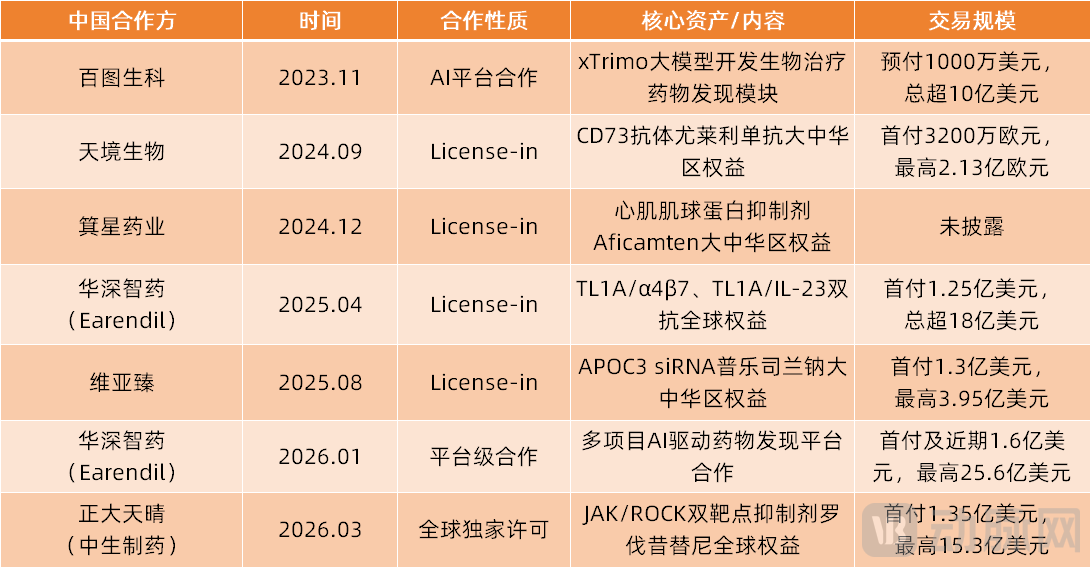
Sanofi’s Select Business Development Deals with Chinese Innovative Pharmaceutical Companies
The fruits of strategic adjustments have been realized. From late 2025 to early 2026, two new drugs originating from China’s domestic pipeline were successively approved globally in a synchronized manner: Afkaitai tablets, licensed by Ji Xing Pharmaceutical, and Visirna Therapeutics’s original Plisilan Sodium Injection. This achievement marks a “China-originated, global first launch,” demonstrating that local business development (BD) teams now possess the capability to manage global pipelines.
MSD’s business development strategy is highly focused, concentrating resources on three core therapeutic areas: oncology, cardiovascular and metabolic diseases, and autoimmune disorders. Within the oncology sector, the company prioritizes antibody-drug conjugates (ADCs), RAS inhibitors, and bispecific antibodies as its key strategic pillars.
Representative collaborations include the licensing of Kelun Biotech’s ADC portfolio, with cumulative transaction values exceeding $10 billion across multiple rounds, setting a benchmark for ADC partnerships in the industry.
In addition to direct business development (BD), MSD has established the MSD China Innovation Collaboration Center (MCICC) to proactively identify and secure early-stage assets. Launched in 2024, the center provides preclinical and early-clinical startups with access to global clinical resources and development expertise, facilitating the integration of local pipelines into overseas clinical development systems.
As of mid-2026, the center has engaged with over 530 local biotech firms, established clinical co-development partnerships with Medimscience and Degron Therapeutics, and simultaneously signed letters of intent with Zelgen Pharmaceuticals and Inventisbio, thereby creating a seamless continuum from “early-stage incubation to late-stage business development.”
Roche adopts a long-term incubation strategy of “upfront screening via incubators + BD-driven commercialization,” focusing on source-stage startups to secure early differentiated pipelines in advance.
Roche China Accelerator officially commenced operations in 2023, providing tenant companies with R&D equipment, funding matchmaking, and global collaboration channels. Currently, more than twenty local innovative enterprises have joined the accelerator, covering cutting-edge fields such as AI-driven molecular design, cell and gene therapy, and protein therapeutics.
Leveraging its incubation ecosystem, Roche secured exclusive development rights in advance: in 2024 and 2026, it reached two consecutive rounds of global licensing agreements for ADCs with Yilian Biologics, entrusting Roche with the global development of two differentiated targeted ADCs.
In addition, Roche’s business development (BD) team is also ramping up its efforts. The BD side is likewise closely focusing on the oncology pipeline, with antibody-drug conjugates (ADCs) being the most densely populated therapeutic area.
Over the past three years, Roche has secured global licensing rights for nearly ten innovative assets from China. In 2025, it successively entered into ADC collaborations with Innovent Biologics and Hansoh Pharmaceutical, with potential milestone payments capped at $1 billion and $1.45 billion, respectively, underscoring its continued commitment to capitalizing on overseas opportunities for Chinese-made ADCs.
III. Long-Term Trends of MNCs’ Business Development in China
The series of organizational and authority adjustments by multinational pharmaceutical companies in China from 2023 to 2026 essentially represents a complete replacement of their development paradigm.
The previous paradigm involved global headquarters completing source R&D, followed by localized production and commercialization in China, with sales revenue being the sole core performance indicator for the China region.
The emerging new paradigm involves cultivating source innovation in China, leveraging global resources for synchronous development, and achieving commercialization for the global market. “The quality of introduced innovative assets and the scale of transactions” are increasingly being incorporated into the core performance metrics for the China region.
The core of this transition is the local BD department’s leap from back-office execution support to the forefront of the group’s strategic decision-making:
Looking Back at the Past Decade: The Era of "Introducing Global Innovative Drugs to China"Over the past decade, the pharmaceutical industry has witnessed a cycle characterized by the introduction of global innovative drugs into the Chinese market. During this period, Business Development (BD) teams in China primarily operated in a back-office support capacity, serving sales functions and executing directives from headquarters. Consequently, BD teams in China not only faced a scarcity of talent but also wielded limited influence within their organizations, making it difficult to drive impactful business development initiatives.
As the strategic positioning of “China as a global source of innovation” takes effect, Business Development (BD) in China has evolved into a frontline strategic unit for multinational corporations (MNCs) to embed themselves in the local innovation ecosystem and coordinate global pipeline layouts, with group resources increasingly倾斜 toward the BD department.
Standing at the critical juncture of the current paradigm shift, Chinese innovative drug companies need to focus on three trends.
First, bidirectional BD becomes the new normal;
Previously, the global expansion of domestically developed innovative drugs primarily involved one-way pipeline licensing: local companies divested overseas rights, relying on upfront payments and milestone payments to fund their own R&D.
However, by 2026, leading Chinese pharmaceutical companies began to “hedge their bets”—the bidirectional licensing between Hengrui and BMS, and the “outbound + inbound” combination of Innovent and Eli Lilly, all marking an upgrade in the BD model from unidirectional output to bidirectional allocation.
Second, Platform-Based Long-term Collaboration Replacing single-item transactions;
Historically, business development (BD) in the industry mostly involved one-off transactions for single pipelines; today, multinational pharmaceutical companies are more inclined to partner with local technology platforms to build multi-pipeline, long-term, and deeply collaborative relationships.
Sanofi and Huashen Zhiyao jointly built an AI drug discovery platform; Eli Lilly and Haisco Pharmaceuticals locked in a full-chain collaboration for small molecules; AstraZeneca partnered with CSPC to deploy a peptide technology pipeline. These are all typical examples. Compared to scattered, single-project transactions, platform collaborations can continuously produce candidate molecules in batches, forming stable, long-term synergies.
Third, Local Decentralization and Global Right Reclamation Advance together;
The industry is witnessing a set of seemingly contradictory changes: on one hand, companies such as Sanofi and Merck are significantly decentralizing local business development (BD) deal-making authority, shortening approval chains, and enhancing transaction efficiency; on the other hand, there is a continuing rise in cases where global headquarters directly appoint senior executives and maintain direct control over core positions.
However, there is no logical conflict behind this approach, as multinational corporation (MNC) headquarters require local teams to stay close to the industry and rapidly identify high-quality early-stage assets, while simultaneously maintaining strategic direction through direct oversight of core management. This ensures alignment between the innovation layout in China and global pipeline planning.