Restructuring or Renaissance? Medtronic's Strategic Transformation and Innovation Crossroads

Medtronic
Chronic Disease Medical Device and Therapy Developer
MedtronicAs the leading medical device company, its performance in the stock market has been lackluster, with its share price lingering at a low level for years. This has also led to some...Activist investors see profit potential. Thus, in August this year, a well-known activist investor finally made a move, acquiring a significant portion of shares in the world's largest medical device company, Medtronic, plc., and prompting Medtronic to add two senior figures from the medical technology field to its board of directors.
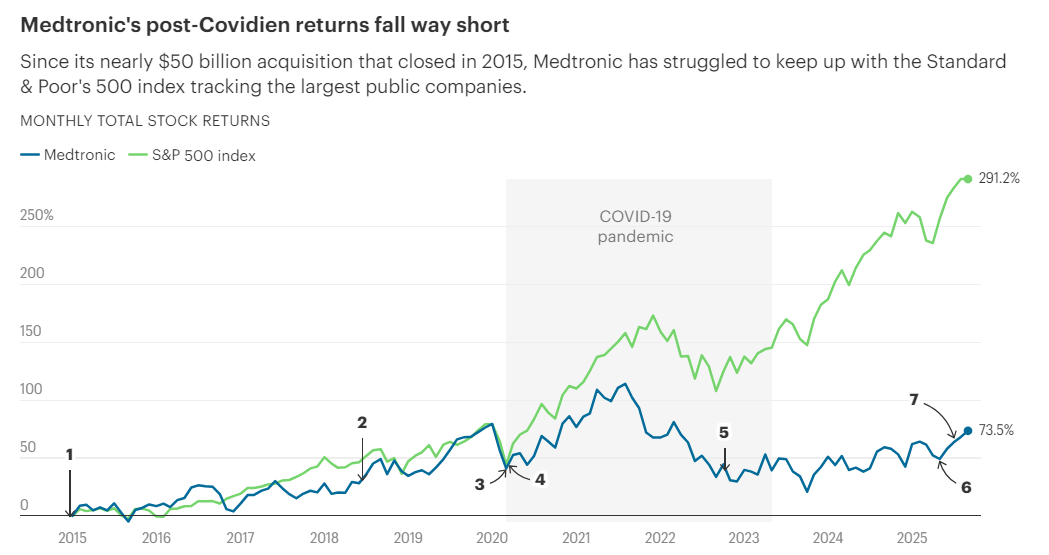
Elliott Investment Management, known for helping portfolio companies realize their value potential, has been signaling the market for months that it may break up Medtronic, plc., the Minnesota-based medical technology giant whose growth has slowed in recent years. More than a dozen former executives and long-time industry observers trace Medtronic's struggles back to its $50 billion acquisition of Covidien. Over the past decade, the company has seen fewer blockbuster product launches, shrinking R&D investment, and persistently lackluster stock performance.
CEO Geoff Martha frankly stated that this analysis has serious flaws. He said that Medtronic is in an "innovation supercycle" and will soon launch a series of significant devices, demonstrating the value of its long-term innovation strategy.Elliott Investment ManagementAlthough it did not respond to multiple requests for comments, it had previously expressed optimism about Medtronic's innovative layout in potential markets.
"The company has no plans to split."Geoff MarthaEmphasis. Investors, analysts, and Medtronic's 10,000 employees in Minnesota are closely watching the progress.Geoff MarthaThe team must demonstrate the value of many years of new product development - and the only way to validate it is through more impressive profitability.
The Lingering Pain of M&A
The merger with Covidien, known for its low-tech consumables, was intended to expand the global footprint and free up funds for investment in the U.S. However, by the end of 2022, growth had stalled. More than two years had passed sinceGeoff MarthaAt a gathering of executives in a Minnesota auditorium, the former Penn State hockey captain asked each manager to "look in the mirror and reflect."
According to three people present, as reported by "Minnesota Star Tribune》revealed,Geoff MarthaAn executive with over a decade in an unnamed position was asked to reflect again, leaving everyone astonished by this method of accountability. In a recent exclusive interview,Geoff MarthaWhile acknowledging the value of veteran employees, it was emphasized that everyone must recognize: "The company must change, and you must be part of the change."
Former Executive Points Out That the Essence of M&A is Cultural Conflict. According to Medtronic's Data,Geoff MarthaR&D investment has continued to decline since the deal. Darrel Untereker, former vice president of enterprise research technology, admitted: "Covidien's low-tech products like surgical staplers are incompatible with Medtronic's high-tech positioning, and colleagues from traditional departments struggle to understand this difference."
Innovation Dilemma
In the nearly $6 trillion medical device industry, a leading edge often hinges on the speed of innovation and sales efficiency. Former Vice President of Cardiac Rhythm Management, Warren Watson, pointed out that as the business focus shifts away from implantable devices like pacemakers, Medtronic's competitiveness is waning: "Covidien's low-tech consumables are not at the core of Medtronic's competitive advantage." Despite a 19% rise in its stock price this year, its historical peak of $134 has remained stagnant since September 2021, and it has now stayed below the $100 mark for three consecutive years.
Michael Hill, former Vice President of Technology and Clinical Affairs at Medtronic, believes the company has lost its way on the path to innovation. He pointed out that management changes in the 2010s ushered in an era of "financial games": driving growth through acquisitions of ready-made companies and portfolio splits rather than relying on internal R&D. In the last fiscal year, R&D expenditure accounted for 8.15%, a decrease of about 2 percentage points from 2007, lagging behind competitor Boston Scientific's investment level of 9.64%.
Surgical Robot Game
Hugo Soft Tissue Surgical Robot, Heavily Invested in by the Company, Faces Supply Chain and Manufacturing Bottlenecks; Insiders RevealHugo"Significant defects" have existed since the merger with Covidien. Analysts at JPMorgan Chase estimated that it costs $500 million annually and has not yet been approved by the FDA. Meanwhile,Medtronic Reported to Have Lowered Internal R&D Priority for Pulse Field Ablation (PFA) Technology——This catheter technology for treating atrial fibrillation through electrical pulses is driving industry growth. To maintain competitiveness, the company acquired Affera, which owns PFA technology, for $925 million in 2022.
The Way to Break the Stalemate
At the annual patient sharing meeting at the end of last year, Medtronic showcased several innovative achievements: an algorithm-driven insulin pump benefiting adolescent patients, an adaptive deep brain stimulator for controlling Parkinson's disease, and a hypertension device as an alternative to drug therapy.Geoff Martha"Don't emphasize the company's persistence in the field of hypertension treatment: 'When the clinical trial data was poor in 2014, we were the only ones who stayed the course.'"
Despite Hugo's delayed market entry, an FDA registration application (for urological indications) has been submitted following its 98.5% surgical success rate in clinical trials.HugoWill directly compete with Intuitive's Da Vinci robot, which dominates the market. J.P. Morgan analysts believe that money-burning projects like Hugo should be terminated, but Evercore analyst Vijay Kumar warned that abandoning the robotics field would be a strategic mistake: "Hospitals are reluctant to entrust all their operations to a single supplier."
Debunking Myths
Known for pushing management changesElliott Investment ManagementEntering the game,Geoff MarthaHas begun to streamline its business portfolio: spinning off the diabetes business line and shutting down the loss-making ventilator department. Despite undergoing significant adjustments, employee survey data shows that employees still have a strong sense of pride.Geoff Martha"All members must face the fact that financial performance has fallen short of expectations: 'This adjustment will inevitably bring pain, and only the adaptable will survive. Those who cannot adapt will eventually leave.'"
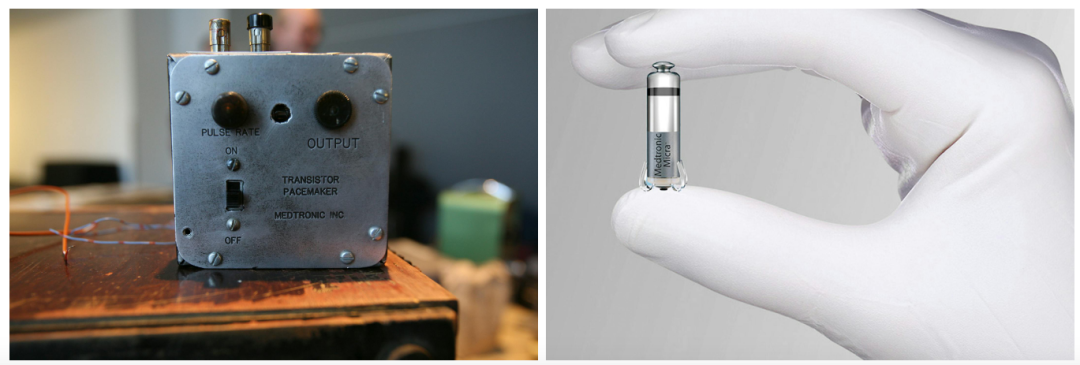
Standing in front of the "Riser" sculpture at the Fridley, Minnesota headquarters, this company, which emerged from a Minneapolis garage in 1949, is witnessing a new turning point in its legendary history. The inventor of the portable pacemaker could never have imagined that sixty years later, when his successor placed the capsule-sized Micra pacemaker next to the sandwich-sized original product on "Mad Money," Medtronic would once again need to prove its ability to reshape the industry.