

From the Regret of Bone Grafting to China’s First Class III Medical Device Certificate: 3D-Printed Absorbable Artificial Bone Ushers in the First Year of Industrialization
"At that time, bone grafting surgery was performed in three areas. However, before the bones had properly healed, the implanted material had already been absorbed, leaving a depression."
Recalling the original intention behind starting the business, Chen Chongguang, founder of T-Bright (Kunshan) Biotechnology Co., Ltd. (hereinafter referred to as “T-Bright Biotech”), mentioned this personal experience.
A personal experience with bone grafting led him to focus on the clinical needs behind bone repair materials: Is there a material that, after implantation, can provide necessary support while creating conditions for bone tissue growth, and is gradually absorbed by the body as the repair process progresses?
This vision ultimately led to T-Bright Biotech’s current core product—the first Class III medical device registration certificate in China for 3D-printed (FDM) absorbable artificial bone. From the company’s establishment in 2017 to its approval in early 2026, this technological marathon spanned nearly a decade, with total investments approaching RMB 100 million.
The “Gold Standard” Dilemma in the Multi-Billion Bone Graft Market
There has long been substantial clinical demand in the field of bone repair. According to data from the Center for Medical Device Evaluation (CMDE) of the National Medical Products Administration, more than 6 million patients in China suffer from bone dysfunction caused by accidents and orthopedic diseases each year.
Ideal bone repair materials need to simultaneously meet three criteria: first, they must possess Sufficient Mechanical Properties, providing stable support in the bone defect area to assist in the restoration of bone structure; secondly, it needs to possess Appropriate Pore Structure, creating space for vascular and bone tissue ingrowth; meanwhile, it also needs to possess a certain degree of Biodegradability, gradually absorbed by the body after providing phased support, avoiding long-term foreign body retention.
However, it has long been difficult to achieve these three goals simultaneously.
Autologous bone, long regarded as the “gold standard” in clinical practice, is scarce in supply and causes secondary trauma; allogeneic bone carries risks of immune rejection and ethical concerns. As for commercially available synthetic bone products, their drawbacks are equally pronounced—ceramic materials based on β-tricalcium phosphate (β-TCP) or hydroxyapatite readily disintegrate in physiological fluids, exhibiting almost no toughness or impact resistance.
“Many commercially available products are prone to brittle fracture in liquid environments, which is essentially due to insufficient material toughness, making them unable to serve effectively as fixation anchors,” said Chen Jianyu, Deputy General Manager of T-Bright Biotech, recalling the team’s early clinical research.
Finding a balance among mechanical strength, bioactivity, and biodegradability has become a key focus in the development of next-generation bone repair materials.
From the Inspiration of "Pencil + Eraser" to the Exploration of Composite Materials
“The most profitable business is not inventing the pencil, nor inventing the eraser, but combining the pencil and eraser together.”
Chairman Chen Chongguang used this metaphor to highlight the team’s problem-solving approach: single-material solutions often involve trade-offs, and true breakthroughs lie in combining the advantages of different materials into one.
The founding team, with backgrounds in materials science and chemical engineering, recognized that the development of bone repair materials is not about finding a “stronger” material, but rather about striking a balance among different properties.
Ideal artificial bone needs to simultaneously meet the requirements of mechanical support, bioactivity, and biodegradability. The intersection of these demands has guided T-Bright onto a path of "combination"— Combining the toughness of organic biodegradable polymers with the osteoconductivity of inorganic bioceramic materials.
Among them, PCL (polycaprolactone) exhibits excellent biocompatibility and processability, providing material toughness; β-TCP (beta-tricalcium phosphate) possesses superior osteoconductivity, facilitating new bone formation.
However, transitioning from materials research to medical device products is not as simple as merely mixing two materials.
β-TCP exists in powder form, while PCL exhibits high viscosity during processing. Achieving uniform dispersion of a high proportion of ceramic particles within the polymer matrix, while simultaneously avoiding residual organic solvents, represents a key challenge in composite manufacturing. To address this issue, T-Bright Biotech has explored a solvent-free composite manufacturing process that enables stable bonding between the two materials.
Secondly, the issue of material structure design needs to be addressed.
Traditional artificial bone materials are typically fabricated using mold-based techniques, resulting in relatively fixed structures. However, the morphology of bone defect regions is complex and varies among patients, making it difficult for a single structural design to meet all clinical needs.
T-Bright Biotech introduces FDM (Fused Deposition Modeling) 3D printing technology into the manufacturing of artificial bones, achieving internal porous structure design by controlling the layer-by-layer accumulation of materials through digital models.
Compared to simply altering material composition, 3D printing technology can further modulate the internal structure of implants, providing space for bone tissue growth while maintaining structural support.
In addition to material and structural design, the composite ratio is also a critical factor determining product performance.
An excessively low β-TCP ratio may compromise the material’s osteoconductivity, while an excessively high ratio may reduce its overall toughness. Therefore, the team needs to strike a balance among material toughness, bioactivity, and degradation kinetics.
Ultimately, these breakthroughs were validated in animal experiments. In a study of femoral condyle defects in beagles, the relative bone volume fraction (BV/TV) for T-Bright Biotech’s product reached 88% at 36 weeks, significantly surpassing the 29% observed with a solid competitor product. More importantly, its stress-strain curve and elastic modulus both approached those of natural, undamaged bone.
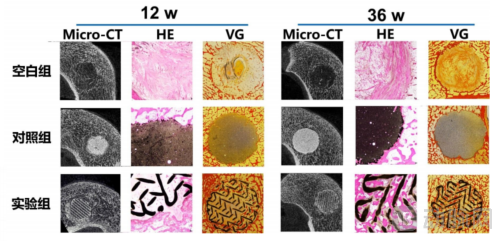
Beagle Dog Femoral Condyle Defect Test
This also proves that the technical path inspired by the “pencil + eraser” concept indeed yields restorative effects closer to physiological needs.
From “Bone Defect Filling” to “Functional Support,” Bone Speed Print Enters Clinical Settings
For medical devices, material performance in the laboratory is merely the first step; what truly determines a product’s value is its ability to address real-world clinical challenges.
T-Bright Biotech’s Core Product— OsteoInn: Additively Manufactured Absorbable Composite Bone Repair Material, it was against this backdrop that the R&D and regulatory registration translation were completed.
Bone Speed Print utilizes an exclusive patented honeycomb interconnected porous structure, with a porosity exceeding 70%, an interconnectivity rate greater than 99%, and pore sizes controlled within the range of approximately 450 ± 150 μm. This architecture facilitates the ingrowth of blood vessels and bone tissue into the material, promoting the transition of implantable materials from mere defect fillers to tissue regeneration scaffolds.
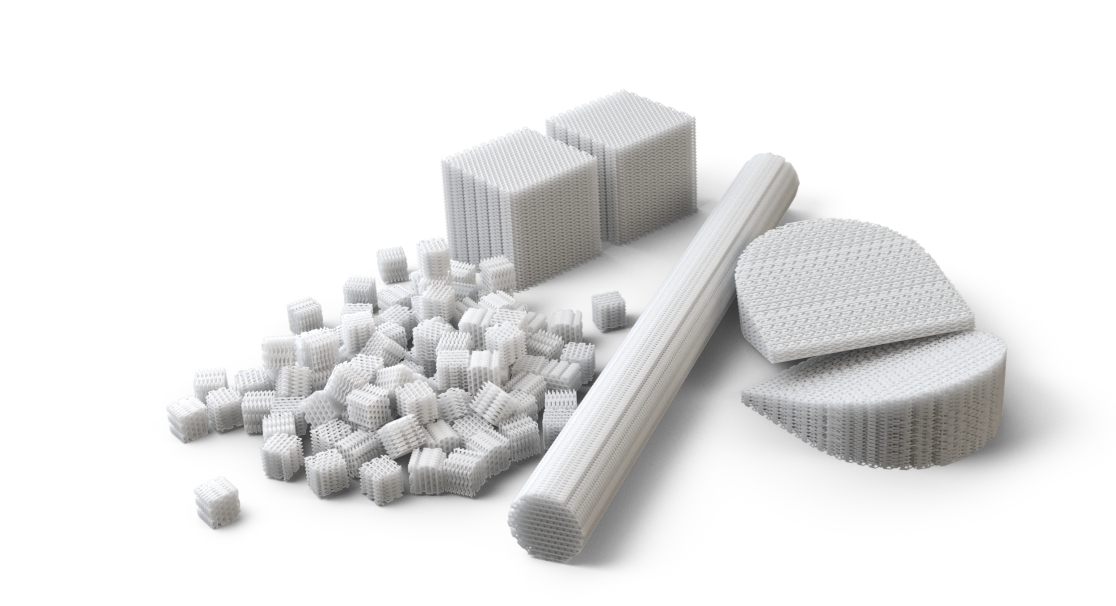
OsteoInn
In some complex bone repair scenarios, what doctors need is not just a filler, but a material capable of participating in structural restoration.
Comminuted Fracture is one of the representative scenarios.
In such patients, the bone fragments are highly comminuted, and reliance solely on internal fixation devices may lead to localized stress concentration. Meanwhile, some traditional brittle artificial bone materials, due to their limited toughness, are unable to serve as effective anchor points for screw fixation.
T-Bright Biotech aims to enhance the toughness of implants through composite material systems, enabling them to assist in maintaining structural stability during fracture repair.
Chen Jianyu noted that in clinical feedback, some physicians described the material as providing “tactile feedback during screw insertion,” highlighting its difference from traditional brittle synthetic bone grafts in actual surgical practice.
Another exploratory scenario is Repair of Avascular Necrosis of the Femoral Head。
In patients with osteonecrosis of the femoral head, impaired local blood supply predisposes them to bone tissue necrosis and structural collapse. During treatment, it is essential to provide support and repair to the defective area.
However, bone repair is not simply a matter of filling the defect area. If the material structure is too dense, it may restrict vascular ingrowth and new bone formation. Therefore, T-Bright Biotech aims to create conditions for subsequent tissue regeneration by designing porous structures that allow the implanted material to provide support while facilitating this process.
Centered on the clinical application of Bone Speed Print, T-Bright Biotech conducted a multicenter, randomized, single-blind, parallel-controlled clinical trial for the treatment of limb bone defect filling.
From material development and performance validation to clinical trials, Gusuyin underwent nearly a decade of research, development, and regulatory evaluation. In early 2026, T-Bright Biotech obtained the Class III medical device registration certificate for this product (Medical Device Registration Certificate No.20263130074).
From an Artificial Bone to a Technological System: Exploring the Translation Pathway for Medical Materials
Product approval is just the starting point.
For innovative medical device companies, the real challenge lies not merely in securing product registration, but in the ability to continuously develop new products aligned with clinical needs around core technologies.
As one of the first enterprises in China to explore the industrialization of 3D-printed absorbable artificial bone, The development path of T-Bright Biotechnology has also been accompanied by the exploration of industry standards and the establishment of clinical evaluation systems.
According to the company’s disclosure, T-Bright Biotech participated in the formulation of industry standards such as the “Technical Requirements for 3D Bioprinted Bone Tissue Engineering Biomimetic Scaffolds.” The First Affiliated Hospital of Soochow University served as the lead organization. The remaining collaborating orthopedic centers, listed in alphabetical order by Pinyin initials, are: the Fourth Medical Center of the Chinese PLA General Hospital, Lishui Central Hospital, Quzhou People’s Hospital, Shanghai Sixth People’s Hospital, and the Ninth People’s Hospital affiliated with Shanghai Jiao Tong University School of Medicine.
In terms of industrial layout, by the end of 2025, the parent company, Xi’an Maite Medical Materials, completed an angel financing round of nearly RMB 50 million, further advancing the research and development and industrial translation of medical materials.
Among them, T-Bright Biotech focuses on the research and development, registration, and clinical application of absorbable bone repair materials; Xi’an Mait Medical Materials centers its strategy around highly active medical materials. Its developed poly(citrate ester) (POC) material features tunable mechanical properties, holding promise for future exploration in applications such as tissue repair.
From bone repair materials to the broader exploration of medical materials, T-Bright Biotech aims to establish a sustainable innovation system centered on material R&D, additive manufacturing, and clinical translation.
On the product development front, 3D printing technology has made personalized bone repair solutions possible. During the interview, the company noted that hospital experts have raised customized demands for special cases, hoping to develop corresponding solutions based on patients' specific conditions. For customized bone repair materials, current regulatory pathways also provide room for exploration in terms of researcher participation, corporate collaboration, and product registration.
In the realm of materials research and development, new biomaterials are being developed to meet diverse performance requirements, and also provide a foundation for future product expansion.
Meanwhile, the company is advancing its overseas registration strategy, aiming to further explore opportunities in international markets while meeting domestic clinical needs.
From “Replacement” to “Symbiosis”: The Evolution of Synthetic Biomaterials
The direction of development in the field of bone repair is not to create a "substitute" that remains permanently in the human body.
An ideal scenario is for the material to assume a phased role during the human body’s repair process: providing structural support in the early stage, creating conditions for vascular and bone tissue ingrowth in the intermediate stage, and ultimately being absorbed by the body as new bone tissue gradually forms.
This also represents a direction that absorbable biomaterials have been continuously exploring in recent years—materials are no longer merely passive fillers for defects, but actively participate in and guide the body’s own repair processes.
For the entire bone repair industry, the key to future competition may lie not merely in enhancing the performance of a single material, but in aligning more closely with the principles of human tissue regeneration, thereby striking a balance among materials, manufacturing technologies, and clinical needs.
T-Bright Biotech is also exploring this very direction.
Looking back at the beginning of his entrepreneurial journey, Chen Chongguang was initially motivated by a regretful experience with bone grafting. Faced with the issue of “premature degradation of materials and suboptimal bone regeneration,” he sought to find a solution that better aligned with the body’s natural healing process.
Starting from clinical pain points, progressing through material system exploration, and advancing to 3D printing manufacturing and clinical validation, T-Bright Biotech has followed a path of medical innovation from need identification to product commercialization.
For the entire bone repair industry, how to find a better balance among material properties, tissue regeneration, and clinical needs—making artificial materials more aligned with the body’s own repair logic—remains a question that must continue to be addressed in the future.