Roche Sets Guinness World Record with Sub-4-Hour Human Genome Sequencing Using Novel SBX Technology

Roche
Oncology Drug Research, Development, and Manufacturing


On October 15, 2025, Roche, in collaboration with Broad Clinical Labs and Boston Children's Hospital, published groundbreaking results in The New England Journal of Medicine: completing the sequencing and analysis of the entire human genome in under four hours. This breakthrough not only successfully set a new Guinness World Record for the "fastest DNA sequencing speed globally" but also elevated clinical decision-making and treatment efficiency in neonatal intensive care units (NICU) to new heights.
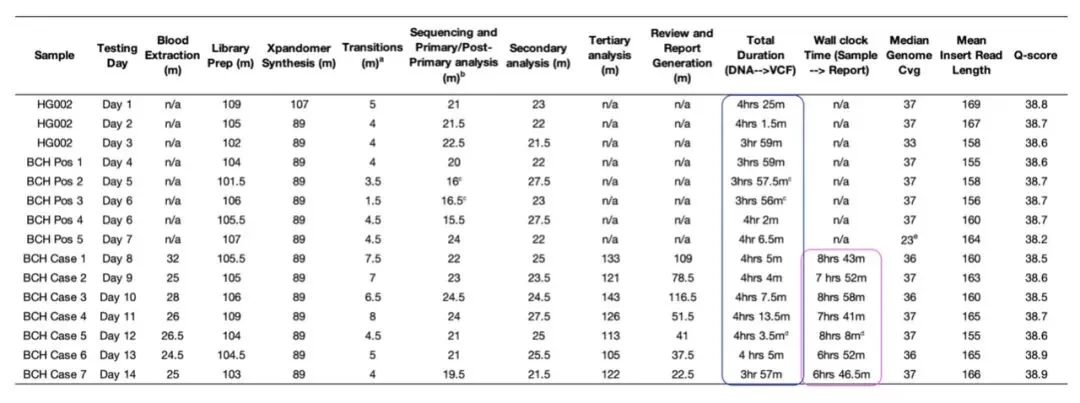
The results published by the project team in the New England Journal of Medicine showed that the average time to generate variations from genomic DNA was 4 hours and 4 minutes (range: 3 hours and 57 minutes to 4 hours and 25 minutes).
In the Neonatal Intensive Care Unit (NICU), whole genome sequencing as a first-line diagnostic solution for hospitalized infants is often limited by a "speed bottleneck," failing to meet the clinical time requirements for critical care in a timely manner. In response to these efficiency demands in clinical and research settings, Roche has introduced a novel whole genome sequencing technology—Sequencing by Expansion (abbreviated as SBX, or Expansion Sequencing).
In SBX technology, Xpandomer is its core component, an alternative molecule for DNA sequencing developed by Stratos Genomics, a subsidiary of Roche.
The synthesis of Xpandomer is based on the natural function of DNA replication, using scalable nucleoside triphosphates (X-NTPs) as substrates, which are incorporated into Xpandomer under the action of engineered polymerases, serving as a substitute for the complementary strand of the nucleic acid template. During the synthesis of Xpandomer, four easily distinguishable X-NTPs are used, each corresponding to one DNA base. As the Xpandomer molecule passes through a nanopore, the unique electrical signal of each base reporter is easily identified, enabling high-accuracy, high-throughput nucleic acid sequencing based on nanopores.
This technology overcomes the limitations of traditional sequencing methods, byUltra-fast Sequencing and Automated AnalysisFunction: It can complete a clinically actionable report within 8 hours and send it back to the clinic, compressing the rapid sequencing time from several days to a few hours, enabling same-day decision-making guidance at the genetic level.
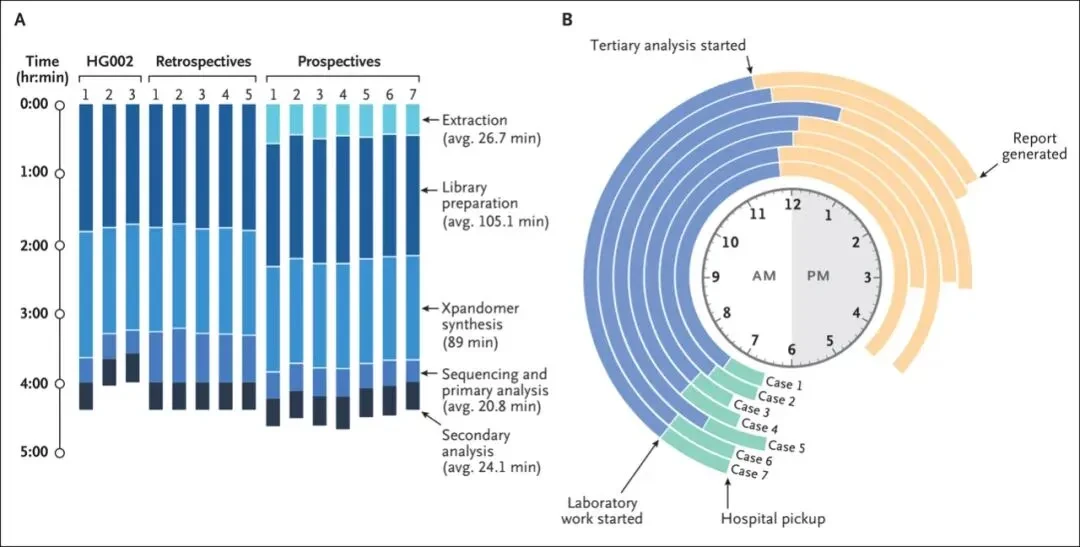
This research achievement demonstrates for the first time a feasible technical pathway to complete whole-genome diagnosis within a day and validates its practical operability in the NICU. Although it has not yet been directly applied to clinical decision-making, SBX technology has the potential to bring about a paradigm shift for doctors and patients.
The application of SBX has upgraded the traditional diagnostic rhythm from a linear process of "identifying symptoms, investigating causes, diagnosing, and treating" to "identifying symptoms, genetic sequencing, followed by simultaneous diagnosis and treatment," better aligning with the clinical decision-making and treatment needs of critically ill newborns. Of course, in addition to the neonatal field, sequencing technology also holds significant clinical guidance value in areas such as cancer treatment and infectious disease prevention and control.
From initially taking 13 years to now just 4 hours, technological innovation continuously brings surprises to human health. In this process, in vitro diagnostic technology, as a crucial participating link, has effectively transformed product application into diagnostic value. Throughout this journey, the focal point of innovative technologies has always been deepening and extending across the "point, line, and plane" where research and development, application, and clinical aspects intersect.

The content of the article was edited and organized by "MIR Medical Equipment and Reagents". Please indicate the source when reprinting.