

Corheart 6: World's First MDR-Certified Artificial Heart from China Clears EU's Strictest Regulatory Hurdle

Core Medical
Artificial Heart Series Product Developer
Chinese-Made Artificial Heart Brand Officially Enters European Market for the First Time, Penetrating the Core of the Global High-End Medical Market.
In July 2026, the implantable left ventricular assist system Corheart 6, independently developed by Shenzhen Core Medical Technology Co., Ltd., officially received CE certification under the European Union's Medical Device Regulation (MDR). This is the world's first artificial heart product to obtain CE certification under the European Union's new Medical Device Regulation (MDR) framework, and it is also China's first and currently only CE-certified artificial heart product.
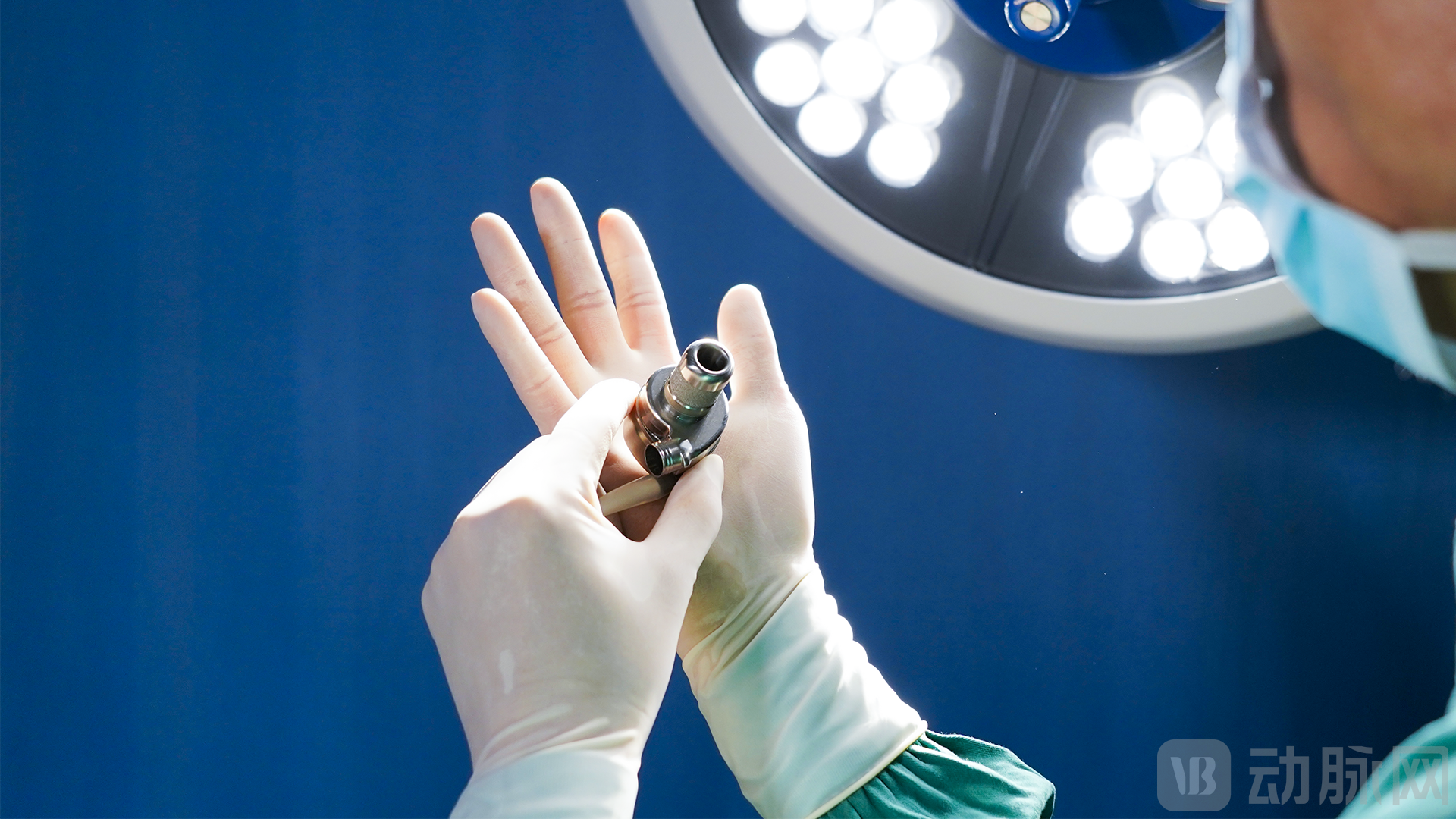
Not only the certification, but also the breadth of approved indications is noteworthy. According to the approval document, Corheart 6 can be used for bridging to heart transplantation, myocardial recovery (short-term therapy), or destination therapy (long-term therapy), thereby covering the full spectrum of clinical needs—from short-term transition to long-term support—as outlined in the "Expert Consensus on Preoperative Assessment and Management of Candidates for Left Ventricular Assist Devices in China (2023)."
The value of this certification extends far beyond mere regulatory market access. Behind it lies a globally recognized "hard threshold," representing a fundamental upgrade in the overseas expansion model for high-end Chinese-made medical devices, and serving as a concentrated demonstration of the company's strategic resolve in its globalization efforts.
Both are CE, but this CE is not that CE.
In 2017, the European Union initiated reforms to its medical device regulatory framework, upgrading the long-standing Medical Devices Directive (MDD) to the Medical Devices Regulation (MDR), which officially came into effect on May 26, 2021. Data may better illustrate the differences between these old and new systems.
During the era of the Medical Devices Directive (MDD), CE certification was largely regarded as a notification-based regulatory approach, with long-term product safety and real-world performance relying primarily on passive post-market surveillance. The Medical Device Regulation (MDR) has fundamentally transformed this paradigm: it significantly raises the volume and quality requirements for clinical evaluation report data, makes post-market clinical follow-up mandatory, and enshrines full lifecycle traceability of products into law.
Since its implementation five years ago, the EU Medical Device Regulation (MDR) has been widely recognized as one of the strictest medical device regulations globally. According to survey data from the European Commission's Directorate-General for Health and Food Safety (DG SANTE), the approval rate for conformity assessments is less than 60%. Due to these exceptionally high barriers, few Chinese Class III active implantable or interventional medical devices have obtained CE certification and market access in Europe in recent years.
Therefore, for a domestically produced artificial heart and Chinese innovative enterprises, the significance of crossing the threshold of obtaining CE certification under the EU's new Medical Device Regulation (MDR) regulatory framework is multi-layered.
For enterprises, CE certification serves as the entry ticket for market launch and clinical application in the European Union and multiple countries within the European Economic Area. Furthermore, it is widely recognized in over 50 countries and regions worldwide, covering a combined population of more than 2 billion. The most significant information in this approval document is the approval for all indications—particularly for endpoint therapy (long-term treatment). In the global field of artificial hearts, "long-term therapy" signifies that a product is recognized as a long-term survival solution for patients, rather than merely serving as a bridge to heart transplantation.
This serves as the highest-level endorsement of the long-term reliability, safety, and stability of Corheart 6.
For the domestic artificial heart industry, this signifies breaking the long-standing monopoly held by international giants in European and American markets. Corheart 6 has become the second fully magnetically levitated artificial heart to be approved for entry into mainstream European and American markets in over a decade, and also the second fully magnetically levitated artificial heart approved in Europe and the United States for destination therapy indications.
More importantly, the only product that had previously achieved this milestone obtained its CE certification under the MDD regime—And Corheart 6 has secured the world's first CE certificate for an artificial heart in the new MDR era.
Both hold CE marking and cover full-spectrum indications, yet their substantive value differs significantly.
For innovative medical devices in China, the recent approval of Corheart 6 fully demonstrates the comprehensive strengths of domestically produced artificial hearts in areas such as innovative technology R&D, product safety validation, accumulation of clinical evidence, and establishment of quality management systems. As stated by the National Medical Products Administration in its evaluation, "The device's motor employs only a single set of stator coils to simultaneously control both the rotation and levitation of the rotor, resulting in a simpler structure, lighter weight, smaller size, and lower power consumption. In clinical practice, this enables smaller surgical incisions, faster patient recovery, a broader eligible patient population, and a reduced risk of thrombosis caused by heat generation from the blood pump."
From MDD to MDR, from a notification-based regulatory approach to mandatory full-lifecycle scrutiny, and with approval rates falling below 60%, the fact that a Chinese company has secured the world's first MDR certificate for an artificial heart underscores that this threshold is far more challenging than many imagine, thereby magnifying the significance of crossing it several fold.
Over the past few decades, the global expansion of Chinese medical device companies has generally progressed through three stages.
In the 1990s, low-value consumables such as gauze, syringes, and infusion sets went global through original equipment manufacturing (OEM). After China joined the WTO in 2001, although export volume experienced explosive growth, its core advantage remained cost competitiveness, with no recognizable brands to speak of. Entering the 2010s, mid-to-high-end devices such as CT scanners and ultrasound systems began to expand overseas under independent Chinese brands. However, their destinations were largely concentrated in emerging markets like Southeast Asia and Latin America. The high-barrier mainstream markets of Europe and the United States have never truly opened their doors to domestically produced Class III active implantable and interventional medical devices.
Until Corheart 6 obtained the EU CE certification (MDR) this time.
First, in terms of the R&D pathway, Core Medical did not follow the me-too approach of imitation. The Corheart 6 adopts a proprietary, original technology with no international precedent: time-division, spatially-partitioned dynamic axial fully magnetic levitation control technology. Traditional magnetically levitated artificial hearts rely on multiple sets of coils to separately achieve levitation and rotation functions. In contrast, based on this technology and real-time feedback from position sensors, the Corheart 6 synchronously accomplishes both impeller rotational drive and levitation control using only a single set of coils.
This breakthrough makes it currently the world's smallest and lightest commercialized fully magnetically levitated implantable artificial heart—with a pump diameter of only 34 mm and a weight of just 90 g.
Compared with similar international products, the Corheart 6 features a 30% reduction in diameter and a 50% reduction in weight, aligning with the iterative trend toward "miniaturization and lightweight design" in implantable artificial heart devices. The continuous decrease in the pump's volume and weight not only alleviates the burden on the patient's heart and reduces tissue compression and injury but also facilitates minimally invasive surgery, thereby improving the patient's long-term postoperative quality of life.
Secondly, in terms of clinical evidence, since receiving approval from the National Medical Products Administration (NMPA) for market launch in 2023, Corheart 6 has completed large-scale real-world clinical validation in China. As of the first half of 2026, cumulative implantations have exceeded 1,500 cases, covering more than 150 hospitals across China. The two-year follow-up results were published in the European Journal of Cardio-Thoracic Surgery, an authoritative journal in the field of international cardiothoracic surgery, with a two-year survival rate of 86%. no adverse events such as pump thrombosis, device malfunction, or hemolysis occurred during the follow-up period.
These are not laboratory data, but rather accumulated from real heart failure patients, real surgeries, and real follow-ups. Under the MDR framework, what regulatory authorities value most are precisely these long-term real-world evidence.
Furthermore, CE certification is a key step in Core Medical's globalization strategy, but its international expansion had already begun prior to this.
Leveraging technologies and products that have been thoroughly refined in the Chinese market, Core Medical is accelerating its expansion into overseas markets. Since November 2024, Corheart 6 has successively obtained marketing approvals in multiple countries, including Colombia, Ukraine, Indonesia, and Vietnam, with commercialization further substantiated by actual orders and implantation cases.
Undoubtedly, CE certification marks a pivotal leap in Core Medical's globalization journey. However, the true mettle of a company is determined by its ability to leverage each milestone as a fulcrum to continuously build global comprehensive competitiveness, spanning from technological innovation to product commercialization, and from clinical application to market rollout.
Core Medical is doing exactly this difficult yet right thing.
Like all hard-tech sectors, artificial hearts are characterized by long development cycles, high risks, and the need for sustained investment. In the global field of implantable artificial hearts, international giants have dominated for decades; similarly, the transcatheter artificial heart sector is also controlled by a single major player. While most companies choose to establish a foothold in one sector first, Core Medical has leveraged foundational technological innovations to advance both product lines simultaneously.
Core Medical is currently the world's only platform enterprise achieving dual commercialization of both implantable and interventional artificial hearts. The true weight of this positioning lies in the fact that its underlying support is not one or two technological breakthroughs, but a proven closed-loop capability encompassing "technological leadership – product innovation – clinical validation – market acceptance."
From the perspective of innovation and translation, the company has five core product series (comprising a total of seven products) included in the special review procedure for innovative medical devices.
The National Medical Products Administration sets clear review thresholds: technologies must be pioneering and deliver significant clinical value. Five product series from Core Medical have been selected, demonstrating that the company's innovation stems from sustained systematic capabilities rather than occasional breakthroughs. Industry‑wide data highlights this achievement: since 2021, 481 medical devices from 377 domestic enterprises have entered this review pathway, and only three companies, including Core Medical, have accumulated five included products.
From the product matrix perspective, Core Medical has deployed 5 implantable artificial heart products and 6 interventional artificial heart products, the product portfolio covers full-scenario clinical needs, including long-term support and short-term emergency care, left ventricular and biventricular support, and adult and pediatric applications. Notably, CorVad 4.0 is the first percutaneous artificial heart approved for marketing in China, filling a domestic gap in this field.
From the perspective of its global expansion rhythm, Core Medical has initiated the registration and market launch processes in the United States for its core products, including the DuoCor 2 implantable biventricular assist system and the CorVad 4.0/6.0 interventional ventricular assist systems. Spanning Southeast Asia, Latin America, Europe, and the United States, the company's globalization path demonstrates a clear, stepwise progression—rather than placing all bets on a single market, it employs a phased, product-specific portfolio strategy to gradually penetrate major global markets.
The heart, a fist-sized organ, is the core engine sustaining carbon-based life. In the face of a severe shortage of donor hearts for transplantation, artificial hearts serve as a crucial solution, providing bridge-to-transplant or cardiac recovery support for patients with end-stage heart failure, as well as long-term circulatory assistance.
Corheart 6's recent acquisition of the EU CE Mark (MDR) may appear to be merely a market access credential, but in reality, it represents a strategic move by Core Medical across multiple global markets. These seemingly disparate international expansion efforts all point to the same fact: Chinese innovation, Chinese technology, and Chinese brands are continuously upgrading, leveraging more advanced technologies, greater safety reliability, and more significant therapeutic efficacy to benefit heart failure patients worldwide.