

CDH17: The Next Frontier in Gastrointestinal Cancer Therapy – HS-20110 ADC Inks $1.53B Roche Deal

Roche
Oncology Drug Research, Development, and Manufacturing
Hansoh Pharma
Pharmaceutical Research, Production, and Sales
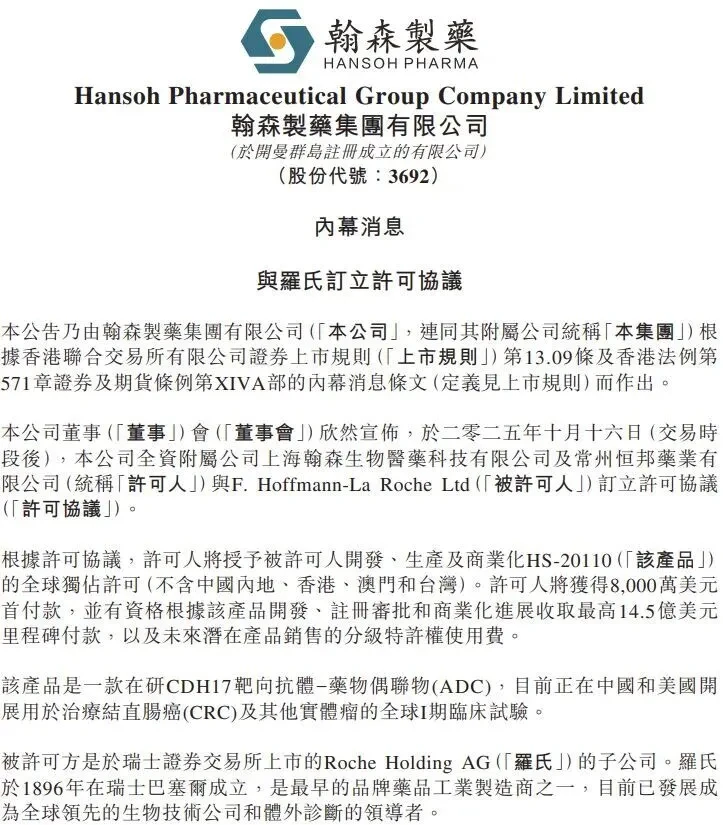
On October 17, 2025, Hansoh Pharma granted Roche the global rights outside of Greater China for its investigational CDH17-targeted ADC drug HS-20110. Roche will pay an upfront payment of $80 million and potential milestone payments of up to $1.45 billion, bringing the total transaction value to $1.53 billion. This deal highlights the significant potential of the CDH17 target in terms of drug development, differentiated competitiveness, and commercial prospects. Currently, HS-20110 is in Phase 1 clinical trials.
CDH17: A Novel Tumor Target of Growing Interest in Recent YearsCDH17 (Cadherin 17), also known as Liver–intestine cadherin (LI-cadherin), or Human Peptide Transporter-1 (HPT-1), is an atypical member of the cadherin family, belonging to the 7-D subfamily. It features a long extracellular region containing seven Cadherin domains (EC1-EC7). Among these, EC1-EC2 are the distal membrane domains, or the N-terminal extracellular region, responsible for intercellular binding and most accessible for antibody recognition. The middle segment, EC3-EC5, may contribute to molecular flexibility and folding states, distinguishing between normal and tumor conformations. EC6 and EC7 are the proximal membrane domains, with EC6 containing the RGD motif, which exists in most mammals and mediates integrin recognition. CDH17 has a relatively short intracellular region and lacks the conserved cytoplasmic tail found in classical cadherins.
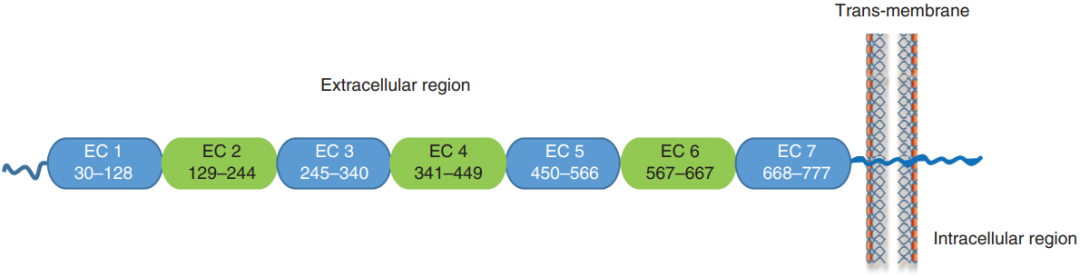
CDH17 Structure[1]
CDH17 is primarily expressed in the gastrointestinal system, especially in colorectal enterocytes, Paneth cells, and goblet cells, functioning to mediate cell adhesion and maintain the integrity of epithelial cells. Additionally, as a proton-dependent peptide transporter, CDH17 promotes water absorption and regulates intestinal permeability. Meanwhile, CDH17 is a Ca2+Dependent cell adhesion molecules can initiate cell adhesion signals by binding to integrin molecules such as Integrin α2β1 and αIIbβ3, which is referred to as heterotypic interaction.
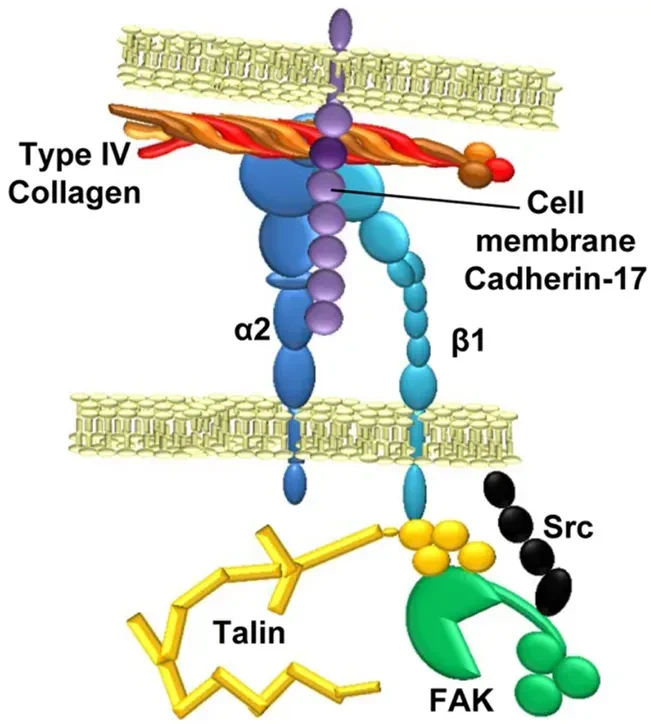
CDH17 Binds to Integrin α2β1[2]
CDH17 can also mediate homotypic trans-interactions through different EC domains.[3], participating in tight junctions and aggregation between cells. In tumor cells, these heterotypic and homotypic interaction capabilities may be simultaneously altered, leading to enhanced cell migration and adhesion abilities while weakening intercellular connections, causing cells to become detached and invasive.
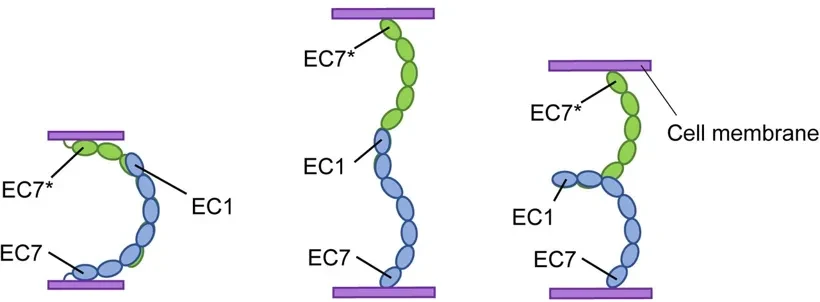
Homotypic Trans Interaction of CDH17[3]
CDH17 is highly expressed in a significant proportion of colorectal tumors and other gastrointestinal malignancies, including gastric cancer.[4], Pancreatic Cancer[5], Liver Cancer[6], Neuroendocrine Tumors[7]And carcinoid tumors. Compared with normal mucosa, the expression of CDH17 is usually relatively low in the early stages of cancer (such as colorectal cancer), but increases in the advanced stage, especially during liver metastasis. CDH17 has now become a star target for solid tumors, particularly gastrointestinal tumors, and due to its advantages such as high tumor specificity and membrane localization, it is very suitable as a target for targeted antibodies or ADCs.
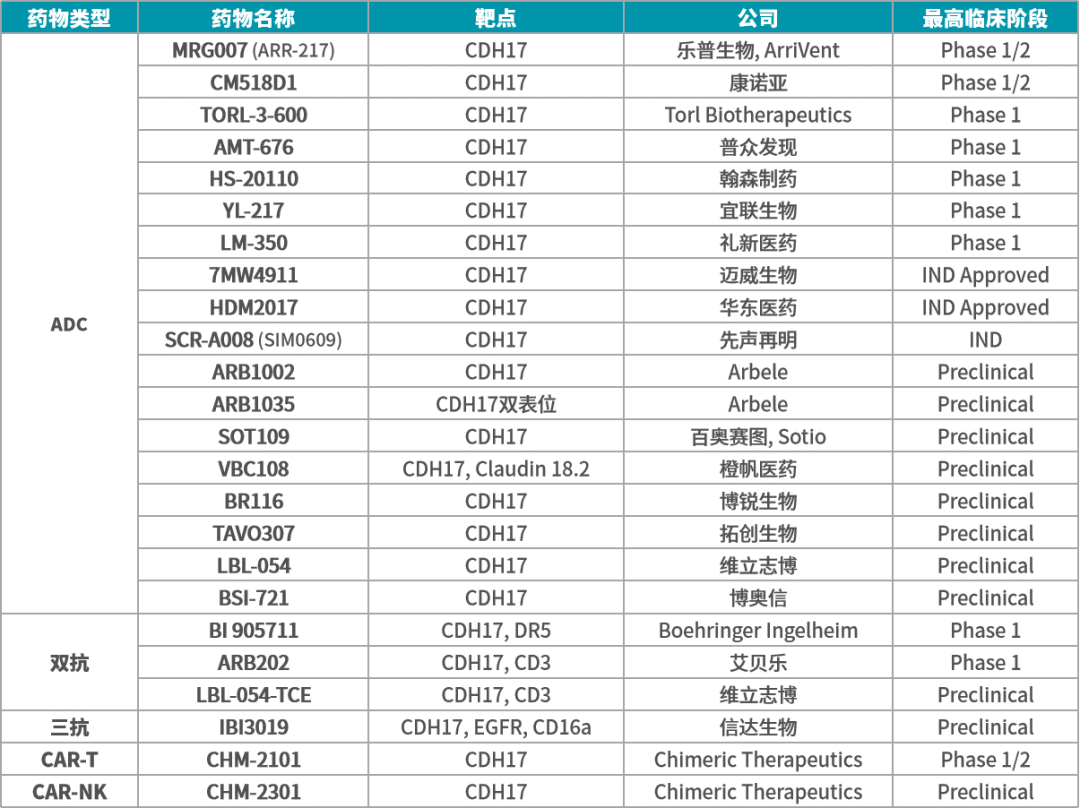
The development of targeted drugs around CDH17 is proceeding rapidly, with ADC being the most common type of targeted drug for CDH17 currently. In addition to Hansoh Pharma's HS-20110, other highly anticipated drugs include 7MW4911 from Mabwell, SIM0609 from Simcere, and MRG007 from Lepu Biopharma. Other types such as bispecific antibodies and bispecific ADCs (e.g., Novartis[8]), triple antibody, and cell therapy have all been deployed, demonstrating the clear therapeutic potential and broad translational prospects of CDH17 in gastrointestinal tumors such as colorectal and gastric cancer.
Among these drugs, most recognize the EC1-EC2 domains of CDH17, such as 7MW4911.[9]etc. This type of distal membrane epitope may enhance the internalization effect of ADCs and improve drug accessibility and binding efficiency. However, there are also epitopes designed in other EC regions, such as Aibole's TCE ARB202, which targets the CDH7 EC5-EC7 region to prevent CDH17 from binding to integrins and to inhibit the shedding of the extracellular domain. Therefore,The extracellular domains of CDH17, including EC1-EC7, determine the mechanism of action and selectivity of drugs. Domain-specific research is the key foundation for the precise design of CDH17-targeted drugs.Promising to form a multi-mechanism, diversified combination therapy system, enhancing the long-term efficacy and drug resistance management potential of CDH17-targeted therapies.
CDH17 Partial Drugs
High-quality tool proteins are the foundation of targeted drug development. Kactus Biosystems has independently designed and developed a highly active CDH17 recombinant protein.Exclusive supply of Domain products covering EC1-EC7 of CDH17 extracellular domains, all products have passed strict quality inspections and can meet customers' needs in different scenarios such as animal immunization, antibody screening, and epitope identification.
Data Example:
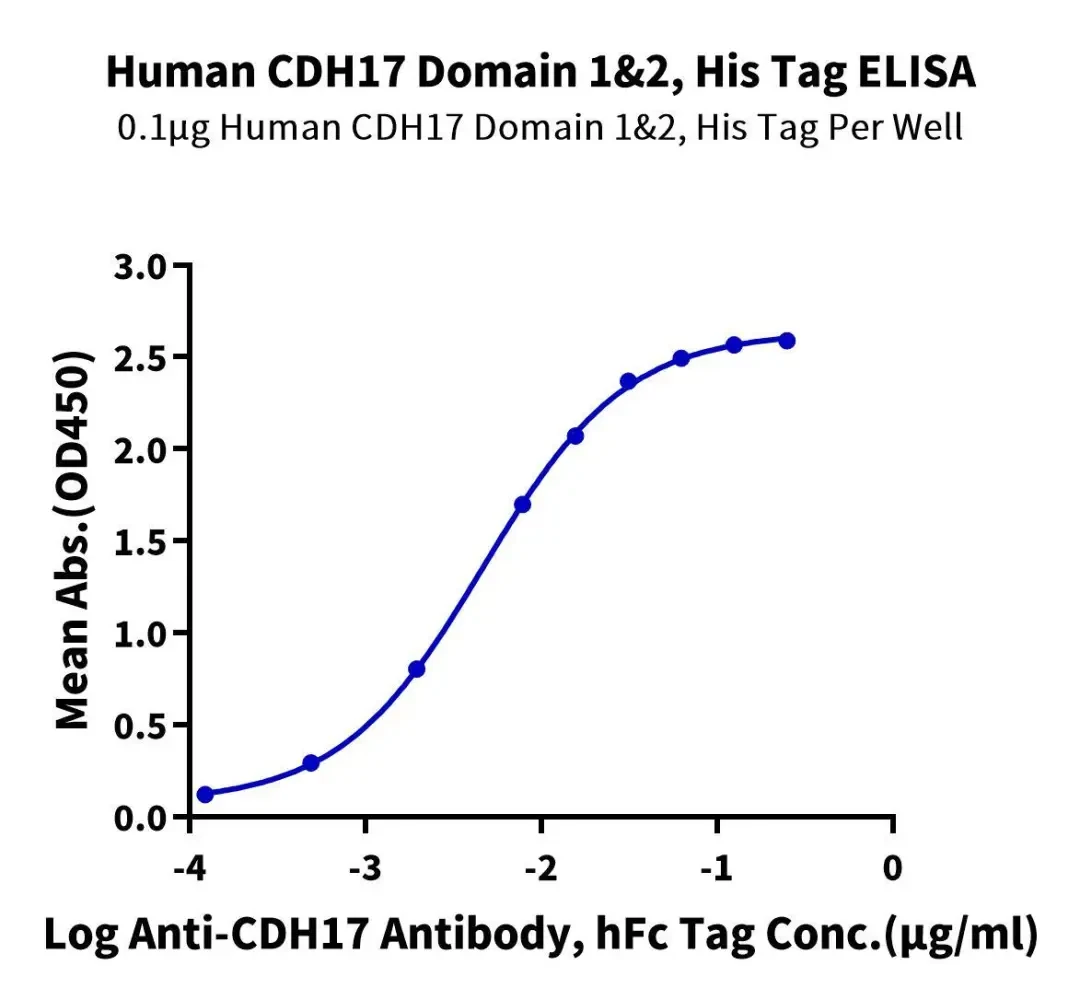
Immobilized Human CDH17 Domain 1-2, His Tag at 1 μg/ml (100 μl/well) on the plate. Dose response curve for Anti-CDH17 Antibody, hFc Tag with the EC50 of 4.7 ng/ml determined by ELISA (QC Test).
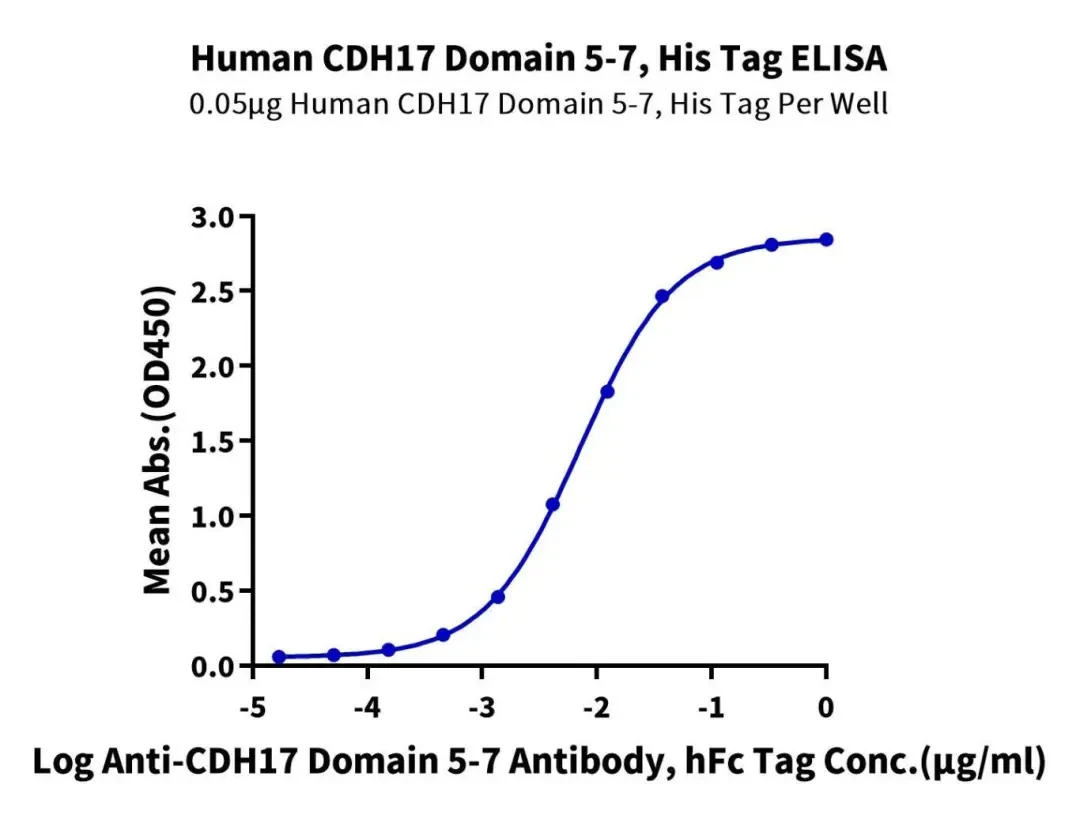
Immobilized Human CDH17 Domain 5-7, His Tag at 0.5 μg/ml (100 μl/well) on the plate. Dose response curve for Anti-CDH17 Domain 5-7 Antibody, hFc Tag with the EC50 of 7.1 ng/ml determined by ELISA (QC Test).
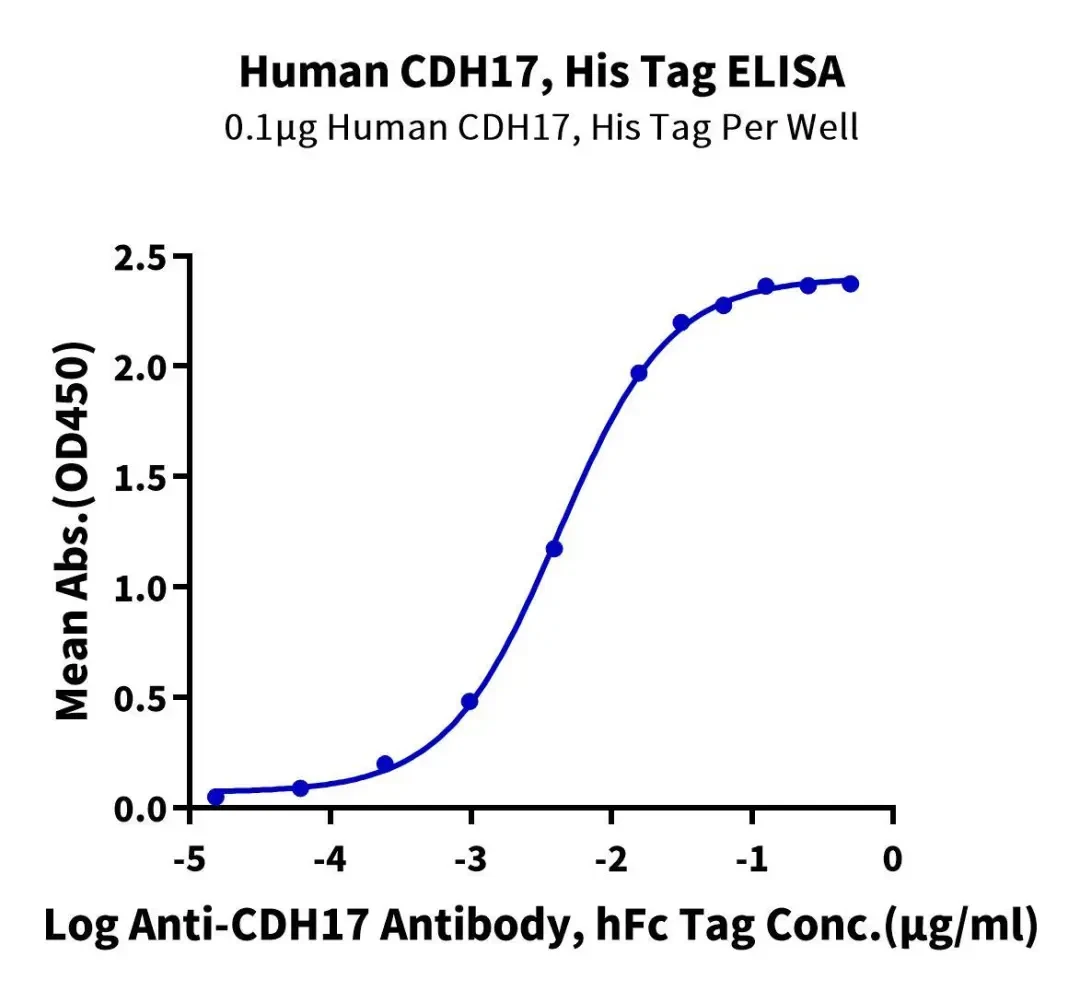
Immobilized Human CDH17, His Tag at 1 μg/ml (100 μl/Well) on the plate. Dose response curve for Anti-CDH17 Antibody, hFc Tag with the EC50 of 4.1 ng/ml determined by ELISA (QC Test).
Product List:
References(Swipe up and down to view):
[1] Immunoaffinity enrichment LC-MS/MS quantitation of CDH17 in tissues. Bioanalysis. 2020 Oct;12(20):1439-1447. doi: 10.4155/bio-2020-0162.
[2] An RGD motif present in cadherin 17 induces integrin activation and tumor growth. J Biol Chem. 2014 Dec 12;289(50):34801-14. doi: 10.1074/jbc.M114.600502.
[3] Mechanism of dimerization and structural features of human LI-cadherin. J Biol Chem. 2021 Aug 6;297(3):101054. doi: 10.1016/j.jbc.2021.101054
[4] CDH17 Is a More Sensitive Marker for Gastric Adenocarcinoma Than CK20 and CDX2. Arch Pathol Lab Med. 2017 Jan;141(1):144-150. doi: 10.5858/arpa.2015-0404-OA.
[5] Identification and Validation of Novel Subtype-Specific Protein Biomarkers in Pancreatic Ductal Adenocarcinoma. Pancreas. 2017 Mar;46(3):311-322. doi: 10.1097/MPA.0000000000000743.
[6] Targeting cadherin-17 inactivates Wnt signaling and inhibits tumor growth in liver carcinoma. Hepatology. 2009 Nov;50(5):1453-63. doi: 10.1002/hep.23143.
[7] Expression of cadherin 17 in well-differentiated neuroendocrine tumours. Histopathology. 2015 Jun;66(7):1010-21. doi: 10.1111/his.12610. Epub 2015 Jan 13.
[8] A bispecific antibody-drug conjugate targeting pCAD and CDH17 has antitumor activity and improved tumor-specificity. MAbs. 2025 Dec;17(1):2441411. doi: 10.1080/19420862.2024.2441411.
[9] Overcoming multidrug resistance in gastrointestinal cancers with a CDH17-targeted ADC conjugated to a DNA topoisomerase inhibitor. Cell Rep Med. 2025 Jul 1;6(7):102213. doi: 10.1016/j.xcrm.2025.102213
[10] Global Disparities in Colorectal Cancer: Unveiling the Present Landscape of Incidence and Mortality Rates, Analyzing Geographical Variances, and Assessing the Human Development Index. J Prev Med Hyg. 2025 Jan 31;65(4):E499–E514. doi: 10.15167/2421-4248/jpmh2024.65.4.3071
[11] Analysis of trends in the burden of colorectal cancer in China and globally from 1990 to 2021 with projections for the next 15 years: a cross-sectional study based on the GBD database. Front Public Health. 2025 Jun 27:13:1635228. doi: 10.3389/fpubh.2025.1635228.
[12] CDX2 regulates liver intestine-cadherin expression in normal and malignant colon epithelium and intestinal metaplasia. Gastroenterology. 2002 Nov;123(5):1565-77. doi: 10.1053/gast.2002.36598.
[13] Beyond N-Cadherin, Relevance of Cadherins 5, 6 and 17 in Cancer Progression and MetastasisInt J Mol Sci. 2019 Jul 9;20(13):3373. doi: 10.3390/ijms20133373.

400-614-0008
www.kactusbio.cn
support@kactusbio.com