

Investors Deconstruct Brain-Computer Interfaces: Not All “Technologically Leading” Ventures Are Worth Betting On

Delian Capital
Investment Institution Specializing in Technology and Innovative Healthcare Sectors

BrainCo
Non-invasive brain-computer interface technology solution provider

StairMed
Developer of Implantable Brain-Computer Interface Technology

Gestala
Ultrasound Brain-Computer Interface Technology Developer
The speed at which money poured in was surprising even to industry insiders.
“The first half of the year wasn’t that hot, but in the second half, valuations of companies in the primary market surged dramatically, even doubling. Similar to the tech sector, before this funding round has closed, negotiations for the next round are already underway,” described an investor focused on the brain science sector, outlining the changes in the primary market for brain-computer interfaces (BCI) in 2025.
Investment and financing data from research institutions are more illustrative. According to statistics from IT Juzi, a total of 104 financing deals amounting to RMB 9.37 billion were completed in China's brain-computer interface sector from 2013 to May 2026. The financing volume in the first half of 2026 alone accounted for nearly 60% of the total over the past 13 years.
At the corporate level, these developments are even more tangible. Early this year, BrainCo completed a Series B+ financing round of approximately RMB 2 billion, setting a new record for the largest single funding round in China’s brain-computer interface (BCI) sector, with a post-money valuation of $1.3 billion. Shortly thereafter, in March, StairMed secured an additional RMB 500 million in strategic financing, marking the first BCI investment made by Alibaba and Tencent. Gestala Tech raised RMB 150 million in its angel round just two months after its establishment.
Industry-specific and government-led special funds are also rolling out in succession. Driven by the dual catalysts of policy and capital, brain-computer interfaces have reached a critical juncture for transitioning from technological breakthroughs to commercialization.
1The Convergence of Demand Certainty and Technological Sophistication: The Most Ideal Investment Window
Brain science is not a single-track field; it possesses cross-sector attributes spanning medical devices, medical technology, and broad consumer healthcare. It encompasses multiple directions, including basic research, brain-computer interfaces (BCI), neuromodulation, and rehabilitation equipment, with significant variations in maturity across these areas. Unlike traditional medical devices—such as interventional access products, which are already relatively mature—brain-computer interfaces are still in their infancy. The BCI sector may experience a bubble and subsequent burst before gradually moving toward maturity.
The ultimate goal of brain-computer interfaces (BCIs) extends far beyond addressing clinical needs; it aims to realize human-machine interaction, human enhancement, and human-machine symbiosis. However, achieving this endgame requires large-scale clinical applications as the first stage. As the BCI industry is still in its early stages and must navigate through bubble cycles, how should investors approach investment at this current phase? Technology and demand are two indispensable variables in valuing BCI companies and constitute the two core factors shaping investment institutions' target selection logic.
Jiang Donghui, a partner at Delian Capital, uses a simple matrix to break down the current investment logic. The horizontal axis represents demand space, and the vertical axis represents technological advancement, forming four quadrants.
The upper right quadrant represents technological leadership and clear demand. This is the most ideal investment range. Taking Delian Capital’s strategic layout in visual reconstruction as an example, according to the latest data from the World Health Organization, approximately 43 million people worldwide are currently blind, with an additional 295 million suffering from moderate to severe vision impairment. Given the large patient population and the more tangible life challenges posed by visual impairment compared to hearing and speech disabilities, this field represents an area of rigid demand. The underlying technological mechanism is also relatively clear: it involves capturing external signals to stimulate the V1 area of the visual cortex, establishing a mapping relationship that allows blind individuals to “see” contours composed of light points. Mindtrix, a company invested in by Delian Capital, is operating in this direction.
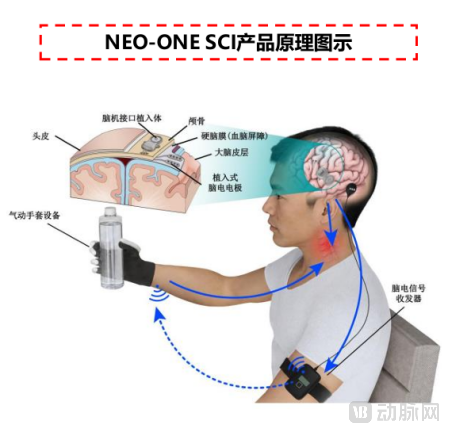
Motor function reconstruction for spinal cord injury also falls within this quadrant; enabling paraplegic patients to walk again represents the most intuitive clinical value of brain-computer interfaces (BCIs). The NEO system, an implantable BCI-based hand motor function compensation system developed by Neuracle, is a highly representative product. On July 13, the first prescription for this system was issued in Shanghai following its market approval, and the world’s first implantation surgery was successfully performed at Huashan Hospital, Fuandan University.
The top left quadrant represents technologies that are leading but whose demand has not yet fully materialized. Ultrasound-based brain-computer interfaces are a typical representative. By non-invasively accessing deep brain regions, they enable neuromodulation or signal acquisition and imaging, offering broad application potential; however, no Class III medical device approval has been granted globally to date.
“No matter how advanced the technology is, if it fails to translate into actual demand and lacks technological convergence, caution is warranted.” Jiang Donghui expressed her views.
The bottom right corner indicates demand with a low technical barrier. This type of demand corresponds to broad consumer scenarios, such as non-invasive neuromodulation products for treating sleep disorders and depression, as well as some consumer-facing EEG applications. The target audience is large, but the technical barriers are relatively low, leading to intense competition. “This sector is somewhat mixed in quality. If you launch a mediocre product, consumers’ curiosity may drive them to give it a try; however, to truly address practical problems, you need to deliver a product that scores 80–90 out of 100,” Jiang Donghui used a simple example to describe the current state of business in this quadrant.
This matrix elucidates the investment preferences of an institution focused on brain science, prioritizing serious medical scenarios. It also clearly delineates the current capital landscape for brain-computer interface (BCI) enterprises, which are advancing along three distinct technological pathways—invasive, semi-invasive, and non-invasive—with a results-oriented approach.
2Semi-invasive devices secure regulatory approval first, while non-invasive solutions achieve monetization earlier.
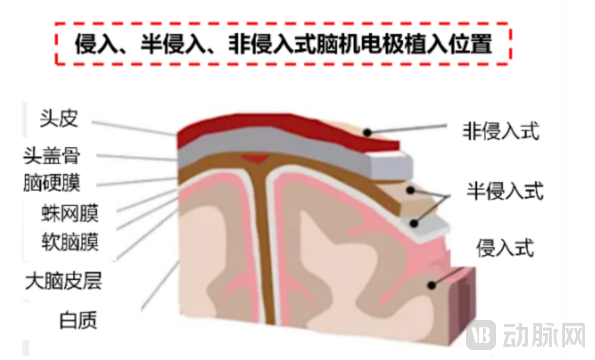
Brain-computer interfaces are categorized into three approaches based on signal acquisition methods: invasive, with electrodes implanted in the cerebral cortex; semi-invasive, positioned epidurally or on the cortical surface; and non-invasive, with signals collected from the scalp surface.
Source: CSC Financial Research Report
Players on these three paths found themselves in vastly different positions by 2026.
Semi-invasive devices were the first to secure commercialization approval. On March 13 this year, Neuracle’s NEO brain-computer interface (BCI) system received approval from the National Medical Products Administration (NMPA), becoming the world’s first approved invasive BCI product. It employs an epidural implantation approach, requiring only a 2-mm-deep groove milled into the skull to secure the implanted device, which is approximately the size of two coins. Compared with approaches that directly implant electrodes into the cerebral cortex, this method offers relatively limited signal bandwidth but entails lower surgical trauma and reduced risk of brain tissue reactions, better aligning with the safety and reproducibility requirements of the current clinical rollout phase.
However, the current functionalities implemented by the NEO system are primarily focused on hand grasping, which has sparked some controversy within the industry due to the perception that its capabilities remain relatively limited. Nevertheless, according to insiders in the industry, In addition to grasping function, the NEO system also offers improvements in partial neurological functional reconstruction, including improved bladder and bowel control in some patients.
Source: CITIC Securities Research Report
It is worth emphasizing that the system took a total of 28 months from the first clinical trial to approval. It obtained the medical insurance code within 48 hours after approval. The case of Neuracle exemplifies the state’s systematic support for brain-computer interfaces, carrying profound symbolic significance.
Neuracle has submitted its IPO application for the STAR Market this June. In the same sector is NeuCyber, a company incubated by the Beijing Institute for Brain Disorders and Brain-like Intelligence. Its “Beinao No. 1” is the world’s first semi-invasive brain-computer interface system featuring over one hundred channels and fully wireless implantation. As of June 2026, nearly 30 human implantations have been completed, accumulating more than 70,000 hours of safe operation. The first patient has had the implant for over 15 months, with the system demonstrating sustained and stable performance.
Among overseas players in the semi-invasive brain-computer interface space, Synchron pursues a vascular intervention approach, delivering electrodes to the motor cortex via the jugular vein without requiring craniotomy, and has already completed multiple human implants in the United States. Precision Neuroscience adopts a thin-film electrode approach, placing ultra-thin electrodes on the surface of the cerebral cortex, and has received approval for short-term commercial implantation.
Non-invasive approaches were the first to generate revenue. BrainCo is currently the fastest-moving company in terms of commercialization within the non-invasive brain-computer interface (BCI) sector. Its product portfolio includes smart bionic hands, bionic legs, attention training systems, and sleep devices, having already achieved a certain scale of revenue in the consumer market. In early 2026, BrainCo completed approximately RMB 2 billion in financing, marking the second-largest funding round globally in the BCI field, trailing only Neuralink. The company has also filed for an initial public offering (IPO), competing with NeuroBooster to become the "first listed BCI company."
However, the non-invasive sector has many players and faces intense competition. BrainUp focuses on sleep and mental health. Since completing its angel round in 2019, BrainUp has successively secured Pre-A, A, A+, and Series B financing (in May 2022). Investors include Chongqing venture capital co..ltd., Ocean Capital Limited, and the Jinan Biomedical Medical Fund of Funds, with cumulative financing reaching hundreds of millions of yuan. ZhenTec combines “brain-computer interfaces (BCI) + exoskeleton robots,” targeting rehabilitation scenarios. HuiChuang Medical specializes in functional near-infrared spectroscopy (fNIRS), a type of optical BCI, and collaborated with Tongji Hospital affiliated to Huazhong University of Science and Technology to establish the first BCI assessment outpatient clinic in Central China. Pengrui Neuroscience’s portable electroencephalogram (EEG) device has obtained Class II medical device certification.
Another key player on this path worthy of close attention is Gestala. Despite being recently established, it has secured the most aggressive funding, completing a RMB 420 million Angel+ round on July 3. The round was led by Meridian Capital, with participation from over ten institutions, including HSG (formerly Sequoia China), Lens Technology, and C Capital. Combined with its RMB 150 million Angel round in March, the company has raised a cumulative total of RMB 570 million in just six months, setting a new record for early-stage financing in China’s brain-computer interface (BCI) sector. Gestala pursues an ultrasonic BCI approach that avoids craniotomy and electrode implantation; instead, it uses ultrasound waves to penetrate the skull and modulate neurons, while simultaneously reading signals by capturing microvascular blood flow changes induced by neural activity.
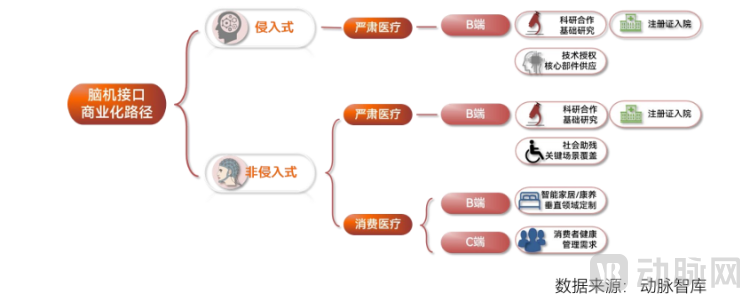
“The technological barrier is not particularly high, leading to intense competition. Developing consumer-facing products places stringent demands on a team’s capabilities in product definition, marketing, and channel distribution, which follows an entirely different logic compared to developing regulated medical devices,” Jiang Donghui pointed out.
According to data from the China Academy of Information and Communications Technology, 88% of domestic brain-computer interface (BCI) companies have opted for non-invasive approaches, citing safety, lower entry barriers, and faster commercialization. Consequently, this sector has become visibly crowded.
Invasive approaches take the longest path, yet they offer the greatest room for imagination.
This is the direction Elon Musk has bet on. Since its founding in 2014, Neuralink has completed more than 20 human implants to date, achieving functionalities such as cursor control and speech decoding, and, according to public reports, plans to initiate clinical trials for visual restoration. Its three major product lines correspond to motor disorders (Telepathy), visual impairments (Blindsight), and neuromodulation (Deep).
Among domestic companies pursuing this approach, Neuracle is at the forefront. In December 2025, it launched China’s first fully implantable, fully wireless, and fully functional brain-computer interface (BCI) with an integrated battery. The device has completed its first clinical trial, enabling the patient to control a computer cursor, wheelchair, and robotic arm using thoughts just five days post-surgery. The decoding rate reached 5.2 bits per second (BPS), comparable to the leading international standards.
StairMed is another key player, having completed its Series B financing round in March this year, led by Alibaba. Jieti Medical pursues an ultra-flexible electrode approach, with electrode dimensions only one-fifth the size of Neuralink’s; the surgical procedure requires only the creation of 3–5 nm micro-holes in the skull. In December 2025, StairMed launched a 256-channel high-throughput wireless invasive brain-computer interface system. The company has already advanced multiple investigator-initiated trials (IITs) and plans to further expand the scale of its clinical studies in 2026.
We-Linking specializes in medical-grade, fully implantable brain-computer interface (BCI) systems, with accumulated expertise in high-density flexible electrodes and specialized chips for neuroelectrophysiology.
In Jiang Donghui's view, Invasive approaches are still in the phase of technological breakthroughs and indication selection. She also emphasized that the three pathways are not mutually exclusive; “different technical solutions address different problems, have distinct prospects, and belong to different niche segments.”
3The US focuses on hardware platforms, while China deepens clinical implementation.
The global competitive landscape of brain-computer interfaces is essentially a race between China and the United States.
Elon Musk’s path is clear: an extreme focus on the hardware platform, centered around high-throughput electrodes, with the goal of enhancing human capabilities. According to public reports, Neuralink plans to increase the number of implanted electrodes to 3,000 by 2026, with a target of exceeding 25,000 by 2028. This reflects a “platform-first, applications-second” strategy.
China’s path is more fragmented and pragmatic. Neuracle has followed the most standard medical device registration pathway; NeuroXess has developed competitive products in flexible electrodes; BrainCo has adopted a consumer-grade strategy to generate revenue first; and PINS Medical and SceneRay already have mature commercialized products in neuromodulation. Different companies have chosen different paths, each moving at its own pace.
Jiang Donghui believes that China’s advantages lie primarily in three areas: abundant clinical resources, strong engineering capabilities, and growing self-sufficiency in upstream fields such as chips and AI.
“The gap between China and the United States is narrowing. While China may lag by three to five years in certain niche sectors, it has taken a leading or even forefront position in some technological pathways. However, claiming that China is comprehensively ahead would be an exaggeration. More accurately, China excels in rapid application translation and large-scale implementation, but there is still room for improvement in foundational, original technologies.” Jiang Donghui further highlighted the differentiated advantages of the current development paths pursued by China and the United States.
A fact is that the world’s first Class III certification for an invasive brain-computer interface was not awarded in Silicon Valley, but in Shanghai.
Policy-driven momentum is also accelerating. 2025 has been dubbed the “Year One of Brain-Computer Interfaces (BCI) in China” by the industry. In January, Beijing and Shanghai successively introduced supportive policies; in March, the National Healthcare Security Administration established a separate project category for brain-computer interfaces; in July, seven ministries and commissions jointly issued a policy document; and by year-end, BCI technology was incorporated into the “15th Five-Year Plan.” Shanghai’s “Hu Hui Bao” supplemental health insurance has already covered consumables used in BCI surgeries, while Zhejiang Province has included adaptation fees for non-invasive BCI devices in its basic medical insurance coverage. In December 2025, the National Medical Products Administration held a special promotional meeting on the regulation and development of BCI medical devices.
It can be said that the capital enthusiasm witnessed today is not a spontaneous market phenomenon, but rather the result of the combined forces of policy, capital, and clinical practice.
4Cross-Industry Capital Enters the Market, Exit Strategies Diverge
Policy dividends attract a large influx of cross-sector capital.
Two to three years ago, capital flowing into brain-computer interfaces (BCI) came primarily from specialized funds in the healthcare sector, which possessed a fundamental understanding of the technology and clinical pathways. Following the implementation of the comprehensive policy measures in 2025, institutions focused on AI and technology have also surged into the field.
“Rapid consensus among investors does not mean that everyone’s understanding is aligned; the fundamental logic for some capital has not been established,” shared Jiang Donghui, offering her observations.
Compared to other sectors, investment in brain-computer interfaces has several distinct characteristics.
The industrial cycle for brain-computer interfaces (BCIs) is long. While AI large-model companies can go from inception to IPO rapidly, BCIs require at least five to eight years to progress from the laboratory to obtaining Class III medical device certification. Projects with such extended technological cycles often outlast the lifespan of venture capital funds, failing to align with commercialization milestones, and present more complex exit mechanisms.
This sector also carries higher uncertainty. The core risk of AI lies in its commercialization pathway, the core risk of innovative drugs lies in clinical data, and the core risk of brain-computer interfaces lies in the failure to translate technology into viable products.
“The technology is impressive, and the narrative is compelling, but the core technology may fail to translate into a viable product. I believe this poses a significant risk,” pointed out Jiang Donghui.
In terms of exit pathways, this sector offers greater diversity. Platform-based companies are well-suited for initial public offerings (IPOs); BrainCo is already in the queue, while PINS Medical is preparing for its own. Companies with a single product or indication are more suitable for acquisition by major corporations; overseas giants such as Medtronic and Boston Scientific have been actively acquiring neurotechnology firms. For those facing excessively long technology cycles, partial exits can be achieved through S funds or secondary share transfers.
In Jiang Donghui’s view, the specific path a company should take depends on its type. Companies with diverse product portfolios and substantial commercial scale are better suited for pursuing an initial public offering (IPO) as a platform company, whereas those focused solely on a single indication have limited room for future expansion and may be more suitable for acquisition by larger pharmaceutical or biotech firms.
5AI Large Models Are Useful, But Not a Panacea
“AI + Brain-Computer Interface” is a narrative highly favored by the capital market.
Brain-computer interfaces (BCIs) address the ultimate form of human-computer interaction, yet the number of channels has long remained a critical bottleneck. Non-invasive BCIs offer only dozens of channels with suboptimal signal quality, while even invasive BCIs, despite having thousands of signal channels, fall far short of the number of natural neural pathways. The integration of AI aids in decomposing complex tasks at the decoding end and enhancing signal precision. Furthermore, large language models equip machines with capabilities in language understanding, logical reasoning, task planning, and autonomous learning, enabling them to process complex semantic information and adapt to dynamic environments.
However, Jiang Donghui holds a different perspective. “AI is now a foundational tool that every enterprise will utilize. But does the adoption of large language models by brain-computer interface (BCI) companies necessarily enhance their algorithmic capabilities? Not necessarily. It is not a one-size-fits-all application,” stated Jiang Donghui.
The algorithmic requirements for brain-computer interfaces (BCIs) are highly customized. The algorithmic logic differs significantly across domains such as motor decoding, language decoding, and visual reconstruction. AI’s contribution is primarily reflected at the level of foundational tools, rather than simply integrating large language models to accelerate commercialization.
This presents an interesting contrast to the investment logic inherent in the AI sector. While large AI model companies pursue generality and scalability, the algorithmic demands of brain-computer interfaces (BCIs) are distinctly non-generalizable, requiring customized development for each indication and every signal type.
BCI-Sonics is one of the concrete embodiments of the “AI + Brain-Computer Interface” combined narrative.
BCI-Sonics has independently developed a transcranial phase correction algorithm that enables rapid individualized calibration, enhancing transcranial focusing precision to 1.5 mm. This marks China’s first quasi-commercial ultrasound brain-computer interface system equipped with a transcranial phase correction algorithm.
Just last month, BCL-Sonics completed an angel round of financing amounting to hundreds of millions of RMB. The angel round was exclusively led by MPCi, while the angel+ round was co-led by Delian Capital and Tao Capital, with Xunguang Capital serving as the exclusive financial advisor.
Viewed within the financing rhythm of 2025 to 2026, this figure alone is telling. It is uncommon in the brain-computer interface (BCI) sector for a company founded as recently as July 2025 to secure a series funding round worth hundreds of millions of yuan at the angel stage.
While large-scale financing rounds certainly draw attention, investors are not merely captivated by the concept of “AI + Brain-Computer Interfaces.” MPCi stated bluntly in its investment commentary that the company’s core team has established formidable technical barriers in underlying algorithms and transducer manufacturing processes. Delian Capital, meanwhile, emphasized that the company is a rare platform enterprise in China capable of independent research and development across the entire industry chain, possessing core competencies in acoustics-related hardware, algorithm R&D, high-integration medical device development, and regulatory registration.
In other words, capital is betting on a full-chain capability spanning from algorithms to transducers and from prototypes to regulatory registration, rather than on the fused concept of “AI + Brain-Computer Interface.”
6Conclusion
The uniqueness of the brain science sector lies in the fact that the path from laboratory to clinic is far longer than anticipated. Each stage—indication selection, clinical trial design, regulatory approval, and commercialization—is also more complex than expected, which constitutes its appeal to investors.
Ultimately, the brain-computer interface (BCI) sector is not one that can be simply summarized as either “bullish” or “bearish.” It requires a layered analysis: different technological pathways have distinct timelines, various application scenarios present unique competitive landscapes, and different exit routes correspond to different types of enterprises.
No single technological approach will dominate the market. AI algorithms serve merely as supportive tools rather than accelerators for commercialization. The companies that will ultimately succeed are those that balance foundational technical barriers, standardized clinical value, and stable commercialization pathways.