Nanochap Achieves China's First High-Resolution Retinal Visual Brain-Computer Interface Breakthrough, Restoring Sight to the Blind

Nanochap
Core Chip Developer in the Biomedical Field


China’s First High-Resolution Retinal Pathway Visual Brain-Computer Interface GCP Clinical Trial Achieves SuccessA high-resolution retinal pathway visual brain-computer interface (BCI) product, independently developed by Nanochap, a portfolio company of Legend Capital, has recently achieved success in its Good Clinical Practice (GCP) clinical trial. The device helped a patient who had been blind for nearly 20 years regain light perception and successfully recognize letters and patterns, marking a critical step forward for China’s visual BCI technology as it transitions from the laboratory to clinical application. On July 22, Zhejiang Daily published a special report on this breakthrough.
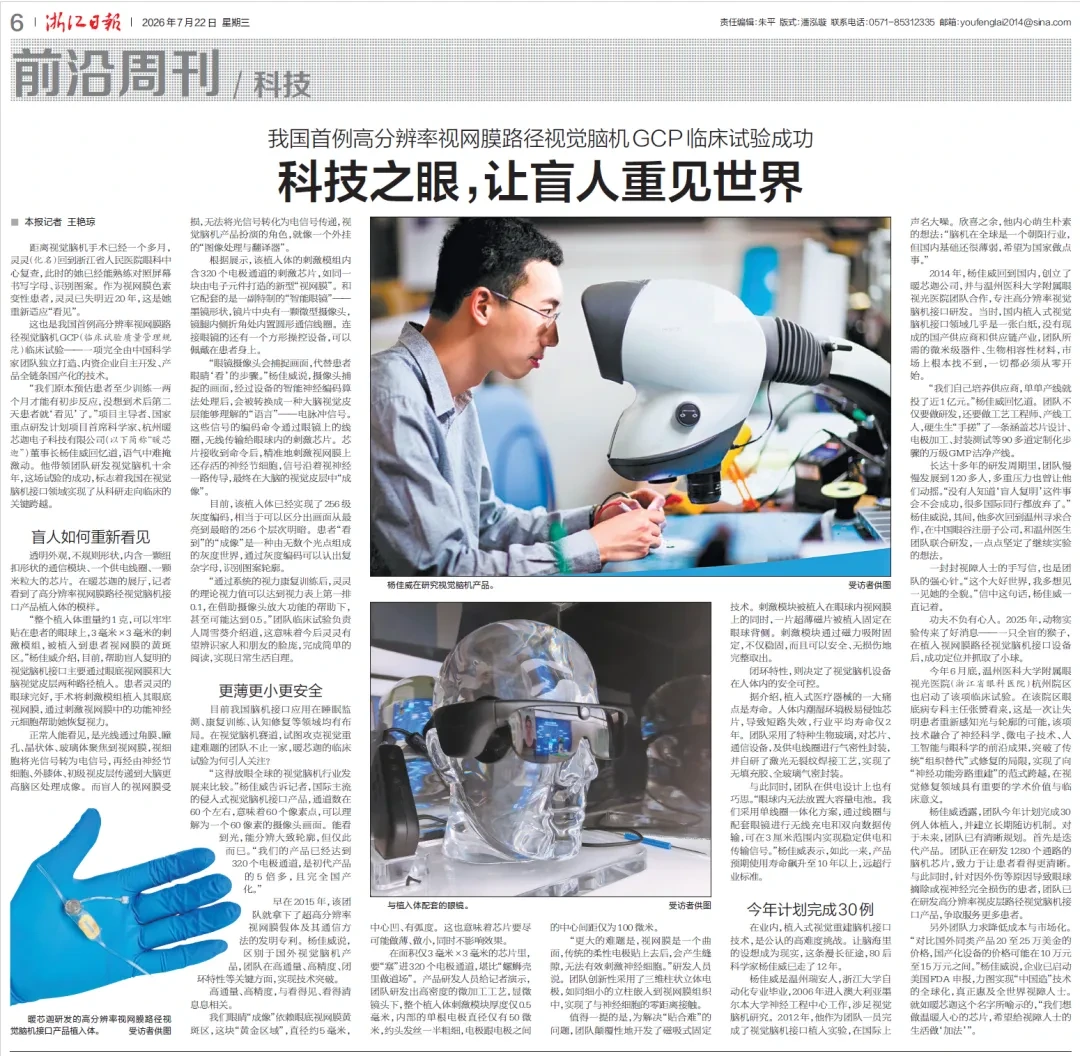
The following is the original report:
More than a month after the visual brain-computer interface surgery, Lingling (a pseudonym) returned to the Eye Center of Zhejiang Provincial People's Hospital for a follow-up examination. She can now proficiently write letters and recognize patterns by referencing the screen. As a patient with retinitis pigmentosa who had been blind for nearly 20 years, Lingling is re-adapting to "seeing."
This also marks China’s first Good Clinical Practice (GCP)-compliant clinical trial for a high-resolution retinal pathway visual brain-computer interface—a technology independently developed by a Chinese scientific team, autonomously created by domestic enterprises, and fully localized across the entire product supply chain.
“We initially estimated that patients would need at least one to two months of training before showing any initial response, but unexpectedly, the patient ‘saw’ on the second day after surgery,” recalled Yang Jiawei, the project leader, chief scientist of the National Key R&D Program, and Chairman of Nanochap Electronics Co., Ltd. (hereinafter referred to as “Nanochap”), his voice unable to conceal his excitement. Having led his team in researching visual brain-computer interfaces for over a decade, the success of this trial marks a critical leap for China in the field of visual brain-computer interfaces, transitioning from scientific research to clinical application.
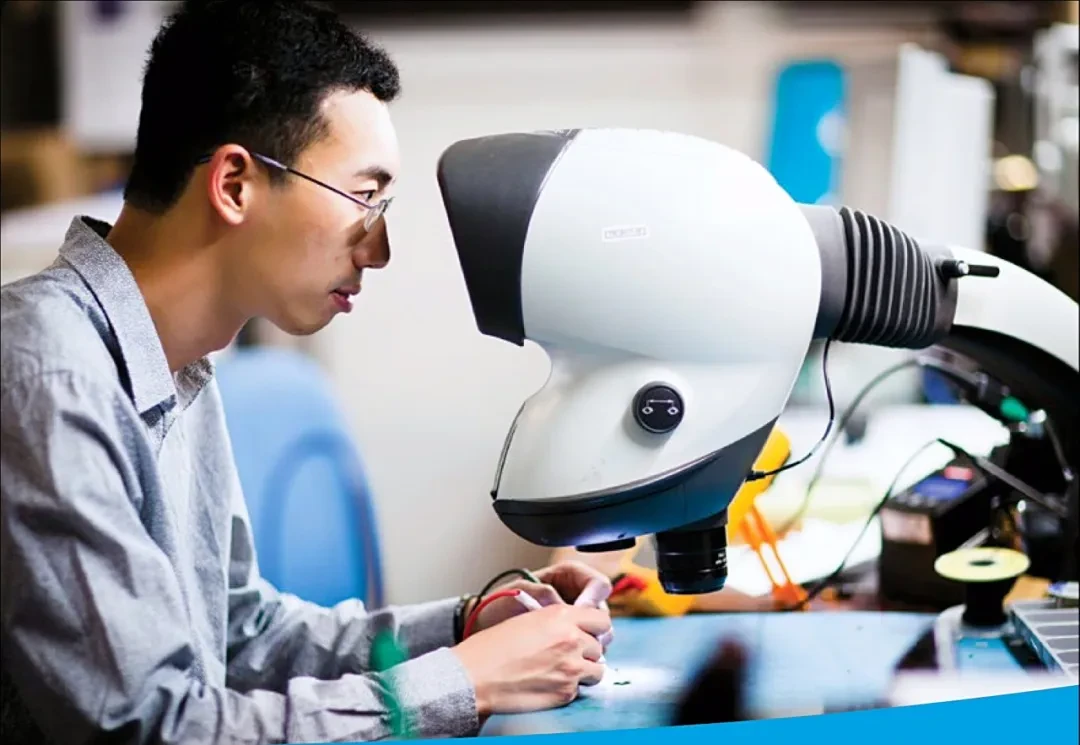
Yang Jiawei is researching visual brain-computer interface products.
· How the Blind Can Regain Their Sight
Transparent in appearance and irregular in shape, the implant contains a button-shaped communication module, a power supply coil, and a chip the size of a grain of rice. At Nanochap’s showroom, reporters observed the high-resolution retinal pathway visual brain-computer interface (BCI) implant.
“The entire implant weighs approximately 1 gram and can be firmly attached to the patient’s eyeball. The 3 mm × 3 mm stimulation module is implanted into the macular region of the patient’s retina,” introduced Yang Jiawei. He explained that current visual brain-computer interfaces designed to restore sight in blind patients are primarily implanted via two pathways: the retinal fundus and the cerebral visual cortex. Since the patient, Lingling, has intact eyeballs, the surgical procedure involved implanting the stimulation module into her retinal fundus. This approach aims to help her regain vision by stimulating functional neuronal cells within the retina.
In individuals with normal vision, light passes through the cornea, pupil, lens, and vitreous body to focus on the retina. Photoreceptor cells convert light signals into electrical signals, which are then transmitted via retinal ganglion cells, the lateral geniculate nucleus, and the primary visual cortex to higher-order brain regions for image processing. In blind individuals, retinal damage prevents the conversion and transmission of light signals into electrical impulses. Visual brain-computer interface products function as an external “image processor and translator.”
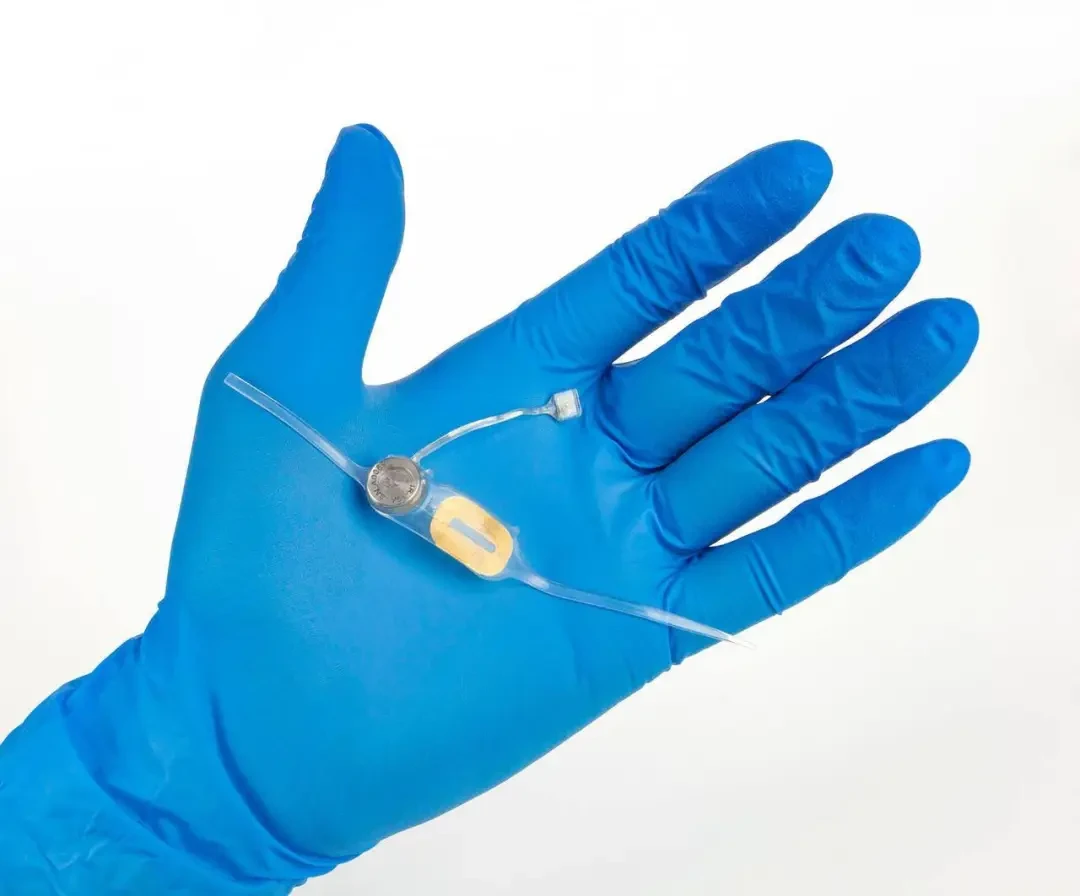
Nanochap's High-Resolution Retinal Pathway Visual Brain-Computer Interface Implant
As demonstrated, the implant’s stimulation module contains a stimulation chip with 320 electrode channels, functioning as a novel “retina” crafted from electronic components. It is paired with a pair of customized “smart glasses”—sunglass-shaped, with a miniature camera at the center of the lenses and a circular communication coil embedded in the inner bend of the temples. Also connected to the glasses is a square control device that can be worn on the patient’s body.
“The glasses’ camera captures images, replacing the step where the patient’s eyes ‘see,’” said Yang Jiawei. The images captured by the camera are processed by the device’s intelligent neural encoding algorithm and converted into a “language” understandable by the brain’s visual cortex—electrical pulse signals. The encoded commands of these signals are wirelessly transmitted via coils on the glasses to a stimulation chip implanted within the eye. Upon receiving the commands, the chip precisely stimulates the surviving retinal ganglion cells. The signals are then conducted along the optic nerve, ultimately forming an “image” in the brain’s visual cortex.
Currently, the implant has achieved 256-level grayscale encoding, equivalent to distinguishing 256 levels of brightness from the brightest to the darkest in an image. The "vision" perceived by patients is a grayscale world composed of countless light points, enabling them to recognize complex letters and identify pattern outlines through grayscale encoding.
“After systematic visual rehabilitation training, Lingling’s theoretical visual acuity can reach 0.1, corresponding to the first row of the Snellen chart, and with the aid of camera magnification features, may even reach 0.5,” introduced Zhou Xuekui, head of the team’s clinical trials. This means that Lingling is expected to be able to recognize the faces of family and friends, perform simple reading tasks, and achieve independence in daily living activities.
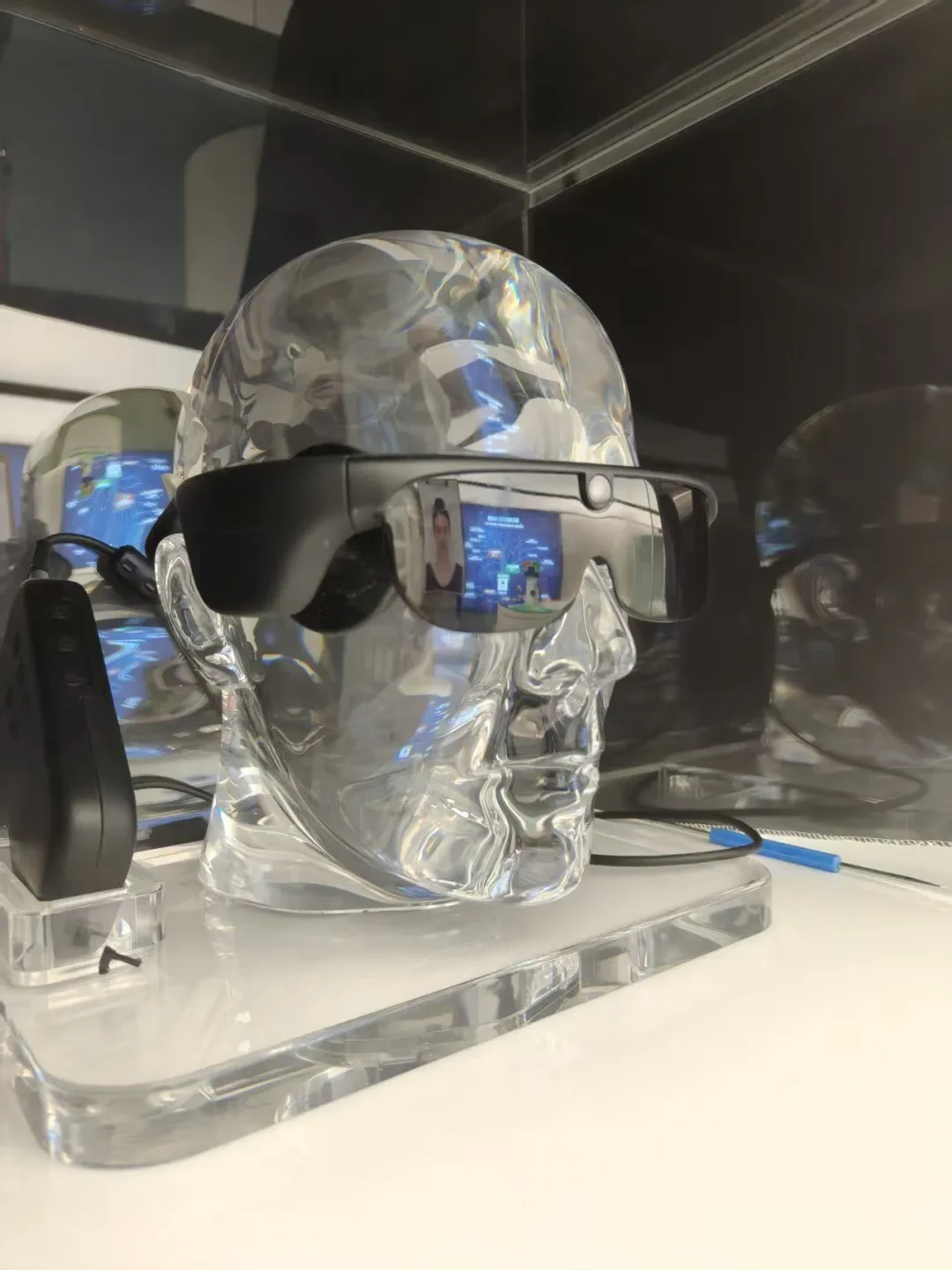
Eyeglasses Compatible with the Implant
· Thinner, Smaller, Safer
Currently, China has deployed brain-computer interface (BCI) applications in fields such as sleep monitoring, rehabilitation training, and cognitive restoration. In the visual BCI sector, more than one team is attempting to overcome the challenges of visual reconstruction. Why have Nanochap’s clinical trials attracted significant attention?
“This must be viewed in the context of the global development of the visual brain-computer interface (BCI) industry,” Yang Jiawei told reporters. Mainstream international invasive visual BCI products typically feature around 60 channels, equivalent to 60 pixels—comparable to the image quality of a 60-pixel camera. They allow users to perceive light and discern rough outlines, but nothing more. “Our product has already achieved 320 electrode channels, more than five times that of the first-generation devices, and is entirely domestically produced in China.”
As early as 2015, the team secured an invention patent for ultra-high-resolution retinal prostheses and their communication methods. Yang Jiawei stated that, unlike foreign visual brain-computer interface products, the team achieved technological breakthroughs in key areas such as high throughput, high precision, and closed-loop functionality.
High throughput and high precision are closely related to clear visualization.
Our eyes’ “imaging” relies on the macular region of the retinal fundus, this “golden area,” which is approximately 5 millimeters in diameter, with a fovea and a curved structure. This also means that the chip must be made as thin and small as possible without compromising performance.
Packing 320 electrode channels into a chip measuring just 3 mm × 3 mm is akin to “performing elaborate rituals inside a snail’s shell.” R&D personnel demonstrated to reporters that the team has developed a high-density microfabrication process. Under a microscope, the entire implantable stimulation module is only 0.5 mm thick, with individual electrodes having a diameter of just 50 micrometers—approximately half the thickness of a human hair—and a center-to-center spacing of only 100 micrometers between adjacent electrodes.
“The greater challenge is that the retina is a curved surface; when traditional flexible electrodes are applied, gaps form, preventing effective stimulation of nerve cells,” said the researchers. The team innovatively adopted three-dimensional pillar-shaped立体 electrodes, which embed into the retinal tissue like tiny columns, achieving zero-distance contact with nerve cells.
Notably, to address the challenge of “difficult adhesion,” the team pioneered a disruptive magnetic fixation technology. While the stimulation module is implanted onto the retina within the eye, an ultra-thin magnetic sheet is simultaneously implanted and fixed at the posterior aspect of the eyeball. Secured via magnetic attraction, the stimulation module is not only stable but also allows for safe, non-traumatic, and complete explantation.
The closed-loop characteristics determine the safety and controllability of visual brain-computer interface devices within the human body.
According to reports, a major pain point for implantable medical devices is their lifespan. The humid environment within the human body readily corrodes chips, leading to short-circuit failures, with an average industry lifespan of only two years. The team employed specialty bioactive glass to achieve hermetic encapsulation of the chips, communication components, and power supply coils. Additionally, they developed a proprietary laser crack-free welding process, enabling filler-free, all-glass hermetic packaging.
Meanwhile, the team also demonstrated ingenuity in the power supply design. “Due to the inability to accommodate large-capacity batteries within the eye, we adopted a single-coil integrated solution that enables wireless charging and bidirectional data transmission through coil coupling with compatible eyewear, ensuring stable power delivery and signal transmission within a range of 3 centimeters,” stated Yang Jiawei. As a result, the product’s expected service life has surged to over 10 years, far exceeding industry standards.
· Plan to complete 30 cases this year
In the industry, implantable visual restoration brain-computer interface technology is widely recognized as a highly challenging endeavor. To turn the visions in one’s mind into reality, post-1980s scientist Yang Jiawei has been on this long journey for 12 years.
Yang Jiawei, a native of Ruian, Wenzhou, graduated with a degree in Automation from Zhejiang University. In 2006, he joined the Centre for Neural Engineering at the University of Melbourne in Australia, where he became involved in visual brain-computer interface (BCI) research. In 2012, as a member of the team, he participated in the implantation experiment of a visual BCI, which garnered significant international acclaim. Amidst this success, a simple yet profound aspiration took root in his heart: “While the global BCI industry is a burgeoning sunrise sector, the foundational infrastructure in China remains relatively weak. I hope to contribute to my country’s development in this field.”
In 2014, Yang Jiawei returned to China and founded Nanochap, collaborating with the team from the Eye & Vision Hospital affiliated with Wenzhou Medical University to focus on the research and development of high-resolution visual brain-computer interfaces. At that time, the field of implantable visual brain-computer interfaces in China was virtually a blank slate, with no established domestic suppliers or supply chain industries. The micron-scale devices and biocompatible materials required by the team were unavailable on the market, necessitating that everything be developed from scratch.
“We cultivated our own suppliers, investing nearly RMB 100 million in the production line alone,” recalled Yang Jiawei. The team was responsible not only for R&D but also for serving as process engineers and production line workers, painstakingly building from scratch a Class 10,000 GMP cleanroom production line that encompasses more than 90 customized steps, including chip design, electrode processing, and packaging and testing.
Over a development cycle spanning more than a decade, the team gradually expanded to over 120 members, with mounting pressures at times shaking their resolve. “No one knew whether the endeavor to ‘restore sight to the blind’ would succeed; many international peers had given up,” said Yang Jiawei. During this period, he repeatedly returned to Wenzhou to seek collaborations, registered a subsidiary in China Eye Valley, and engaged in joint research and development with medical teams in Wenzhou, thereby steadily reinforcing his determination to continue the experiments.
Handwritten letters from visually impaired individuals have also served as a powerful morale booster for the team. Yang Jiawei has always kept in mind this line from one of the letters: “In this wonderful world, how I long to see its full beauty.”
Hard Work Pays Off. In 2025, good news came from animal experiments—a completely blind monkey successfully located and grasped a small ball after implantation of a retinal pathway visual brain-computer interface device.
In late June this year, the Hangzhou Campus of the Eye Hospital of Wenzhou Medical University (Zhejiang Provincial Eye Hospital) also launched this clinical trial. According to Zhang Yun, Director of the Fundus Disease Department at this campus, this represents a potential breakthrough enabling blind patients to regain perception of light and contours. The technology integrates cutting-edge advancements in neuroscience, microelectronics, artificial intelligence, and ophthalmology, transcending the limitations of traditional “tissue replacement”-based repair and achieving a paradigm shift toward “neural functional bypass reconstruction.” It holds significant academic value and clinical importance in the field of visual restoration.
Yang Jiawei revealed that the team plans to complete 30 human implants this year and establish a long-term follow-up mechanism. The team has a clear roadmap for the future, starting with product iteration. They are currently developing a brain-computer interface (BCI) chip with 1,280 channels, aiming to provide patients with clearer vision. Meanwhile, for patients who have undergone enucleation due to trauma or other causes, or who have suffered complete optic nerve damage, the team is developing high-resolution visual BCI products targeting the visual cortex pathway, striving to serve a broader patient population.
Additionally, the team strives to reduce costs and promote commercialization. “Compared to the price of similar foreign products, which ranges from $200,000 to $250,000, the price of domestically produced equipment may be between 100,000 and 150,000 yuan,” said Yang Jiawei. The company has initiated the U.S. FDA application process, aiming to globalize “Made in China” technology and truly benefit visually impaired individuals worldwide. As the name Nanochap suggests, “We aim to create heartwarming chips, hoping to add value to the lives of visually impaired individuals.”
Source: Zhejiang Daily, July 22, 2026
Further Reading
1
2
3
4
5