

WAIC 2026 Spotlight: BrainCo Unveils World's First Brain-Controlled Robotics Platform and Dexterous Manipulation Data Matrix

BrainCo
Non-invasive brain-computer interface technology solution provider
From July 17 to 20, WAIC 2026 (World Artificial Intelligence Conference) officially opened amid the summer heatwave at the Shanghai World Expo Exhibition and Convention Center.
At the BrainCo exhibition booth, a demonstrator wearing an EEG cap stood with arms crossed in front of their body, gazing at a robotic arm positioned beside them. There were no controllers, no touchscreens, and no voice commands. The robotic arm then activated, slowly moving toward the table and gently pouring water from a bottle into a nearby paper cup without spilling a single drop. On the other side of the booth, another unmanned robotic arm autonomously identified an egg, grasped it delicately with three fingers, and gently lifted it before setting it back down.
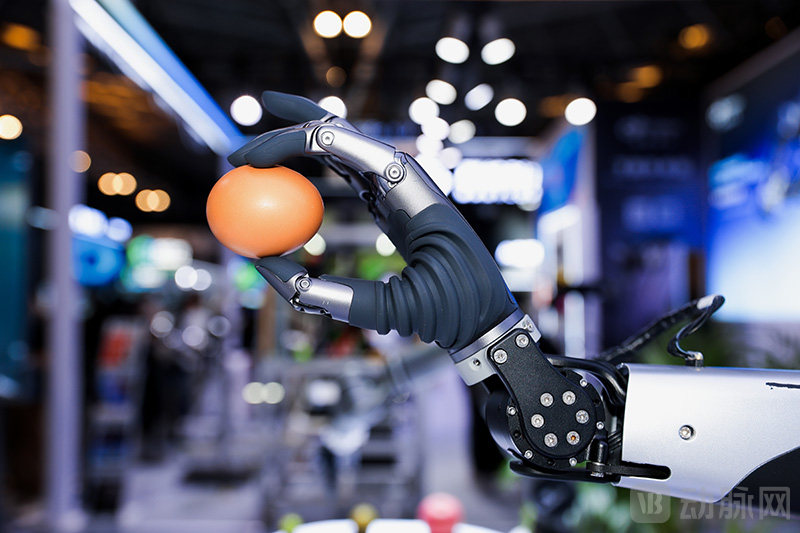
BrainCo's Dextrous Hand on Display
The entire process was seamless, with the five robotic fingers demonstrating force control during grasping and releasing that rivaled that of a human hand. Passersby stopped to watch intently, taking out their phones to capture the moment. It is precisely BrainCo’s breakthroughs in brain-computer interfaces, AI, and embodied intelligence that have turned what was once an inconceivable scene into reality.
As one of the few unicorns in the industry spanning all three fields of brain-computer interfaces, AI, and embodied intelligence, BrainCo has unveiled the world’s first integrated brain-controlled robotic AI research platform and the BrainCo Dexterous Manipulation Data Acquisition Matrix. This launch marks the first fusion of these three concepts, presented to the world through a complete hardware pipeline and software platform.
A profound restructuring of human–machine interaction logic is quietly taking place at this booth.
Brain-Computer Interfaces, AI, and Embodied Artificial Intelligence are currently the most prominent concepts. These three fields are in fact highly complementary: Brain-Computer Interfaces (BCI) address the ultimate form of human-computer interaction by enabling direct communication between the brain and external devices. AI enhances the precision of BCI signal decoding and breaks down complex tasks. Embodied Artificial Intelligence provides a channel for AI to connect with the physical world, enabling tasks to be completed in real-world environments through a perception–decision–execution loop.
He Xiyujin, a partner at BrainCo, also stated in an interview with VCBeat that neural signals are extremely weak, equivalent to one-millionth of the voltage of a standard AA battery. In the past, their acquisition relied on bulky instruments and conductive gels. Today, technological breakthroughs have enabled portable signal acquisition, and when combined with AI-driven neural decoding, this allows the technology to truly enter home and industrial settings. “The concept of brain-computer interfaces has actually been around for over a century; it is only in recent years that we have seen meaningful technological breakthroughs.”
During this window of opportunity, BrainCo has taken a significant step toward real-world implementation of this integration by pioneering the deployment of a comprehensive integrated platform matrix.
For instance, while most companies in the Embodied AI industry are still focused on creating more flexible joints, greater load-bearing capacity, and longer battery life for robots, BrainCo has already begun to contemplate a more forward-looking challenge: how to establish a direct channel between the robot’s “brain” and the human brain.
As the world’s first integrated AI research platform for brain-controlled robotics, BrainCo’s Brain-Controlled Robot Training Platform represents BrainCo’s exploration in this field.
This platform is not merely a simple combination of non-invasive brain-computer interfaces (BCIs) and robotic arms; rather, it is a unified platform-based system that integrates multiple previously disparate steps—each relying on different disciplinary backgrounds—into a cohesive workflow, including EEG acquisition, signal denoising, neural decoding, control mapping, and real-time feedback.
After the user wears a non-invasive brain-computer interface (BCI), the platform can collect task-related electroencephalogram (EEG) signals in real time, identify movement intention-related patterns through AI algorithms, and convert them into specific commands sent to robots for execution. The entire process does not rely on any physical movements and does not require users to have a professional background in brain–computer interfaces.
According to the official introduction, a developer with no background in brain–computer interfaces can unlock “mind-controlled” robot operation within just 10 minutes. This means that the experimental environment, which previously required a multidisciplinary team spanning several cross-disciplinary fields, has now been condensed into an integrated platform capable of conducting end-to-end experiments independently, thereby transforming it into an engineering capability accessible to a broader range of research teams.
Currently, the platform supports integration with mainstream third-party devices such as humanoid robots, robotic arms, and robotic dogs, demonstrating strong compatibility and tool-like utility.
Notably, it is not a proprietary solution tailored to any specific robot; rather, it functions as a universal middleware layer with foundational capabilities for cross-industry adoption. This also reflects BrainCo’s strategic move as a platform-oriented company.
If the brain-controlled robot training platform aims to address the challenge of enabling robots to understand humans, then the BrainCo Dexterous Manipulation Data Acquisition Matrix, released concurrently, tackles a more fundamental engineering problem: how to teach robots to perform dexterous manipulation.
The extreme scarcity of high-quality training data is one of the most acute pain points currently facing the embodied AI industry. On one hand, physical modeling in simulation environments always exhibits subtle discrepancies from the real world; on the other hand, real-robot data collection is characterized by high costs, slow speeds, and limited scenario coverage.
The value of the dexterous manipulation data acquisition matrix lies precisely in this: it aims to build a diversified data system encompassing human demonstration, real-robot execution, and simulation-generated data, thereby providing large-scale, sustainably supplied, high-quality training data for dexterous manipulation.
To achieve this goal, the dexterous manipulation data acquisition matrix features a robust hardware configuration.
The Revo 3 dexterous hand at the execution terminal features 21 degrees of freedom, a fully direct-drive architecture, and backdrivability. Its joints can be directly driven by motors to achieve ultra-fast response (supporting rapid opening and closing at 3 Hz), while also responding reversibly to external forces and providing force feedback, rather than relying solely on preset trajectories to perform actions.
Its five-finger grip strength can reach up to 70N, with 500 Hz communication capability and supports various control modes such as hybrid force-position control. The full-palm array of tactile sensors extends perception coverage to the entire dexterous hand, capable of detecting deformations as minute as a single human hair (130 μm in diameter). Additionally, visuo-tactile sensors are integrated into the fingertips, enabling sub-millimeter alignment prior to grasping.
In layman's terms, this dexterous robotic hand can not only perceive the hardness and surface texture of an object upon contact, but also accurately predict the optimal grasping posture before contact occurs, bringing the granularity of data acquisition closer to that of natural human manipulation.
On the other end, the RevoHuman exoskeleton-based human data acquisition glove adopts a side-mounted exoskeleton design, placing sensors on the sides of the fingers. This allows for the simultaneous collection of hand posture, tactile, and first-person wrist-view data without interfering with the natural operation of the human hand. Furthermore, this non-intrusive design facilitates the capture of more authentic data.
RevoHuman complements data collection from the physical Revo 3 robot, bridging the data gap between natural human demonstration and robot learning.
BrainCo’s New Generation of Intelligent Bionic Hand Also Debuted at WAIC.

BrainCo's New Generation Intelligent Bionic Hand
Compared to previous products, it is more compact, with the entire unit weighing only 383g and measuring 16cm in total length. Additionally, it can be paired with a bionic skin cover to enhance the cosmetic appearance and tactile experience, making it virtually indistinguishable from a human hand at a glance.
It identifies movement intent by detecting neural and myoelectric signals from the wearer’s residual limb, translating them into independent movements of five fingers. Its control precision can reach 0.1°, with a five-finger grip strength of ≥50N, and each hand can bear up to 20kg.
The intelligent bionic leg is also one of BrainCo’s flagship products. It collects data in real time via sensors, processes it through algorithms, and controls the hydraulic system to dynamically adapt to the locomotion status of lower-limb amputees.
BrainCo is one of the few companies worldwide to achieve large-scale production and sustained commercialization of cutting-edge brain-computer interface (BCI) products. Its smart bionic hand received U.S. FDA clearance in 2022, and its smart bionic leg completed FDA registration and listing in 2024, gaining inclusion in the U.S. medical insurance reimbursement system.
Furthermore, BrainCo is committed to making its technology accessible to all. He Xiyujin highlighted the significance of BrainCo’s non-invasive, wearable brain-controlled prosthetics in promoting technological inclusivity: “Last year, the Zhejiang government launched a special initiative to support people with disabilities through technology, providing bionic prosthetics to 2,046 individuals with physical disabilities. Many of these individuals, who were previously homebound and unable to care for themselves, have now reintegrated into society and found employment. The greatest value of technology lies in helping ordinary people who face genuine challenges and have real needs.”
These core strengths have also supported its cumulative fundraising of up to $500 million, making it second only to Neuralink in terms of funding scale within the global brain-computer interface sector.
While most players in the embodied AI industry continue to focus on enhancing the intrinsic capabilities of robots, BrainCo has chosen a different approach—building an interface layer that connects human intelligence with machine intelligence. By integrating brain-computer interface (BCI) technology into the R&D ecosystem of embodied AI, BrainCo delivers platform-based capabilities. This truly embodies the industrial significance of the convergence of BCI, AI, and embodied AI.
The value of brain-computer interfaces (BCIs) lies not in any single product, but in their capacity as a foundational technology to continuously extend into broader fields such as medical rehabilitation, embodied intelligence, and consumer electronics. As signal acquisition and neural decoding capabilities mature, the application threshold for this technology will continue to decrease, thereby expanding the range of scenarios and populations it can reach.
What we are ushering in is no longer a cold, machine-dominated era, but a new age of intelligence characterized by human-machine symbiosis and seamless mind-to-mind communication.