

Danaher Advances China Strategy to 3.0 With Opening of Leica Shanghai R&D and Manufacturing Base

Danaher
Product Design and Manufacturer
Danaher Corporation is advancing its China strategy to transform local innovation into global solutions, marking a new phase of its growth in China’s dynamic life sciences market. The company’s Leica Shanghai R&D and Manufacturing Base officially opened in Pudong on July 16 following a relocation and upgrade, paired with the launch of Danaher’s third-generation localization framework, “Launching China 3.0”. The integrated site combines R&D, manufacturing, supply chain and lean operation capabilities, designed to respond more effectively to customer needs in China while bringing China-developed products and solutions into Danaher’s global supply and innovation network.
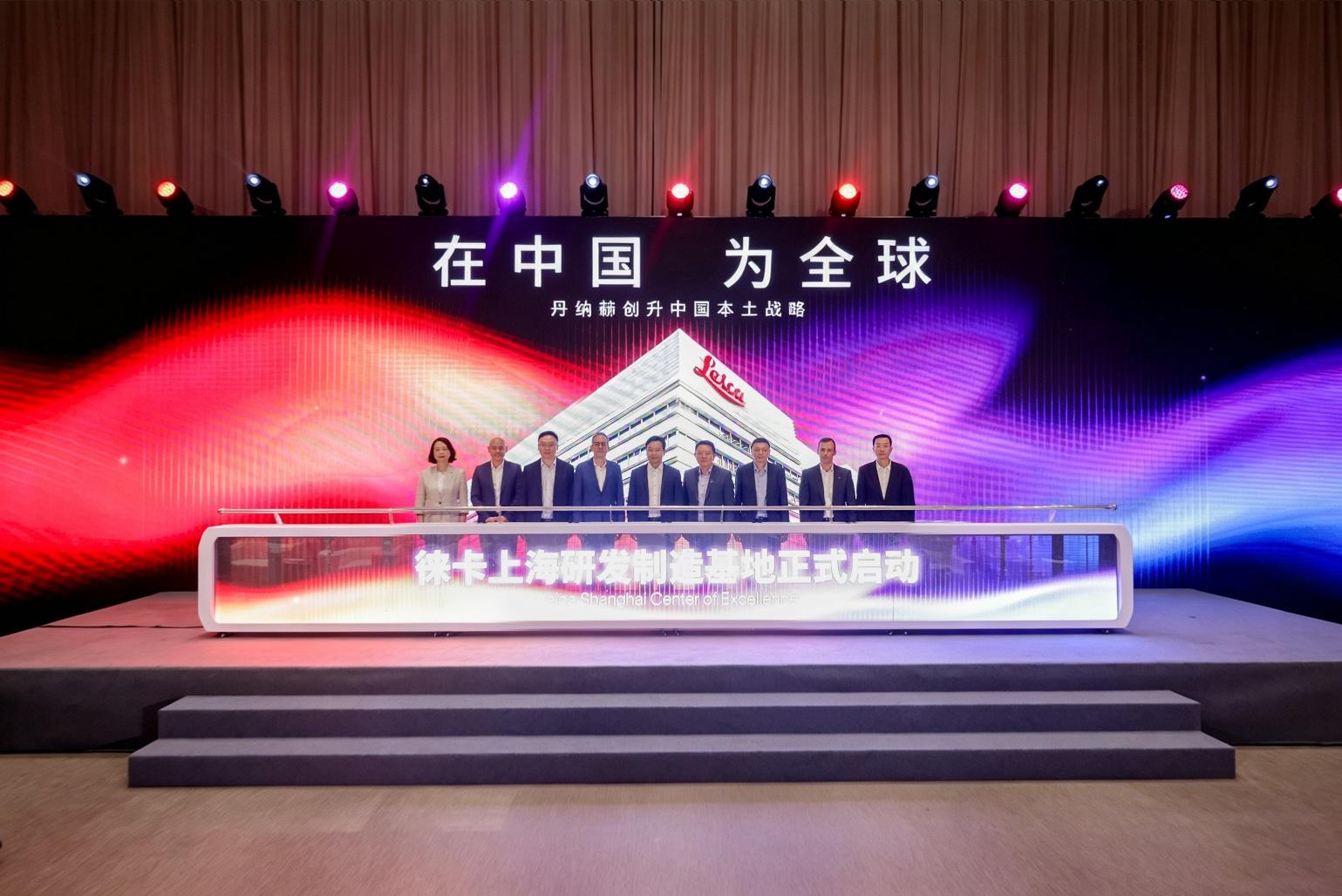
Government officials, diplomatic representatives and Danaher leaders joined together to witness the official opening of the Leica Shanghai R&D and Manufacturing Base.
First launched in Pudong’s Jinqiao area in 1993, the Leica facility has grown in lockstep with the district’s decades of opening-up. The upgraded site now joins Danaher’s global network of six regional innovation centers and also houses the newly inaugurated Danaher China Lean Excellence Center.
Mr. Perez-Fernandez, Danaher Diagnostics’ executive president and global president of Leica Biosystems, said Shanghai’s strength lies in its unique combination of healthcare resources, innovative enterprises and world-class talent. “True innovation happens when patients, clinicians and researchers are connected,” he said in an interview. “Shanghai is one of the few cities globally that brings all these pieces together and lets innovation move fast.”
Gustavo Perez-Fernandez, Executive President of Danaher Diagnostics and Global President of Leica Biosystems, during an interview.
Hard operational data back that assessment. The Shanghai base ranks among Leica’s most critical global R&D and manufacturing centers of excellence. Its 19 pathology production lines make it the highest-volume equipment factory across Leica Biosystems’ nine global sites. Nearly 80% of Leica’s global core histology product output and approximately 30% of its digital pathology product output are manufactured in Shanghai, which produces nearly all of the company’s routine pathology devices except a small number of cryostats and tissue processors. On the microscopy side, 13 production lines span a full product portfolio from entry-level models to high-end systems, serving medical surgery, life science research and industrial inspection use cases.
“This upgrade is far more than a new building,” Mr. Perez-Fernandez said in his opening remarks. “It represents our ability to deliver greater value to customers, partners and patients through local R&D, advanced manufacturing, supply chain collaboration and Danaher’s execution discipline. It underscores our confidence in China’s market and its healthcare and innovation ecosystem.”
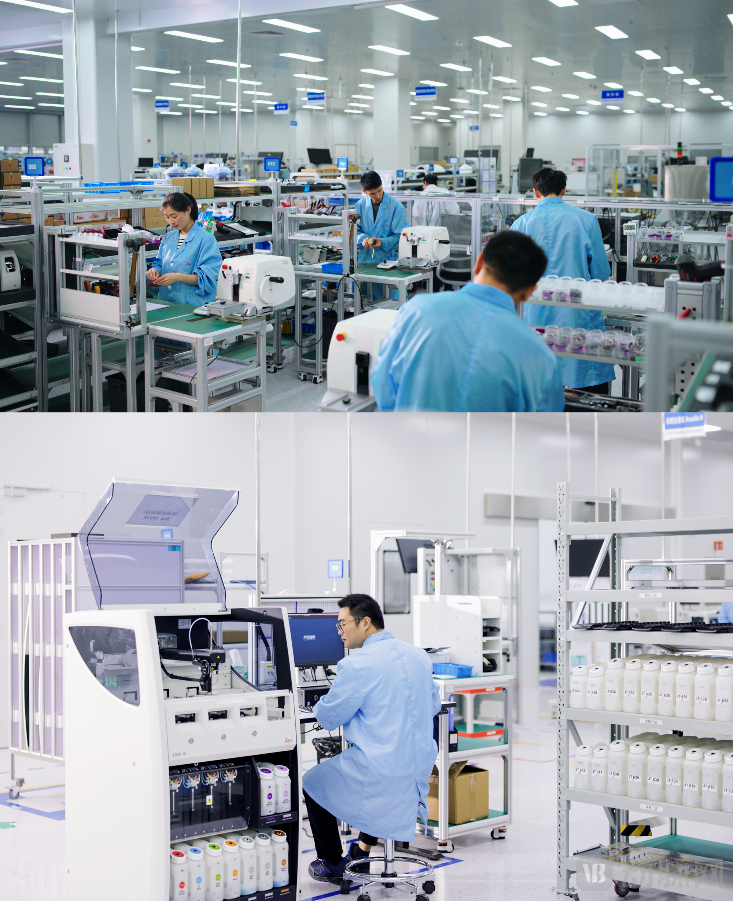
The site employs a local R&D team of nearly 100, 60% holding master’s or doctoral degrees. Since 2004, it has filed 341 patents, primarily invention patents, across China, the U.S., Europe and Japan. Homegrown innovations include the HistoCore PEGASUS tissue processor, CM1950 S cryostat and HistoCore LIGHTNING S laser slide labeler. The BOND-III automated IHC stainer is now fully manufactured locally, as is 100% of Leica’s digital pathology product line. In microscopy, the STELLARIS confocal system and DM4/6/i8 microscope series have been localized. The Mateo TL and Mateo FL digital inverted microscopes, co-developed with Leica’s SMART Suzhou R&D Center, are engineered in Suzhou and produced in Shanghai for global distribution.
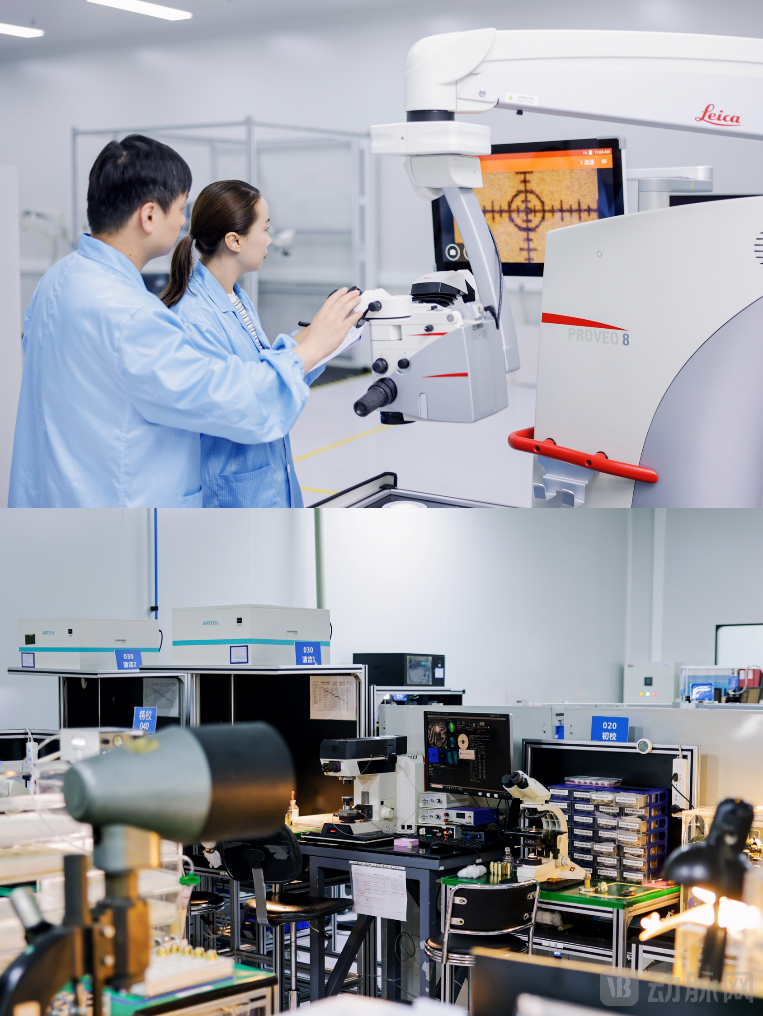
“China has outstanding universities and deeply committed, innovation-driven R&D talent,” Mr. Perez-Fernandez said. “The manufacturing capability here is world-class—arguably our best factory globally. Combined with access to local partners and institutions, that makes Shanghai unique. It’s a city with world-class intellectual resources and medical institutions.”
The Lean Excellence Center designation recognizes the site’s industry-leading operational record: it is the only Danaher facility worldwide to win the company’s “Best Factory” award four years running, with top-tier performance across safety, quality, delivery, inventory and productivity metrics.
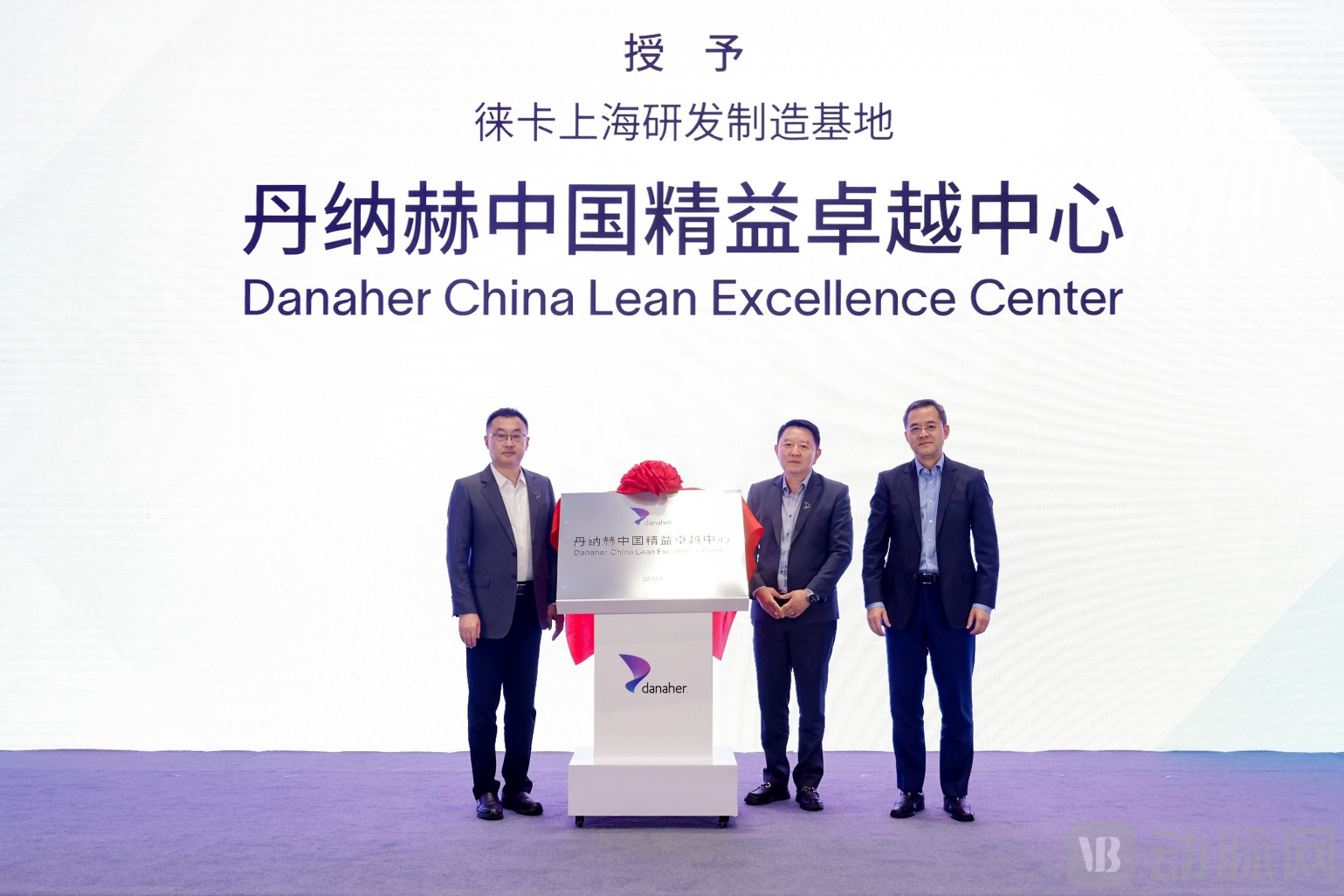
Peng Yang, Global Vice President of Danaher and Group President for China; Wu Jiang, Vice President of Danaher China DBS; and Liao Songping, Vice President of Leica Shanghai Excellence Center, unveil the Danaher China Lean Excellence Center.
Peng Yang, Danaher’s global vice president and group president for China, said lean management is a longstanding corporate priority. “We want to embed the Danaher Business System deeper into every process at this factory and develop more local talent,” he said in an interview. “We also invite sister factories to learn from our practices here, with the goal of standardizing and scaling these excellence models.”
David Neubeck, global vice president of operations at Leica Microsystems, said the Shanghai base reflects cross-unit collaboration across Leica Microsystems, Leica Biosystems and Danaher China. Leveraging the Danaher Business System, the company will work with customers and partners to advance research, healthcare and industrial development, creating long-term value for China and global markets, he said.
The “Launching China 3.0” initiative marks the next stage of Danaher’s China strategy. Earlier phases 1.0 and 2.0 focused on importing overseas technology to China, building local factories and R&D teams, and growing domestic sales of locally made products. But as China’s innovation ecosystem matured, Danaher saw an opportunity to co-develop products with local partners and take those innovations global, Mr. Peng said. “That’s the core of our 3.0 strategy—taking Chinese innovation worldwide,” he said.
Mr. Peng pointed to the broader trend of Chinese life sciences innovation going global, from novel drugs to medical devices. “China has evolved from just a large market into a source of innovation with a growing global standing,” he said.
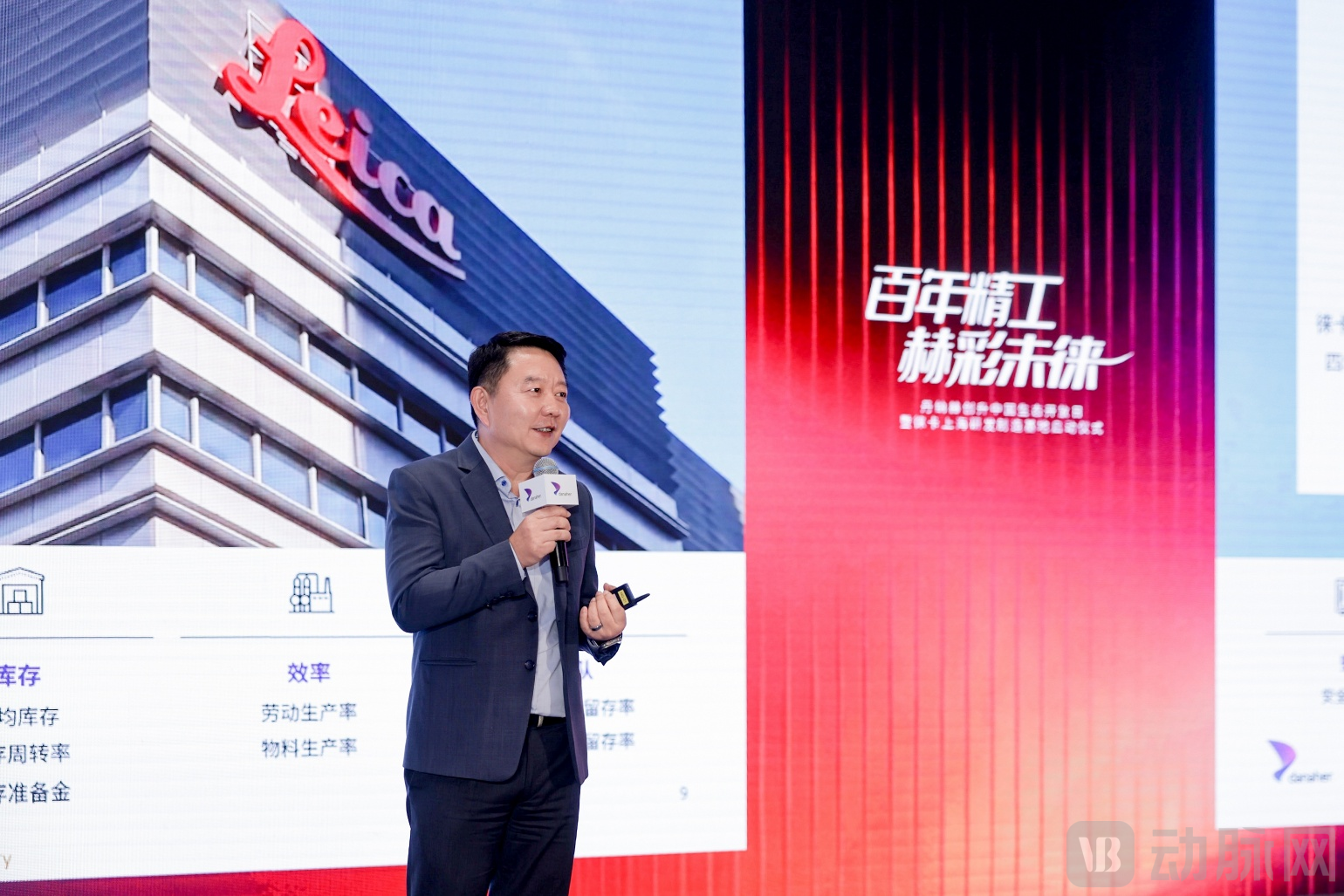
Peng Yang, Global Vice President of Danaher and Group President of Danaher China, Delivers Strategic Remarks on “Launching China 3.0”
In his keynote speech, Mr. Peng stressed that Danaher’s China localization goes beyond physical facilities. “It’s about co-innovating with Chinese customers, research institutes and partners, and turning China’s needs and challenges into global solutions,” he said. “With Chinese speed, talent and solutions, we will connect global value and shape the future of precision medicine and cancer diagnosis.”
Shanghai anchors Danaher’s China strategy. The city hosts the company’s China joint headquarters, while Pudong is home to two Danaher manufacturing and R&D bases—the Leica site and the Molecular Devices Shanghai R&D and Manufacturing Base—plus the Cytiva China Innovation Center. The cluster serves as a hub for the Yangtze River Delta, the broader Chinese market and the Asia-Pacific region.
Local officials expressed support for the expansion. Wu Jincheng, Pudong district mayor and deputy secretary-general of the Shanghai municipal government, attended the ceremony.
German Consul General Li Deren said combining German rigor and precision with Chinese speed and drive would yield strong results, calling for the base to become a platform for talent, ideas and cooperation.
Jiang Ge, deputy director of the Shanghai Science and Technology Commission, said the city will continue building a world-class business and innovation environment, and encouraged Leica to deepen local partnerships to launch more innovations first in Shanghai.
Lin Tingjun, head of Pudong’s commerce commission, noted the upcoming 2026 World Artificial Intelligence Conference will highlight “AI for Science” across drug discovery, protein design, biomanufacturing and precision health. Pudong’s AI and biomedicine ecosystem will help Leica speed up new product development, he said.
Thirty-three years after Leica first set up its Pudong factory, the upgraded site caps Danaher’s evolution from local production to local innovation in China. With the 3.0 strategy now official, the company is deepening two-way integration between Chinese innovation and its global resource network.