Evergreen Medicines Announces Positive Phase II ClearMEMory Trial Results for EG-501, an AI-Driven Therapy for Cognitive Impairment in Neuropsychiatric Lupus
Evergreen Therapeutics
Innovative Drug Developer

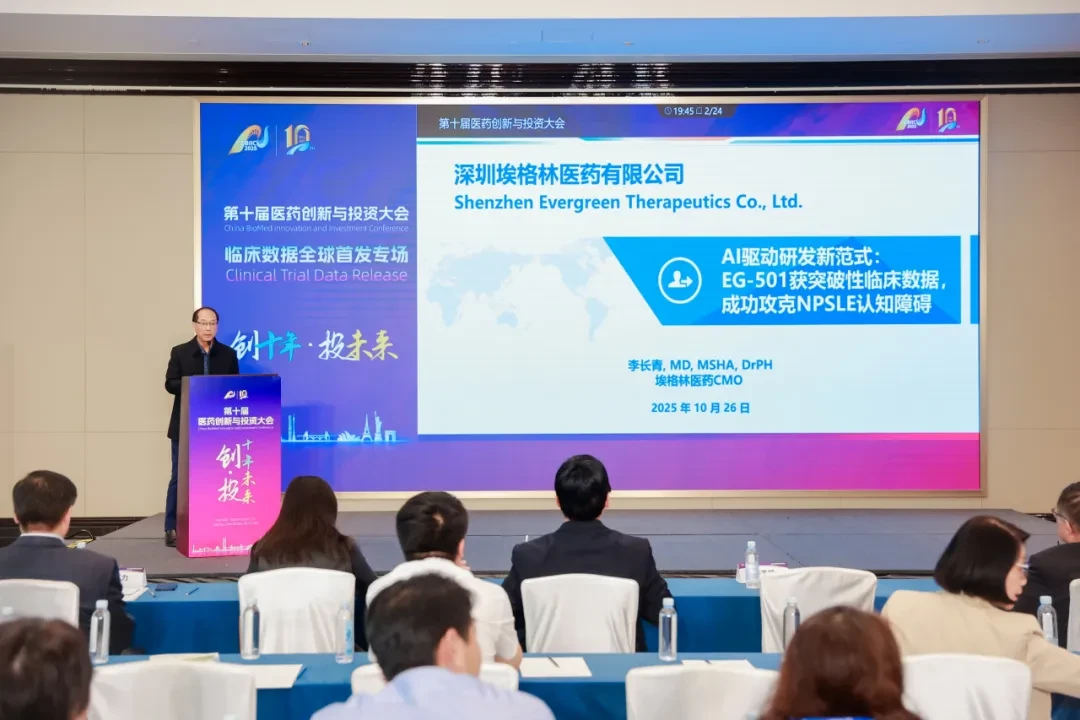
Dr. Li Changqing Releases Phase II Clinical Trial Data of EG-501 at the Conference
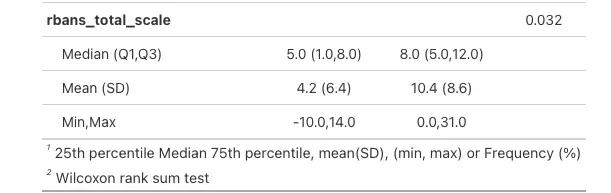
01 Research Background
02 Research Methods
03 Research Conclusions
Dr. Changqing Li, Co-founder and Chief Medical Officer of Evergreen Therapeutics"We are excited about the Phase II clinical data of EG-501, which represents a significant achievement resulting from our team's years of dedication to leveraging AI-driven clinical technologies in drug development. We are highly optimistic about EG-501’s potential to improve the quality of life for patients with cognitive impairment associated with systemic lupus erythematosus. Furthermore, the drug’s core mechanism of modulating neuroinflammation holds great promise for expansion into other therapeutic areas, such as the treatment of cognitive impairments associated with rheumatoid arthritis (RA), Sjögren's syndrome, and Parkinson’s disease, offering hope to even more patients."
The EG-501 project will accelerate the advancement of its regulatory strategy in the United States, including applications for Orphan Drug Designation, Fast Track Designation, or Breakthrough Therapy Designation. It also plans to hold an End-of-Phase II meeting with the FDA to initiate pivotal clinical trials.
Notably, in the development of EG-501, both the research on SLE phenotypes related to cognitive impairment and drug repurposing studies originated from Evergreen Therapeutics' self-developed AI platform. During the drug development process, "dry lab" predictions via AI were closely integrated with clinical "wet lab" experiments.Evergreen Therapeutics Further Deepens the Understanding of GRIN2A's Role in Neurological and Immune Diseases. The Evergreen AI model successfully identified correlations that traditional models struggle to capture, fully demonstrating the feasibility of this AI platform in drug repurposing for rare central nervous system (CNS) disorders.By adopting this drug repositioning method, the cost of drug discovery can be significantly reduced from the conventional $2-3 billion to approximately $50 million, while the R&D cycle can be shortened from 10 years to 2-3 years. This approach greatly enhances R&D efficiency, reduces R&D risks, and paves a new path for pharmaceutical innovation.
About Evergreen Therapeutics
Evergreen Therapeutics is an innovative pharmaceutical company focusing on the development and application of AI technologies in biology and clinical fields. With branches in Shenzhen and Yantai in China, and Maryland in the United States, its international team brings together top talents from AI drug-related fields such as clinical medicine, international regulatory laws, chemistry, and computational science. The company always prioritizes addressing diseases with "urgent clinical needs" and is committed to developing first-in-disease global innovative drugs. Currently, six of Evergreen Therapeutics' proprietary pipelines have been approved by the U.S. FDA to enter clinical trials, with over 60 patent applications covering major pharmaceutical markets worldwide, including China, the U.S., Europe, and Japan.
The company adopts a "self-research + service" dual business model. On one hand, it focuses on the development of differentiated "in-house" drugs in the fields of ophthalmology, cardiovascular, and autoimmune diseases. In other therapeutic areas, it relies on its unique AI drug discovery platform and comprehensive capabilities and professional experience in pharmaceutical regulations and clinical trials to provide clients and partners with "one-stop" solutions that address challenges from drug discovery to the clinical process. It offers flexible and efficient R&D solutions and optimal regulatory submission pathway planning services tailored to specific needs.
About EvergreenAI Platform
Evergreen Therapeutics Integrates Multi-Omics, Clinical, and Real-World Data Using AI Technology to Enhance Scientific Design from the Outset, Building a Comprehensive and Efficient AI Platform Spanning the Entire Drug Development Cycle. The platform's functions include: Mechanism of Action (MOA) and Indication Identification, Pathway Analysis and Mechanism Elucidation, Multi-Omics and Patient Stratification, Clinical Trial Protocol Writing, Drug Repositioning, as well as Clinical Trial Prediction and Optimization. By innovatively constructing the "Three Major Engines"—Cross-Species Translation Prediction Engine, Mechanism Prioritization Engine, and "Target-Population-Disease" Mapping Engine—the platform effectively addresses long-standing challenges in the clinical stage, significantly improving the success rate of candidate drugs entering clinical trials while reducing R&D costs and shortening timelines. Evergreen Therapeutics plans to productize its proprietary AI platform and actively seeks global partners to empower more innovative pharmaceutical companies, jointly advancing this highly efficient innovation model to maximize commercialization and return on investment.
Recommended Reading