Weekly Medical Device News Roundup (July 6–12, 2026): Funding, Approvals, and IPO Filings Highlight Sector Momentum

SONOSEMI
Active Vascular Implantable and Interventional Medical Device R&D and Manufacturer


01
Zhiyu Medical Completes Over$60 Million in Financing to Advance Clinical Development of Waterjet Surgical Robot
Beijing Zhiyu Medical Recently Announced the Completion of Over 60 Million Yuan in Pre-A++ Round Financing, Led by Chende Capital, with Follow-on Investment from Legend Star, and Continued Support from Existing Shareholders Shunwei Capital and Lilly Asia Ventures. The Company’s Independently Developed High-Pressure Water Jet Autonomous Surgical Robot for Prostate Hyperplasia Surgery Achieves Precise Computer-Controlled Thermal-Free Selective Resection, Reducing Traditional Surgery Time of Approximately One Hour to Around Five Minutes. The Product Has Entered the National Special Review Procedure for Innovative Medical Devices, and This Round of Financing Will Accelerate the Progress of Clinical Trials.
02
SONOSEMI CompletedSeries B+ Funding Round Accelerates Globalization of Vascular Interventional Devices
Recently, Sonosemi Medical Co., Ltd., a Shenzhen-based enterprise specializing in active interventional pan-vascular devices, announced the completion of its Series B+ financing round, amounting to hundreds of millions of RMB. The round was co-led by Yahui Investment and Sida Capital, with existing shareholders such as Furong Investment continuing to participate. The funds will be primarily allocated to the R&D and regulatory registration of core product pipelines, as well as the establishment of supply chain and commercialization channels. Sonosemi has strategically positioned itself in areas including coronary artery disease, peripheral vascular disease, and structural heart disease. Five of its Class III medical device products have been fully commercialized, with its core products now adopted by hundreds of hospitals across China.
03
Gestalt Tech Secures420 Million Yuan in Financing to Boost Ultrasound Brain-Computer Interface
Gestalt Tech, one of the earliest companies in China to deploy ultrasonic brain-computer interface (BCI) technology, recently announced the completion of a RMB 420 million Angel+ round of financing. The round was led by Huaying Capital, with participation from Sequoia China, Lens Technology, and CECC Health Fund, among others. This follows a RMB 150 million Angel round completed in March of this year, bringing the company’s total funding to RMB 570 million within just six months of its establishment. The funds will be used to advance clinical trials for its first-generation product, which focuses on chronic pain management, with the goal of obtaining Class III medical device registration for its ultrasonic BCI system in the first half of 2028.
04
Insai Feiying Completes Tens of MillionsSeries A Financing
Recently, Suzhou Insight Medical Technology Co., Ltd., an emerging player in China’s wireless endoscopy sector, announced the completion of its tens-of-millions-yuan Series A financing round. Investors in this round included Deshi Capital, Yueda Private Equity, and the Suzhou Angel Fund. The funds will be primarily used to accelerate the research and development and regulatory approval of disposable wireless endoscopes, as well as to build dual distribution channels domestically and internationally. Established in 2020, Insight Medical is one of the few domestic manufacturers of wireless endoscopes that independently masters three core underlying technologies: “ultra-high-definition, ultra-low-latency wireless video transmission,” “image ISP tuning technology,” and “low-power whole-device design.” Its core product, the wireless endoscopic camera system, has obtained medical device registration certification. Integrating endoscopic imaging, a cold light source, and power supply into a single unit, the system features intelligence, miniaturization, and wireless connectivity. It is widely applicable across all rigid endoscopy departments, including urology, orthopedics, gynecology, otolaryngology, thoracic surgery, and general surgery.

05
Toumai Surgical Robot Ranks Among the Industry Leaders in New Domestic Orders in the First Half of the Year
MicroPort MedBot’s Toumai Laparoscopic Surgical Robot Recently Announced First-Half Operational Data, with New Domestic Orders Ranking Among the Industry Leaders. Since receiving market approval, Toumai has been deployed in over 100 hospitals, completing surgical procedures across multiple departments including urology, gynecology, and general surgery. The company continues to expand its clinical indications, while accelerating the iteration of next-generation products. Amid intensifying competition in the domestically produced surgical robot sector, Toumai has maintained strong market competitiveness leveraging its clinical experience and channel advantages.
06
Sizhe Ruikang Duo Robot Completes Latin America5G Remote Surgery Demonstrates the Strength of Domestic Products
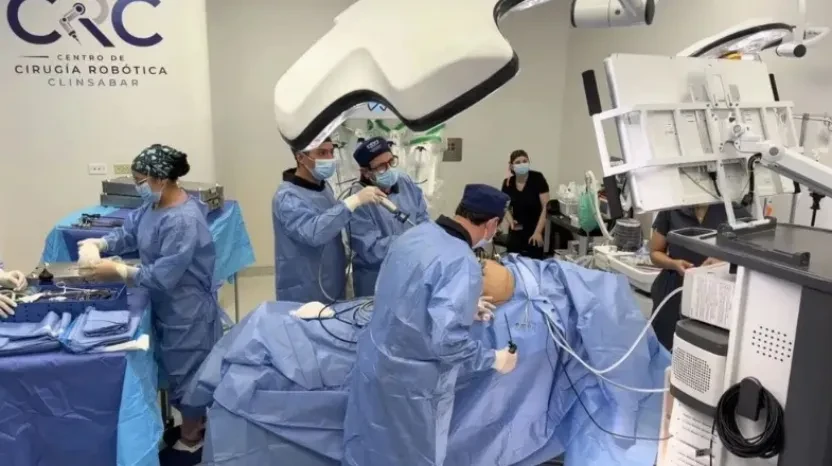
Recently, the Kangduo Robot, independently developed by Harbin Sizhe Rui Intelligent Medical Equipment Co., Ltd., successfully performed a 5G remote laparoscopic surgery in Latin America. The procedure was remotely operated by experts in Beijing for a patient in Ecuador, marking a significant breakthrough for Chinese-made surgical robots in overseas remote surgery applications. To date, the Kangduo Robot has been deployed across more than 40 countries on five continents, with over 10,000 surgeries completed cumulatively, while its remote surgery technology continues to undergo iterative upgrades.
07
NeuroXus’s Three-System Brain-Computer Interface Approved to Enter Class III Medical Device Registration Clinical Trials
Recently, the “Sanquan” brain-computer interface (BCI) system, independently developed by Tao Hu Technology, officially launched its Good Clinical Practice (GCP) registration clinical trial at Huashan Hospital Affiliated to Fudan University. Led by Professor Mao Ying’s team at Huashan Hospital, the system is undergoing a multicenter study in collaboration with 15 top-tier (Grade 3A) hospitals across China. The data collected will be directly used for the Class III medical device registration application with the National Medical Products Administration (NMPA). The NMPA has issued guidelines specifying that invasive BCI products are uniformly regulated as Class III medical devices. The product adopts a subdural implantation approach, where flexible electrodes are attached to the surface of the cerebral cortex without penetrating brain tissue. It features a full-link latency of less than 50 milliseconds, and its brain-controlled cursor decoding performance reaches 5.2 bits per second (BPS). Its split design places heat-generating components, such as the battery and wireless charging module, under the skin of the chest, away from the brain.
08
Domestic Surgical Robots Achieve Over 90% Localization Rate, Deployed in More Than 1,000 Hospitals
CCTV Finance Recently Featured the Industrialization Progress of Domestic Surgical RobotsDomestic fully orthopedic surgical robots have achieved a localization rate of over 90% for complete units, with costs amounting to only one-third of those of imported counterparts. These systems have been deployed in more than 1,000 hospitals across China and have cumulatively served over 10,000 patients. Meanwhile, domestic single-port serpentine-arm surgical robots have successfully entered public hospitals in Germany and Spain to perform clinical surgeries. The global cumulative number of clinical cases involving Edge Medical's surgical robots has exceeded 20,000. China's domestic surgical robot industry is transitioning from technological autonomy to large-scale clinical application and is now competing in the international market.
09
Multiple ModelsAI Medical Devices Obtain Class III Registration Certificates, Accelerating Full-Scale Commercialization
Since 2026, Yice Technology’s AI-assisted diagnostic software for digital pathological images of cervical cells, Chu Jingling’s AI-assisted triage software for electronic endoscopic images of gastric lesions, Changmugu Medical’s ROPA6 AI-powered total orthopedic surgical robot, and United Imaging Intelligence’s AI-assisted triage software for thoracic nuclear medicine images have successively obtained Class III medical device registration certificates. Industry analysis suggests that the focus of AI healthcare applications is shifting from assisted diagnosis to assisted treatment, with accelerated breakthroughs in high-barrier sectors such as surgical navigation and nuclear medicine. United Imaging Intelligence has cumulatively secured 20 Class III certificates, while companies like Jingfeng Medical and Shukun Technology are accelerating their layouts in surgical robots and intelligent diagnostic and therapeutic platforms, driving AI medical devices into a phase of large-scale implementation.
10
Tianlong TechnologyHCMV Nucleic Acid Detection Kit Receives Class III Registration Approval from the NMPA
Recently, Suzhou Tianlong Biotechnology Co., Ltd. obtained the Class III Medical Device Registration Certificate (No. Guo Xie Zhu Zhun 20263401389) issued by the National Medical Products Administration for its Human Cytomegalovirus Nucleic Acid Test Kit (PCR-Fluorescent Probe Method). Based on real-time fluorescent PCR technology, this product features a limit of detection as low as 30 IU/mL, is compatible with urine and plasma samples, and employs an internal control method for precise quantification. It is primarily used for early screening and therapeutic monitoring of HCMV infection in immunocompromised patients, organ transplant recipients, and neonates. The prevalence of HCMV antibody positivity in the general population in China ranges from 86% to 96%, and maternal infection can be transmitted transplacentally, leading to fetal developmental abnormalities. Traditional serological tests struggle to distinguish between latent and active infections, prompting multiple clinical guidelines to recommend nucleic acid testing as the preferred diagnostic method. This approval enriches Tianlong’s product portfolio in the field of eugenics and optimal childbirth.
11
Shurui Single-Port Surgical Robot Completes Europe’s First Pediatric Minimally Invasive Surgery
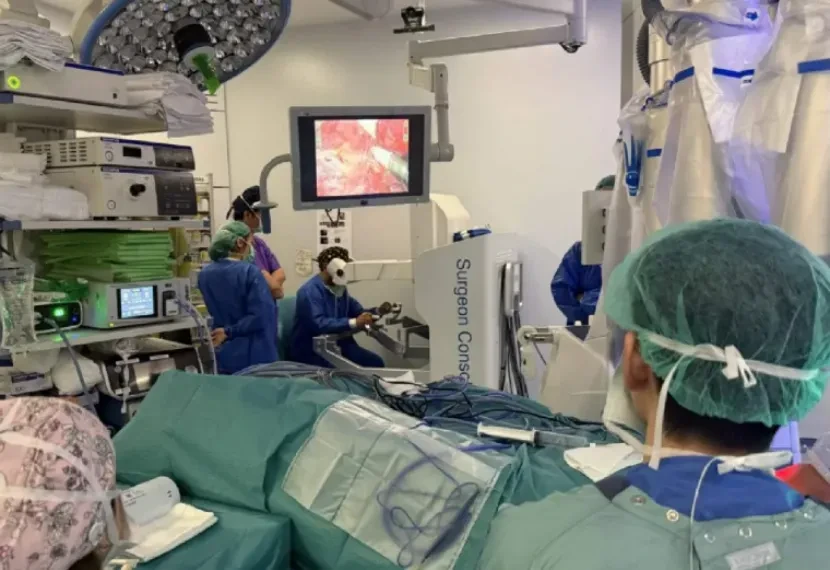
Recently, Vall d’Hebron University Hospital in Barcelona, Spain, successfully performed Europe’s first pediatric single-port robotic ureteronephrectomy using the SHURUI SP single-port surgical robot, independently developed by Shurui. This minimally invasive procedure was carried out on a 12-year-old boy through a tiny incision of only 2.5 centimeters, and the patient was discharged smoothly within 48 hours post-surgery. The SHURUI SP is currently the only single-port robotic system approved by the European Union for use in pediatric surgeries. Over a hundred mainstream European media outlets have reported extensively on this milestone, marking the recognition of Chinese-made high-end minimally invasive medical equipment by Europe’s authoritative healthcare systems and further expanding the global presence of Chinese surgical robots.
12
Pound MedicalAI Long Hair Extraction Robot Debuts at the 9th Hair Transplantation Conference
At the 9th Hair Transplantation Conference, Bangce Medical officially launched the world’s first AI-powered long-hair extraction and transplantation robot on a global scale. Through keynote speeches, live surgical broadcasts, and case competitions, the company showcased the achievements of domestically produced AI surgical robots. The conference brought together experts from hundreds of top-tier public institutions across China, pooling comprehensive insights ranging from macro-level strategies to micro-surgical techniques. This milestone marks the Chinese hair transplantation industry’s confident stride toward new heights of standardization and intelligent innovation.

13
Snibe69 In Vitro Diagnostic Products Obtain EU IVDR Certification
Shenzhen New Industries Biomedical Engineering Co., Ltd. recently announced that 69 of its products have obtained IVDR CE certification issued by TÜV SÜD Group. The certified products include three chemiluminescence reagents, three chemiluminescence quality control materials, twenty biochemical reagents, twenty biochemical quality control materials, and twenty-three biochemical calibrators. These products cover testing areas such as cardiac markers, tumor markers, and inflammation indicators. This batch certification further expands the company’s market presence in Europe and other international markets that recognize IVDR certification.
14
Medical DevicesETF: Huatai-PineBridge Officially Launches Offering as Sector Valuations Hit Historic Lows
Huatai-PineBridge Medical Device ETF Officially Launches OfferingRecently, the Huatai-PineBridge Medical Device ETF officially launched its offering, with the subscription code 561813. The fund closely tracks the CSI All-Share Medical Device Index, excluding pharmaceutical constituents to maintain a focused exposure to the medical device sector. As of June 30, the sector’s rolling price-to-earnings (P/E) ratio stood at 39.32x, placing it at the 38.46th percentile historically since the index’s inception, indicating a relatively low valuation. The launch of this ETF provides investors with a precise tool for allocating capital to the medical device track and is expected to channel more funds toward innovation in domestically produced medical devices.
15
Wuzhou Medical Suspends Trading Effective Immediately for Cross-Industry Acquisition of Chipmaker Xuanzhi Technology
Recently, Wuzhou Medical, a manufacturer of disposable sterile infusion medical devices, announced plans to acquire a controlling stake in Xuanzhi Technology, a motor control chip company formerly known as the Fairchild Semiconductor division in the United States. The company’s stock has been suspended from trading since July 8, and the transaction plan will be disclosed within 10 trading days. This cross-industry merger marks the extension of traditional medical device enterprises into the field of core semiconductor components, reflecting an acceleration in the trend of domestic substitution in the upstream medical device industry chain. Market attention is focused on the subsequent integration plan and the synergistic effects on the intelligent upgrade of existing infusion products.
16
Johnson & Johnson MedTech Signs Agreement with Beijing Anzhen Hospital to Advance Medical-Enterprise Collaboration in Cardiovascular Care
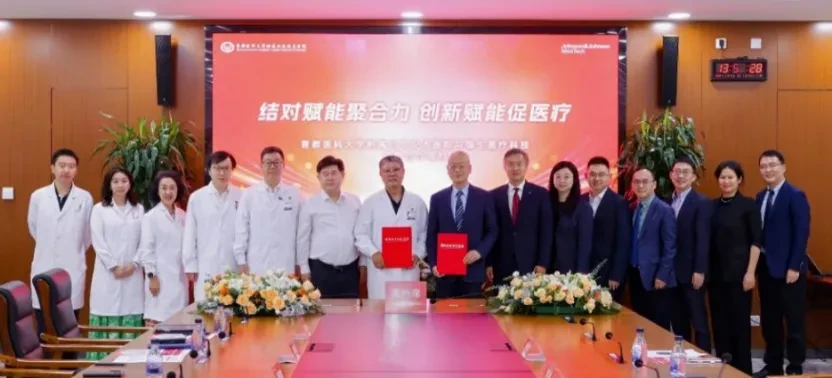
Recently, Johnson & Johnson MedTech officially signed a strategic cooperation agreement with Beijing Anzhen Hospital, Capital Medical University. As one of the implementation projects under the 2026 Beijing “Pairing Project” between renowned enterprises and prestigious hospitals, both parties will deepen their collaboration in four key areas: tackling high-level clinical research challenges, standardizing the development of new technologies and establishing clinical training systems, industry standards and academic exchanges, and market access and standardized clinical application of new technologies. This signing aims to promote medical-enterprise collaborative innovation in the cardiovascular field, accelerate the clinical translation of cutting-edge technologies, and enhance the application level of Chinese-made high-end devices in surgical procedures.
17
Erbe’s Domestically Produced High-Frequency Surgical Device Main Unit Officially Rolls Off the Production Line, Accelerating Localized Layout
Recently, Erbe Elektromedizin, a globally renowned electrosurgery company based in Germany, announced that the VIOSCN, a high-end high-frequency surgical generator developed with significant involvement from its China team, has officially rolled off the production line. The product received its Class III medical device registration certificate from the National Medical Products Administration (NMPA) on June 11. Previously, all of Erbe’s products sold in China relied on complete unit imports from Germany; local manufacturing will significantly improve supply chain responsiveness. According to bidding data, Erbe holds a leading market share in high-frequency surgical equipment in China. This localization marks an acceleration of the company’s local strategy for imported energy-based surgical devices. Erbe stated that it will continue to deepen its R&D and production footprint in China, promoting the localized manufacturing of more high-end electrosurgical products.
18
Surui Shares STAR MarketIPO Application Accepted: Plan to Raise RMB 700 Million to Advance Commercialization of Surgical Robots
According to recent disclosures on the official website of the Shanghai Stock Exchange (SSE), the initial public offering (IPO) application of Beijing Shurui Robotics Co., Ltd. for listing on the STAR Market has been accepted. The company plans to raise RMB 700 million to fund product upgrade research and development, the construction of a global marketing network, and supplementary working capital. Shurui Robotics’ core product, the Thoracoabdominal Endoscopic Single-Port Surgical System, is a single-port laparoscopic surgical robot that has received market approval in China. It has also obtained EU CE certification, making it the first Chinese surgical robot approved for use across the entire population in the European Union. To date, the company has secured commercial projects with 19 renowned tertiary hospitals in China and achieved breakthroughs in the European market, including in Spain, Germany, and France. In 2025, the company’s operating revenue reached RMB 81.3 million, representing a year-on-year increase of more than threefold.
19
Financial Leasing Companies Enter the Surgical Robotics Sector with Innovative Leasing Models
Recently, financial leasing companies have accelerated their expansion into the medical equipment industry, with leased devices extending from large-scale imaging systems to technology-driven and intelligent solutions such as surgical robots and exoskeletons. Data shows that China’s medical equipment market reached RMB 1.44 trillion in 2025, a year-on-year increase of approximately 7%. With single units of surgical robots often costing tens of millions of yuan, Zhongguancun Science & Technology Leasing has introduced a “service-based leasing” model, allowing hospitals to pay per usage session, thereby significantly reducing the burden of upfront procurement costs. Beijing Jishuitan Hospital has already planned to lease three orthopedic surgical robots with a budget of RMB 9.3 million. At the policy level, multiple departments in Beijing have jointly issued measures promoting innovative leasing models for surgical robots and incorporating them into performance monitoring frameworks for public hospitals.
20
Global Hidden Champion in Medical Devices, Mani Inc., Establishes Presence in Foshan
Mani Group’s Medical Device Manufacturing Project Signs Deal to Settle in Nanhai, FoshanRecently, Mani Group signed an agreement to establish its medical device manufacturing project in Nanhai District, Foshan. This project marks the first Japanese-funded medical device initiative in Nanhai and the first specialized production facility for ophthalmic surgical knives in Foshan. The investor, Mani Inc., was founded in 1956 and is a benchmark enterprise in niche segments of the global medical device industry. Recognized as one of the Top 100 Global Hidden Champions, the company holds 310 core patents, has set multiple global industry records, and operates in more than 130 countries and regions worldwide.The Nanhai project will be developed in two phases. Phase I will focus on ophthalmic surgical knives, while Phase II will expand into dental instrument products. This represents Mani Inc.’s first production base in China. Nanhai’s robust industrial foundation as the “Capital of Intelligent Dental Instrument Manufacturing in China,” along with its supportive ecosystem and favorable business environment for foreign investment, were key factors in the company’s decision to locate here.

21
Inclusion of the Medical Device Administration Law in the Key Legislative Tasks of the State Administration for Market Regulation
The State Administration for Market Regulation has recently deployed the key legislative tasks for 2026, incorporating the "Medical Device Management Law" into the agenda. Comprising 119 articles, this law establishes a legal framework for regulatory oversight across the entire lifecycle of medical devices, including research and development, manufacturing, distribution, and usage. Core changes include upgrading the "domestic agent" to a "domestic responsible person" who bears joint and several liability, intensifying penalties for illegal activities, and adding special chapters on product traceability and adverse event monitoring. As specialized legislation in the field of medical devices, it will provide a higher-level legal basis for medical device regulation.
22
NMPA Solicits Public Comments on the Classification of Medical Aesthetic Ultrasound Devices
The National Medical Products Administration (NMPA) recently released a draft for public comment on the "Guiding Principles for the Classification and Definition of Ultrasound Products for Medical Aesthetic Purposes," proposing to implement classified management for ultrasound devices used in medical aesthetics. The draft proposes that ultrasound devices used for fat emulsification or high-parameter lifting and tightening procedures be managed as Class III medical devices, while low-parameter products be managed as Class II. Ultrasound devices for non-medical cosmetic purposes are explicitly excluded from the scope of medical device regulation. This move is regarded as a specialized classification initiative for medical aesthetic ultrasound devices, aiming to regulate the rapidly expanding light medical aesthetics market from the access control stage.
23
Multi-Department Joint PromotionUDI Implementation Lays the Traceability Foundation for Medical Insurance Reimbursement
The National Healthcare Security Administration, in conjunction with the National Medical Products Administration, recently issued a notice to further clarify the implementation roadmap for the Unique Device Identification (UDI) system for medical devices. The notice mandates the completion of UDI assignment for all Class III medical devices by the end of 2026, while simultaneously advancing the mapping and integration between healthcare security codes and UDIs. This coding system covers the entire chain of production, distribution, and usage, providing data support for healthcare reimbursement, centralized procurement management, and adverse event traceability. Several provinces have already launched pilot programs, and some hospitals have achieved closed-loop application of UDIs in procurement warehousing and surgical billing processes.
24
Four Guangdong Departments Jointly Issue “Spring Rain Action” to Promote Clinical Innovation and Translation of Medical Devices
Recently, the Guangdong Provincial Medical Products Administration, in conjunction with the Provincial Department of Industry and Information Technology, the Provincial Health Commission, and the Provincial Healthcare Security Administration, officially issued the “Implementation Plan for the ‘Spring Rain Action’ to Promote the Transformation of Clinical Innovation Achievements in Medical Devices in Guangdong Province (2026–2028).” The plan specifies that by the end of 2028, more than 900 clinical innovation achievements will be collected cumulatively, and over 150 key transformation projects will complete product finalization. The plan supports clinical transformation in Hong Kong and Macao, explores the establishment of a collaborative mechanism for medical devices among Guangdong, Hong Kong, and Macao, and provides institutional guarantees for the integration of regional innovation resources.
25
Zhejiang Healthcare Security Administration Introduces Measures to Support High-Quality Development of Innovative Pharmaceuticals
Recently, the Zhejiang Provincial Healthcare Security Administration issued the "Several Measures on Supporting the High-Quality Development of Innovative Pharmaceuticals," which centers on a full-chain strategic deployment for the innovative drug, medical device, and biopharmaceutical industries. The measures include ten key initiatives, such as streamlining online listing services for pharmaceutical products, improving the efficiency of access to the provincial centralized pharmaceutical procurement platform for innovative drugs and medical devices, and ensuring that processing times do not exceed 10 working days. By leveraging the strategic purchasing and payment functions of healthcare insurance, these measures aim to promote the clinical application of innovative pharmaceutical products and drive the high-quality development of the biopharmaceutical industry across the province.
26
New 2026 Edition of GMP for Medical Devices: Regulations on Procurement and Material Management to Take Effect in November
The National Medical Products Administration (NMPA) recently released the revised Chapter VIII, “Procurement and Material Management,” of the Good Manufacturing Practice for Medical Devices, which will take effect on November 1, 2026. This chapter has been expanded from six articles in the previous version to ten, introducing six new rules: mandatory establishment of supplier quality files, full-chain procurement traceability, scientific control of incoming inspection, standardized warehouse management, upgraded material validity period management, and strengthened control over supplier changes. The new regulations require the establishment of comprehensive quality files for key suppliers, implementation of penetrating process controls, and a circuit-breaker mechanism that immediately suspends procurement in the event of major supplier defects. This marks a transition in the supervision of the medical device supply chain from point-based control to a new stage of full-chain governance.
27
NMPA's New Clinical Trial Exemption Rules Benefit Class II Medical Device Registration
Recently, the National Medical Products Administration (NMPA) clarified the conditions for exemption from clinical trials for Class II medical devices in 2026, covering basic products such as blood glucose meters, electronic blood pressure monitors, and ultrasound equipment. The new regulations simultaneously optimize the pathway for equivalence comparison with existing products; manufacturers may apply for exemption based on data from already marketed similar devices. Imported devices that have been approved in the United States, Europe, or Japan and have completed clinical trials compliant with Good Clinical Practice (GCP) requirements may also submit overseas data to apply for exemption. The NMPA regularly updates the exemption catalog, and six major categories of Class II passive medical devices, including passive surgical instruments and neurovascular surgical instruments, have been fully incorporated into the exemption scope.
28
MultinationalExporting Medical Device Companies Face Strict Regulatory Constraints Under the UDI Compliance Deadline
July 2026 Marks a Critical Juncture for Medical Device Export Compliance. The EU MDR UDI requirements became fully mandatory in May, prohibiting non-compliant products from entering the EU market; Switzerland’s UDI system was fully implemented in July, meaning customs clearance will be denied without compliant UDIs; Australia’s TGA UDI mandate officially took effect in July, requiring imported devices to complete database registration and update labels for compliance. The Nanjing Municipal Administration for Market Regulation has launched the “Director’s Service Express Lane” to provide specialized guidance to local medical device enterprises on overseas registration and the establishment of compliance systems.
Note: The information in this article is compiled and summarized from online news sources.
Recent Highlights
Recent Highlights
Recommended Article Collection
Corporate News
2025 Annual Milestones ▏Zhongguancun Shuimu Medical|Shuimu Jingchuang|Chengdu Shuimu|Shuimu Jiheng|Shuimu Jinsheng|Shuimu Jingzhi
Recent News ▏Group Good News|Research Visit

END