

Novartis to Acquire Avidity Biosciences for $12 Billion, a 46% Premium, to Advance Pioneering AOC Platform Targeting Neuromuscular Diseases

Avidity Biosciences
Antibody Oligonucleotide Conjugates Developer

Novartis
Drug Development and Manufacturing
On October 26, 2025, local time, Novartis announced that it had reached an agreement to acquire Avidity Biosciences, Inc., a biopharmaceutical company headquartered in San Diego.AvidityBiosciences (Nasdaq: RNA, hereinafter referred to as Avidity), which focuses on developing novel therapeutic solutions for delivering RNA therapies to muscle tissues.
According to the terms of the agreement unanimously approved by both boards, Novartis will merge with Avidity Biosciences through a newly established indirect wholly-owned subsidiary, acquiring all outstanding shares of Avidity. Under the terms of the merger agreement, shareholders of Avidity common stock will receive $72 in cash per share at the closing of the transaction, representing a premium over the closing price on October 24, 2025.46%, with a total value of approximately US$12 billion (approximately RMB 85.5 billion), and an estimated enterprise value of approximately US$11 billion at the time the transaction is completed.
Meanwhile, prior to the completion of the merger, Avidity transferred its early precision cardiology programs and related collaborations to its wholly-owned subsidiary, SpinCo.SpinCoKathleen Gallagher, current Chief Project Officer of Avidity, will serve as CEO, while Sarah Boyce, current CEO of Avidity, will assume the role of Chair of the Board.
On August 6, 2025, Novartis announced plans to acquire the U.S. biotechnology company Avidity Biosciences. Following the announcement, the latter's stock price surged 26% in a single day, with its market value skyrocketing to $5.8 billion.
According to data from BioPharma Dive, this transaction ranks as the second-largest deal this year by total consideration, only behind Johnson & Johnson's $14.6 billion acquisition of Intracellular Therapies in January. Meanwhile, there were eight acquisitions in October with upfront payments totaling at least $50 million, marking the highest number in a single month for several years.
Avidity's acquisition is also one of Novartis' largest acquisitions in recent years. Prior to this, its largest acquisition was the approximately $9 billion purchase of gene therapy manufacturer AveXis in 2018, and the nearly $10 billion acquisition of heart drug developer The Medicines Company in 2019.
According to the monitoring data from VCBeat, this acquisition, with a 46% premium, set a record as the largest acquisition amount in the RNA therapy field this year.
Three Core Assets Reach the Eve of IPO, Seizing the High Ground of Pricing
That could make Novartis willingly write the largest check of the year,AvidityThe underlying logic is not as complicated as imagined.
Based on the successful development of ADC, the use of antibodies as a means of drug delivery has drawn attention from drug developers. Combined with scientific advances in the oligonucleotide field, this has led to the design and development of Antibody Oligonucleotide Conjugates (AOC), which have shown therapeutic potential in areas such as muscular diseases, central nervous system disorders, and cancer.
Avidity's core asset is precisely the Antibody-Oligonucleotide Conjugate (AOC™) platform, which is distinctive in its ability to deliver Phosphorodiamidate Morpholino Oligomers (PMO) into skeletal and cardiac muscle cells via a TfR1 (Transferrin Receptor-1) monoclonal antibody. Notably, this technological platform has successfully achieved RNA-targeted delivery to muscles for the first time.
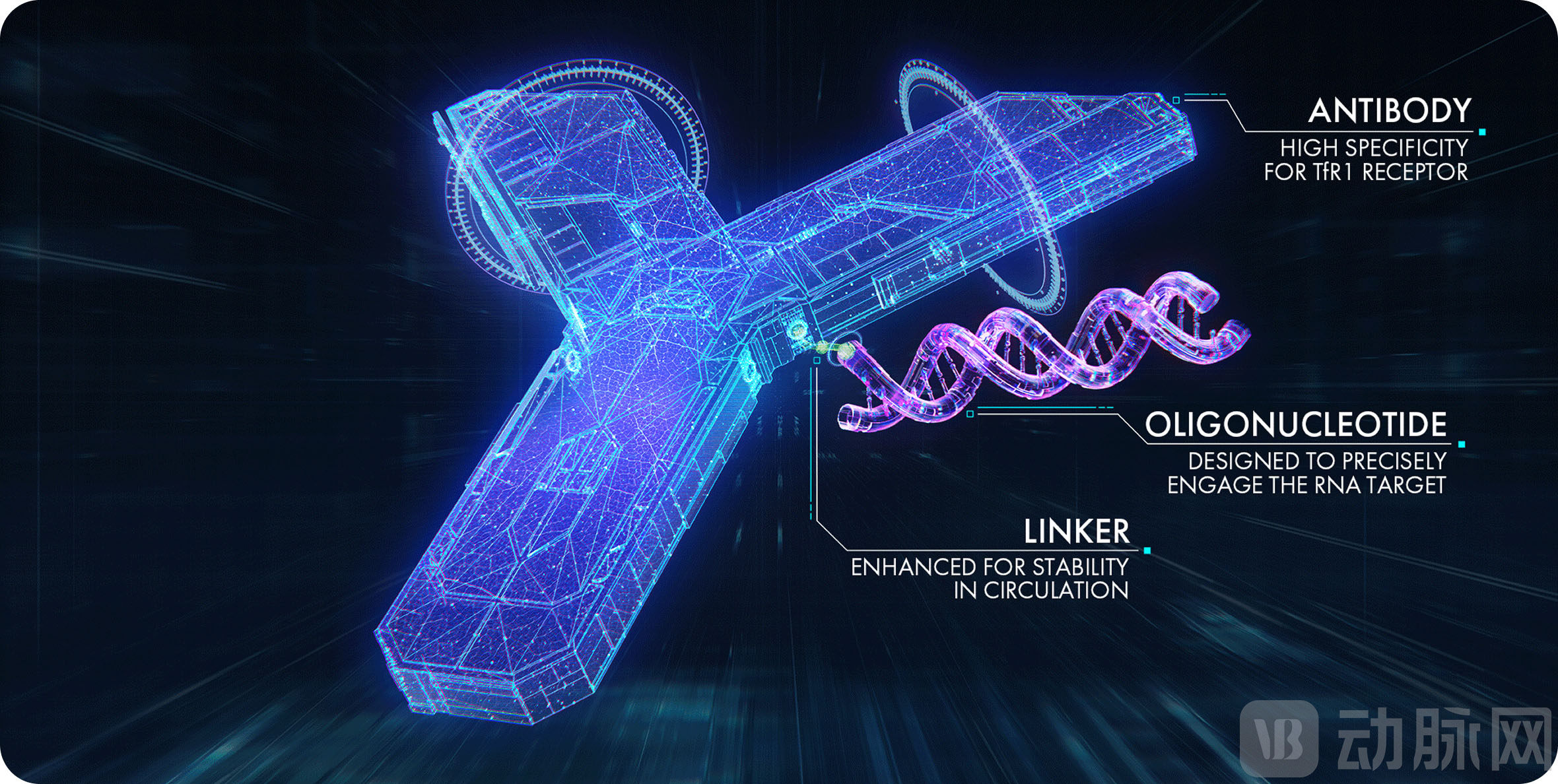
This transaction agreement also covers three projects that have reached the late clinical stage based on their own technology platforms: including potential first-in-class, late-stage disease-modifying therapies — delpacibart zotadirsen (del-zota) for the treatment of Duchenne Muscular Dystrophy (DMD), delpacibart etedesiran (del-desiran) for the treatment of Type 1 Myotonic Dystrophy (DM1), and delpacibart braxlosiran (del-brax) for the treatment of Facioscapulohumeral Muscular Dystrophy (FSHD). These projects are expected to advance Novartis' neuroscience strategy and supplement the existing R&D pipeline with potential first-in-class therapeutic candidates to address the genetic drivers of muscle-wasting diseases.
Among them,Del-zota aims to treat patients with Duchenne muscular dystrophy (DMD) who have exon 44 skipping (DMD44) gene mutations.The one-year data of EXPLORE44 published in September 2025 showed that patients with DMD demonstrated a reversal of disease progression across multiple functional indicators, and exhibited "unprecedented" improvements compared to baseline and natural history. In subjects treated with del-zota, total dystrophin levels were restored to up to 58% of normal levels. Creatine kinase (CK) levels rapidly decreased by more than 80% from baseline and remained near-normal during the longest follow-up period of 16 months. Additionally, after one year of treatment, CK levels returned to the normal range in 50% of the subjects.
Mid-October,AvidityAvidity Biosciences announced that it has held a positive pre-BLA meeting with the FDA regarding its upcoming Biologics License Application (BLA) for delzotarartan. Delzotarartan has already received Breakthrough Therapy Designation from the FDA, and Avidity is preparing a confirmatory study to support the global full approval of delzotarartan.
Del-desiran for Type 1 Myotonic Dystrophy — a condition with approximately 90,000 to 160,000 patients globally, currently has no approved targeted drug.On July 28, 2025, Avidity announced that the global Phase III clinical trial HARBOR for del-desiran in treating Type 1 Myotonic Dystrophy (DM1) has completed patient enrollment. As the first global Phase III clinical trial in the DM1 field, the key data from HARBOR is expected to be released in the second quarter of 2026.
Del-brax for the treatment of facioscapulohumeral muscular dystrophy (FSHD)Positive New Data in Phase 1/2 Clinical Trial FORTITUDE: Compared to placebo, improvements were observed in muscle functional mobility, muscle strength, and patient-reported outcomes (PROs) measuring quality of life in FSHD patients treated with del-brax, along with a rapid and significant decline in biomarkers. In terms of safety, del-brax demonstrated good long-term safety and tolerability, with most adverse events being mild or moderate, no related serious adverse events, and no discontinuations. Meanwhile, the global patient population for FSHD is approximately 50,000, with nearly no competition.
It should be noted that,The field of rare neuromuscular diseases has always been a high-priced area.Gene Therapy SRP-9001At a cost of $3.2 million per treatment, Spinraza (Nusinersen Injection), a drug for SMA treatment already covered by China's medical insurance, is priced at 699,700 yuan per vial. Assuming the U.S. pricing range for del-zota is $600,000 per year, and estimating based on approximately 3,000 treatable patients (70% of DMD44), a U.S. penetration rate exceeding 50% could generate $1 billion in revenue.
Thus, the high price of Avidity Biosciences, Inc. is justifiable:The "precision missile" AOC platform, which combines antibodies with small nucleic acids, delivers RNA drugs precisely into muscles to target rare diseases that others "can't reach." Relying on the platform, three core assets have reached the eve of commercialization, each possessing "billion-dollar molecule" potential.
Complete the Neuromuscular Landscape, Elevate the Growth Curve
On the other hand, it is Novartis' own willingness.
First is Novartis' own treatment landscape.Novartis possesses the siRNA platform (inclisiran), ASO platform, and xRNA research team, as well as Zolgensma (a gene therapy for spinal muscular atrophy), but the missing piece of the puzzle is muscle targeting. After incorporating the AOC technology platform into its portfolio, Novartis can expand its RNA layout from lipid-lowering and blood pressure reduction to neuromuscular applications, achieving broader research and development and market coverage.
Not only that, but Avidity's AOC technology can also cover older patients and adult populations, addressing the unmet clinical needs that Zolgensma cannot reach. The systemic delivery capability of AOC will further complement Novartis' gene therapy, establishing a comprehensive treatment matrix for rare diseases that covers "infants and young children + older children/adults."
Considering the patent cliff that Zolgensma will face, along with the corresponding multi-billion-dollar funding gap, Avidity's three RNA drugs happen to form a "relay baton" to hedge against the decline of gene therapy. Looking further ahead, Novartis plans to integrate the AOC platform with its own siRNA, ASO, and mRNA technologies to develop cardiomyopathy, CNS rare diseases, and obesity, which is also part of building a "second growth curve."
Secondly, the introduced drug delivery model can be extended to multiple disease areas, especially in autoimmune and chronic diseases.Del-desiran’s "six-months-a-dose" model has been proven to reverse disease progression (Phase II clinical data shows continuous improvement in muscle function), and this technology can be extended to metabolic diseases that require long-term medication, such as hemophilia and hereditary cardiomyopathy.
This is followed by new growth driven by technological iteration and platform collaboration.Currently, Avidity's technology platform has been validated, with all three of its pipelines entering the registration stage, already ahead of competitors. AOC technology can be considered the third iteration of small nucleic acid drugs, capable of achieving systemic tissue targeting. Avidity’s clinical breakthrough marks the maturation of this field. If Novartis combines its own RNAi technology to accelerate the development of long-acting therapies for cardiometabolic diseases using AOC, it is more likely to seize the commanding heights in chronic disease management within the global market, which is worth hundreds of billions of dollars.
As del-zota, del-desiran, and del-brax sequentially enter the review cycle, the rare muscle disease field is poised to welcome its first batch of RNA-modifying therapies. Novartis also has the potential to leverage its existing technology platform, powered by a new engine brought by Avidity Biosciences, to redefine the competitive boundaries of neuromuscular diseases. If the integration proceeds smoothly, this deal could become a milestone for RNA drugs transitioning from "liver-targeting" to "whole-body targeting."