

Five CGT Therapies Receive First-in-Class Clinical Approval in China, Targeting Allergic Rhinitis, Parkinsonian MSA, and Dual-Target siRNA Applications

iRegene Therapeutics
Cell Therapy Product Developer
October 28, 2025
eMedClub News
According to the Center for Drug Evaluation of the National Medical Products Administration of China(CDE)Incomplete statistics from the official website and publicly available data last week(October 20 - October 26)About 30 Class 1 innovative drugs are proposed to be included in the breakthrough therapy category/IND has been granted clinical tacit approval/IND application has been accepted, covering fields such as stem cells, small nucleic acids, ADCs, and bispecific antibodies, with indications tilting towards diseases that have "no specific treatment" or "limited treatment options."
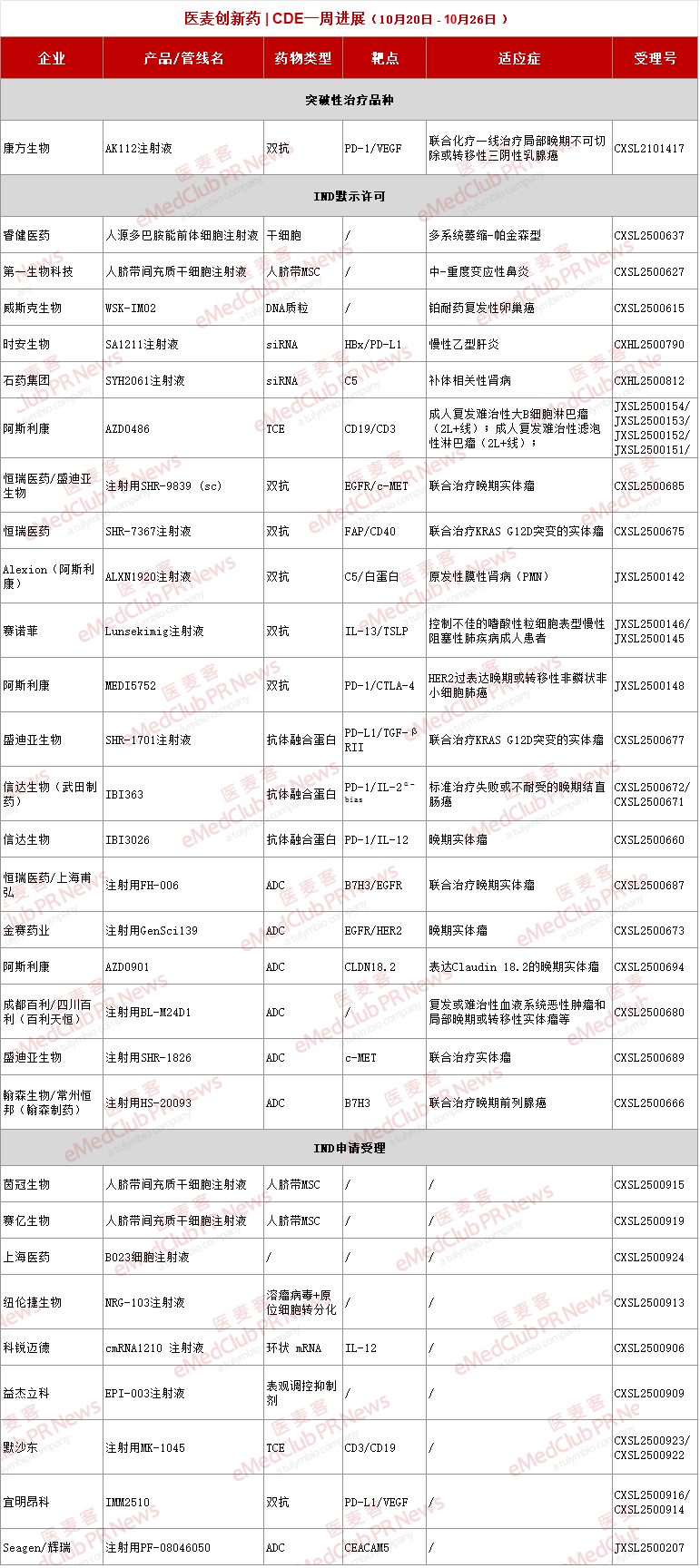
The following will introduce representative Class 1 innovative drugs that have been approved for clinical trials by the CDE for the first time.
iRegene:
Human-derived dopaminergic precursor cells
According to the official website of iRegene, the company's application for the human-derived dopaminergic progenitor cell injection NouvNeu004 has been approved for Phase I-III clinical trials, and is proposed for development to treatTherapeutic Multi-SystemAtrophy(MSA)-Parkinson's type, which marks the official entry into the clinical stage of the world's first cell therapy for MSA.
As a rapidly progressing adult neurodegenerative disease, the core pathological feature of MSA is the abnormal aggregation of α-synuclein in oligodendrocytes, leading to myelin damage and nerve conduction disorders.This fundamental difference renders conventional neurology treatment strategies largely ineffective.Currently, there are no specific therapies available globally that can delay or halt the progression of the disease. However, NouvNeu004, with its ability to efficiently secrete neurotrophic factors, innovatively adopts a "neurotrophic + neural reconstruction" combined treatment strategy, offering promising potential to address the treatment challenges of MSA.
First Biotech:
Human Umbilical Cord Mesenchymal Stem Cells
First Biotech's human umbilical cord mesenchymal stem cell injection has been approved for clinical trials, aiming to develop treatments for moderate to severe allergic rhinitis. According to the press release from First Biotech, unlike traditional drugs that "suppress symptoms" through "antagonistic" treatment, the core advantage of this stem cell candidate drug lies in its innovative"Triple Mechanism of Action: Immunomodulation + Anti-Inflammation + Repair". The core logic of the drug isRegulate the patient's imbalanced immune status from the root cause., correcting the body's overreaction to allergens, which means it can not only alleviate current symptoms but also holds the potential for long-term stable therapeutic effects.

WestVac Biopharma Co.,Ltd:
DNA Plasmid
WestVac Biopharma's WSK-IM02 Approved for Clinical Trials, Aiming to Treat Platinum-Resistant Recurrent Ovarian Cancer. Public information shows that this is an injectable pMVA-1 lipid complex, the main components of which are the pMVA-1 plasmid and cationic excipients, currently primarily targeting the treatment of advanced ovarian cancer. The main mechanism of action is that after WSK-IM02 enters the peritoneal cavity, the pMVA-1 plasmid is introduced into cells, where the plasmid DNA binds to the cGAS sensor receptor on the inner surface of the cell membrane, activating the STING pathway and DC cells, releasing Type I interferons, and inhibiting tumor growth.
Shi'an Biotech:
HBx/PD-L1 Targeting siRNA
Shian Biotech's SA1211 Injection Approved for Clinical Trials, Aiming to Develop Treatment for Chronic Hepatitis B. According to the company’s public data, SA1211 is a drug that can simultaneously target the hepatitis B virus.HBxGenes and Hepatocytes PD-L1Dual-target siRNA of genes, also a single-molecule dual-target siRNA candidate drug. To overcome the treatment of chronic hepatitis BVirus elimination with no reboundThe challenge led Shian Bio to develop two siRNA molecules: one that directly degrades HBV mRNA and another that helps patients overcome immune tolerance to HBV. Additionally, they independently developed a single-molecule dual-target siRNA platform technology, enabling the achievement of this with a single molecule.Virus Clearance and Immune RestorationTwo functions.

In preclinical experiments, SA1211 monotherapy achieved the effect of combination therapy: in a mouse model of hepatitis B, a single injection resulted in 80% of the mice testing negative for hepatitis B virus DNA within 14 days.80% of Mice Cleared Hepatitis B Surface Antigen Within 28 Days Without Rebound。
CSPC Group:
C5 Targeted siRNA
SYH2061 Injection, submitted by CSPC, approved for clinical trials, intended for the treatment of complement-related nephropathy(CMKD)According to the announcement by CSPC, SYH2061 is a double-stranded siRNA conjugated with galactosamine acetate.(GalNAc) Achieving liver-targeted delivery and targeting complement protein C5 through subcutaneous administration can effectively reduce C5 levels. By optimizing sequences and employing chemical modification strategies, SYH2061 achieves more durable gene silencing effects, making it suitable for treating IgA nephropathy and other complement-mediated related diseases. In preclinical studies, SYH2061 has demonstrated superior drug activity and prolonged efficacy compared to similar siRNAs.
Innovent Biologics:
PD-1/IL-12 Antibody Fusion Protein
Innovent Biologics' IBI3026 Approved for Clinical Trials, Intended for Development in Treating Advanced Solid Tumors(Including but not limited to lung cancer, breast cancer, gastric cancer/gastroesophageal junction adenocarcinoma, pancreatic cancer, etc.)Public data shows that this is a PD-1 antibody fused with IL-12, which demonstrates the potential to become a novel cancer immunotherapy by removing the suppression of immune responses and strongly activating T cells and NK cells within the tumor microenvironment. Additionally, IBI3026 is a bispecific immune agonist targeting both PD-1 and the IL-12 receptor. It can localize to PD-1 positive T cells in the tumor microenvironment via PD-1, maximizing the activation function of IL-12.
Data released at this year's AACR show that in in vivo tests using mouse tumor modelsIBI3026 Achieved Complete Remission in Almost All MiceIn terms of safety, the maximum tolerated dose in cynomolgus monkeys was 150 mg/kg, with a therapeutic index of 63, demonstrating an excellent therapeutic window.
Kexay Biotech:
EGFR/HER2 Targeted Bispecific ADC
GenSci's GenSci139 Injection Approved for Clinical Trials, Aiming to Treat Advanced Solid Tumors. According to public information, GenSci139 is a bispecific antibody-drug conjugate targeting EGFR and HER2.(BsADC)GenSci139 utilizes a highly stable and hydrophilic cleavable linker, covalently attached to a potent topoisomerase I inhibitor payload. It specifically recognizes and binds to tumor cells expressing EGFR and/or HER2, inhibiting tumor cell growth by blocking the signaling of EGFR homodimers, HER2 homodimers, and EGFR-HER2 heterodimers. Additionally, after binding to tumor cells expressing EGFR and/or HER2, GenSci139 is internalized, releasing the payload to kill the tumor cells.
Baili Tianheng:
ADC
According to the announcement issued by Baili Tianheng, its application for the injection of BL-M24D1 has been approved for clinical trials. It is intended to be used for, but not limited to, recurrent or refractory hematologic malignancies and locally advanced or metastatic solid tumors that have failed standard treatment or cannot receive standard treatment. According to public information, BL-M24D1 is aNew Generation ToxinsADC, originating from the same small-molecule technology platform as BL-B16D1 and BL-M17D1, and sharing the same "linker + toxin" platform with BL-B16D1 and BL-M17D1.
For more IND progress of new drugs, please refer to the table.

Exciting Live Broadcast Preview
Press and hold to scan the QR code and participate immediately ↓
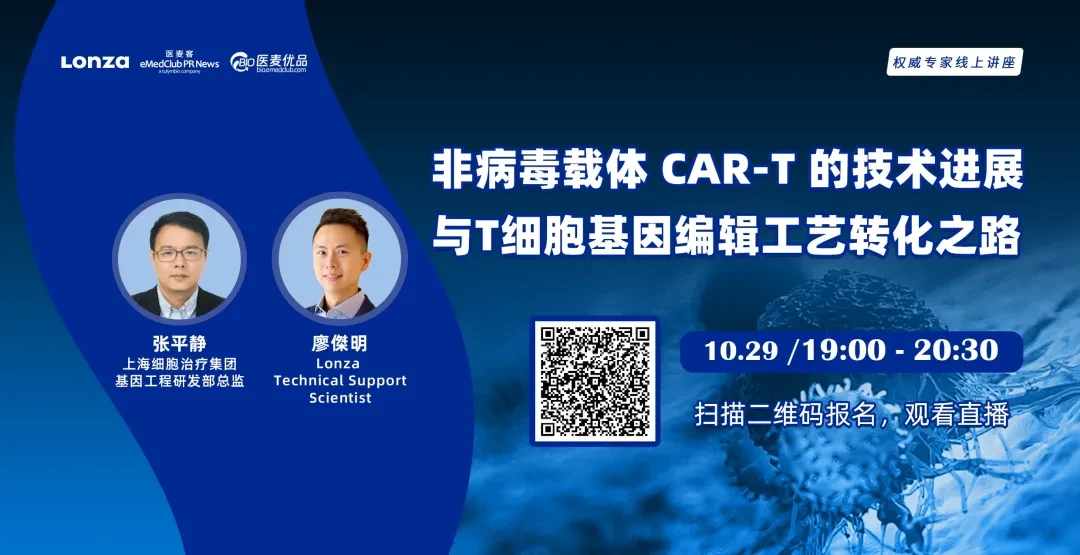
Recommendation 1
October 29th, 19:00-20:30
Advances in Non-Viral Vector CAR-T Technology and the Path to T-Cell Gene Editing Process Translation
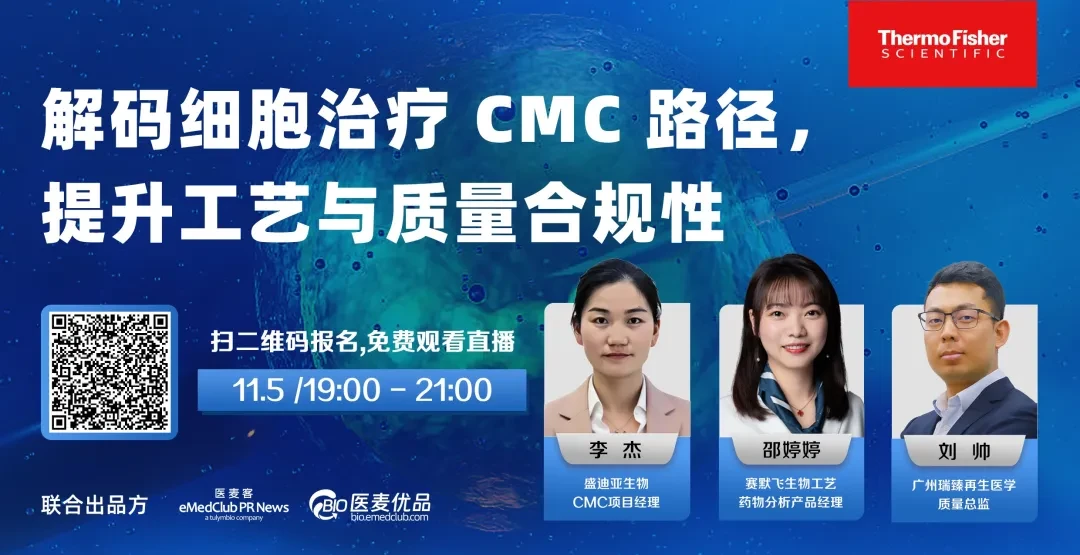
Recommendation 2
November 5th, 19:00-21:00
Decoding the CMC Pathway for Cell Therapy: Enhancing Process and Quality Compliance

DianDian "Share”、“Like" and "In View", give me a little recharge~"