

AstraZeneca Chen Bing: From 3C to Co-Creation, Driving More '0-to-1' Innovations

AstraZeneca
Biopharmaceutical Manufacturer
On October 25, AstraZeneca, a globally renowned biopharmaceutical company, officially launched its sixth global strategic R&D center and second such center in China in Beijing. The company also announced a four-party collaboration with the University of Cambridge, Beijing Municipal Science & Technology Commission, Zhongguancun Administrative Committee, and Beijing Economic-Technological Development Area (BDA) Management Committee. These significant developments mark a new phase in AstraZeneca's deepened innovation ecosystem strategy in China.
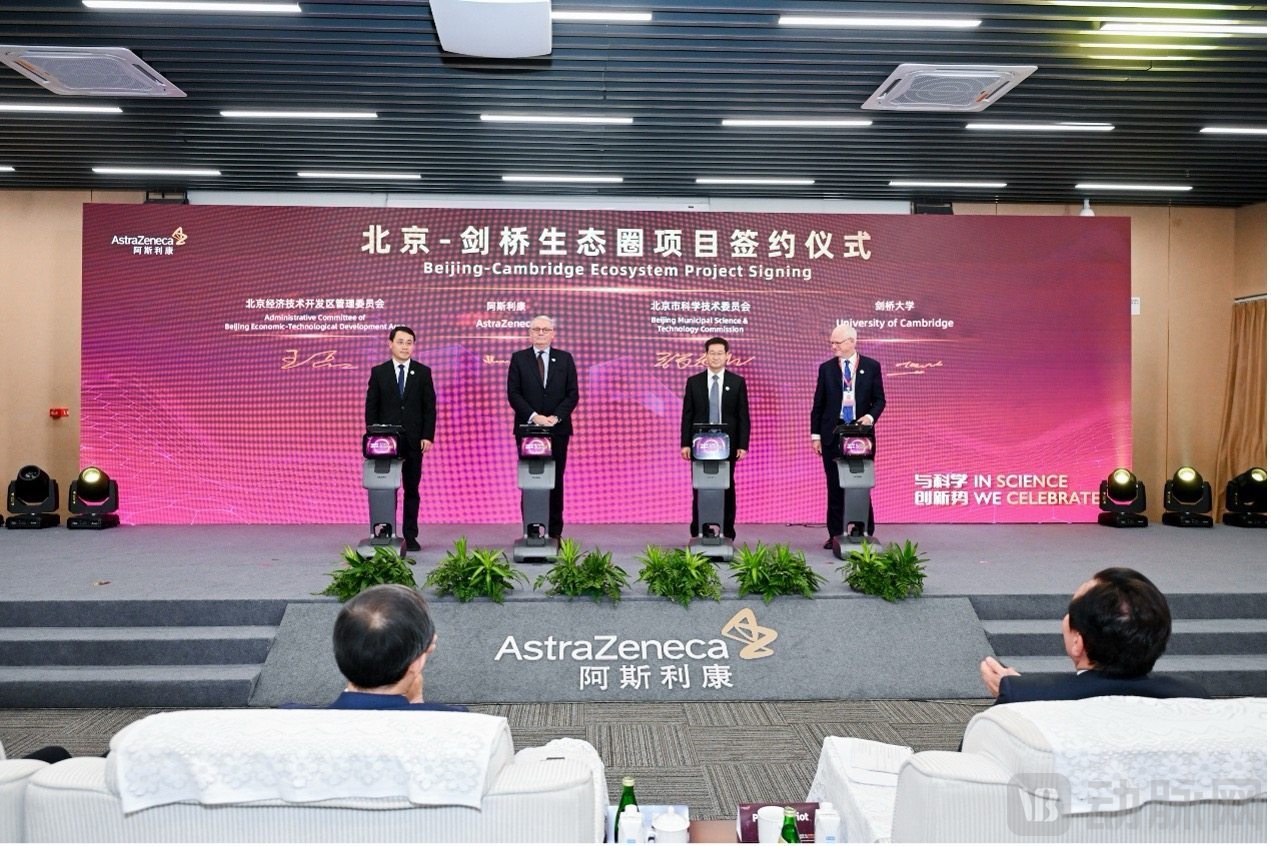
The newly launched Global R&D Beijing Strategic Center will integrate AI and data science centers, expand cooperation with local clinical trial institutions, universities, and biotech companies, deepen the understanding of diseases, and incubate scientific innovations. The establishment of the Beijing-Cambridge Scientific Innovation Ecosystem will comprehensively enhance collaboration between these two world-leading scientific ecosystems by sharing educational resources, training, and talent exchange, strengthening the connection between Beijing and the University of Cambridge, and jointly accelerating innovation.
13C+1C: From Connection to Co-creation
In an interview, Chen Bing, Vice President of International Business Development, Partnerships, and Strategic Investments at AstraZeneca, elaborated on the core concept of this collaboration—the "3C" cooperation model.
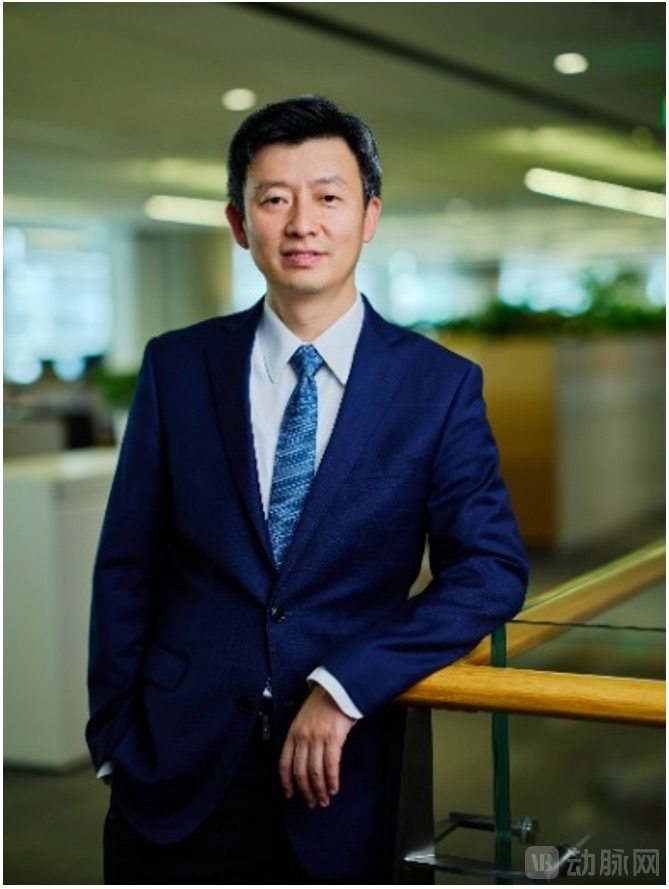
Figure: Vice President of International Business Development, Collaboration, and Strategic Investment at AstraZeneca, Bing Chen
"The first C is Connect, the second C is Communicate, and the third C is Collaborate," said Chen Bing, indicating that this is a three-year progressive planning process.
Specifically, the first year focuses on "Connection," establishing links between people and resources through mutual visits by delegations, training, and getting to know each other. The second year begins to promote "Communication" and "Collaboration," gradually forming a stable cooperation mechanism through more frequent communication and project collaboration. The third year and beyond: the focus is on "Collaboration," further deepening project development and technological innovation. A longer-term goal is to introduce the fourth C — Co-create. This means that top talents in Beijing and Cambridge will engage in deep collisions and joint R&D in their respective fields, achieving more innovative results from "0" to "1."
"In the long run, a more advanced and harmonious cooperation model is co-creation – not just the handover of technology and products, but both parties participating in innovation from the R&D origin. Both models have their own advantages and will stimulate different forms of innovation, creating a 'hundred flowers blooming' situation," emphasized Chen Bing.
2The "Closed-loop" Solution to the Challenge of Scientific Research Transformation
China's scientific research output continues to rank among the world's top, but beneath the "quantity and speed," achieving efficient clinical translation of original discoveries still faces many challenges. Chen Bing frankly stated that AstraZeneca's ecosystem collaboration model aims to effectively bridge the innovation of research institutions with clinical applications, accelerating the formation of a closed loop. Without such a closed loop, early-stage scientific research translation is likely to encounter obstacles, affecting clinical success rates and efficiency. AstraZeneca’s professional experience can ensure that the entire process from R&D to clinical application becomes more systematic and sustainable, which is also an important role we hope to play in ecosystem collaboration.
How to achieve breakthroughs in talent cultivation, scientific research openness, and other dimensions? Chen Bing believes the most direct way is through mutual delegation visits. For instance, under the leadership of the Beijing Municipal Science & Technology Commission, topic experts or young professors are selected from various universities to bring their research topics to Cambridge for exchange. The University of Cambridge will provide lectures or share experiences to help them understand the process, key stages, and potential challenges involved in the early-stage R&D product commercialization.
Beyond the industrialization of scientific research achievements, Chen Bing further pointed out that the competitiveness of Chinese pharmaceutical companies not only stems from "0 to 1" breakthroughs in the field of basic science but is also reflected in the continuous iterative capability in engineering. Chinese pharmaceutical companies excel at building upon existing molecular mechanisms or processes, optimizing structures, upgrading production workflows, and rapidly testing hypotheses to better align innovation with unmet clinical needs, forming an innovation model that is "more attuned to clinical requirements."
As Chen Bing said: "A lot of innovation is actually engineering innovation, such as fine-tuning the molecular structure of drugs, adding new components, or process improvements. As long as it can enhance clinical value, it is meaningful. Innovation is not just about breakthroughs from 0 to 1; micro-innovations and engineering improvements from 1 to 1.1 are equally valuable in practical terms. Relying on a solid engineering foundation, a diligent and efficient team culture, and a comprehensive industrial system, Chinese companies continue to accumulate advantages in molecular structure optimization, process upgrades, and workflow automation. It is these 'micro-innovations' that allow innovation to advance step by step."
Overall, it is precisely this ecosystem loop that starts with the end in mind, linking demand-research-clinical-industry, along with engineering innovation and more, that is driving the accelerated enhancement of China's pharmaceutical innovation capabilities, also providing a solid foundation for world-class original drugs to move from China to the global stage.
3Global Innovation Hub: China Becomes the New Growth Driver
Why locate the sixth global strategic R&D center in Beijing? Chen Bing's answer is, "Where there is innovation, that's where our R&D focus lies."
By drawing on the innovative cluster model of Cambridge, research institutions, leading pharmaceutical companies, start-ups, and regulatory resources need to be gathered within "coffee distance" to achieve efficient collisions and collaboration. The geographical advantage of Yizhuang is precisely reflected here — with universities, hospitals, regulatory agencies, and a large number of industrial chain partners clustered in the surrounding area, enabling key processes such as meetings, reviews, and registration to be completed within a one-kilometer radius.
Chen Bing frankly stated: "The reason why Beijing has strategic appeal mainly lies in its locational advantages, industrial support, and talent reserve. Here, there are top universities, hospitals, and research institutions, and at the same time, the industrial ecosystem is complete, which is conducive to the closed-loop construction from early-stage R&D to clinical transformation."
Therefore, AstraZeneca has established its sixth global strategic R&D center and second in China in Beijing. On one hand, it aims at the capital's vast clinical needs and top talent resources; on the other hand, it hopes to leverage Beijing’s unique industrial clustering and policy environment to accelerate the full-chain collaboration from original scientific research to clinical translation and then to industrial implementation.
Against the backdrop of a gradual shift in global innovation hubs, Chen Bing observed that these hubs are showing a "decentralization" trend. With its vast clinical needs, policy support, and robust engineering capabilities, China is regarded as a significant "new growth driver" for global innovation. AstraZeneca currently has six global strategic R&D centers—two in Europe (Sweden, UK), two in the United States (Boston, California), and two in China (Shanghai, Beijing)—a move that aligns with the eastward shift of innovation focus: it aims to bring Chinese original drugs to the global stage while also delivering cutting-edge global resources to patients in China.
Chen Bing emphasized, "It is now 2+2+2, with the latest two increments in China." More importantly, AstraZeneca plans to build the Beijing-Cambridge Innovation Corridor into a high-speed channel connecting basic research, clinical validation, and industrialization, while taking on multiple roles such as "matchmaker," "accelerator," and "co-investor" to accelerate the deep integration of the innovation ecosystems in China and the UK.
At the same time, when selecting local partner companies, AstraZeneca adheres to a globally unified standard. "As long as the product is sufficiently innovative and has the potential to become a global drug, we treat everyone equally," emphasized Chen Bing. She highlighted that when evaluating and supporting local innovative enterprises, AstraZeneca values the combination of scientific value and engineering capability, clinical significance, the execution ability of the innovation team, and resource utilization efficiency.
4Future Outlook
With the official launch of AstraZeneca's sixth global strategic R&D center, and relying on collaborations with the University of Cambridge, Beijing Municipal Science & Technology Commission, and the Beijing Economic-Technological Development Area Management Committee, AstraZeneca will focus on promoting in-depth collaboration between two world-class scientific ecosystems—by sharing educational resources, jointly cultivating talent, and facilitating exchange programs to strengthen innovative connectivity and capacity building between Beijing and Cambridge.
AstraZeneca's Layout in Beijing: Demonstrating Long-Term Commitment to the Chinese Market and Firm Resolve to Propel Local Innovation onto the Global Stage. As a model of globalization and localization working in tandem, AstraZeneca is dedicated to building a more open, flexible, and efficient innovation ecosystem, bringing more life-changing medicines to patients in China and around the world.
From a $2.5 billion investment plan to the "3C" roadmap, from the iterative advantages of continuous engineering to Beijing's "coffee distance" innovation cluster, the launch of AstraZeneca's Global R&D Beijing Strategic Center marks a comprehensive repositioning of multinational pharmaceutical companies in China's innovation ecosystem: this is not only a vast market but also a research and development origin point with the capability to resonate globally.
For Chinese Biotech companies aspiring to the international stage, the "Beijing-Cambridge" scientific innovation ecosystem provides a fast track for going global and global collaboration, while also introducing a clinical transformation perspective that begins with the end in mind and a new paradigm of international registration synergy. In the future, within the multipolar global innovation landscape, this innovation corridor is expected to become a new model for global collaboration in the life sciences field, propelling more original Chinese forces onto the world stage.