Hangzhou Brain-Computer Science Innovation Demonstration Center Unveiled, Pioneering a New Era for the BCI Industry

BrainCo
Non-invasive brain-computer interface technology solution provider
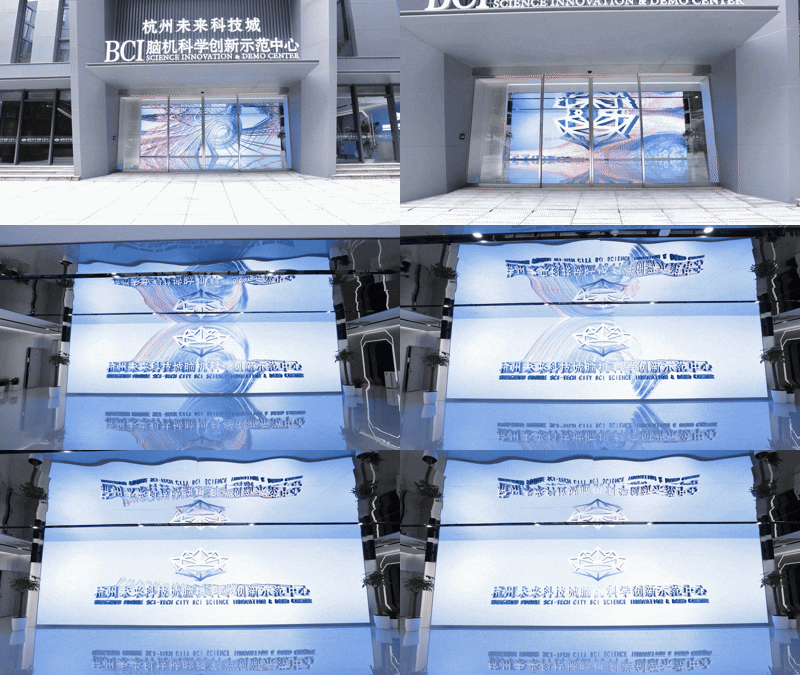
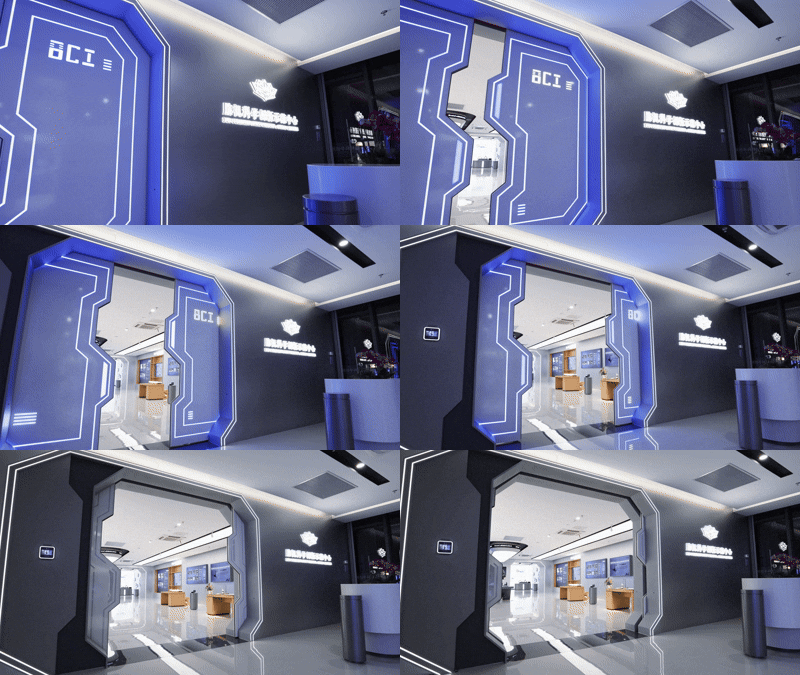
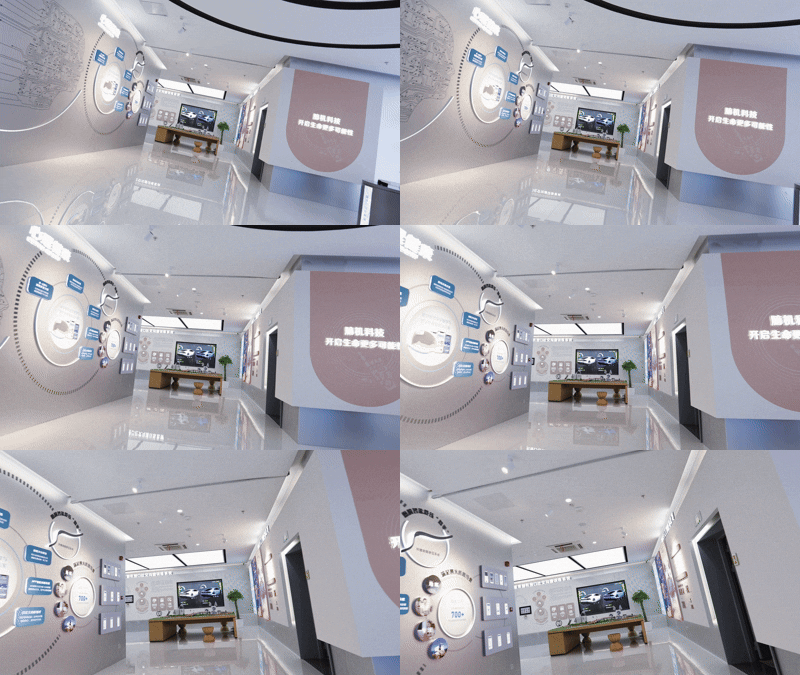
Recently, the "Brain-Computer Science Innovation Demonstration Center" located in the China (Hangzhou) Artificial Intelligence Town officially opened. As an important window for showcasing the achievements of the brain-computer interface industry, the exhibition hall was built by Hangzhou Future Sci-Tech City Innovation Development Co., Ltd. and relies on BrainCo to create a comprehensive presentation of the brain-computer interface from scientific exploration to industrial implementation.
Currently, brain-computer interface technology is moving from the "scientific frontier" to an "industrial necessity." The "15th Five-Year Plan" recommendations also explicitly list it as a future industry for forward-looking development. Building an open and collaborative experimental platform has become a key infrastructure for industrial transformation.
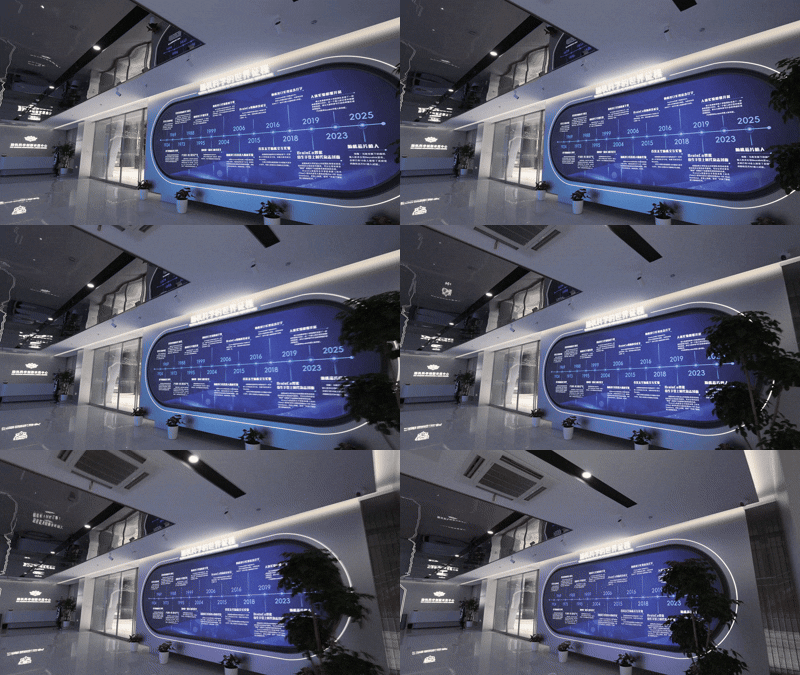
Walking into the exhibition hall, the preface hall systematically outlines the key journey of global brain-computer interface technology from its conceptual origin to the application explosion in the form of a timeline, showcasing the development course of brain-computer science. From the early discovery of EEG signals to the current push in technological advancement by companies such as Musk's Neuralink and BrainCo, the century-old brain-computer interface technology is gradually moving towards real-life applications.
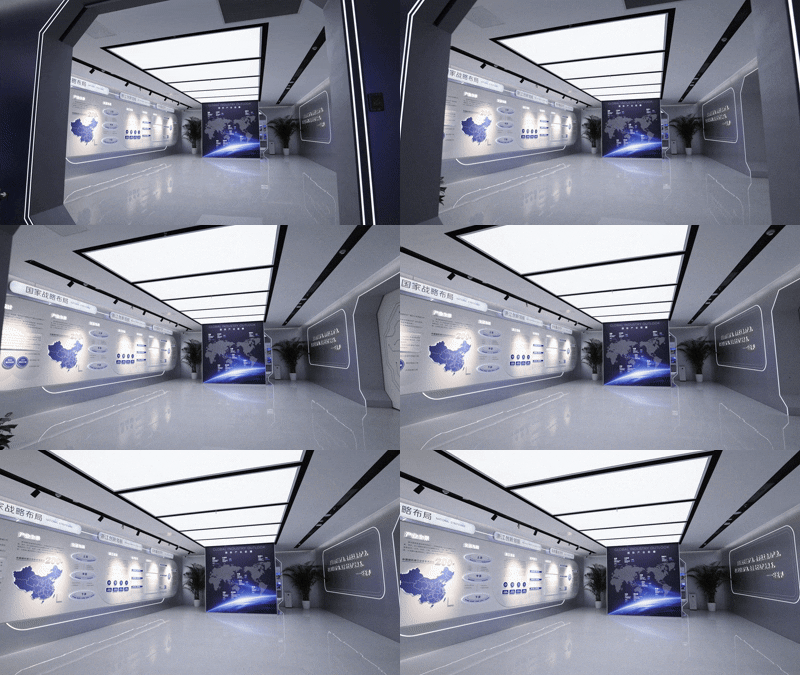
Inside the "Hangzhou Future Sci-Tech City Brain-Computer Industry Panorama Exhibition Space," the exhibits are presented along the main thread of a global brain-computer industry map, showcasing key directions under the strategic layout of future industries at national, provincial, and municipal levels. With the core mission of building a “Neuromorphic Intelligence Future Industry Pilot Zone,” Hangzhou has established an integrated innovative ecosystem encompassing fundamental research, technology transfer, and industrial application, attracting several leading companies in the field, including BrainCo.
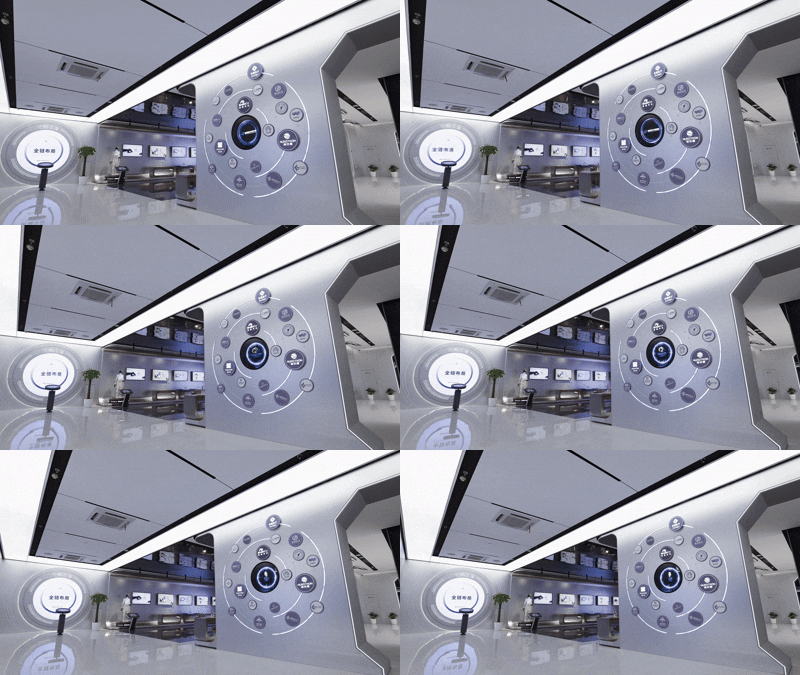
In the visually striking 3D film viewed without special glasses, visitors can get a panoramic understanding of the development landscape of the brain-computer interface industry and the innovative achievements of Hangzhou enterprises, experiencing the vibrant energy of this city in the frontier of technology.
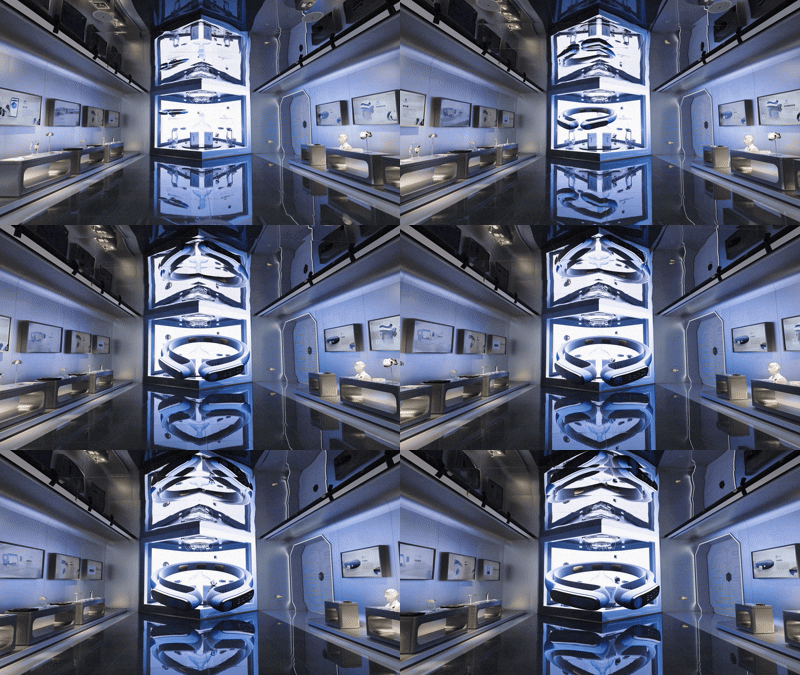
On the other side, the brain-computer technology scenario experience area showcases BrainCo's brain-computer interface products.
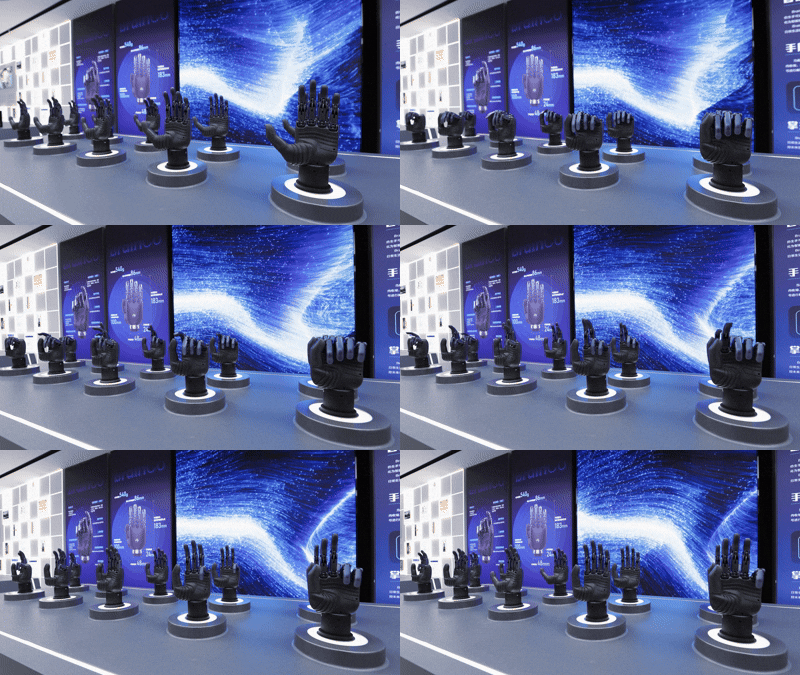
First, there are smart prosthetic products. The BrainCo intelligent bionic hand can precisely decode the neural and muscle electrical signals of the user, converting movement intentions into natural and smooth limb motions. It achieves independent control of all five fingers and multi-gesture switching, assisting upper limb amputees in regaining the ability to perform daily grasping and fine motor operations.
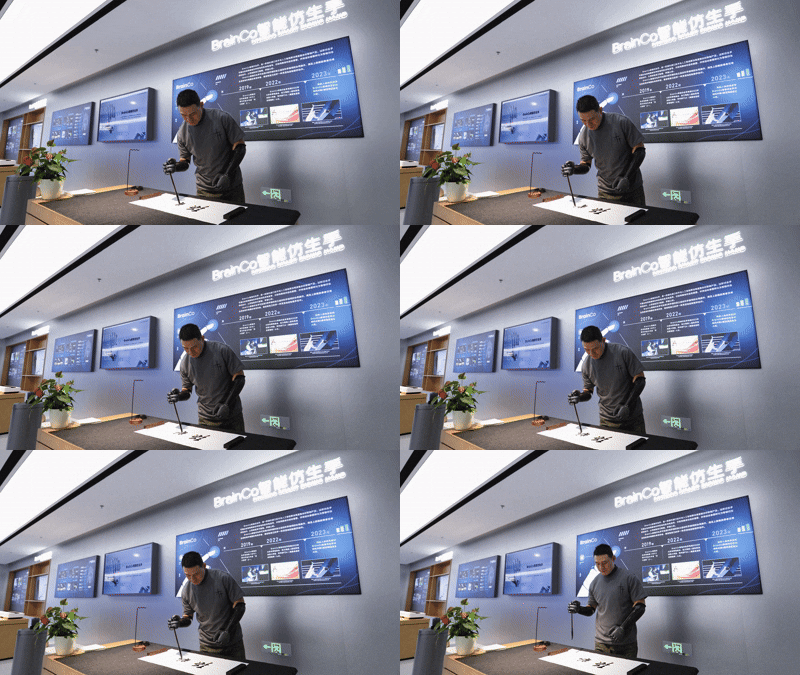
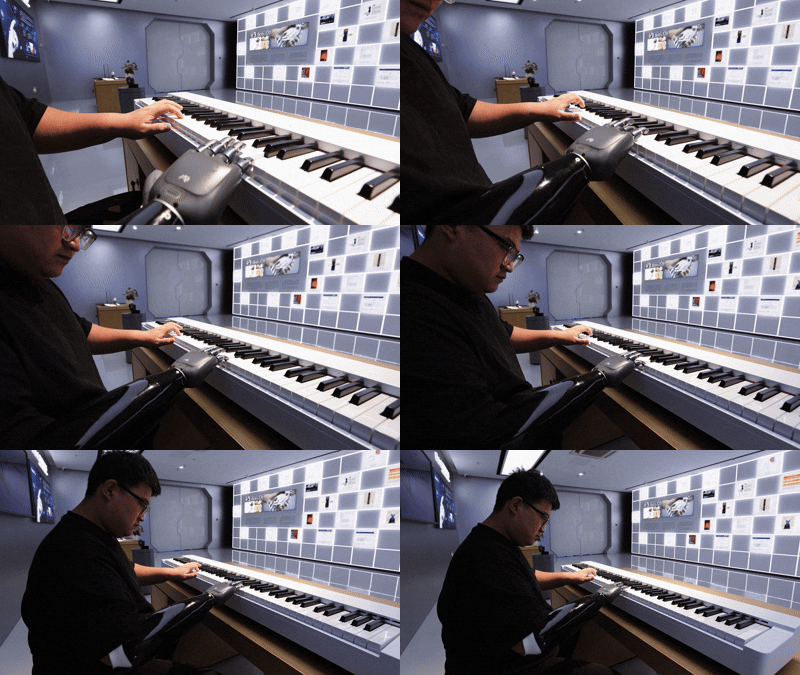
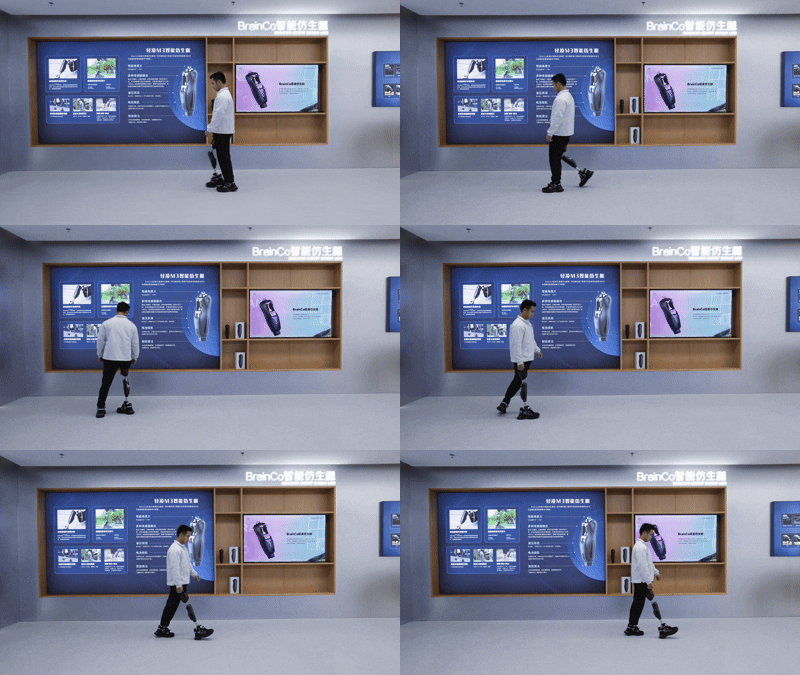
The Light凌M3 Intelligent Bionic Leg dynamically adapts to gait, speed, and more through multi-sensor fusion and intelligent algorithms, enabling users to walk safely and smoothly, go up and down stairs, and even engage in activities like cycling, hiking, and surfing. These two products have made appearances at international events such as the Beijing Winter Paralympics and the Hangzhou Asian Para Games, offering people with disabilities a more dignified and free lifestyle.
In the experience area, visitors can also intuitively see how brain-computer interface technology enables biological signals.The number is converted into actual actions.
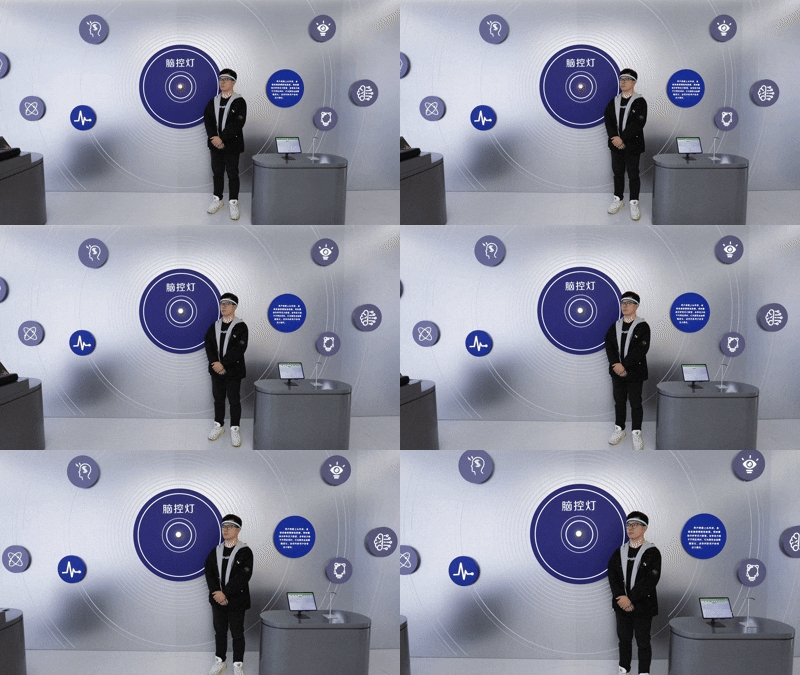
Devices like the BrainCo-controlled lamp can collect EEG signals from the wearer's forehead and analyze their level of focus in real time, achieving an effect where the light changes with attention—brighter and steadier when focused, and shifting to other colors when distracted, allowing users to clearly see their state of concentration.
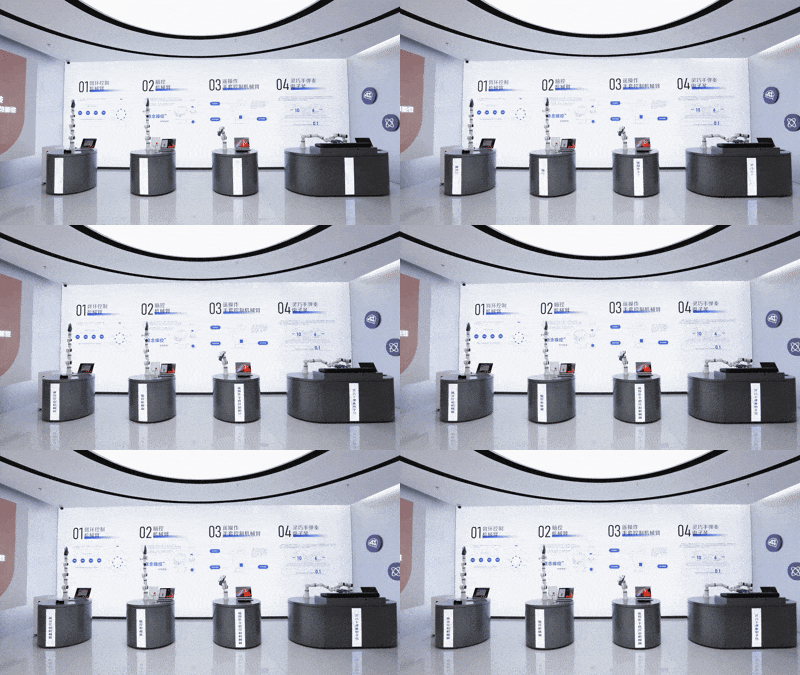
The event also showcased various applications of brain-computer and neural signal-driven devices: an armband controlling a robotic arm by acquiring and decoding muscle and neural electrical signals to replicate movements; a dexterous hand achieving independent and coordinated operation of all five fingers through high-precision algorithms, capable of accurately striking piano keys; a glove remotely operating a robotic arm capturing hand movements via sensors to enable real-time synchronized control, applicable in high-risk scenarios such as deep-sea and mining environments. The brain-controlled robotic arm demonstrated a higher level of interaction—by acquiring and decoding EEG signals through a brain-machine headband, the system directly translates thoughts into motion commands without physical involvement.
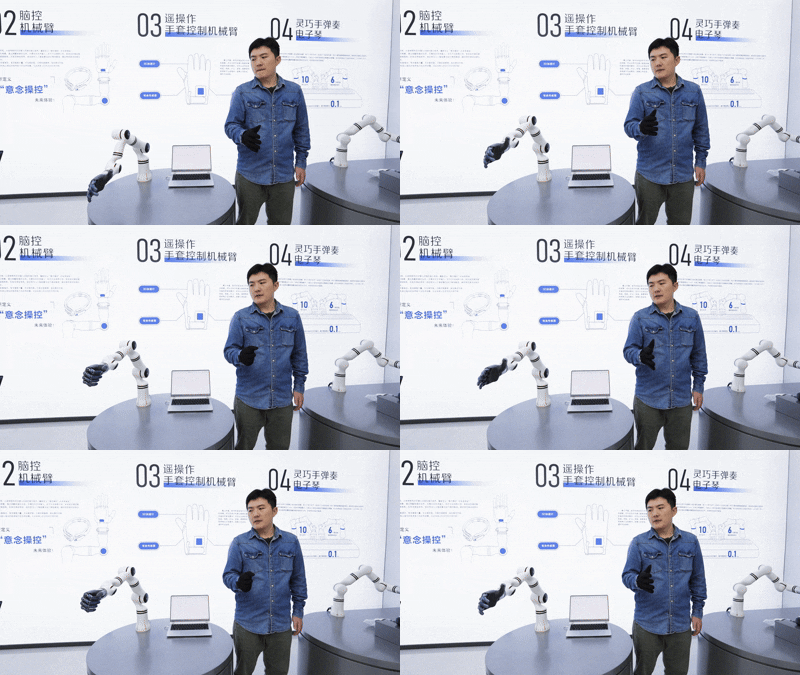
From mind-controlled lights to robotic arm demonstrations, the full presentation shows how brain-computer interface technology allows mental activities to be "seen," understood, and further translated into executable real-world actions.
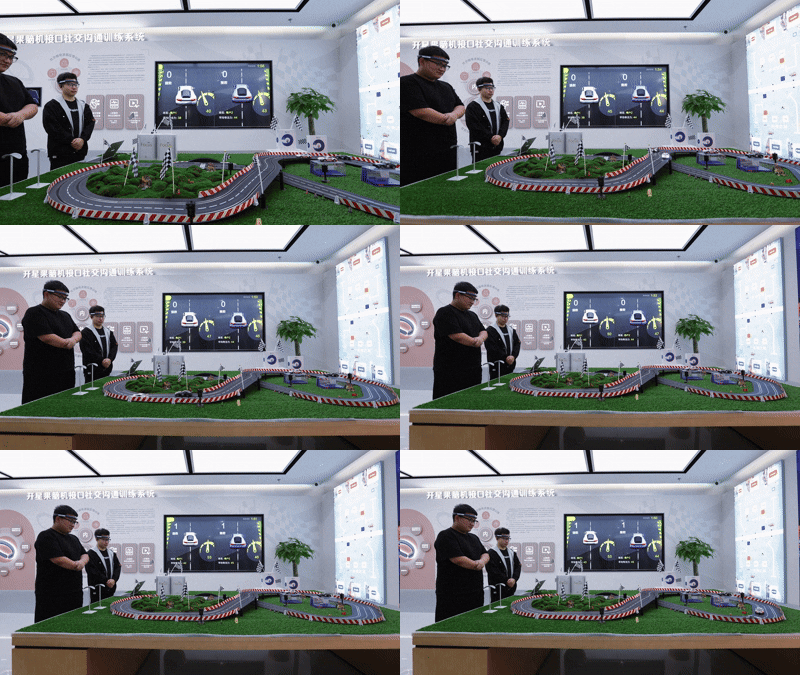
In the intelligent rehabilitation sector, three representative products targeting different groups were showcased. The "Starfruit Brain-Computer Interface Social Communication Training System" for children with autism can enhance social skills through neurofeedback; the "Focus欣 Brain-Computer Interface Attention Training System" for children with attention issues helps improve focus and executive function; and the "BrainPower Cognitive Rehabilitation Training System" for middle-aged and elderly people delays cognitive decline through personalized EEG detection and training. These products collectively form BrainCo's intelligent rehabilitation ecosystem, allowing brain-computer technology to truly serve public welfare.
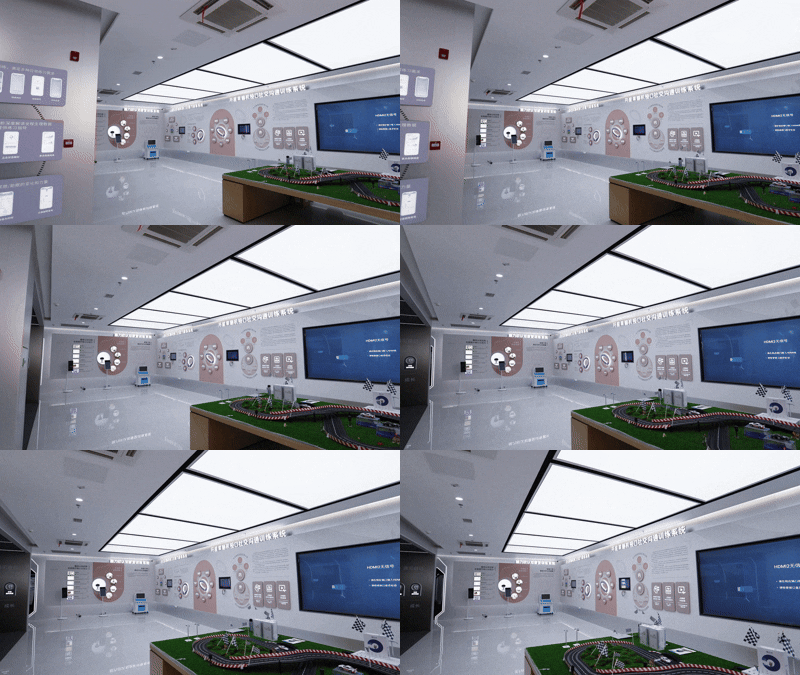
In addition, there is a highly interesting "Focus Racing" experience available for visitors.
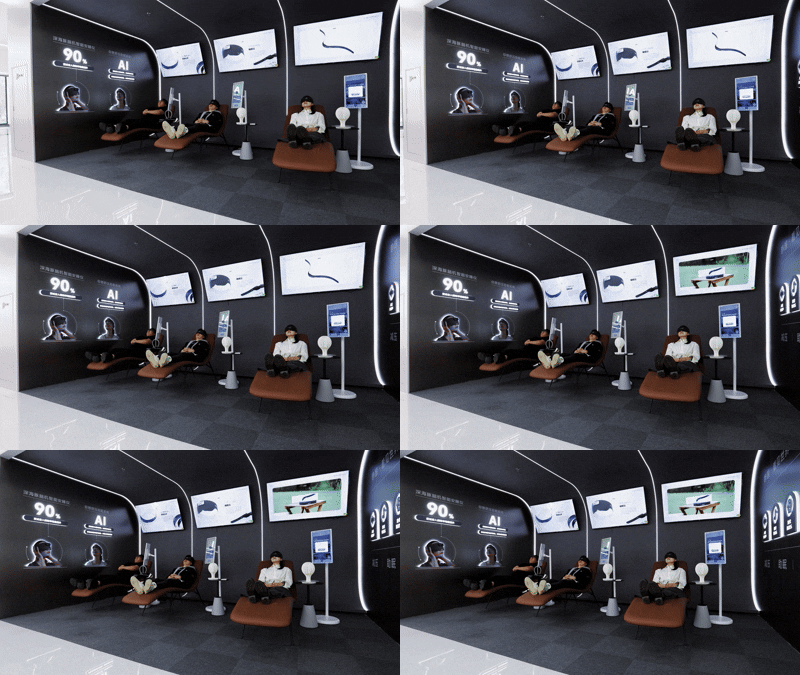
Moving forward, visitors will enter the meditation sleep experience area. Here, comfortable seating is arranged where one can personally experience the relaxation brought by Easleep DolphinBrain Brain-Computer Intelligent Sleep Device, OxyZen Relaxation Pressure Relief System, and FocusZen Mindfulness Relaxation System. Through EEG detection and AI algorithm analysis, these products help people manage stress, improve sleep, and bring brain-computer interface technology into households across China.
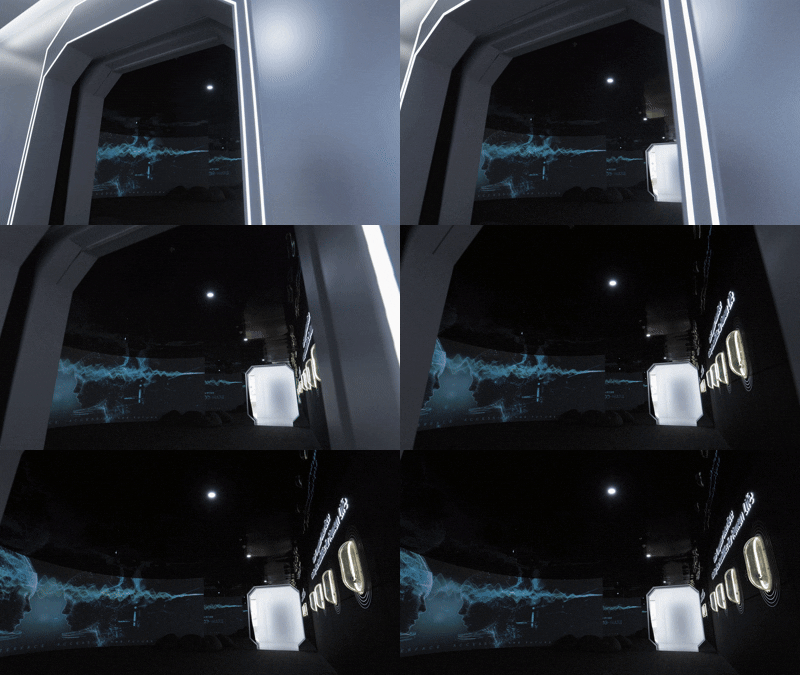
The final part of the exhibition area unfolds with "The Future Development of Brain-Computer Interfaces." On a large screen, immersive imagery depicts the cutting-edge direction of brain-computer interface technology—where continuous optimization of sensors and algorithms enables more natural and efficient communication between humans and intelligent systems, laying the foundation for a future symbiotic society of humans and machines.
The entire exhibition area, in a blend of technology and imagination, showcased how brain-computer interfaces are moving from the present into the future, and how technological innovation is evolving into a force that reshapes lifestyles.
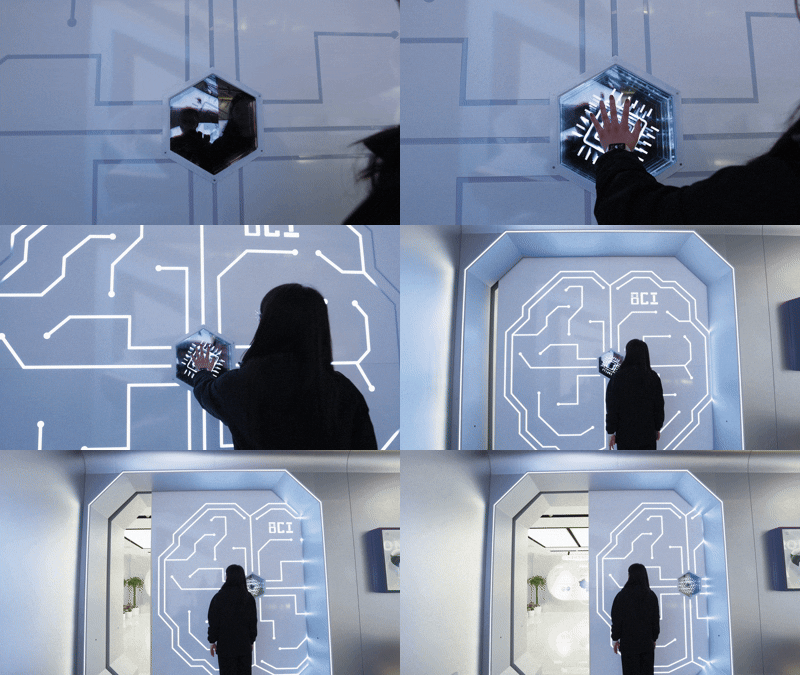
The Brain-Computer Science Innovation Demonstration Center transforms complex technical principles into a tangible future experience through interactive displays, bringing the "new quality productivity" of brain-computer interfaces from abstract concepts into the public eye, laying a solid foundation for the social acceptance of this technology.
As the supporting unit of the exhibition hall, BrainCo has become a new calling card for Hangzhou's exploration of future industries with a decade of technical accumulation, promoting brain-computer interface from laboratories to daily life, extending from rehabilitation and medical treatment to intelligent manufacturing, allowing this cutting-edge technology to truly protect "ordinary people."
Part of the content is sourced from the "Zhejiang Hangzhou Future Sci-Tech City" WeChat Official Account.