

GSK Acquires Two Next-Gen Therapeutics in 48 Hours for Over $1 Billion

GSK
Pharmaceutical R&D Manufacturer
Syndivia
Biological Engineering Company
Empirico
Biotechnology R&D Developer
In two days, GSK made two moves.
First, it was reported on October 27, 2025, local time, focusing on the next generation of ADCs.SyndiviaAnnounced the granting of GSK global exclusive rights to develop and commercialize a preclinical ADC for metastatic castration-resistant prostate cancer (mCRPC). Under the terms of the agreement, Syndivia will receive an upfront payment and success-based development and commercial milestone payments totaling £268 million (approximately $360 million). GSK will assume full responsibility for the ADC project’s development, manufacturing, and global commercialization.
Just one day later, on October 28, 2025, GSK entered into another global exclusive license agreement, this time with the U.S.-based biotechnology company Empirico. Under the agreement, GSK will pay an upfront fee of $85 million to obtain the global exclusive rights for the development and commercialization of EMP-012, Empirico’s siRNA pipeline for treating chronic obstructive pulmonary disease (COPD).
In addition, GSK may also pay up to $660 million in success-based development, regulatory, and commercial milestone payments, as well as tiered royalties on global net sales. Empirico will continue to lead the clinical development of EMP-012 until the completion of the ongoing Phase I clinical trial.
Within 48 hours, GSK first acquired ADC and then siRNA, with the total value of the two deals exceeding $1 billion. The company has simultaneously secured next-generation ADC and long-acting siRNA. On the surface, this appears to be a routine year-end inventory replenishment move by an MNC; in fact, GSK is using increasingly precise BD to build a competitive edge characterized by "low dose, ultra-long efficacy." In other words, prostate cancer and COPD are just entry points, while the underlying technology platforms and clinical pathways are the main focus.
Filling the Gap in Prostate Cancer, Restarting the ADC Layout for Solid Tumors
According to the agreement, GSKSyndiviaThe core technology platform was evaluated as follows: "This novel ADC utilizes Syndivia's proprietary next-generation GeminiMab conjugation technology, which has demonstrated enhanced anti-tumor activity and favorable safety in preclinical studies, showing best-in-class potential. Research indicates that this ADC can significantly shrink tumors at higher doses without a corresponding increase in severe side effects. This pipeline is expected to provide a treatment option that directly targets tumors for mCRPC patients, filling the current therapeutic gap, and is anticipated to be more widely used in community healthcare institutions."
Although the specific product was not specified, based on the current official website information of Syndivia and the company's previously disclosed pipeline news, it is generally believed that the pipeline involved in this transaction is SDV2102, for which data was previously disclosed but has been temporarily hidden.
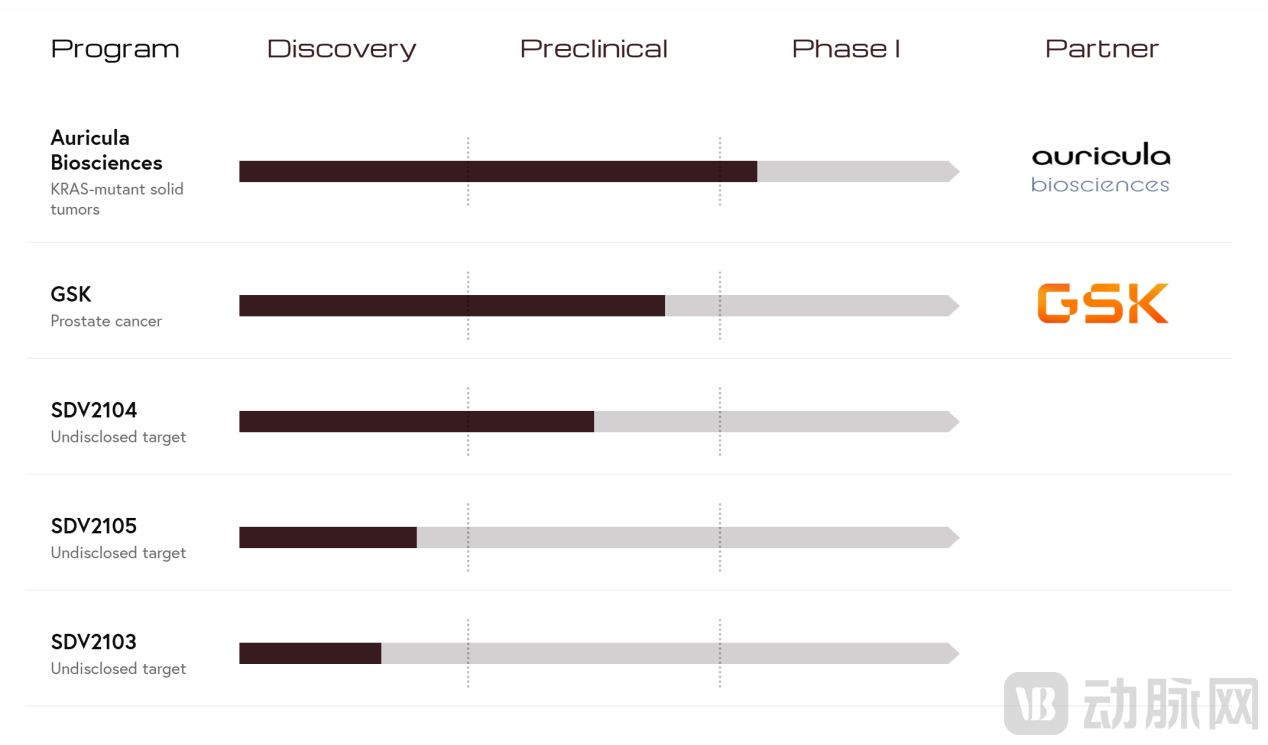
At the 2025 AACR Conference,SyndiviaDisclosed the new drug PSMA ADCSDV2102Preclinical research data. SDV2102 uses a new PSMA antibody D10, demonstrating superior antigen-binding properties; additionally, it employs MMAE as the payload, with a DAR=1, showing better anti-tumor activity than ADC drugs constructed with J591 antibody or D10 antibody at DAR=4 (under equivalent MMAE dosing). NHP toxicology studies indicate that SDV2102 exhibited no significant toxicity even when the dose was increased to 24mg/kg, with a therapeutic window reaching 38.
It is worth mentioning that, at the same MMAE dose,SDV2102The anti-tumor effect of (DAR1) is significantly stronger than that of DAR4 ADCs (XT42/MMAE and J591/MMAE), demonstrating its high-efficiency penetration and killing ability, with its minimum effective dose (MED) as low as 2.5 mg/kg (single dose).
According to the prediction in The Lancet's major report on prostate cancer, the number of global prostate cancer cases will increase from 1.4 million per year in 2020 to 2.9 million per year in 2040, doubling the number of patients. The number of people dying from prostate cancer globally each year is expected to rise from 375,000 in 2020 to nearly 700,000 in 2040, an increase of approximately 85%.
Among them, approximately 10–20% will progress to advanced castration-resistant prostate cancer with metastasis within five years. For patients whose cancer has progressed to mCRPC, targeted treatment options are limited, standard treatments have poor accessibility in community medical institutions, and they are poorly tolerated with limited efficacy. The survival rate for such patients is low, with a five-year survival rate of only about 30% and a median survival period of approximately two years, creating an urgent need for new therapies, representing a significant market opportunity.
On the other hand, GSK's most notable ADC in the oncology field is Blenrep (BCMA), but due to the failure of a confirmatory clinical trial, this drug had to be withdrawn from the market, leaving a gap in the ADC pipeline for a period.
The agreement with Syndivia is equivalent to spending £268 million for a ticket on the solid tumor ADC ship, which is still in the preclinical stage. This cost is much lower than acquiring an already marketed product. More importantly, GSK has its own high-load Linker-Payload platform, which is expected to enable rapid iteration and upgrading of technology in new products.
EMP-012: Transform Daily Inhalation into Long-Acting Drug Delivery
AndSyndiviaSimilarly, Empirico, Inc., another company targeted by GSK this time, has also made innovations in its mechanisms.
Empirico'sEMP-012Targeting a unique inflammatory pathway holds promise for developing a treatment unaffected by baseline Type 2 inflammation, smoking, or comorbidities. Based on this mechanism, EMP-012 has the potential to deliver clinical benefits to patients with non-Type 2 inflammation, a key patient subgroup with limited treatment options.
The therapy is currently in Phase 1 clinical trials for the treatment of chronic obstructive pulmonary disease (COPD) and is expected to further expand to other inflammatory respiratory diseases. In addition, thanks to Empirico's proprietary siRNA chemistry platform, EMP-012 has higher potency and longer dosing intervals. It can strategically complement GSK’s ongoing COPD biologics program and has the potential for development as a monotherapy or combination therapy.
GSK is already the global leader in the respiratory field, with Trelegy (ICS/LABA/LAMA) achieving sales of £2.702 billion in 2024, making it GSK's top respiratory drug. However, daily inhalation adherence remains below expectations, and there is a ceiling effect in controlling acute exacerbations.
Therefore,EMP-012If a longer dosing interval can be achieved, it will directly bypass the trap of inhalation non-compliance and expand the target population to all patients at high risk of acute exacerbations. More importantly, the high barrier of siRNA means increased difficulty in generic production, allowing GSK to build a long-term moat and preemptively prevent price wars.
In addition, EMP-012 will further enhance GSK's already extensive oligonucleotide portfolio in the fields of respiratory, immunology, inflammation, and infectious disease treatments.
Plan ahead for growth over the next decade
GSK's two deals, seemingly in different fields of oncology and respiratory, actually follow the same logic — achieving longer intervals with lower doses while ensuring impressive safety.
Two Deals Lock in Nearly $1 Billion in Milestones + Double-Digit Royalties, a Typical "Light Asset, Heavy Equity" Strategy. Since Syndivia’s pipeline is still in the preclinical stage and EMP-012 is in Phase I with no disclosed data, GSK can defer large milestone payments, avoiding short-term profit pressures. In other words, within just two days, GSK secured two different types of tickets to growth over the next decade at a reasonable price, giving it potential access to a best-in-class ADC for prostate cancer while also exploring the reshaping of global COPD treatment rhythms through EMP-012.
The pipeline that GSK has acquired this time aligns with the dual demands of healthcare cost control and patient compliance, while also providing GSK with an expandable technical platform. The peak sales that GSK is expected to achieve by 2030 will be sufficient to offset the gap caused by the decline in its existing major drug patents. With the support of both the ADC and siRNA platforms, GSK's position as a respiratory giant may further benefit from the addition of the "precision tissue treatment" label, securing its growth trajectory for the next 5-10 years.