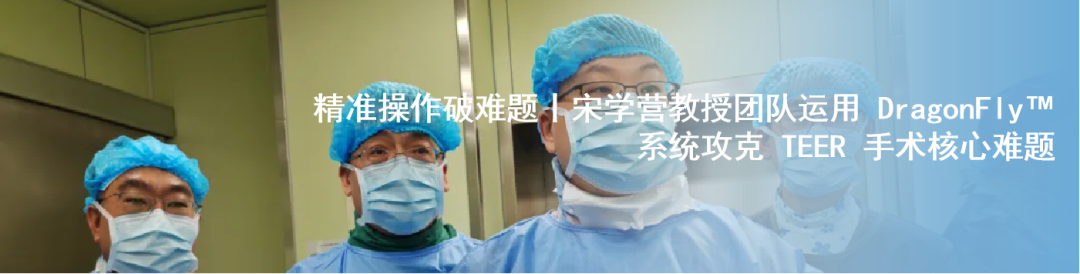
China Structural Week 2025: DeJin Medical Showcases Six Complex TEER Procedures, Exploring New Pathways in Mitral Valve Therapy

Valgen Medtech
Minimally Invasive Interventional Device Developer

In the golden autumn of October, with the fragrance of osmanthus in the air, the annual academic event in China's structural heart disease field – "The 9th China Structural Heart Disease Academic Week" (China Structural Week 2025) – was held from October 20 to 26. This year’s conference brought together top experts from both within and outside China, focusing on cutting-edge technologies and addressing clinical pain points. As a key annual academic event in China's structural heart disease field, the conference centered on academic exchange, creating a high-end platform for discussing advanced technologies and sharing clinical experiences. Many top experts in the industry conducted in-depth discussions on breakthroughs in key technologies and solutions to clinical challenges, contributing wisdom and strength to the development of the field.
Among the participants, Valgen Medtech stood out as a key contributor at the conference, facilitating academic exchange and showcasing cutting-edge technologies through multiple live surgical broadcasts. Six highly instructive Transcatheter Mitral Valve Edge-to-Edge Repair (TEER) surgeries were broadcast, becoming one of the highlights of the event. During these broadcasts, the outstanding clinical value of the DragonFly™ Transcatheter Mitral Valve Clip System in treating various complex mitral valve diseases was vividly demonstrated. Its free-angle locking mechanism combined with a fully scaled system provided a solid foundation for the safety and efficiency of the procedures, offering attendees a series of high-quality clinical practice teaching examples.
During the conference, Qilu Hospital of Shandong UniversityProfessor An GuipengTeam, Shanghai First People's HospitalProfessor Fanglin LuTeam, Zhongshan Hospital Affiliated to Fudan UniversityGe JunboAcademicianTeam, Second Xiangya Hospital of Central South UniversityProfessor Fang ZhenfeiTeam, The First Affiliated Hospital of Sun Yat-sen UniversityProfessor Xiaodong ZhuangTeam, Fuwai Hospital, Chinese Academy of Medical SciencesProfessor Xianghua PanThe team was invited to collaborate with the DragonFly™ Transcatheter Mitral Valve Clip System to present six skillful and highly challenging TEER surgical demonstrations. They also conducted a multi-dimensional analysis with online experts regarding technical experience in intraoperative procedures, clip selection strategies, and key points for managing complex lesions.(*Sorted by surgical demonstration time)
Surgical Demonstration 1
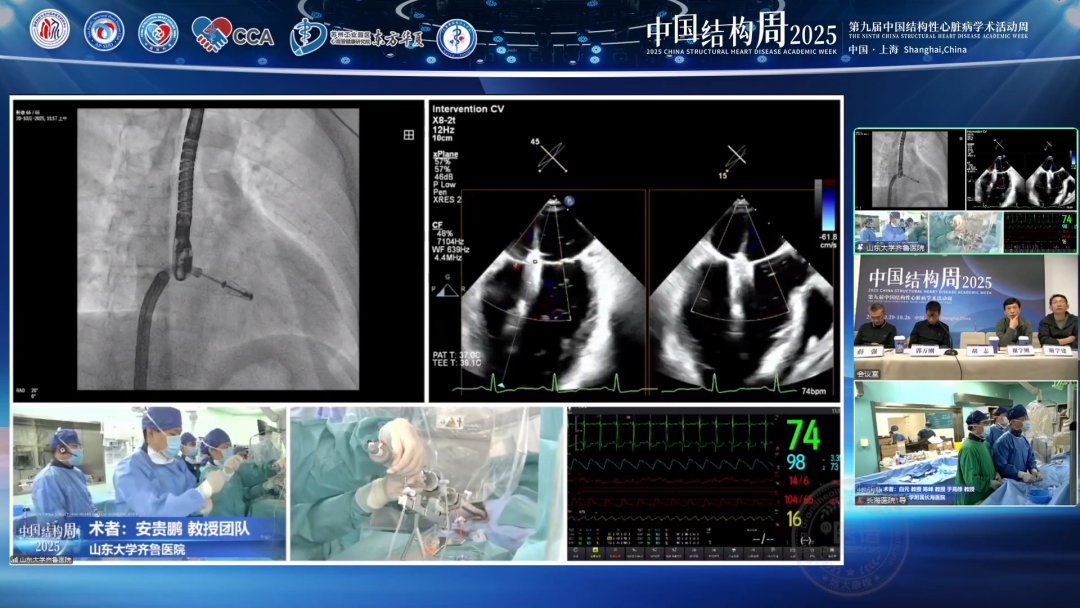
Qilu Hospital of Shandong UniversityProfessor An GuiPengThe TEER surgery presented by the team involved a patient diagnosed with severe ventricular functional mitral regurgitation, combined with significant tethering of the posterior mitral leaflet, pseudo-prolapse of the anterior leaflet, and a small valve orifice area.Professor An GuiPeng's TeamEngage in in-depth discussions with online experts about TEER surgical techniques and clinical insights, closely monitor leaflet tension during the procedure, and ultimately select one.XW0612 Mitral Valve ClipImplanted in the 2.5 area, effectively eliminating medial regurgitation. Significant postoperative results, with patient regurgitation decreasing from severe to trace, and an average transvalvular pressure gradient of 3 mmHg.
Surgical Demonstration 2
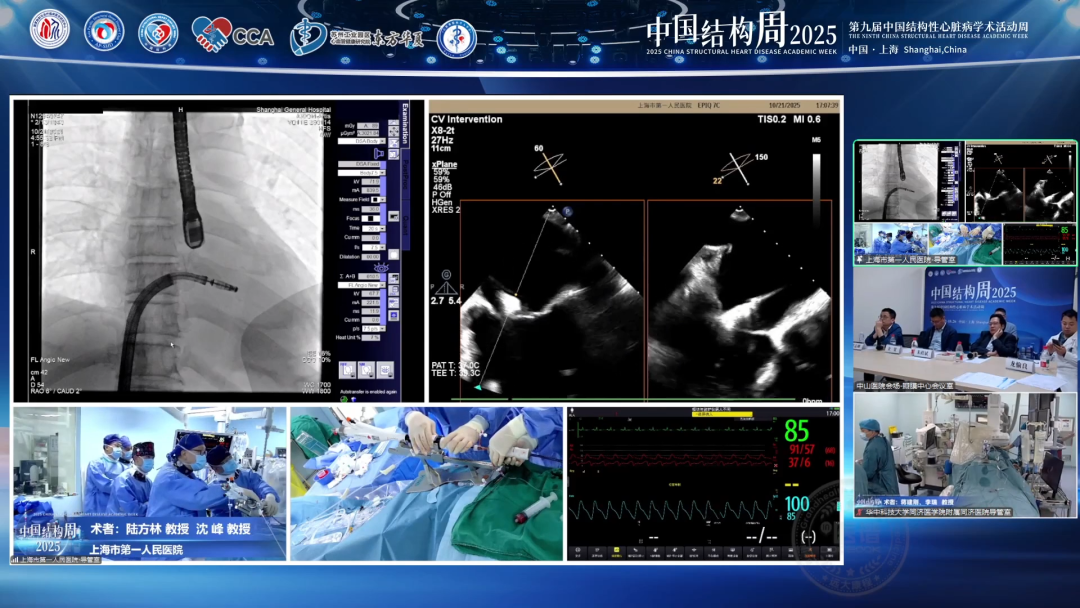
Shanghai First People's HospitalProfessor Fanglin LuThe TEER surgery presented by the team involved a patient diagnosed with severe atrial functional mitral regurgitation, accompanied by left atrial enlargement, annular dilation, and misalignment of the anterior and posterior leaflets.Professor Fanglin LuThe team finally implanted a SW0609 mitral valve in the region with the most severe reflux after experts shared their experiences.ValveThe clip can maximize the resolution of regurgitation while minimizing the tension on the valve leaflets during the MitraClip procedure. At the end of the surgery, ultrasound evaluation showed that the regurgitation was reduced to 1+, the transvalvular pressure gradient was 2mmHg, the MitraClip was stable, and the tissue bridge was in good condition, with significant postoperative results.
Surgical Demonstration 3
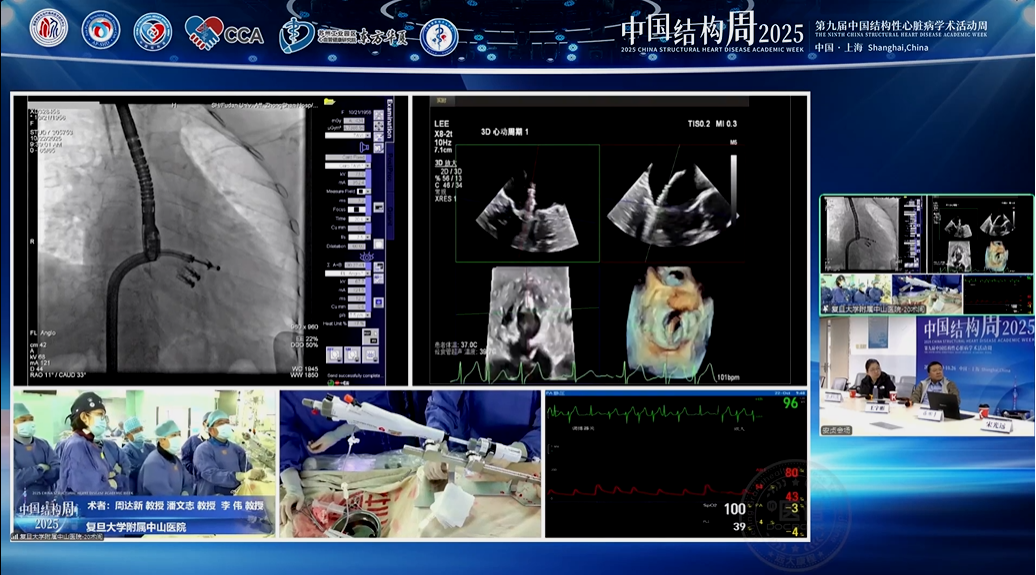
Zhongshan Hospital Affiliated to Fudan UniversityGe JunboAcademician, Professor Zhou Daxin, Professor Pan WenzhiThe TEER surgery presented by the team involved a patient diagnosed with severe mitral regurgitation and complex multiscallop prolapse. Prolapse was observed in regions 1 to 3, with an extensive range of involvement, high prolapse height extending to the commissural zones, accompanied by multiple ruptured chordae tendineae above the valve.Academician Ge Junbo's team has gone throughAfter evaluation and discussion, a multi-clip strategy was decided. Two XN0412 mitral valve clips were implanted sequentially from the inner to the outer junction, which can effectively...Effectively resolve prolapse, reduce capture difficulty, and minimize the loss of orifice area as much as possible. After implanting two mitral valve clips in the internal commissure and zone 2/3 respectively, ultrasound evaluation showed that regurgitation decreased to 2+, transvalvular pressure gradient was 4mmHg, blood pressure immediately recovered, and the surgical effect was remarkable and immediate.
Surgical Demonstration 4
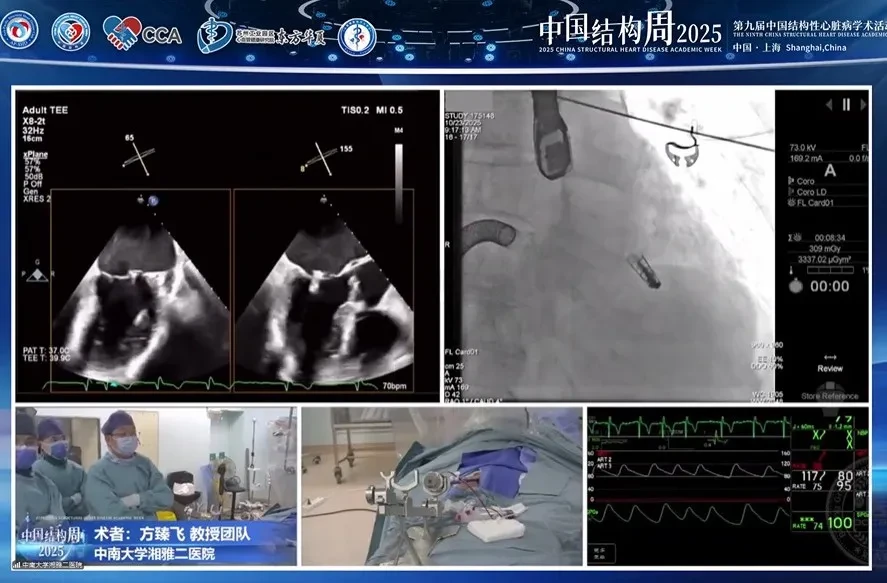
Xiangya, Central South UniversitySecond HospitalProfessor Fang ZhenfeiTeam PresentationThis TEER procedure was performed on a patient diagnosed with mixed-mechanism mitral valve prolapse accompanied by severe regurgitation.Professor Fang Zhenfei's TeamA XW0612 mitral clip was implanted in zone 1 first. After closure, there was no residual prolapse or regurgitation on the L side, while a 1+ residual functional regurgitation remained on the M side with a pressure gradient of 1 mmHg. Based on the AFMR mechanism, another XN0412 clip was implanted parallelly on the M side. After closure, minimal residual regurgitation remained at the center between the two clips, with a pressure gradient of 3 mmHg. The surgical outcome was satisfactory.
Surgical Demonstration 5
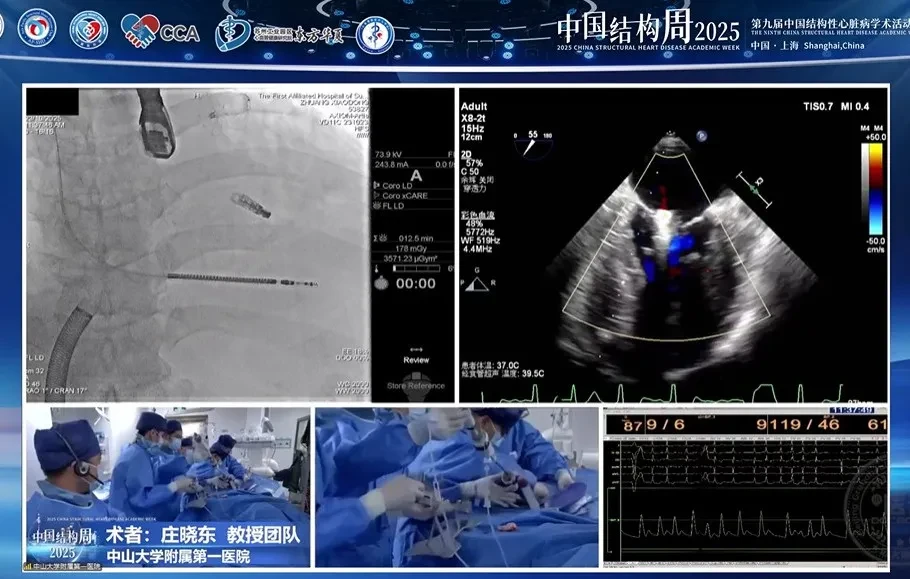
The First Affiliated Hospital of Sun Yat-sen UniversityHospitalProfessor Xiaodong ZhuangThe team presented this caseTEER Surgery: The Patient is Diagnosed with Moderate to Severe Mitral Functional Regurgitation; After a Series of Intense Discussions, Due to the PatientAnd the reflux width is relatively wide,Professor Xiaodong ZhuangThe team decided to proceed with the implantation of the first mitral valve clip.Evaluate reflux to determine if a second clip is needed, ultimately.A XW0612 mitral valve clip was implanted in Zone 2. After clipping, the residual regurgitation was minimal, and no increase in regurgitation was observed post-release. The postoperative transvalvular pressure gradient was 2 mmHg, with satisfactory surgical outcomes.
Surgical Demonstration 6
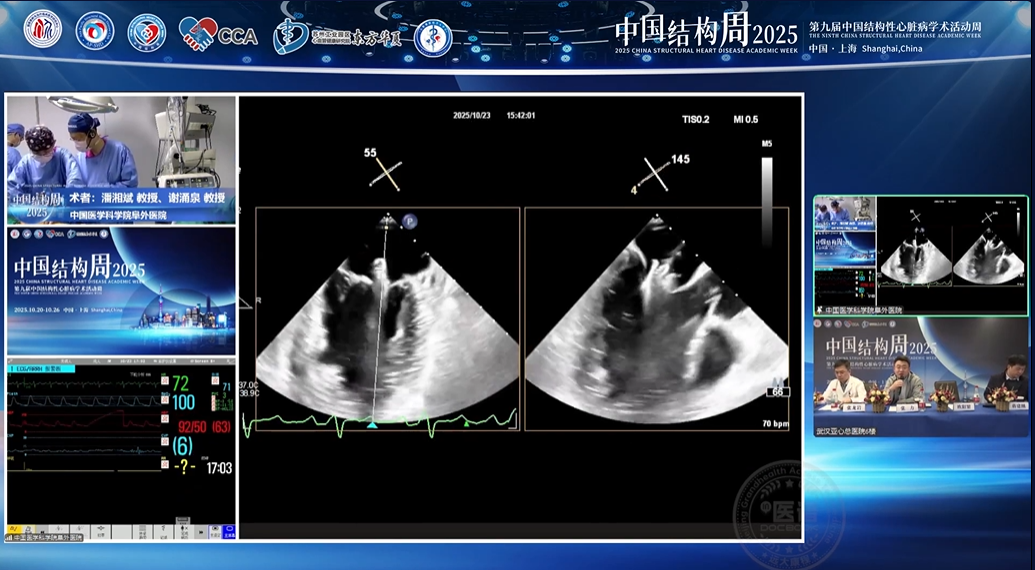
Fu Wai Hospital, Chinese Academy of Medical SciencesHospitalProfessor Xianghua PanThe TEER surgery presented by the team was performed under pure ultrasound guidance. The patient was diagnosed with severe mitral regurgitation.Tethering phenomenon observed in the posterior leaflet of the mitral valve, with poor coaptation between the anterior and posterior leaflets;Professor Xianghua PanAfter the team implanted an XW0612 mitral valve clip in zone 2, residual regurgitation on both sides was 2+. Subsequently, the first valve clip was repositioned from zone 2 towards zone 3, eliminating the medial regurgitation. Then, an SW0609 mitral valve clip was implanted side by side on the L side, reducing the regurgitation to 1+. Postoperative transvalvular pressure gradient was 4 mmHg, pulmonary vein retrograde flow disappeared, and mitral regurgitation decreased from severe to mild. The surgical outcome was ideal.
The full process of six TEER surgeries was presented through high-definition live broadcasts. Experts compared different surgical approaches and shared techniques for handling complex cases based on their clinical experience, providing participants with a new media learning channel that combines "live demonstrations + case discussions." This cross-regional, multi-center exchange format helps clinicians update the latest techniques in TEER surgery, offering critical references for improving treatment outcomes. It also significantly promotes the sharing of clinical experiences, providing important practical evidence for advancing the standardized application and clinical promotion of TEER technology. This effectively drives China's mitral valve interventional treatment into a new phase of precision and safety, ultimately transforming academic exchange achievements into a solid barrier for safeguarding people’s cardiovascular health.
———— Previous Review ————