

Pfizer Reports Strong Q3 2025 Results, Raises Full-Year Guidance, and Fights to Secure Metsera Acquisition Amid Antitrust Dispute
Pfizer
Pharmaceutical R&D Developer
SmartCom APP learned that Pfizer (PFE.US) announced better-than-expected financial results for the third quarter of 2025, while raising its full-year profit forecast. The company stated that ongoing cost-cutting measures have helped offset the pressure from slowing sales growth, which also provided financial support for its bid to acquire weight-loss drug startup Metsera (MTSR.US).
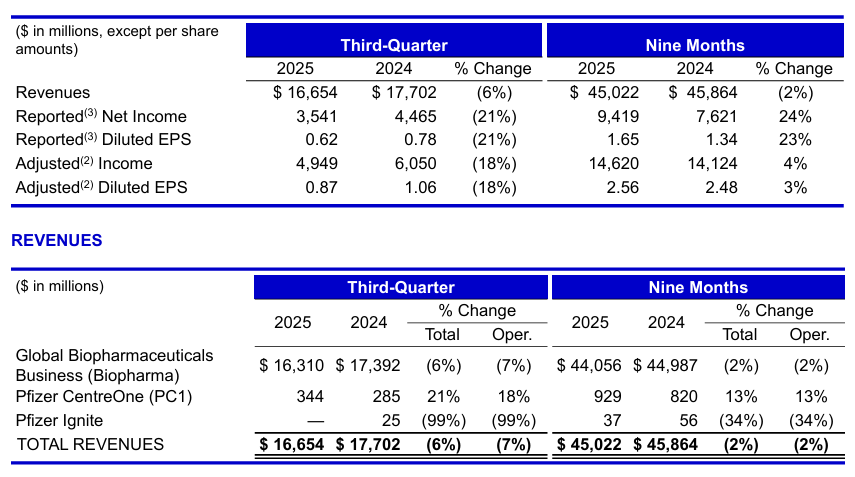
Earnings Report Shows Pfizer's Q3 Revenue Decreased by 6% Year-over-Year to $16.654 Billion, Beating the Analysts' Consensus Estimate of $16.5 Billion; Adjusted Net Profit was $4.949 Billion, a Decrease of 18% Year-over-Year; Adjusted Earnings Per Share was $0.87, Outperforming the Analysts' Consensus Estimate of $0.64.
Pfizer's Core Drug Sales in Q3 Show Mixed Results. Specifically, the sales of the COVID-19 vaccine Comirnaty fell by 19% year-over-year to $1.151 billion, roughly in line with market expectations. The company stated that this decline was mainly due to U.S. regulators narrowing the scope of recommended vaccine recipients and delays in the approval of a new generation of vaccines.
Sales of the pneumonia vaccine Prevnar fell 3% year-over-year to $1.742 billion, in line with market expectations. However, Pfizer's dominance in this field is being challenged by a new vaccine from Merck (MRK.US). Studies show that Merck's new vaccine offers protection against a higher proportion of pathogenic strains in adults, and its quarterly sales performance exceeded market expectations.
Moreover, the sales of Vyndaqel, a drug for treating heart failure, increased by 10% year-over-year to $1.591 billion, falling short of the analysts' consensus expectation of $1.68 billion. The medication is used to treat a rare condition known as ATTR cardiomyopathy, and drugs of this kind have now become a high-profit market contested by a few pharmaceutical companies.
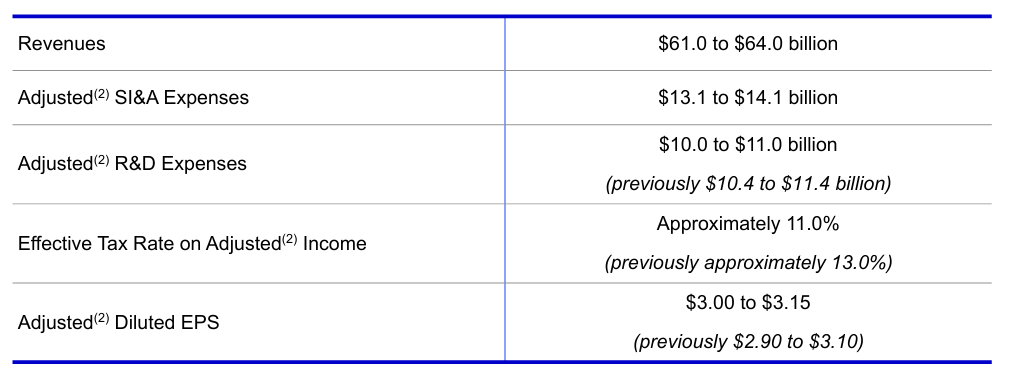
Looking ahead, Pfizer expects its full-year revenue for 2025 to be between $61 billion and $64 billion. The company also forecasts full-year adjusted earnings per share to be in the range of $3.00 to $3.15, up from the previous estimate of $2.90 to $3.10. This marks the second time this year that Pfizer has raised its full-year profit outlook.
File an Antitrust Lawsuit to Block Novo Nordisk's Acquisition of Metsera
As the demand for COVID-related products declines faster than management expected, Pfizer's performance has been impacted, with its stock price falling about 60% from its pandemic high. Currently, Pfizer is still working to rebuild from the pandemic impact by cutting costs and pursuing mergers and acquisitions to drive future growth.
For years, Pfizer has attempted to enter the rapidly growing weight-loss drug market but has faced repeated setbacks. This market, currently dominated by Eli Lilly (LLY.US) and Novo Nordisk (NVO.US), is projected to reach $95 billion by 2030. After Pfizer's early in-house weight-loss drug projects failed to succeed, the company announced in September the acquisition of Metsera for $47.50 per share in cash, corresponding to an enterprise value of approximately $4.9 billion. If specific R&D milestones are achieved, Pfizer will pay an additional $22.50 per share, bringing the total transaction value to $7.3 billion.
It is reported that Metsera is one of the most promising companies in the weight-loss drug sector. The company is developing several experimental weight-loss drugs, including an innovative drug that may require less frequent injections than the existing products from Novo Nordisk and Eli Lilly.
However, Novo Nordisk offered an all-cash bid of $56.50 per share last week, corresponding to an enterprise value of approximately $6 billion. An additional $3 billion will be paid if certain milestones are met. Metsera considers Novo Nordisk's offer more attractive and stated that Pfizer has four business days to make a better offer.
In response, Pfizer filed a lawsuit against Metsera and Novo Nordisk, claiming that the latest merger and acquisition agreement reached by the two weight-loss drug developers violates U.S. federal antitrust laws. This is already the second lawsuit initiated by Pfizer within four days, aiming to protect its previous acquisition agreement that was unexpectedly disrupted by Novo Nordisk.
Pfizer alleged in the complaint that Novo Nordisk's proposed acquisition of Metsera would further solidify its leadership position in the obesity treatment drug market by stifling a smaller competitor. The complaint also claims that Metsera’s controlling shareholders—including Validae Health, Population Health Partners, and others—conspired with Novo Nordisk and Metsera to advance this anti-competitive scheme.
Notably, last Friday, Pfizer filed a lawsuit against Novo Nordisk and Metsera for the first time, seeking to prevent Metsera from tearing up the agreement. In Pfizer's initial lawsuit, the company argued that Novo Nordisk’s acquisition offer should not be considered a “superior proposal,” partly because the deal is highly unlikely to pass regulatory scrutiny. Both Novo Nordisk and Metsera stated that they would contest Pfizer’s allegations in court in response to the first lawsuit.