Three Oral Presentations Highlight Multiple Clinical Advances of TROP2 ADC Sacituzumab Tirumotecan (sac-TMT) at the 2025 CCHIO Congress
Kelun-Biotech
Innovative Drug Developer

MSD
Pharmaceutical R&D and Manufacturer

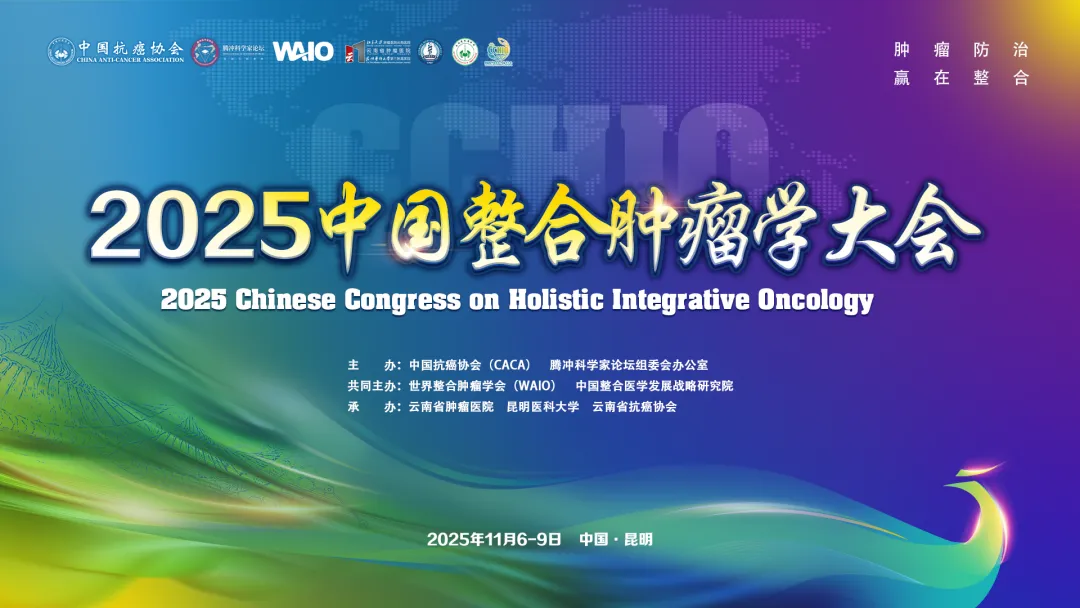
November 6 to 9,2025 China Conference on Integrated Oncology (CCHIO) to be held in Kunming, Yunnan. This conference is hosted by the Chinese Anti-Cancer Association (CACA) and the Tengchong Science Forum Organizing Committee Office, co-hosted by the World Association for Integrative Oncology (WAIO) and the China Academy of Integrative Medicine Development Strategy. Academicians, experts, and scholars from across China gathered to focus on innovations in cancer diagnosis and treatment, sharing breakthroughs in scientific research. At this conference,Sichuan Kelun-Biotech Biopharmaceutical Co.,LTD(hereinafter referred to as "Kelun-Biotech" or "the Company," 6990.HK)The multiple clinical research results of TROP2 ADC Luskantuzumab (sac-TMT) (Jiatailai®) were announced in the form of an oral presentation.
Endometrial Cancer (EC)
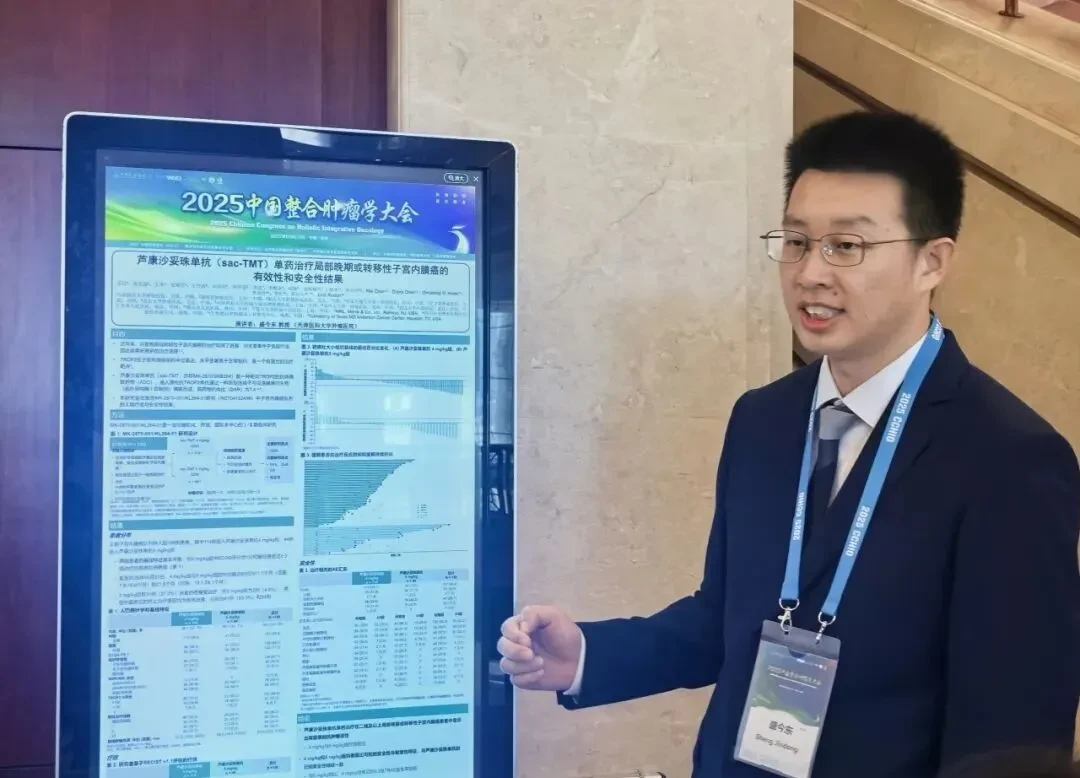
On November 7, fromProfessor Sheng Jindong from Tianjin Tumor HospitalOral Report at the ConferenceEfficacy and Safety Results of Phase II Study (KL264-01/MK-2870-001) of Sac-TMT (Lukansatuzumab) Monotherapy in Locally Advanced or Metastatic Endometrial Cancer (EC).
In this study, the endometrial cancer cohort enrolled a total of 158 patients, with 114 patients in the 4 mg/kg sac-TMT group and 44 patients in the 5 mg/kg sac-TMT group. As of May 21, 2025, the median follow-up times for the 4 mg/kg and 5 mg/kg groups were 11.7 months and 21.8 months, respectively. The confirmed ORR for the 4 mg/kg and 5 mg/kg groups were 30.7% and 34.1%, respectively. The confirmed + unconfirmed ORR for the two groups were 35.1% and 36.4%, respectively. The median DOR for the 4 mg/kg and 5 mg/kg groups were 9.3 months and 8.7 months, respectively, and the median PFS were 6.0 months and 7.3 months, respectively. In the 4 mg/kg and 5 mg/kg groups, ≥ Grade 3 treatment-related adverse events (TRAEs) occurred in 59 patients (51.8%) and 34 patients (77.3%), respectively, and TRAEs leading to permanent discontinuation occurred in 2 and 1 patients, respectively.
In patients with locally advanced or metastatic endometrial cancer, sac-TMT (Lukansatuzumab) monotherapy demonstrated promising antitumor activity and manageable safety in the second-line setting and beyond.Based on the aforementioned data, MSD has initiated two global Phase III clinical trials to further evaluate the efficacy and safety of Sac-TMT (Lukansatuzumab) 4 mg/kg in patients with endometrial cancer.
Non-Small Cell Lung Cancer (NSCLC)
On November 8, fromProfessor Wenfeng Fang from the Sun Yat-sen University Cancer CenterAt the conference sitePreliminary Results of a Phase II Clinical Study of Sac-TMT (Lukang Satuzumab) in Previously Treated Locally Advanced or Metastatic Non-Small Cell Lung Cancer with Rare EGFR MutationsAn oral report was presented.
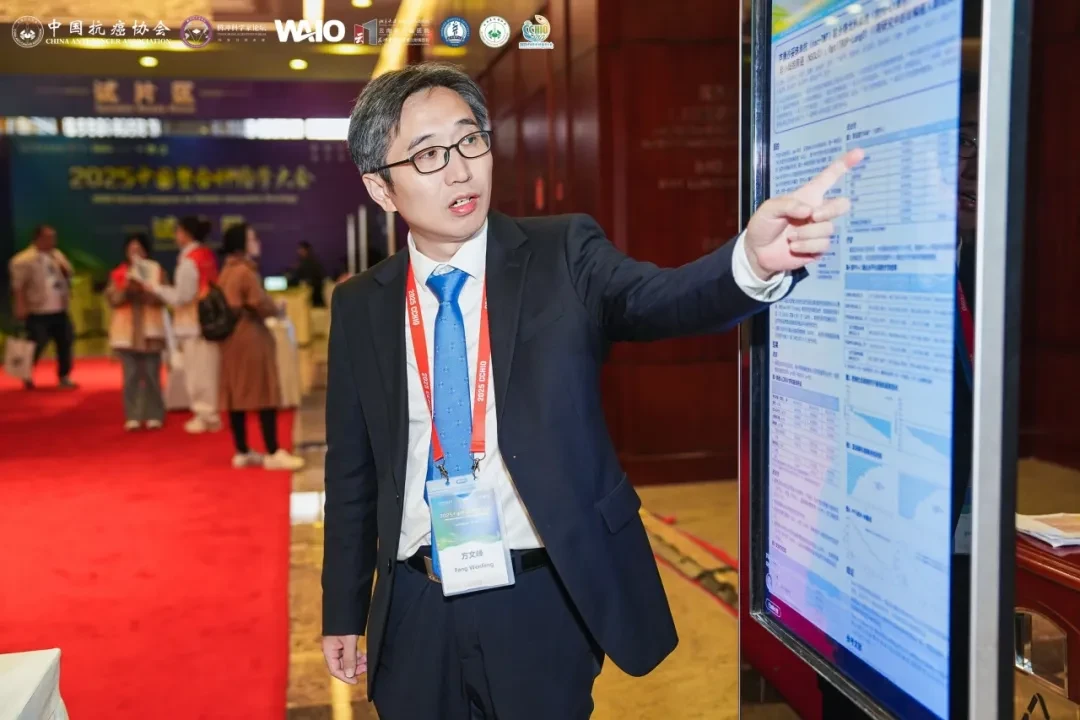
As of December 1, 2024, the study enrolled a total of 42 patients with advanced NSCLC harboring rare EGFR mutations whose disease progressed during or after systemic therapy. This included 23 patients with EGFR exon 18 (exon18) G719X, exon 20 (exon20) S768I, or exon 21 (exon21) L861Q mutations, and 19 patients with EGFR exon 20 insertion mutations (ex20ins). Patients received monotherapy with Lukangsatumab (sac-TMT) at 5 mg/kg Q2W until disease progression or intolerable toxicity occurred. After a median follow-up of 9.9 months, the ORR was 35.7%, and the DCR was 85.7%. Responses were durable, with the median DoR not yet reached. The median PFS was 9.5 months. In the subgroup of patients with rare non-ex20ins mutations, the ORR was 34.8%, and the median PFS was 10.9 months; in the ex20ins subgroup, the ORR was 36.8%, and the median PFS was 9.0 months. The incidence of grade 3 or higher TRAEs was 52.4%. No treatment discontinuation or deaths due to TRAEs occurred, and no cases of ILD/pneumonia were reported.
Sac-TMT (Lukang Satuzumab) Monotherapy Shows Promising Clinical Efficacy in Previously Treated Advanced NSCLC Patients with Rare EGFR Mutations, with Manageable Safety.The research results indicate that sac-TMT (芦康沙妥珠单抗) has the potential to become a treatment option for such patients and is worth further investigation.
On the same afternoon, Professor Fang Wenfeng also participated in the oral presentation session of the conference, focusing onResults of the Non-Squamous Population in the Phase II Clinical Study (OptiTROP-Lung01) of Lucantuzumab (sac-TMT) Combined with Tagrilimab as First-Line Treatment for Advanced Non-Small Cell Lung Cancer (NSCLC)Shared. (The OptiTROP-Lung01 study was led by Professor Zhang Li's team from the Sun Yat-sen University Cancer Center)
As of December 30, 2024, the study enrolled a total of 81 patients with non-squamous non-small cell lung cancer who had not previously received systemic treatment and had no driver gene mutations. Patients received sac-TMT (5 mg/kg Q3W or Q2W) in combination with tazagolumab (1200 mg Q3W or 900 mg Q2W) until disease progression or intolerable toxicity occurred. After a median follow-up of 17.1 months, the confirmed ORR was 59.3%; the median DoR was 16.5 months; and the median PFS was 15.0 months. In the patient population with PD-L1 tumor proportion score (TPS) ≥50%, the confirmed ORR was 77.8%; the median PFS was 17.8 months. In the patient population with PD-L1 TPS ≥1%, the confirmed ORR was 68.1%; the median PFS was 17.8 months. In the patient population with PD-L1 TPS <1%, the confirmed ORR was 47.1%; the median PFS was 12.4 months. No treatment-related adverse events leading to discontinuation or death were reported.
Sac-TMT (芦康沙妥珠单抗) Combined with Tagrilimab as First-Line Treatment for Advanced Non-Squamous NSCLC Demonstrates Promising Antitumor Activity. Durable Clinical Benefit Observed Regardless of PD-L1 Expression Levels.。The safety profile of the combination therapy was consistent with the known safety profiles of each monotherapy, was well-tolerated, and no new safety signals were observed.
Currently, a Phase III registrational study (OptiTROP-Lung06) of sac-TMT (Lukangsatumab) in combination with pembrolizumab versus chemotherapy plus pembrolizumab as first-line treatment for PD-L1-negative advanced non-squamous NSCLC patients, and a Phase III registrational study (OptiTROP-Lung05) of sac-TMT (Lukangsatumab) in combination with pembrolizumab versus pembrolizumab alone as first-line treatment for PD-L1-positive advanced non-squamous NSCLC patients are both ongoing.
Targeting the urgent clinical needs of patients, Kelun-Biotech has strategically advanced over 30 clinical studies across multiple disease areas including lung cancer, breast cancer, and gynecological tumors. These efforts are based on the company's proprietary ADC and novel DC technology platforms.OptiDCTMKelun-Biotech will continue to develop innovative drugs with significant clinical value, further enhance clinical patient benefits, and contribute corporate strength to the advancement of Healthy China.
About Lucantusumab (sac-TMT, Jiatelai)®)
About Kelun-Biotech
Note: This article is only used to disclose the latest progress of Kelun-Biotech as of the date of publication, for communication among healthcare professionals only. It is not a product promotion advertisement and does not constitute investment advice.
Media Contact: klbio_pr@kelun.com