

Eli Lilly's Next-Gen Obesity Drug Eloralintide Achieves Over 20% Weight Loss in 48-Week Phase 2 Trial, Significantly Outperforming Placebo

Eli Lilly
Global Pharmaceutical R&D and Production Company

Source: New Drug Hunter Notes
Recently, the American pharmaceutical giant Eli Lilly and Company announced that its newly developed weight-loss drug, Eloralintide, achieved a significant breakthrough in a 48-week Phase II clinical trial. The results were published in The Lancet.
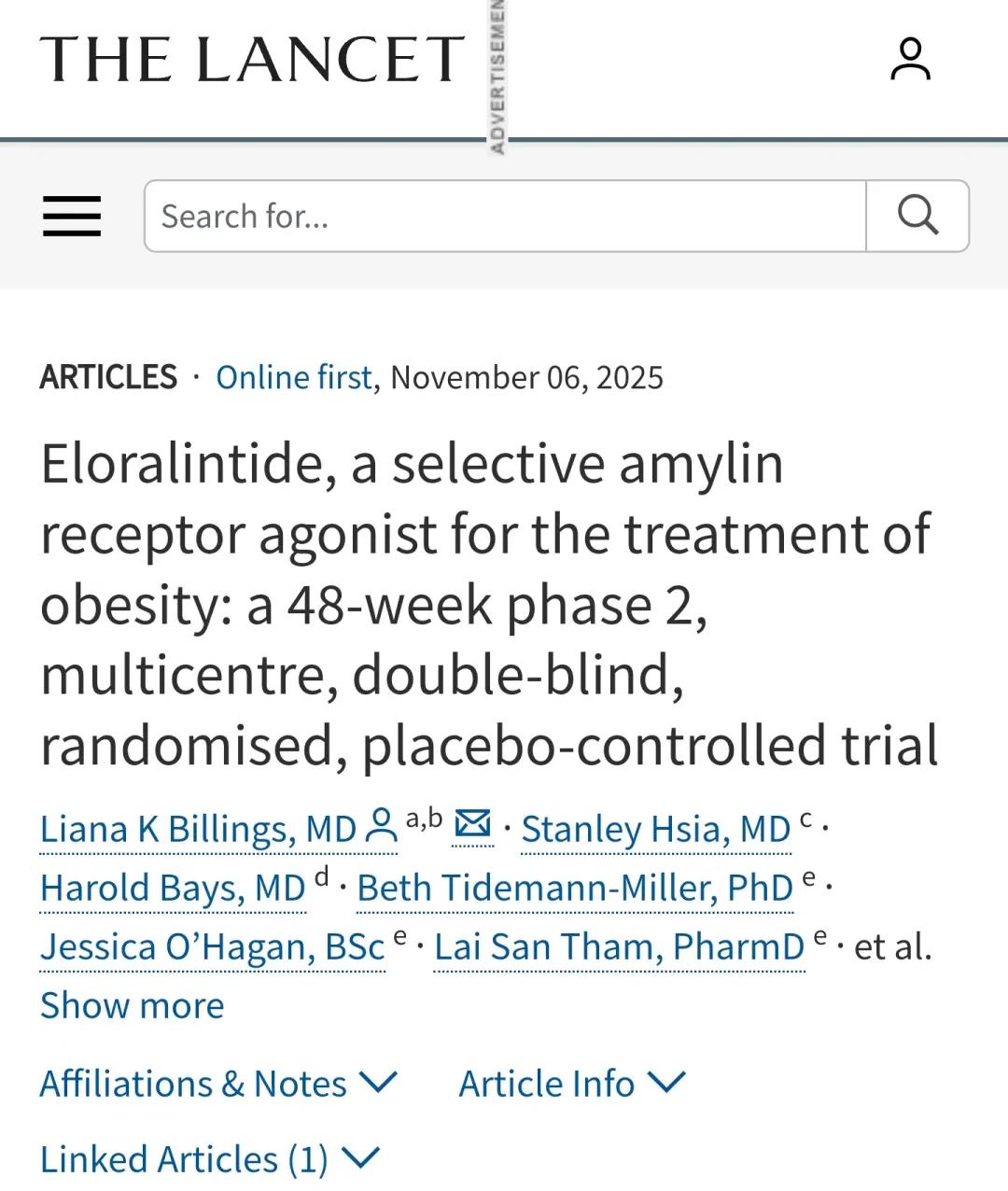
This study is a multicenter, double-blind, randomized, placebo-controlled Phase II clinical trial, enrolling a total of 263 obese or overweight adults with at least one obesity-related complication. Participants were randomly assigned to receive either a once-weekly subcutaneous injection of Eloralintide (at doses of 1mg, 3mg, 6mg, 9mg, and two dose-escalation regimens) or a placebo, over a treatment period of 48 weeks.
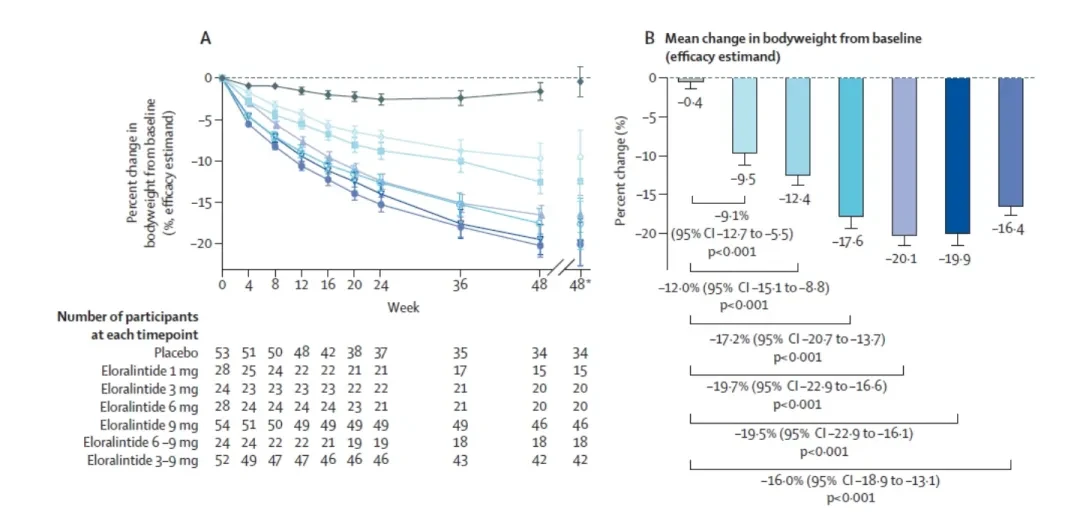
The results showed that all Eloralintide treatment groups reached the primary endpoint, with a dose-dependent reduction in body weight, respectively:
- 1mg group: 9.0%; 3mg group: 12.0%; 6mg group: 18.0%;9mg Group: 20.1% 6–9mg Incremental Group: 20.0%; 3-9mg incremental group: 16.0%.
By contrast, the placebo group experienced a weight loss of only 0.4%.
In addition, Eloralintide treatment significantly improved multiple cardiometabolic risk indicators, including waist circumference, blood pressure, lipid profile, glycemic control, and inflammatory marker levels, demonstrating favorable overall metabolic benefits.
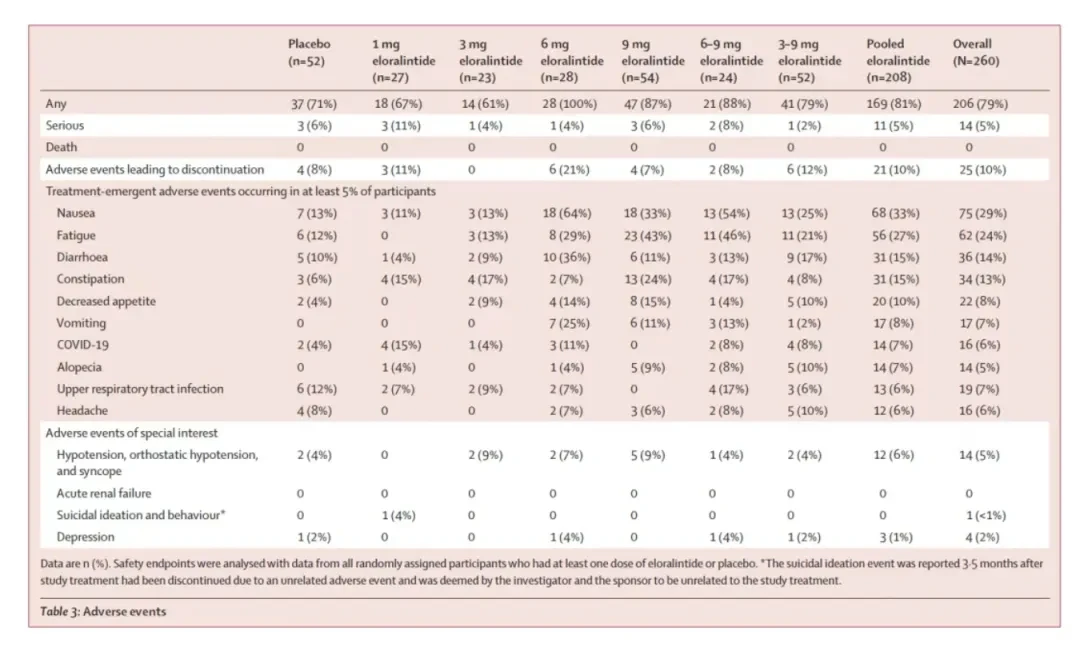
In terms of safety, Eloralintide was generally well-tolerated. The most common adverse events were mild to moderate gastrointestinal symptoms (such as nausea) and fatigue, with a relatively higher incidence of adverse reactions in the high-dose group; however, most were transient and manageable.
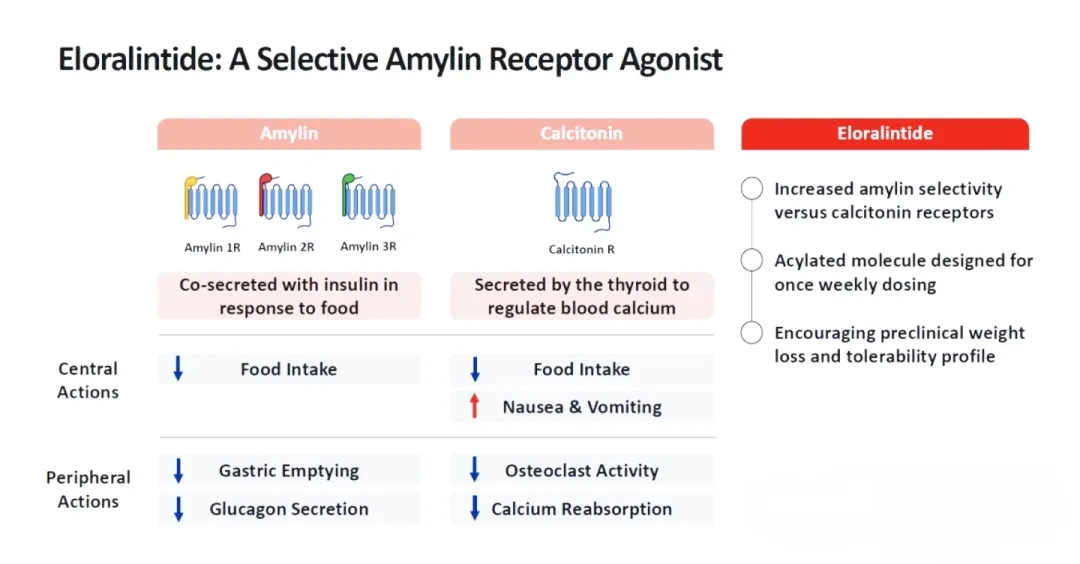
Eloralintide is a selective, long-acting amylin receptor agonist that enhances satiety and delays gastric emptying by mimicking the mechanism of action of amylin, thereby reducing food intake. Compared with currently mainstream GLP-1 drugs, amylin drugs are considered to potentially offer unique advantages in terms of weight loss effects and tolerability, making them an important direction for next-generation obesity treatments.
Based on the positive Phase II clinical data, Eli Lilly and Company plans to initiate a Phase III clinical trial by the end of 2025 to further evaluate the efficacy and safety of Eloralintide as a monotherapy or combination therapy in a broader population.
Conclusion:
Industry analysts believe that if subsequent clinical progress goes smoothly, Eloralintide is expected to become another blockbuster product for Eli Lilly in the weight loss field, complementing existing GLP-1 drugs (such as Mounjaro and Zepbound) and further solidifying its leading position in the global weight loss drug market.
Disclaimer:
The content of the article is for reference only and does not constitute investment advice. Investors who take action based on this information bear their own risks. The article maintains a neutral stance on the statements and viewpoints expressed, and does not provide any explicit or implicit guarantees regarding the accuracy, reliability, or completeness of the content. Readers are advised to use it solely as a reference and assume full responsibility for their actions.


PMO 2026
Booths are booking up fast!
Scan to consult immediately
Phone: 13816031174
(Same as WeChat)
Sponsorship forms include but are not limited toSpeaking slots, venue booths, conference publication color pages, dinner sponsorship, promotional conference materials, etc.