Medical Device Daily Briefing No.4013 (Nov 13): MIIT Accelerates Systematic Layout of Manufacturing Pilot Platforms; Guangdong Releases Guidelines to Improve Drug and Medical Consumables Procurement

StairMed
Developer of Implantable Brain-Computer Interface Technology

Comprehensive Medical Information
1. MIIT Accelerates the Systematic Layout of Pilot Platforms in the Manufacturing Industry
Recently, the Ministry of Industry and Information Technology issued the "Notice on Further Accelerating the Systematic Layout and High-Level Construction of Pilot Platforms in the Manufacturing Industry," focusing on key tasks to promote new industrialization. The Notice emphasizes expediting the systematic layout and high-level construction of pilot platforms in the manufacturing industry, promoting breakthroughs in engineering scientific and technological innovations and their industrial applications. This provides robust support for deep integration of scientific and technological innovation with industrial innovation, as well as accelerating new industrialization. The Notice proposes that by 2027, the strength of high-level pilot platforms will further grow, a modern pilot platform system will be basically established, and a preliminary nationwide pilot service network for China’s manufacturing industry—featuring multi-party participation, multi-field layout, and multi-level services—will take shape. The Notice places significant emphasis on the public service nature and functions of high-level pilot platforms, outlining three key tasks based on the approach of "strengthening some, activating others, and filling gaps where needed." (China Economic Net)
2. Hainan Issues Several Measures to Support the High-End Medical Device Industry and Digital Therapeutics Industry
Recently, the Hainan Provincial Drug Administration issued the "Several Measures to Support the Innovative Development of High-End Medical Device Industry" and the "Several Measures to Support the High-Quality Development of Digital Therapeutics Industry," leveraging the policy advantages of the Free Trade Port to inject dual momentum into the high-quality development of Hainan's biopharmaceutical industry. The "Several Measures to Support the Innovative Development of High-End Medical Device Industry" proposes to strengthen the application leadership of real-world data, support the construction of high-level research and technology platforms, encourage collaborative innovation among industry, academia, research, and medicine, establish a full-process service mechanism for key products, and encourage the establishment of R&D and production bases in Hainan. The "Several Measures to Support the High-Quality Development of Digital Therapeutics Industry" proposes to open a "green channel" for product registration, enhance full-process R&D guidance, establish a regular government-enterprise communication mechanism, implement fast-track review for relocation from other provinces, and promote "inspection-review" linkage services. (Hainan Drug Administration)
3. Guidelines on Further Improving the Procurement of Medicines and Medical Consumables in Guangdong Province Issued
Recently, the Guangdong Provincial Medical Insurance Bureau, Health Commission, and Drug Administration jointly issued the "Guiding Opinions on Further Improving the Procurement of Medicines and Medical Consumables." Effective from December 1, 2025, for a period of five years. The "Guiding Opinions" clearly optimize the procurement model. It steadily advances bulk procurement, including expanding the coverage of centralized procurement, ensuring smooth continuation of bulk procurement, optimizing the bidding rules for bulk procurement, and supporting the development of innovative drugs and medical devices. It standardizes online listing procurement by proposing measures such as formulating unified rules for the listing of medicines and medical consumables across the province, establishing a shared responsibility mechanism for centralized review of listed products, and strengthening the management of listed drugs by distinguishing between active and non-active regions, in line with the consensus spirit of the provincial pharmaceutical procurement platform’s listing rules. (SoHu News)
4. Brain-computer interface products in China enter the approval "green channel"
Recently, the "Implantable Wireless Brain-Computer Interface System" independently developed by Shanghai StairMed Technology Co., Ltd. has officially entered the Innovative Medical Device Special Review Process of the Center for Medical Device Evaluation (CMDE) under the National Medical Products Administration. This marks a key step in China's industrialization process in this cutting-edge technology field, moving from clinical validation to market access. In the first quarter of this year, the company conducted a prospective clinical trial of its invasive brain-computer interface system, with participants "reliably playing racing games using their thoughts." According to "Shanghai Science and Technology," compared to Musk’s Neuralink, StairMed's core advantages lie in electrode technology and product design. With a diameter of 26mm and a thickness of less than 6mm, the implantable component of StairMed's system is only the size of a coin, about half the size of Neuralink's product. (IT Home)
5. Wireless Cardiac Pacing System Initiates Clinical Research
Recently, EBR Systems announced the successful patient recruitment for its WiSE-UP clinical study. The wireless cardiac pacing system, specifically designed for heart failure, has entered the large-scale validation phase. This system achieves left ventricular endocardial pacing through leadless technology, is compact in size, and can collaborate with mainstream leadless pacemakers and existing CRT devices, expanding the pool of eligible patients. The study will cover 300 medical centers globally over five years, tracking data from over 50 patients to provide evidence for optimizing heart failure treatment guidelines. The WiSE system addresses the pain points of traditional CRT by enabling precise left ventricular pacing and improving cardiac contraction synchrony. If the study confirms the long-term advantages of wireless pacing, it could reshape the cardiovascular implantable device market landscape, offering better treatment options for heart failure patients worldwide. (Med Device News)
6. New Generation Magnetic Navigation Surgical Robot Approved by FDA
Recently, Stereotaxis announced that its next-generation endovascular surgery robot, GenesisX, received FDA 510(k) clearance, marking a significant advancement in the field. This approval diversifies competition and deepens clinical applications within the endovascular robotic surgery space. Built on a mature robotic magnetic navigation technology platform, GenesisX represents a new generational evolution designed to maintain high-precision magnetic navigation control while enhancing system flexibility and accessibility. Compared to its predecessor, GenesisX shows improvements in structure, operational performance, and installation feasibility. It features a compact design eliminating the need for complex architectural modifications, enabling "plug-and-play" installation; incorporates lighter and smaller mechanical components for smoother operation, freeing up procedural space and improving clinical workflow; and offers greater openness, ensuring compatibility with various catheters and imaging systems. The company is expanding its range of compatible products. (MedRobot)
7. R&D Design Services Accelerate the Clinical Transformation of Medical Research Achievements
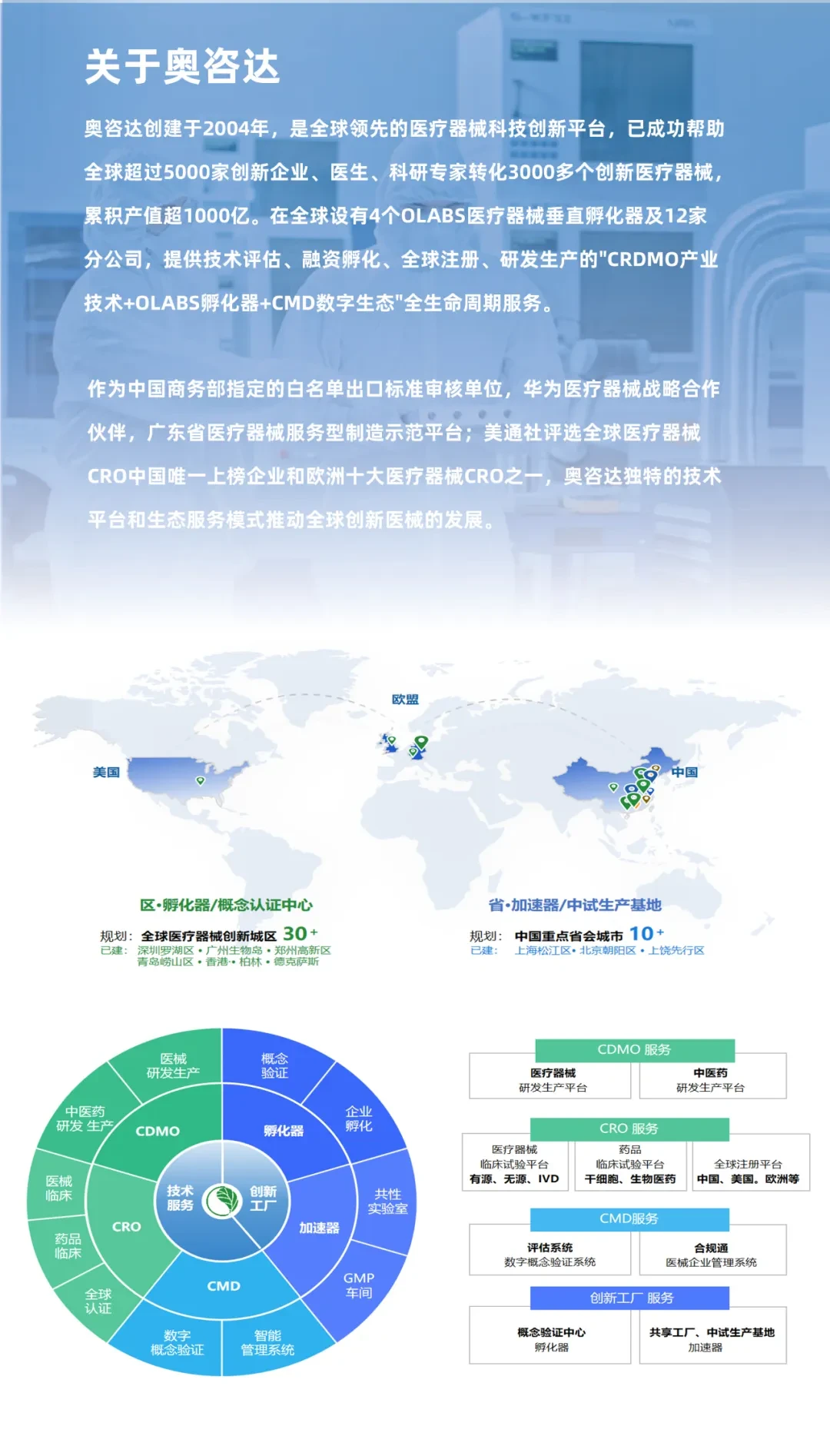
The research and development of medical devices is a complex and rigorous process, involving multiple aspects such as technology, regulations, and clinical practices. StairMed has a 20,000-square-meter science and innovation center and has established a Medical Device Research Institute dedicated to the clinical transformation of medical research achievements. It boasts a high-level, international, multidisciplinary professional team proficient in the entire process of R&D, regulations, clinical trials, registration, and production, capable of developing and producing various complex and innovative products. With extensive project experience and industry resources, StairMed has built a standardized, regulated, and digitalized full-process service system. It provides one-stop services from initial market research, product concept generation, product design and development to prototype production and testing. To date, StairMed has had over 200 projects enter the review stage, more than 100 projects under development, with a 100% success rate in transformation. (Compiled by StairMed)
8. Zhorun Bio Completes A+ Round Financing
Recently, Shenzhen Zhuorun Biotechnology Co., Ltd. completed its A+ round of financing, with the amount undisclosed. The investor was Shen Venture Capital, and no financial advisor was mentioned. Zhuorun Biotechnology, established in May 2019, specializes in R&D, production, sales, and services in the fields of in vitro diagnostics (IVD) and food safety. It owns four major technology platforms, including microfluidics and chemiluminescence, with products covering multi-disease diagnostics such as cardiac markers, thyroid function, and food safety testing. As of June 2025, Zhuorun Biotechnology has obtained 160 medical device registration certificates, passed five major system certifications, filed 93 Chinese patent applications, and been granted 52 patents. (Yiou)