

Daiichi Sankyo Initiates First-in-Human Phase 1 Trial of DS3610, the World’s First STING Agonist Antibody-Drug Conjugate (ISAC)
Daiichi-Sankyo
Pharmaceutical R&D Developer

Note:This article does not constitute any investment opinions or suggestions; please refer to official/company announcements for accuracy.This article only provides an introduction to drugs related to medical health, not a recommendation for treatment plans (if involved), and does not represent the platform's position.Any article reprinted needs to be authorized.
Recently, Daiichi-Sankyo announced that it has initiated a Phase 1 trial for the first time to evaluate DS3610 in patients with advanced, metastatic, or unresectable solid tumors.CompletedFirst PatientAdministration,DS3610 is aSTING Agonist ISAC Drug.
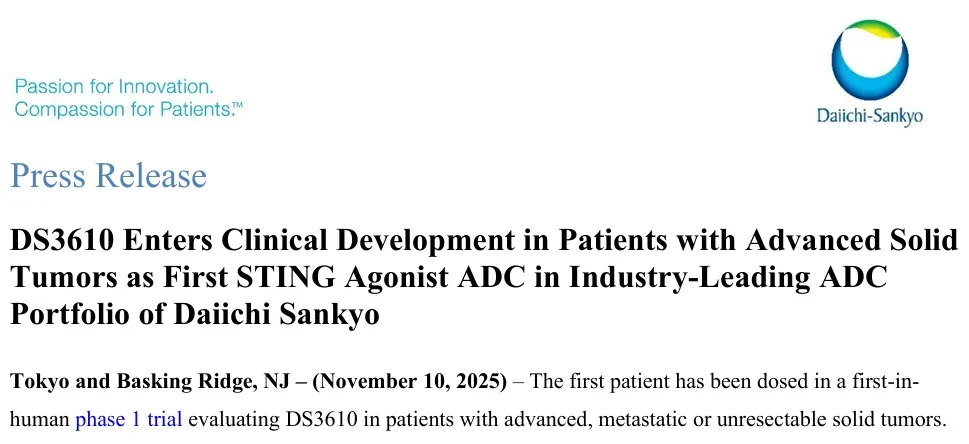
This is another ADC drug entering clinical trials after Mersana's XMT-2056 and Takeda's Plozalizumab plevistinag encountered setbacks.
This multicenter, open-label, first-in-human phase 1 clinical trial will evaluate the safety, tolerability, preliminary efficacy, and pharmacokinetics of DS3610 in patients with advanced, metastatic, or unresectable solid tumors who have no other standard treatment options available. The dose-escalation study will assess the safety and tolerability of increasing doses of DS3610 to determine the recommended dose for an expansion study in patients with advanced, metastatic, or unresectable solid tumors.
The trial will evaluate safety endpoints, including dose-limiting toxicity and adverse events. It will also assess pharmacokinetic and immunogenicity endpoints, as well as exploratory efficacy endpoints, including objective response rate, disease control rate, duration of response, time to onset, progression-free survival, and overall survival. The trial is expected to recruit patients in multiple regions worldwide, including Asia, Europe, and North America.
AboutDS3610
DS3610 is an investigational STING agonist antibody-drug conjugate (ADC), composed of a monoclonal antibody with a novel Fc modification linked to an immunomodulatory payload that acts as a stimulator of interferon genes (STING) agonist. DS3610 can directly deliver the STING agonist payload to the tumor microenvironment, activating the human immune system to target and attack cancer cells.
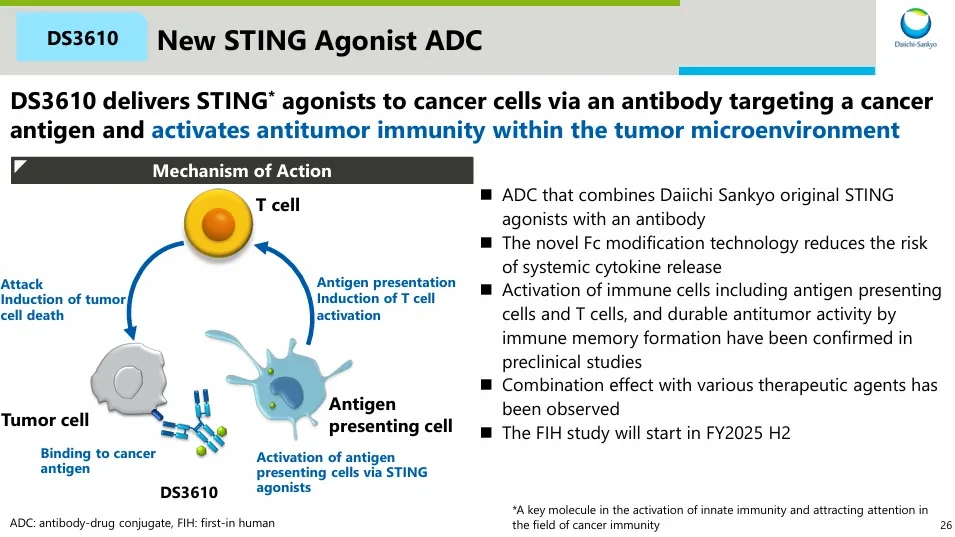
This design concept stands in stark contrast to Mersana's XMT-2056, which retains FcγR binding functionality, thereby enabling dual delivery targeting tumor cells and tumor-resident myeloid cells (e.g., dendritic cells, macrophages) for immune reprogramming.
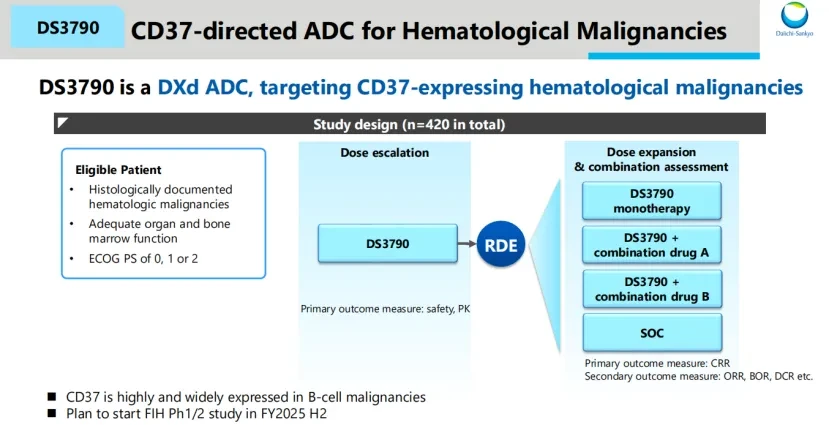
Daiichi Sankyo's ADC pipeline consists of eight ADCs in clinical development, all of which are built on Daiichi Sankyo's proprietary ADC technology.
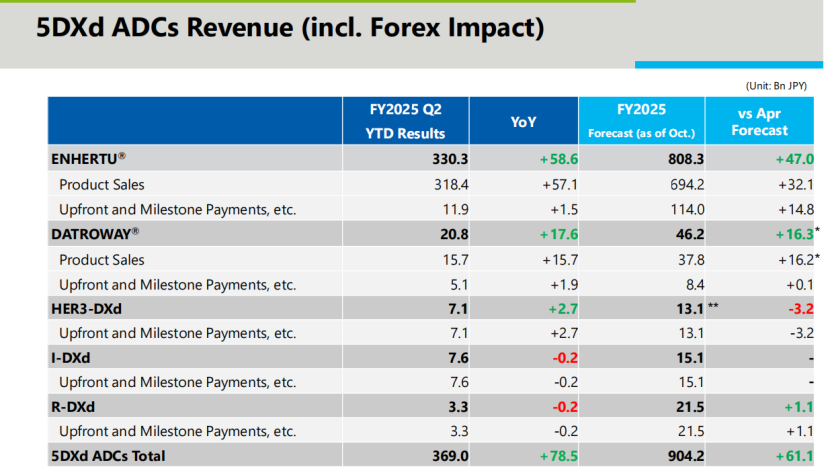
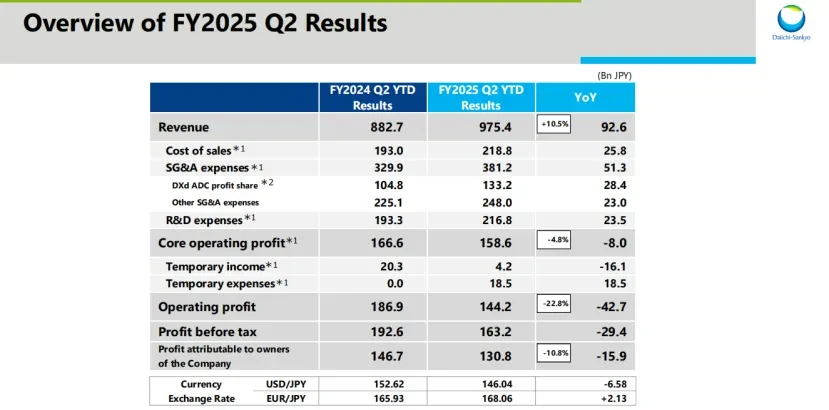
According to the company's financial report, Daiichi Sankyo's star ADC product Enhertu (Trastuzumab Deruxtecan) achieved global sales of 318.4 billion yen (approximately 2.067 billion US dollars) in the first two quarters of the fiscal year 2025, representing a year-on-year increase of 21.9%; The company expects Enhertu to generate total revenue of 808.3 billion yen (including royalties, approximately 5.248 billion US dollars) in 2025, representing a year-on-year increase of 6%.
References:
Official Website
Copyright statement: This article is reproduced from the Biopharmaceutical Era, Media or individuals who do not wish to be reprinted can contact us, and we will delete it immediately.

Copyright statement: This article is reproduced from the Biopharmaceutical Era, Media or individuals who do not wish to be reprinted can contact us, and we will delete it immediately.