AASLD 2025: Suzhou Singlucure Biopharma Presents Late-Breaking Data on HT-101 and HT-102 Combination Therapy Demonstrating 90% HBsAg Clearance in Chronic Hepatitis B

Hepa Thera
Innovative Drug Developer in the Field of Hepatology

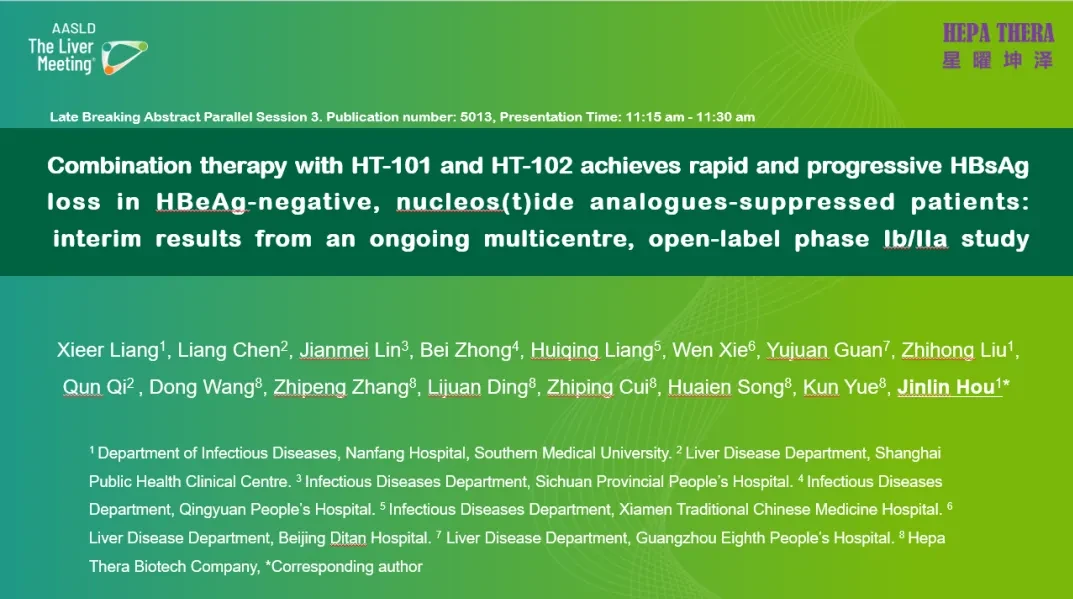
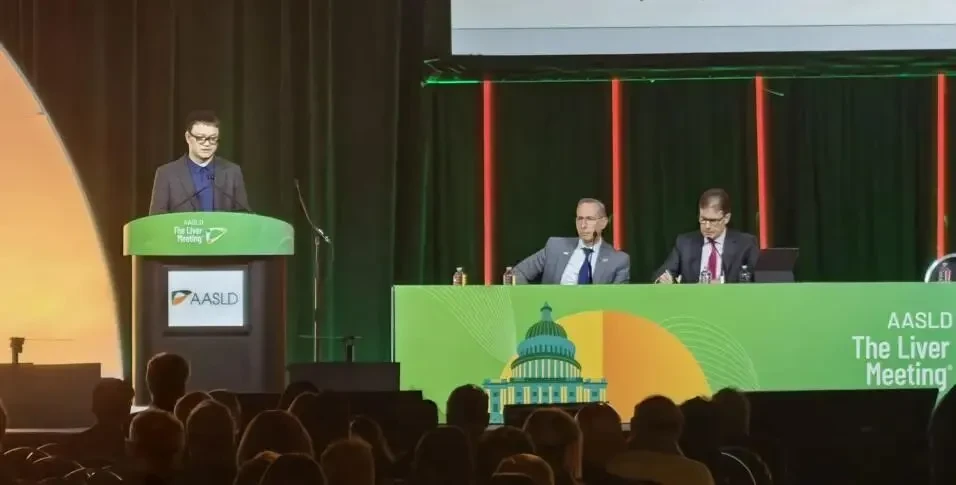
The 76th Annual Meeting of the American Association for the Study of Liver Diseases (AASLD 2025)To be held from November 7-11, 2025, in Washington, D.C., USA. The AASLD is one of the most influential and authoritative international academic conferences in the field of liver diseases worldwide, dedicated to advancing the development of hepatology as a discipline and building research teams, promoting liver health and high-quality patient care. The company was incubated by the "Fosun Pharma New Drug Innovation Fund" established by Fosun Pharma.Suzhou Hepa Thera Biotech Co., LtdThe research team brings the latest research results asLate Breaking Parallel PresentationDebuted at this year's conference.
Research Background:
HT-101 Injection and HT-102 Injection are two anti-hepatitis B virus drugs developed by Suzhou Hepa Thera Biotech Co., Ltd. HT-101 is a development targeting liver cells.GalNAc-conjugated small interfering RNA (siRNA), which can precisely silence HBV transcripts and block the production of HBsAg at its source. HT-102 isFully Human Neutralizing Antibody, which can quickly capture and remove HBsAg from the blood, helping the body rebuild immune recognition. The two work together to form a "suppression + clearance" closed-loop treatment model, significantly improving the cure rate.
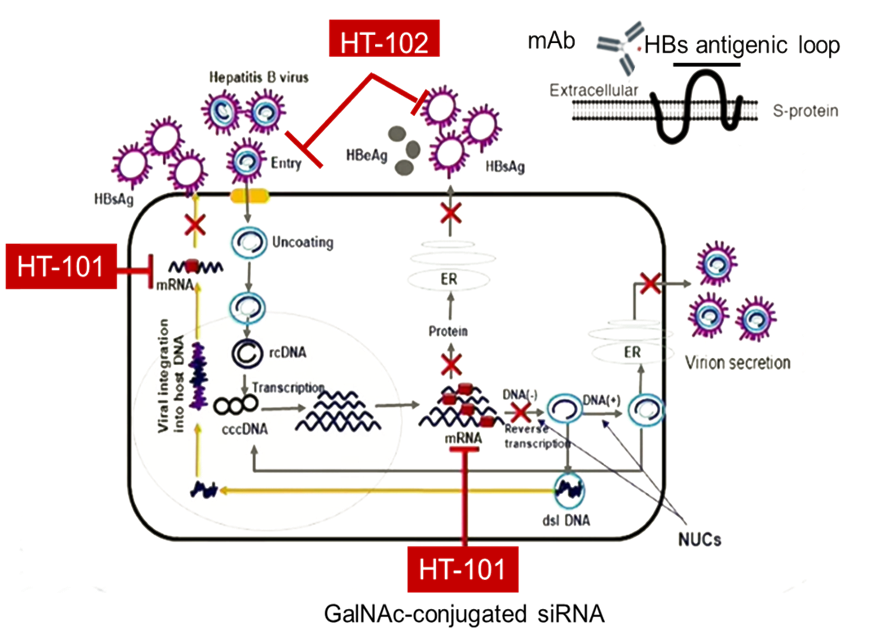
Mechanism of Action for HT-101/HT-102 Combination:
In preclinical studies, HT-101 and HT-102 demonstrated strong efficacy and safety, and in Phase I monotherapy clinical trials, both showed good safety, tolerability, and pharmacokinetics.(HT-101:NCT06746311,HT-102:NCT06744686)Preclinical data on the combination of the two drugs showed a significant reduction in HBsAg levels. At the 2025 American Association for the Study of Liver Diseases held in Washington.(AASLD2025)At the annual meeting, researchers reported the results of the Phase Ib/IIa clinical trial of the two-drug combination.
Research Methods:
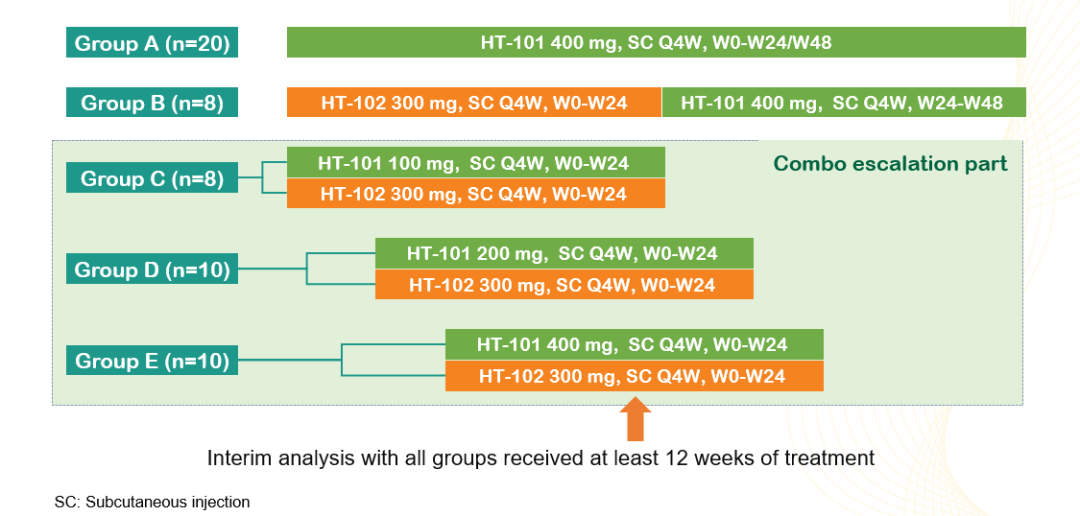
This randomized, multi-center Phase Ib/IIa clinical trial (NCT07183306) aims to evaluate the safety and efficacy of HT-101 and HT-102 as monotherapy or in combination for patients with chronic hepatitis B. The study enrolled 56 HBeAg-negative chronic hepatitis B patients who were under long-term NUC suppression, with baseline HBsAg levels between 100-3,000 IU/mL and HBV DNA <100 IU/mL. Participants were divided into five groups: Group A: HT-101 monotherapy 400mg; Group B: HT-102 300mg followed by HT-101 400mg; Groups C–E: Combination therapy (HT-101 100mg, 200mg, 400mg + fixed dose HT-102 300mg). Subjects received once-monthly dosing for 24 weeks. After dosing completion, subjects continued on NA monotherapy for an additional 24 weeks. At week 48, participants entered an extended 24-week follow-up period, during which they either continued or discontinued NA based on predefined NA discontinuation criteria. Discontinuation required subjects to achieve a complete response (CR), defined as HBsAg <0.05 IU/mL and HBV DNA <10 IU/mL.
Research Results:
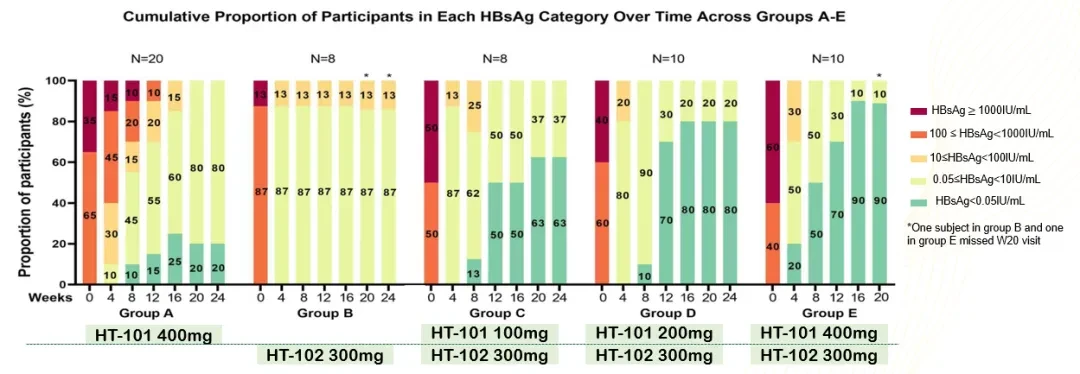
By week 24, the total HBsAg seroclearance rate in the combination therapy group increased to 22/28 (79%) (data for group E at week 20). In group E, 90% of patients achieved HBsAg clearance by week 20, with 2/10 (20%) participants achieving HBsAg clearance as early as week 4.
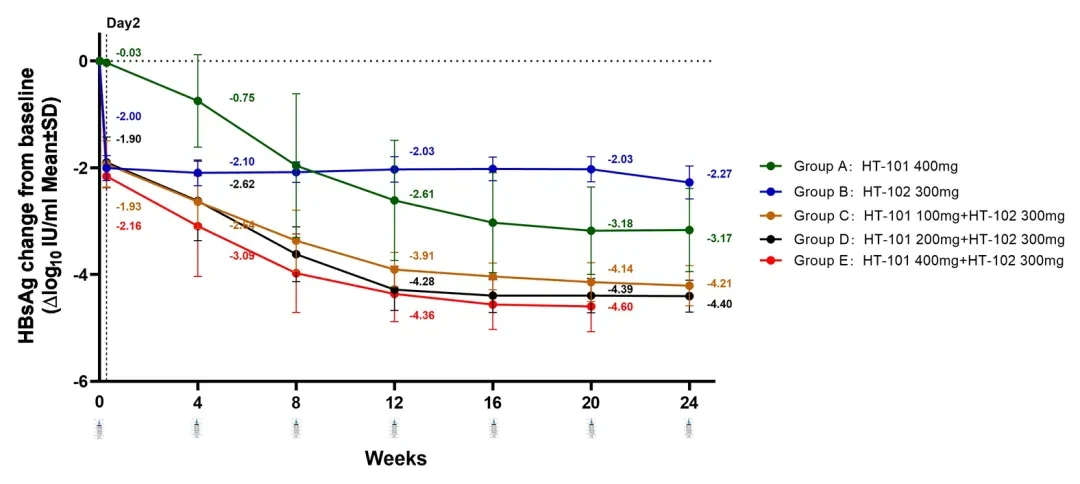
HT-101 monotherapy led to a 3.17 Log 10 IU/mL decrease in HBsAg at Week 24. HT-102 monotherapy resulted in a 2.27 Log 10 IU/mL reduction in HBsAg at Week 24. The combination therapy groups (C-E groups) induced HBsAg reductions of 4.21 (Week 24), 4.4 (Week 24), and 4.6 (Week 20) Log 10 IU/mL, respectively.
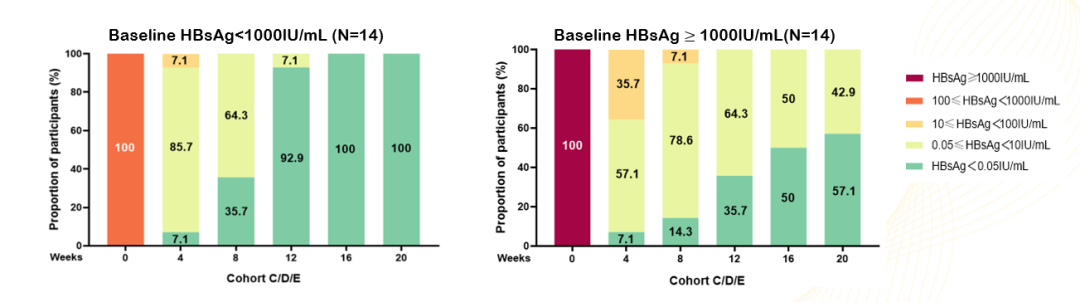
Response Rate Correlates with Baseline HBsAg Levels:Subjects with baseline HBsAg <1,000 IU/mL achieved 14/14 (100%) HBsAg clearance at week 20; subjects with baseline HBsAg ≥ 1,000 IU/mL achieved 8/14 (57%) HBsAg clearance.
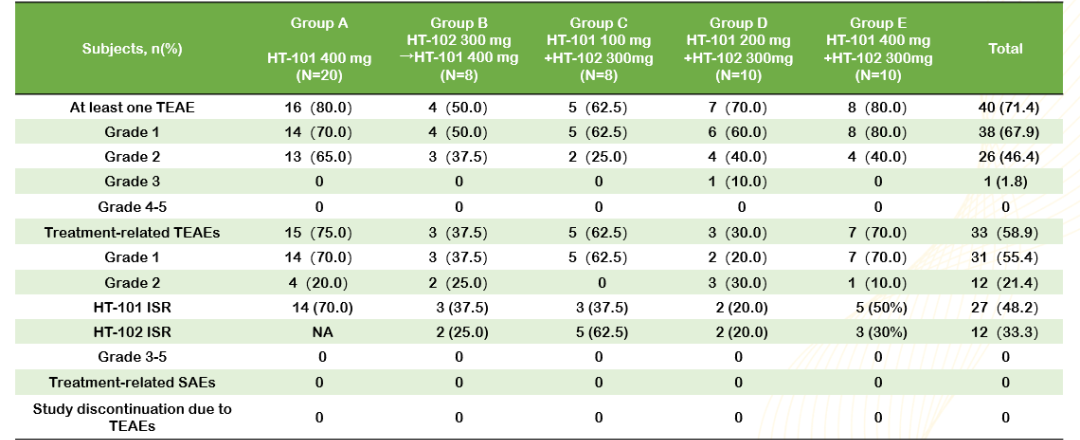
All subjects were able to complete the treatment without discontinuation due to adverse reactions, and no grade three or higher adverse reactions occurred.The main adverse events were mild redness and swelling at the injection site, which resolved on their own; liver and kidney functions remained stable. No serious drug-related adverse events were found in the study, demonstrating good safety and tolerability.
Research Conclusion:
The combination of HT-101 and HT-102 can lead to a rapid, deep, and sustained decline in HBsAg, which is different from using these two drugs alone.
In the combination therapy group of HT-101 and HT-102, 90% of patients in the high-dose group achieved HBsAg clearance by week 20, with 20% of participants achieving HBsAg clearance as early as week 4.
HT-101 and HT-102 monotherapy and combination therapy are generally safe and well-tolerated.
This clinical outcome led to the official inclusion of HT-101 and HT-102 products on September 23, 2025."Breakthrough Therapy Designation"。

Clinical Progress:
Currently, the clinical Phase IIb RCT trial of HT-101 + HT-102 combination is ongoing.
Leading PI Professor Hou JinlinPointed out that this research marks a crucial step forward in the treatment of hepatitis B, transitioning from "long-term suppression" to "functional cure." "The combination of RNAi and antibodies has brought a new leap in hepatitis B treatment. We are accelerating subsequent research and expect to announce post-treatment follow-up results by the first half of 2026." The research was conducted bySuzhou Hepa Thera Research TeamLed by Southern Medical University, in collaboration with multiple liver disease centers in Shanghai, Sichuan, Beijing, Xiamen, and Guangzhou. This achievement not only brings new hope for a cure to chronic hepatitis B patients worldwide but also demonstrates the rise and contribution of China's original solutions in the field of international liver disease research.

About Hepa Thera
Suzhou Hepa Thera Biotech Co., Ltd. was established in May 2021. It is a biotechnology company incubated by the Fosun Pharma Fund, focusing on the development of innovative drugs in the field of liver disease treatment. Hepa Thera leverages technologies such as RNA interference, antibodies, fusion proteins, and gene editing to address unmet needs in the treatment of liver diseases, including hepatitis B, non-alcoholic fatty liver disease, liver fibrosis, cirrhosis, and autoimmune liver diseases. The company collaborates with universities, research institutions, and other biotechnology enterprises, developing products through models such as co-development, contract research, licensing, and independent research and development, with the potential to become an influential innovative enterprise in China's liver disease treatment sector.