

Suzhou Municipal Hospital Affiliated to Soochow University Successfully Performs First Domestic Fully Magnetically Levitated Extra-VAD-Assisted Ultra-High-Risk PCI

magAssist
Developer of Extracorporeal Artificial Heart Devices

Recently, the Cardiology Department of the Second Affiliated Hospital of Soochow University (hereinafter referred to as "SUDA Affiliated Second Hospital") has achieved success with a domestically developed product from magAssist.MoyoAssist®Extra VAD®Full Magnetic Levitation External Ventricular Assist Device, successfully completed a complex percutaneous coronary intervention (PCI) surgery for an elderly patient with multiple high-risk characteristics of coronary heart disease. The successful implementation of this technology marks a significant breakthrough for the hospital in the field of mechanical circulatory support for cardiovascular critical care, opening up a new treatment pathway for extremely high-risk coronary heart disease patients.
I. Multiple High-risk Factors: The "Forbidden Zone of Life" with Overlapping Dilemmas
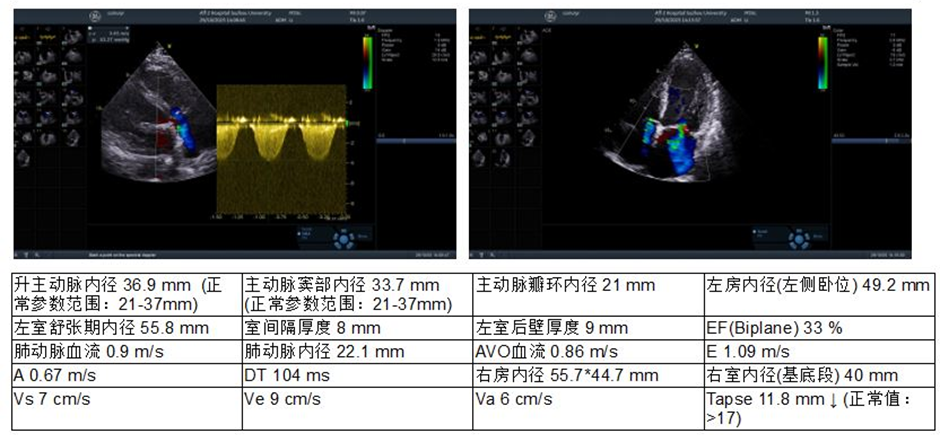
The patient is an elderly male, due toAcute Myocardial Infarction Complicated with Acute Heart FailureAdmitted to the Huguan Branch of the Second Affiliated Hospital of Soochow University, Director Shao Chunlai of the Cardiology Department quickly performed coronary angiography, the results indicatedProximal right coronary artery sub-total occlusion and severe stenosis at the left main coronary artery ostium, classified as high-risk complex coronary artery disease.Echocardiography indicated severe impairment of cardiac function, with a left ventricular ejection fraction (EF value) of only 33%. Moderate pulmonary hypertension, severe mitral regurgitation, and moderate tricuspid regurgitation were also present. Cardiac injury and heart failure markers surged, with troponin T reaching 405 pg/ml and brain natriuretic peptide (BNP) as high as 9004 pg/ml. A chest CT scan showed cardiomegaly and bilateral pleural effusion. Additionally, the patient had a long history of smoking and alcohol consumption, with a complex baseline risk profile.
Ultrasound:
Electrocardiogram:
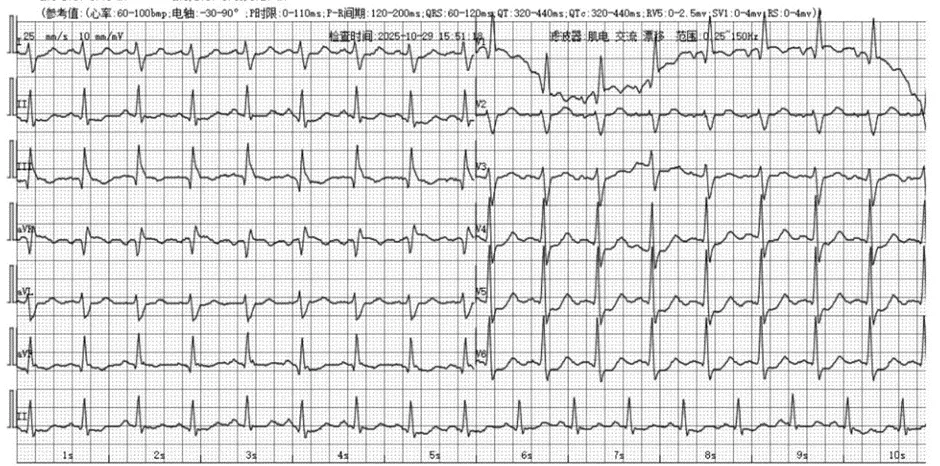
ECG shows sinus tachycardia, ST-T changes.
2. Multidisciplinary Collaborative Consultation: Precise Resolution of High-Risk Dilemmas
Given the patient's poor cardiac function accompanied by acute heart failure, severe stenosis at the origin of the left main coronary artery, and subtotal occlusion in the proximal right coronary artery, the risk of traditional PCI surgery is extremely high.Director Shao ChunlaiRapidly take the lead in organizing multidisciplinary consultations involving specialized teams from the Department of Cardiology, Cardiac Surgery, Critical Care Medicine, Anesthesiology, and Vascular Surgery to deeply discuss treatment plans.
After evaluation by the team, traditional surgical procedures were found to be too invasive for the patient to tolerate, and a PCI procedure alone would very likely lead to circulatory collapse. Therefore, mechanical circulatory support was required to ensure effective and stable circulation during the operation. The team ultimately devised a precise plan."Complex High-Risk PCI in Coronary Heart Disease Supported by Extra VAD (CHIP-PCI)"Plan, to support the smooth progress of the surgery and enhance its safety.
3. Empowerment by Chinese-produced Technology: The Fully Magnetically Levitated Device MoyoAssist®Build a Strong Line of Defense for Life
The MoyoAssist applied this time®Extra VAD®Developed by magAssist, it is a short-term mechanical circulatory support device that is independently innovated in China.Full Magnetic Levitation TechnologyPrecisely meets clinical needs, becoming a key support for maintaining circulation stability during extremely high-risk PCI procedures. Its technological highlights are deeply aligned with the demands of critical cardiovascular care: The device drives the impeller through a magnetically levitated motor to achieve non-contact suspension and rotation, relying on centrifugal force for efficient blood drainage and perfusion, providing support both during the procedure...Partially or completely replace the heart's pumping function, constructing a "temporary power source" for patients with circulatory failure; and with its frictionless suspension design, significantly reducing the risks of hemolysis and thrombosis caused by traditional mechanical contact, demonstrating remarkable blood compatibility. Meanwhile, MoyoAssist®Can provide30 Days of Ventricular External Mechanical Circulatory Support, buying precious time for the recovery of the patient's heart function or subsequent long-term replacement therapy.
Compared with other mechanical circulatory support technologies, this device has significant compatibility advantages for the patient in this surgery:
Precisely meets the requirements for left heart unloading. Compared with ECMO, it can directly achieve left heart decompression, maintaining hemodynamic stability while reducing cardiac load and coagulation consumption.
Excellent blood compatibility, magnetically levitated motor drive reduces the risk of hemolysis and thrombosis, suitable for medium- and short-term assistance needs;
Convenient operation, percutaneous puncture of femoral artery and vein path catheterization, rapid startup, stable operation, saving time for complex interventional procedures.
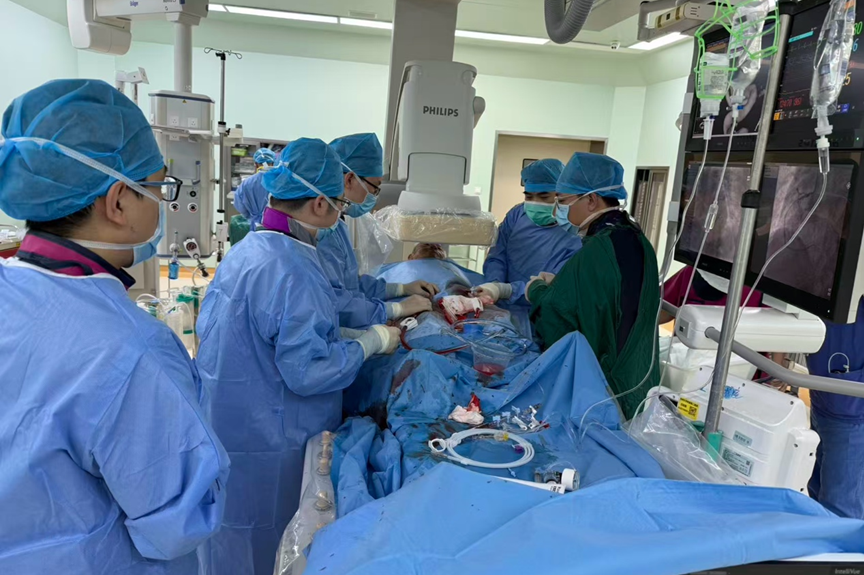
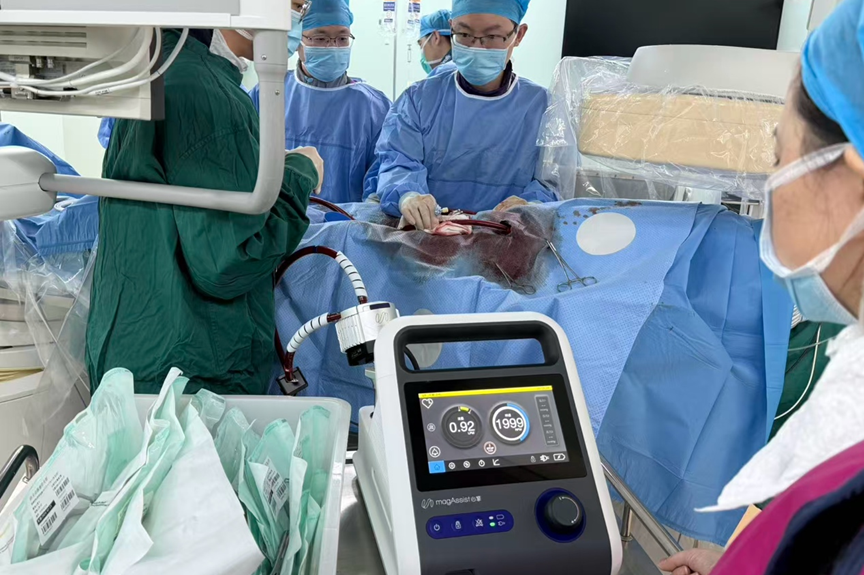
InDirector Shao ChunlaiUnder the overall coordination,Director Team of Li Hui, Gu Haibo, Yu Xiaobin, and Zou QinhuaSmooth Completion of Catheter Placement and Device Activation in the Cath Lab: Under digital subtraction angiography (DSA), the venous catheter was inserted into the left atrium via a percutaneous puncture through the femoral vein-right atrium-atrial septum-left atrium pathway, and the arterial catheter was placed via a percutaneous puncture of the femoral artery. The entire catheterization process was performed smoothly, quickly, and progressed without issues. After the external tubing was successfully connected to the arterial and venous catheters, MoyoAssist®It started immediately and operated well throughout the entire process, successfully creating a safe and stable circulatory environment for subsequent complex high-risk PCI surgeries.
4. Precision Intervention + Mechanical Support: Extra VAD Provides Stable Circulatory Support
During the surgery, MoyoAssist®Extra VAD®Providing stable circulatory support throughout the procedure, delivering approximately 2L/min of flow support, which increased the patient's mean arterial pressure by 10mmHg compared to pre-operation. Under the full "protection" of the device, the patient's blood pressure and heart rate remained consistently stable.
Director Team of Li Hui and Gu HaiboPrecisely controlling the surgical rhythm according to the preset plan: first addressing the sub-total occlusion lesion in the proximal right coronary artery, then focusing on the critical challenge of severe stenosis at the left main ostium, methodically completing the vascular recanalization and drug-eluting stent implantation. During the procedure of handling the severe stenosis at the left main ostium, the patient's circulation was steadily maintained with the support of the device. Ultimately, the surgery successfully achieved complete revascularization of the left main and right coronary arteries, utilizing the domestically produced extracorporeal ventricular assist device MoyoAssist.®The reliable performance provided a solid guarantee for this complex and high-risk interventional treatment.
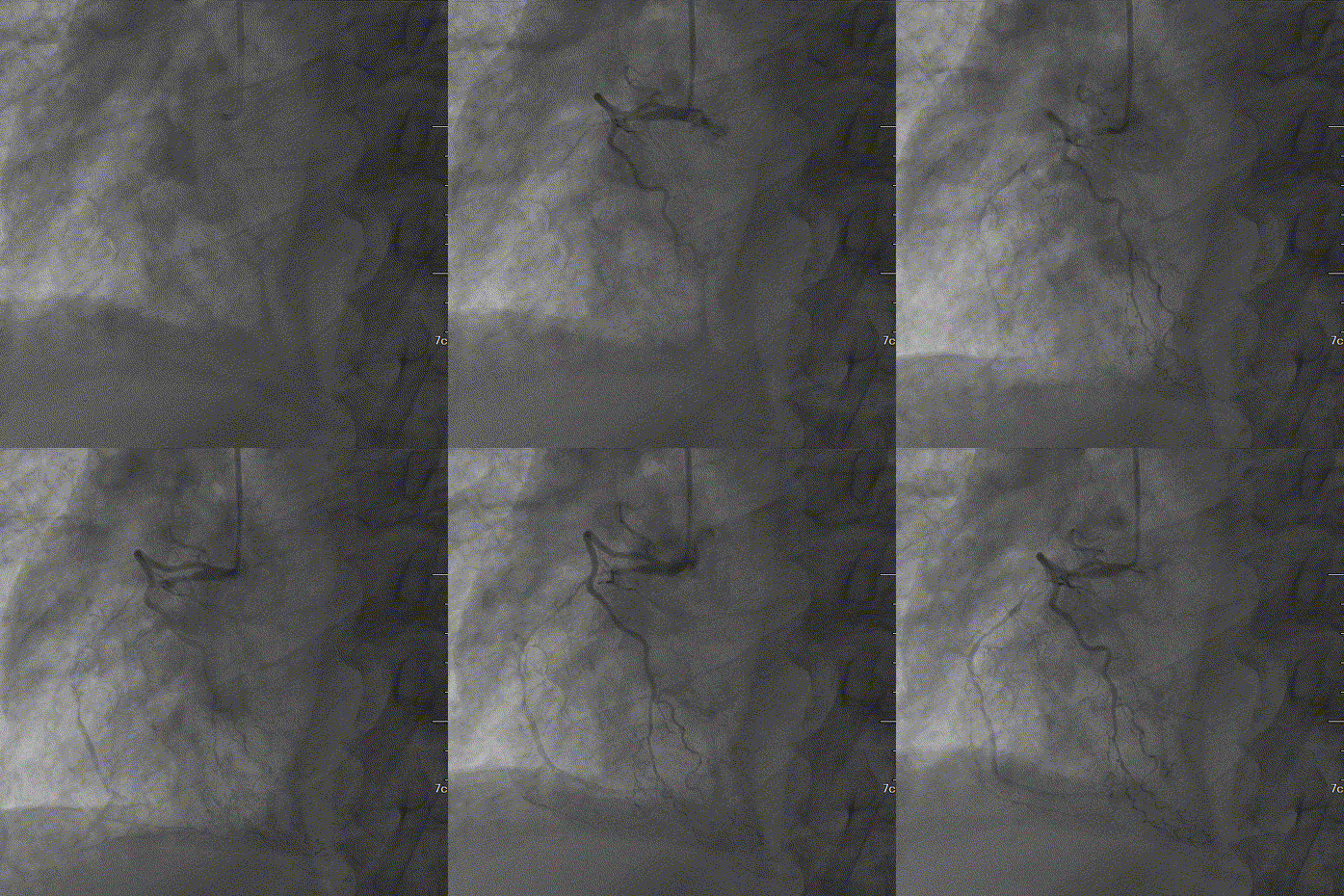
Right Coronary Artery Pre-operation
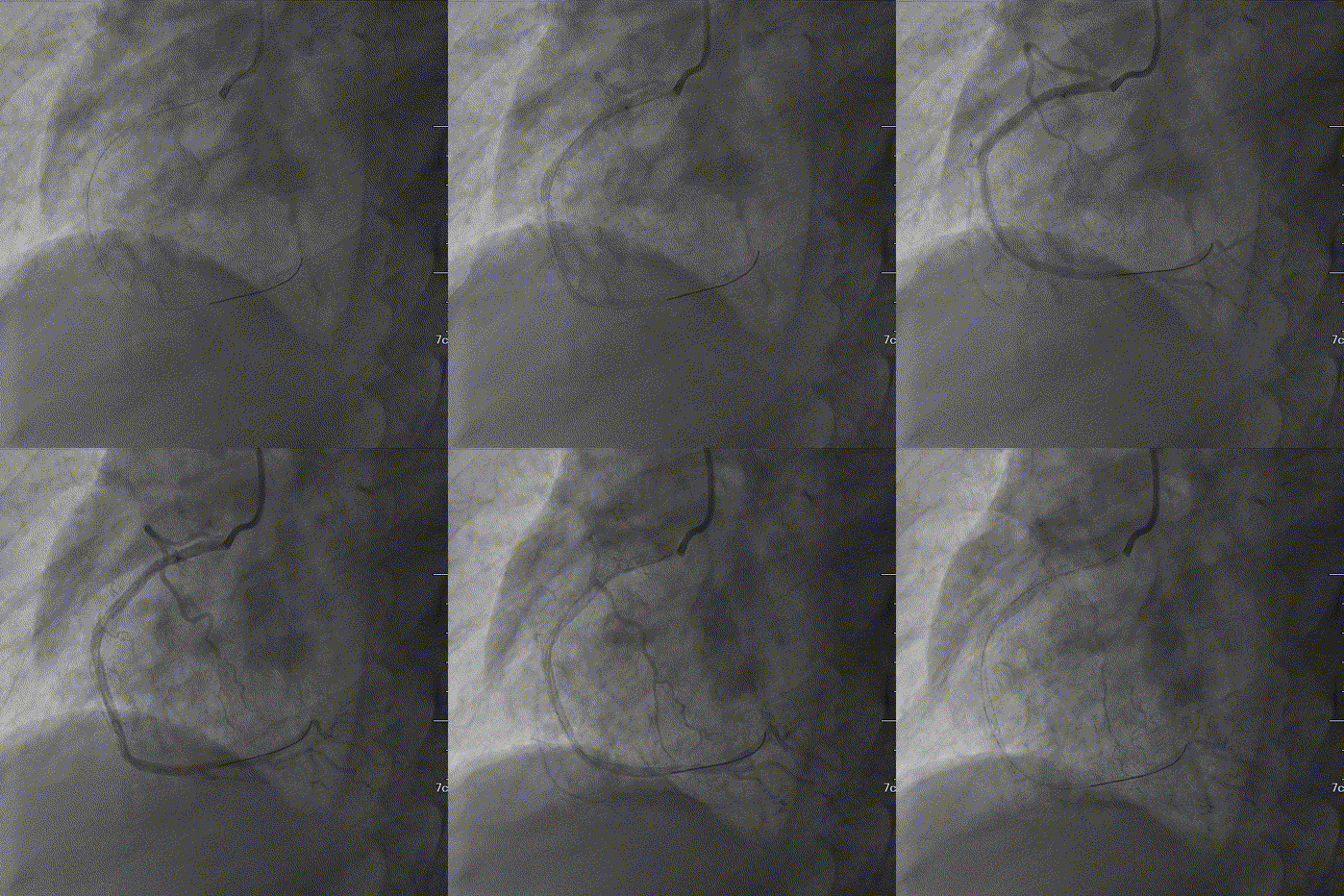
Postoperative Right Coronary
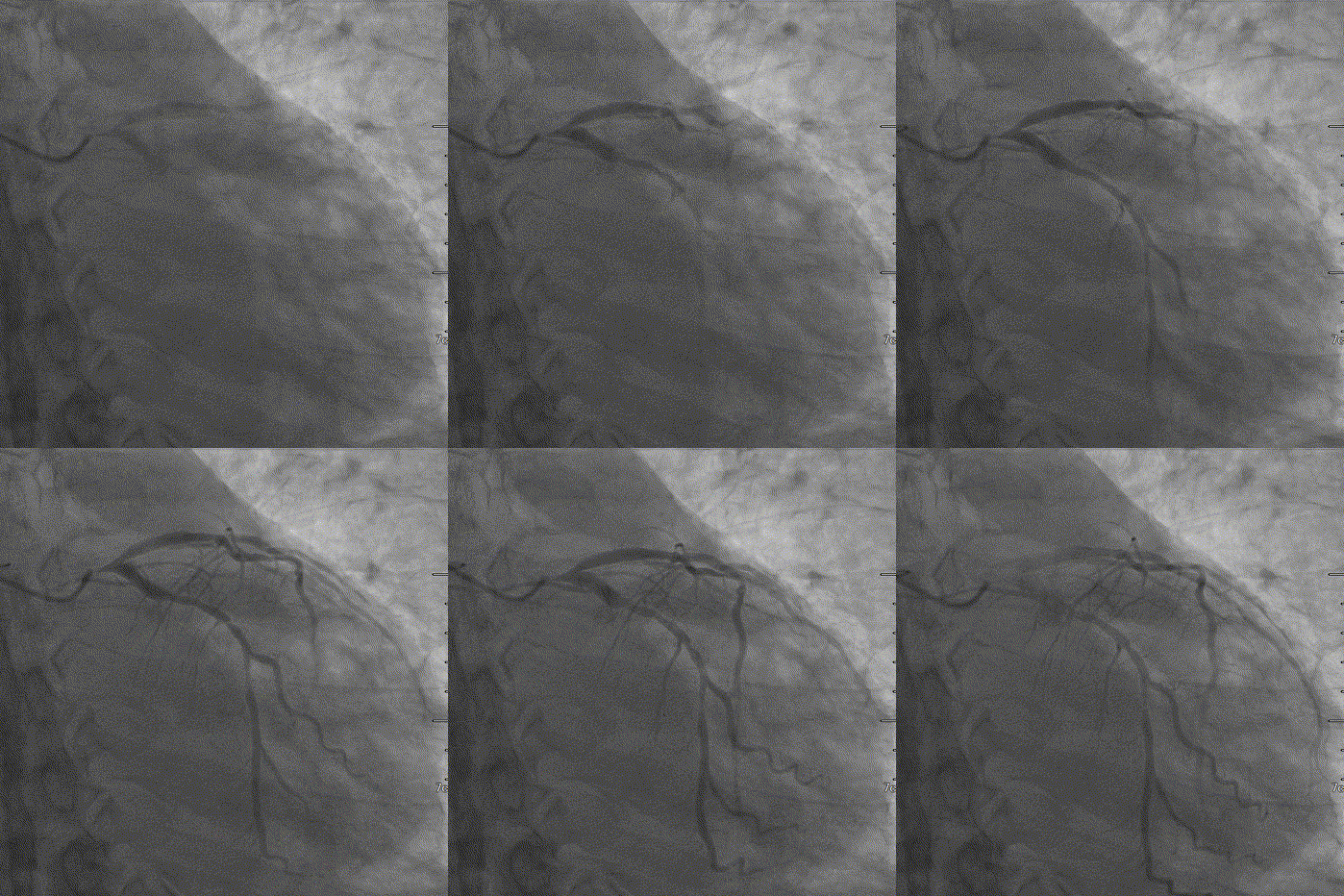
Preoperative Left Coronary
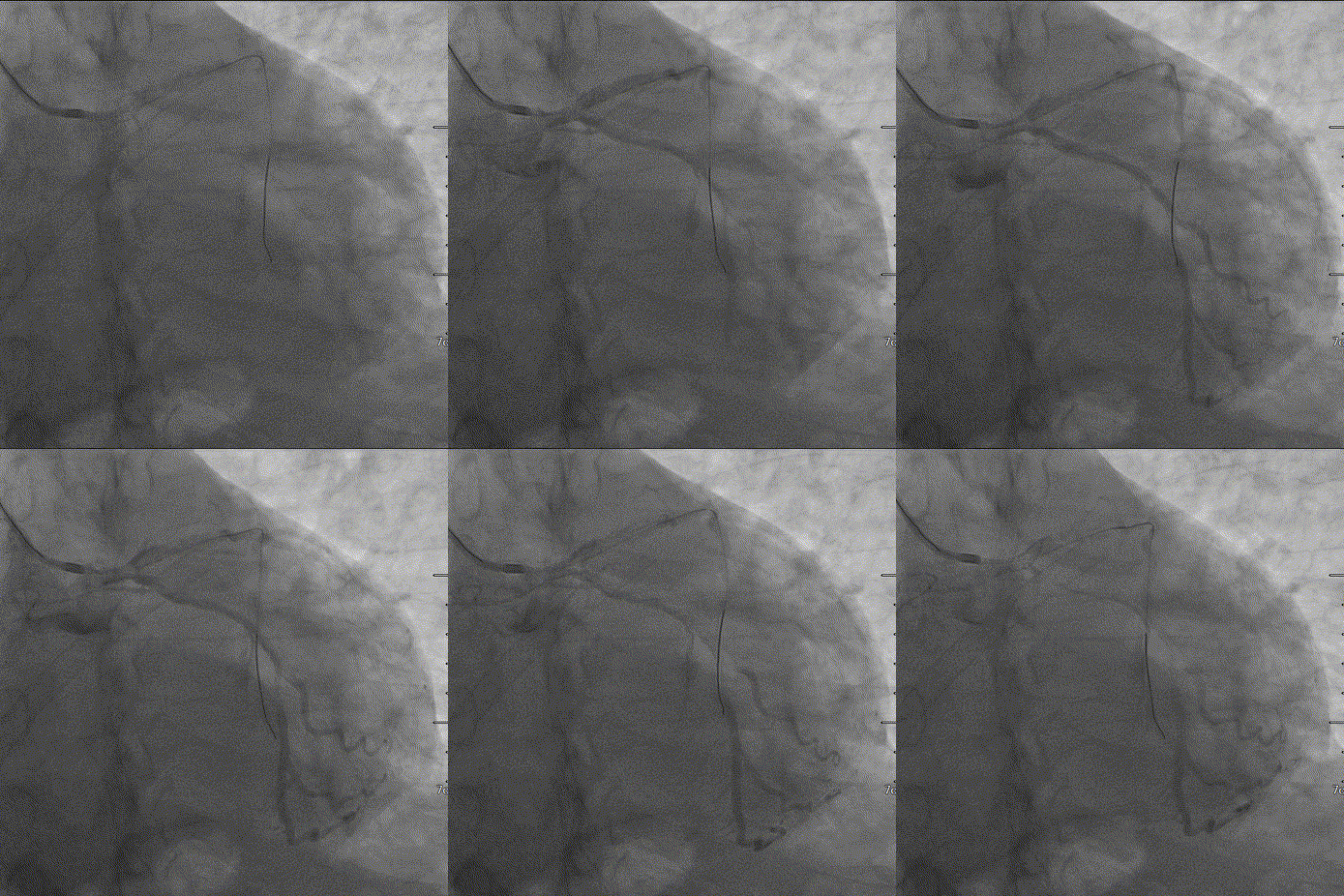
After Left Coronary Surgery
5. Refined Postoperative Management: Domestically Produced Technology Benefits Critically Ill Patients
Postoperatively, the patient was transferred to the Cardiac Care Unit (CCU) for continued treatment.Director Zhu Jing's TeamUnder精细化诊疗与护理, the patient's cardiac function showed a gradual improvement: left ventricular systolic function significantly improved compared to pre-operation; symptoms such as chest tightness, shortness of breath, and restricted activity disappeared; cardiac injury and heart failure markers such as troponin T and BNP steadily decreased to within normal range; chest CT indicated that the cardiac silhouette reduced in size and bilateral pleural effusion was absorbed. After systematic cardiac rehabilitation treatment, the patient has successfully recovered and been discharged.
The success of this surgery not only relied on the mature multidisciplinary collaboration model of Suzhou University Affiliated Second Hospital but also benefited from the rich clinical experience of the cardiovascular intervention team, the vascular access support from the vascular surgery department, and the meticulous catheter care provided by the CCU team.
Department Introduction
The Cardiovascular Department of the Second Affiliated Hospital of Soochow University (Suda Second Hospital) is a key clinical specialty in Jiangsu Province and Suzhou City. The pacing electrophysiology team, as an important part of the cardiovascular department, has grown rapidly under the leadership of Director Li Hui in recent years. Currently, the cardiovascular departments at both campuses of Suda Second Hospital (Sanxiang Road Campus and Huguan Campus) are equipped with independent digital subtraction angiography (DSA) machines, the latest Ensite Velocity cardiac 3D mapping system for precision ablation to restore heart rhythm from "palpitation" to "peace of mind," CARTO3 cardiac 3D mapping systems, multi-channel electrophysiological recorders, radiofrequency ablation devices, esophageal pacing devices, and more. They also have independent pacing electrophysiology catheterization labs. The pacing electrophysiology team at Suda Second Hospital routinely performs various types of radiofrequency ablation for rapid arrhythmias (including atrial fibrillation, atrial flutter, premature ventricular contractions, ventricular tachycardia, atrial tachycardia, supraventricular tachycardia, Wolff-Parkinson-White syndrome, and complex arrhythmia electrophysiological ablation), as well as pacing treatments (including dual-chamber pacemaker implantation, implantable cardioverter-defibrillator implantation, triple-chamber pacemakers, left ventricular quadripolar lead multipoint pacing, Micro leadless pacemakers, and left bundle branch area pacing). The pacing electrophysiology team at Suda Second Hospital actively embraces new technologies in cardiac electrophysiological interventional therapy, including "one-stop" atrial fibrillation ablation, Marshall vein ablation, and physiological pacing, ensuring comprehensive treatment for complex arrhythmias.
Expert Profile
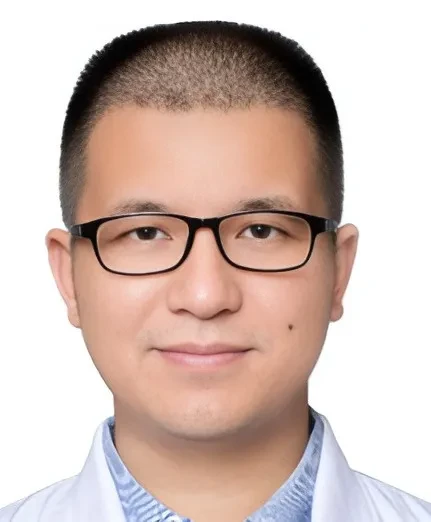
Li Hui
The Second Affiliated Hospital of Soochow University(View expert's detailed resume by clicking)
Shao Chunlai
The Second Affiliated Hospital of Soochow University(View expert's detailed resume by clicking)

Gu Haibo
The Second Affiliated Hospital of Soochow University(View expert's detailed resume by clicking)
Zhu Jing
magAssist (Suzhou) Co., Ltd.The Second Affiliated Hospital of the University(View expert's detailed resume by clicking)
#Extra VAD® #MoyoAssist® #Mechanical Circulatory Support #magAssist #magAssist
· END ·
Copyright and Disclaimer:Yanda Medical Voice Network aims to build a platform for academic dissemination and media communication. The copyright of the information in the article belongs to the holder, and we only provide the service of transmitting information. If there is any infringement, please contact us to delete it.
Get More Information, click "Read the original text"Download"Yan Dao Medical Voice APP"