

GeneMind SURFSeq 5000 Demonstrates High-Performance, Cost-Effective Sequencing for Single-Cell Spatial Transcriptomics in Interdisciplinary Medicine Study

GeneMind
Gene Sequencing Equipment Self-Developer

Illumina
Diagnostic Product Developer

Summary of the Article
Recently,Professor Guangchuang Yu (Y Shu) from Southern Medical UniversityInterdisciplinary Medicine(IF 13.6) published a research article titled "Comparison of Illumina NovaSeq 6000 and GeneMind SURFSeq 5000 platforms for single-cell spatial transcriptomics of mouse brain and lung" [1].The study used the SeekSpace single-cell spatial transcriptomics chip by SeekPlause to construct libraries from mouse brain tissue (n=5) and lung tissue (n=1), followed by parallel sequencing on SURFSeq 5000 and NovaSeq 6000. The analysis results showed:The data quality and downstream analysis results of SURFSeq 5000 are highly consistent with NovaSeq 6000, while offering superior sequencing costs, providing a cost-effective solution for large-scale spatial omics research.
Background Introduction
Single-cell RNA sequencing (scRNA-seq) can precisely resolve cellular heterogeneity but loses spatial information due to tissue dissociation, making it difficult to capture intercellular interaction patterns, functional regional distributions, and the native microenvironment layout. In contrast, single-cell spatial transcriptomics assigns a unique "spatial barcode" to each cell, enabling high-throughput single-cell expression analysis while fully preserving the original tissue structure. This technology not only retains the high-resolution advantage of single-cell sequencing but also provides spatial dimension information that reveals tissue architecture, cell interactions, and microenvironmental heterogeneity, offering a novel panoramic perspective for life science research.
In the past, single-cell spatial transcriptomics technology heavily relied on costly sequencing platforms such as the Illumina NovaSeq 6000, limiting its broader application. To address this, this study conducted a systematic comparative evaluation to validate the performance of GeneMind’s SURFSeq 5000, a second-generation high-throughput sequencing platform produced in China, in single-cell spatial transcriptomics applications. The aim is to explore whether it can become a reliable and economical new option to promote the widespread adoption of this technology with better cost-effectiveness.
*The following is an interpretation of the research findings.
Interpretation of Results
1. Evaluation of Basic Sequencing Quality and Data Characteristics
After all datasets were truncated to the same sequencing depth, the comparison of key quality metrics between the two sequencing platforms showed that SURFSeq 5000 was highly similar to NovaSeq 6000 in terms of the number of sequencing reads, UMI count, spatial barcode count, number of detected genes, and alignment rate.InstructionsSURFSeq 5000With sensitivity, accuracy, and technical reproducibility comparable to NovaSeq 6000(Figure 1). The high consistency of basic sequencing metrics provides a solid foundation for subsequent bioinformatics analysis.
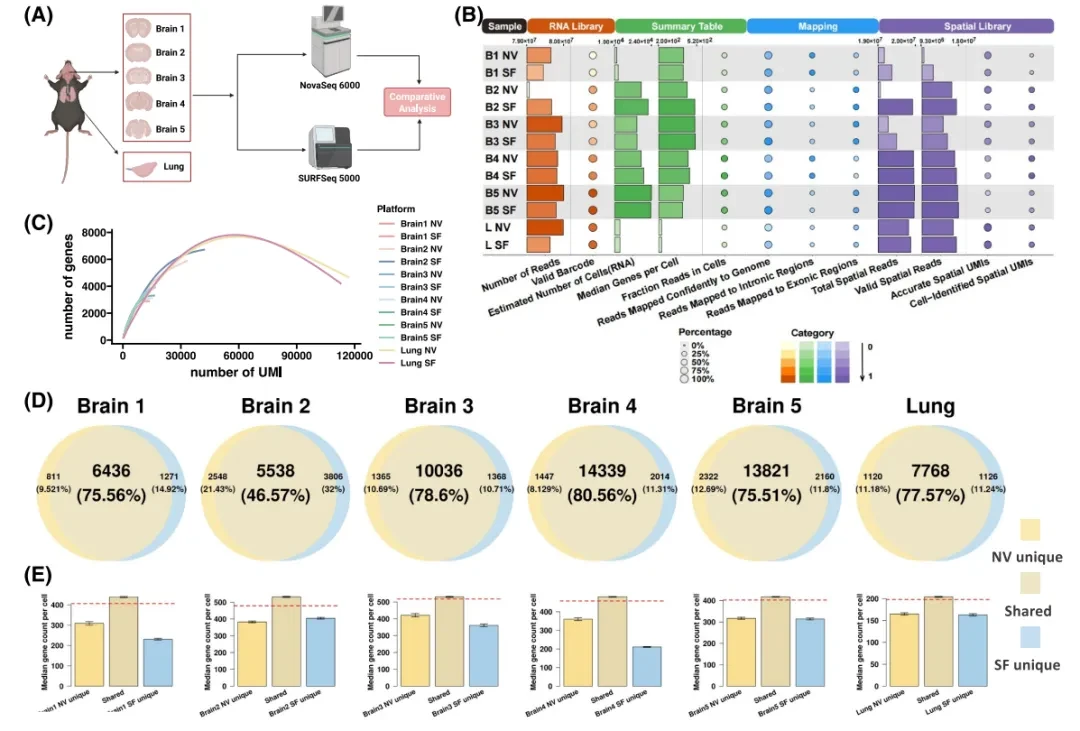
Figure 1Platform Performance Highly Consistent: SURFSeq 5000 vs. NovaSeq 6000 Sequencing Quality Comparison
2. Cross-platform Integration and Cell Annotation Reproducibility Analysis
To comprehensively evaluate the consistency and reliability of different sequencing platforms in cell type annotation and spatial distribution analysis, joint analyses were performed on spatial transcriptomic data from 10 datasets of mouse brain tissue and 2 datasets of lung tissue (Fig. 2-3). The results showed that UMAP visualization of the integrated datasets revealed complete mixing of cells from both platforms across all major clusters, without batch effects or platform-driven separation. Spatial mapping analysis further confirmed highly consistent cell type localization patterns between the two platforms. Quantitative evaluation using the MetaNeighbor algorithm demonstrated that the AUROC scores for all major cell types were above 0.92. Therefore,SURFSeq 5000Compared with NovaSeq 6000 inHigh consistency in transcriptome clustering, cell grouping, spatial mapping, and quantitative classification,Fully verified the interchangeability and technical reproducibility of the data from the two platforms.
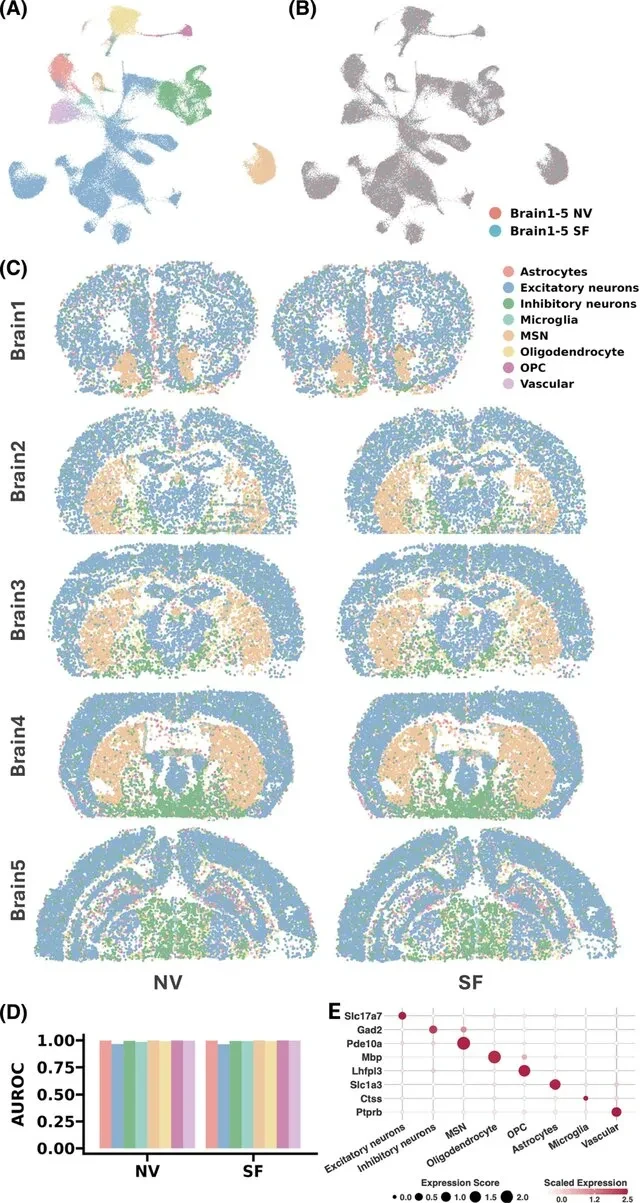
Figure 2Integrated Analysis of Brain SURFSeq 5000 and NovaSeq 6000 Spatial Transcriptomic Data
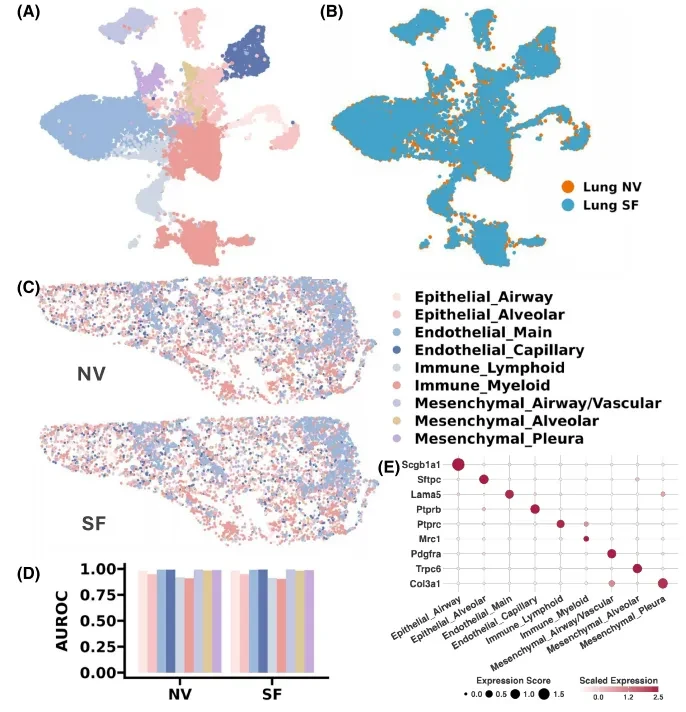
Figure 3 Integrated analysis of lung SURFSeq 5000 and NovaSeq 6000 spatial transcriptomic data
3. Consistency Verification of Downstream Analysis
Based on the aforementioned unified cell type annotations, researchers further systematically evaluated the consistency of the two sequencing platforms in downstream analyses across different tissues (Figure 4). Differential gene expression (DEGs) analysis showed a high level of agreement in DEGs between the two platforms, with most being shared. Functional enrichment analysis further revealed that the biological processes associated with these genes were highly consistent between the two platforms. At the cellular interaction level, the intercellular interaction networks constructed using CellChat demonstrated strong consistency in structural scale, pathway activity, and signal flow. Additionally, by using the self-developed SVP package from the research group to quantitatively compare spatial gene modules, it was further confirmed that the two platforms exhibit a high degree of similarity in spatial expression patterns [2]. In summary, analyses across three dimensions—differential expression, cellular interactions, and spatial modules—all consistently indicateSURFSeq 5000In single-cell spatial transcriptomics analysis, it demonstrates high analytical comparability and data reliability with NovaSeq 6000.
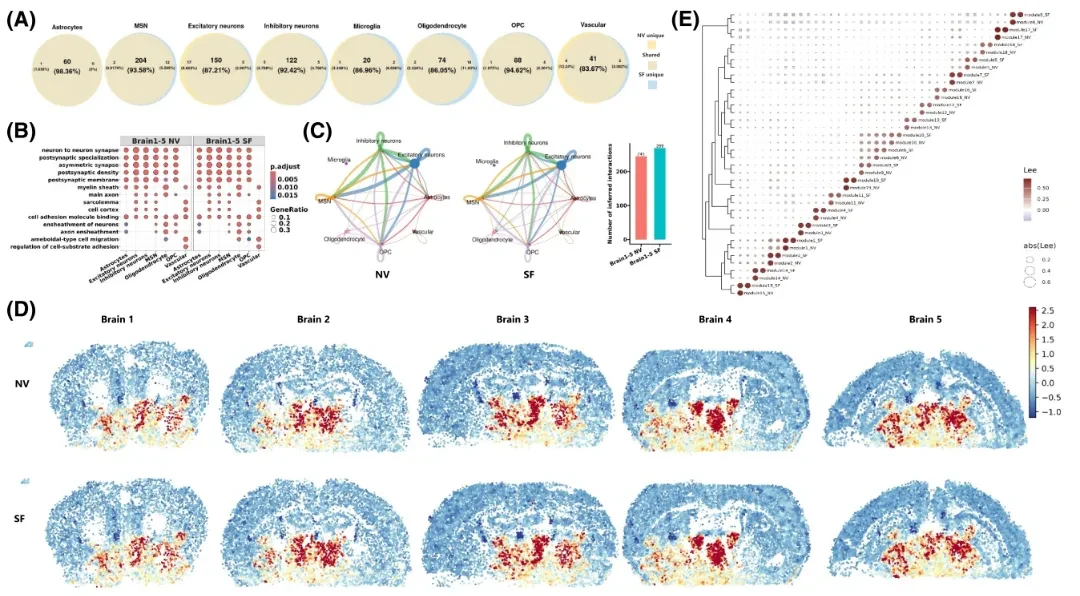
Figure 4 Comparison of Brain Spatial Transcriptome Data Across Sequencing Platforms
Conclusion
1. In the application of single-cell spatial transcriptomics, all key technical indicators of SURFSeq 5000 are comparable to those of NovaSeq 6000.
2. Bioinformatics analysis showed that SURFSeq 5000 and NovaSeq 6000 platforms have good consistency in cell annotation, spatial distribution, and downstream functional analysis.
3. While maintaining the same performance as NovaSeq6000, SURFSeq 5000 demonstrates superior sequencing cost efficiency (this statistic is based on the market in mainland China).
References
[1] Qianwen Wang, et al. "Comparison of Illumina NovaSeq 6000 and GeneMind SURFSeq 5000 platforms for single-cell spatial transcriptomics of mouse brain and lung". Interdisciplinary Medicine. 2025, e70067. https://doi.org/10.1002/inmd.70067
[2] Shuangbin Xu, et al. "Precise Characterization of Cellular States and Spatial Variable Patterns within Spatial Transcriptomics". Research Square. 2025. https://doi.org/10.21203/rs.3.rs-5965581/v1
Author: Lai Juan, Department of Scientific Research Cooperation
Reviewed by: Professor Yu Guangchuang's Team
Recommended Reading
RELATED ARTICLES



About GeneMind
GeneMind focuses on technological innovation in gene sequencers and lifeomics instruments, owning independent intellectual property rights and core technologies of gene sequencers.,Is a world-leading自主研发 manufacturer of gene sequencers。
Since its establishment, GeneMind has broken through various key "bottleneck" technologies and processes, forming the proprietary "SURFSeq" sequencing technology system. It has obtained more than 500 authorized and pending patents domestically and internationally, achieving comprehensive protection from methodology to key process technologies. Currently, GeneMind has launched a series of self-developed sequencers including GenoCare 1600, FASTASeq 300, GenoLab M, SURFSeq 5000, SURFSeq Q, and FASTASeq S. This has created a full-range product lineup covering low-throughput, medium-throughput, high-throughput, and ultra-high-throughput applications, comprehensively meeting the diverse needs of research institutions, medical organizations, and industrial users. These products support cutting-edge scientific research and the advancement of precision medicine.
GeneMind, with the mission of "Making Life Readable and Health Malleable," is committed to building a healthy and diverse high-quality industry ecosystem with its partners. It has established in-depth cooperation with more than 500 partners across over 50 countries and regions worldwide, covering fields such as reproductive health, cancer prevention and control, infectious diseases, forensic science, and molecular breeding.Empower Sequencing Applications with Full Domain Strength,Promote the development of the health industry and safeguard human life and health.
Website: www.genemind.com
Phone: 400-822-3660

↓↓↓ClickRead the original text,Get the original paper