RuiXin Medical Showcases AngioQFA at 2025 Peking University People's Hospital Heart Congress, Highlighting Cutting-Edge Microcirculation Functional Assessment

RaysightMed
Medical Imaging Product Developer

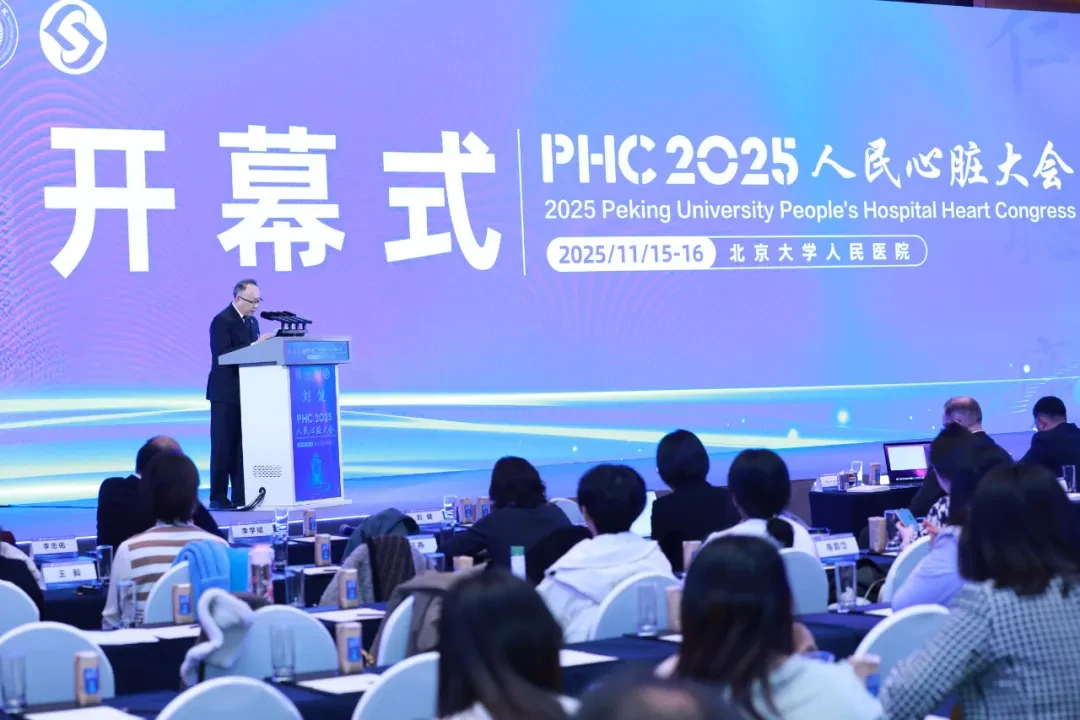
November 15-16, 2025, hosted by the Department of Cardiology, Peking University People's Hospital “2025 Peking University People's Hospital Heart ConferenceInGrandly held at the Beijing Shangri-La Hotel, with nearly a hundredExperts and scholars in the cardiovascular field gathered together.RaysightMed was invited to attend the conference, and itsThe coronary functional microcirculation IMR + epicardial FFR evaluation technology provided by AngioQFA has attracted high attention from the attending experts.。
As an important academic event in the field of cardiovascular medicine in China, this conference features a main forum and multiple sub-forums. The sub-forums cover the entire process of cardiovascular disease from prevention, diagnosis, and treatment to rehabilitation, fully reflecting the integration of scientific research with clinical practice and the combination of traditional techniques with innovative concepts.
During the conference, Professor Liu Jian, Director of the Department of Cardiology at Peking University People's Hospital, emphasized,Clinically, emphasis should be placed on the assessment of microcirculatory function. This concept is a key link in achieving precision diagnosis and treatment of coronary heart disease, and it urgently needs to become a consensus and routine practice among the majority of clinicians.。
Traditional coronary angiography orCTA examination mainly focuses on the degree of stenosis in epicardial coronary arteries, which is equivalent to only examining the "main channels" of a river. However, a significant number of patients have clear main channels but suffer from blockages or dysfunction in the "small tributaries" (i.e., microcirculation) that irrigate the fields, leading to myocardial ischemia. These patients often present with chest tightness and pain in clinical settings, but imaging examinations show no significant stenosis, making them prone to being overlooked or misdiagnosed as non-cardiac chest pain, thus delaying treatment.Therefore, focusing solely on coronary artery stenosis is far from sufficient. It is essential to extend the assessment perspective to the microcirculation domain, which determines the ultimate blood supply to myocardial cells, in order to more comprehensively reveal the true cause of myocardial ischemia.
RaysightMed ExhibitedAngioQFA can synchronously analyze two key functions, IMR (Index of Microcirculatory Resistance) and FFR (Fractional Flow Reserve), in a single use, helping doctors more accurately assess the condition of coronary artery disease in patients and providing an important basis for formulating precise treatment plans.
Currently, RaysightMed has built up cardiovascular and cerebrovascularAI + Surgical Robot Precision Diagnosis and Treatment Platform realizes a full-process intelligent closed-loop from preoperative imaging diagnosis and surgical planning, intraoperative navigation and fully automatic execution of vascular interventional surgery, to postoperative systematic health management.