

RuiShenAn's CNS System with 'Dynamic Sensing + Directional Precision Stimulation' Dual-Core Technology Successfully Completes First Implantation in the Middle East!

Rishena Medical
Implantable Medical Device R&D and Production Manufacturer
Recently, Ibn Sina Specialty Hospital in Tanta, Egypt, completed a landmark treatment — led by Professor Ahmed's team, successfully implanting the Rishena Medical Closed-loop Neurostimulation System (CNS) in a 61-year-old Parkinson's patient. With the two core technologies of "real-time signal sensing" and "directional electrode precision stimulation," this system brings precise neuromodulation therapy to patients in the Middle East.
Six Years of Parkinson's Dilemma,Patients Welcome Technological Breakthrough
Patient Shawky Dawoud, who has suffered from Parkinson's disease for six years, experiences severe tremors and rigidity that significantly impact his daily life. After the effects of traditional medication gradually diminished, he decided to opt for Rishena Medical's CNS system, which integrates functions such as "sensing-directional electrodes-remote control," for further treatment.
The 1-3-3-1 directional electrode used in the surgery is considered the "core利器" of this treatment. It breaks through the traditional electrical stimulation model, achieving precise electrical stimulation with directional focus. Intraoperative testing showed that the patient's limb tremors and muscle stiffness were quickly alleviated, with no adverse reactions such as dyskinesia throughout the procedure. The surgery was successfully completed in just four hours, with the electrode accurately implanted into the corresponding nucleus.
Postoperatively, the doctors successfully collected the patient's local field potential (LFP) signals. This indicates that the system is not only capable of stimulation therapy but also able to perceive and collect "signals" emitted by the brain in real time, transmitting them via Bluetooth to the physician’s end for remote, individualized treatment management. It also lays a solid foundation for subsequent automatic closed-loop stimulation.
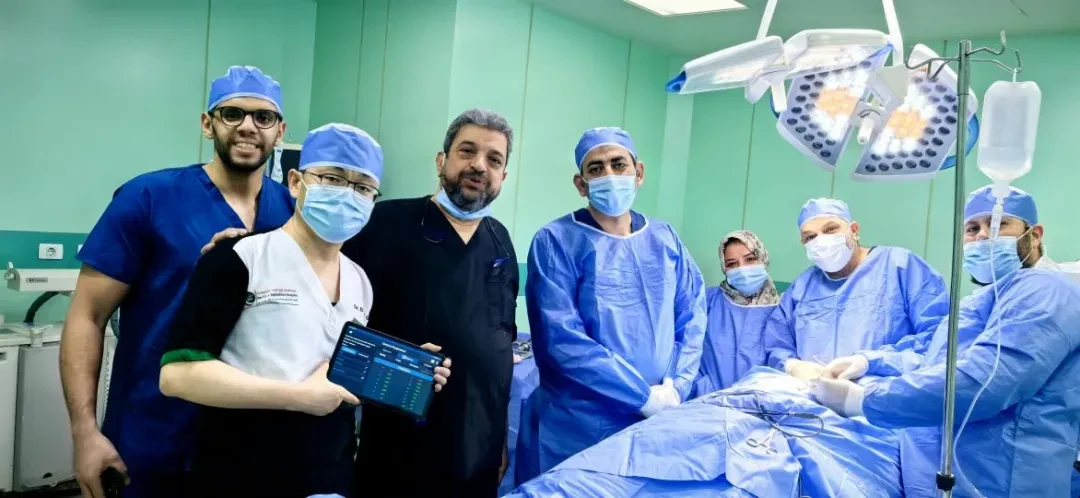
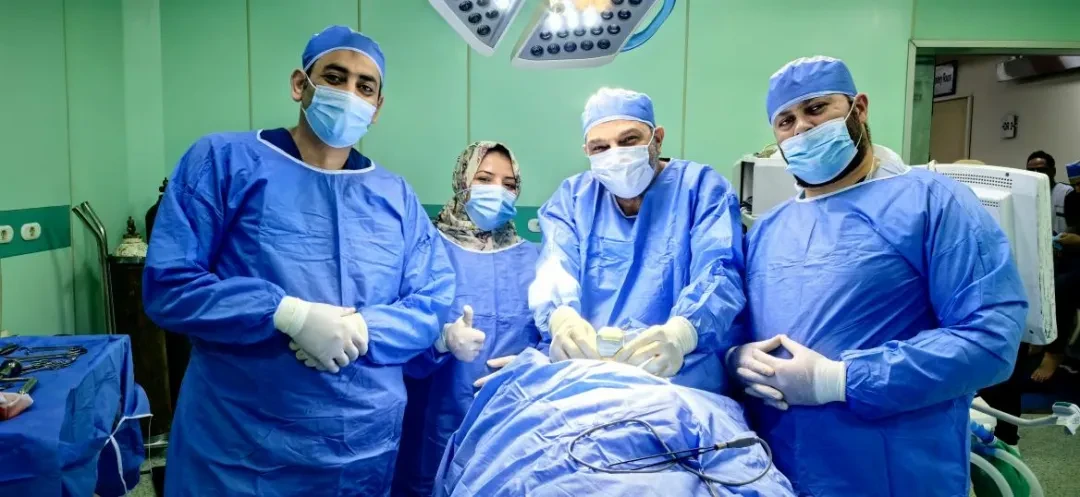
Deep Brain Stimulation: Precision Treatment for Parkinson's Disease
Deep Brain Stimulation (DBS) therapy is an effective treatment for Parkinson's disease. The Rishena Medical Deep Brain Stimulation System (CNS), building on the efficacy of traditional DBS, integrates functions such as "sensing capability," "directional electrode precision stimulation," "connection of up to 4 electrodes," and "remote control." Multi-center clinical trials have validated the excellent outcomes of closed-loop therapy for Parkinson’s disease, establishing a precise treatment model with intelligent feedback.
Currently, this system has been successfully implanted in surgeries in multiple countries including Egypt, Nepal, and Pakistan. This also marks that Rishena Medical's active implantable neuroregulation devices have entered a new phase of international application. In the future, it will cover more countries, bringing hope to more patients with neurological disorders worldwide and opening up new possibilities for a high-quality life.
About Rishena
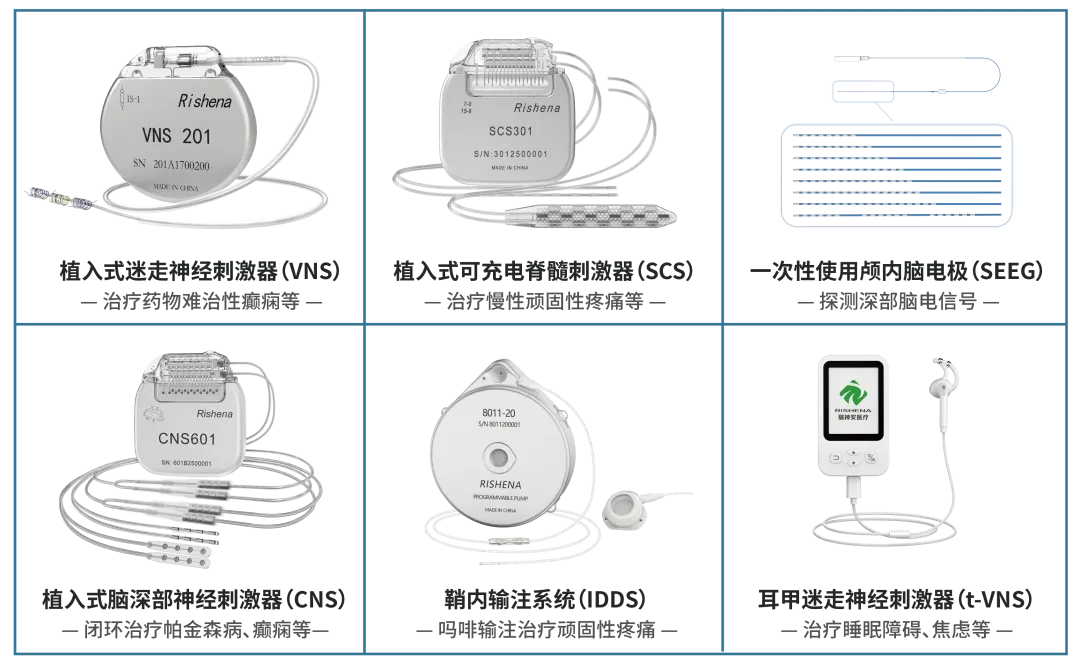
Rishena Medical Co., Ltd. is an innovative high-tech enterprise specializing in the research, development, production, and sales of active implantable medical devices. Originating from the industry-university-research transformation of the Tsinghua University Microelectronics Institute team's implantable neurostimulator project, the company was established in 2013 in the Jiangsu Changzhou Development Zone. The founding team graduated from Tsinghua University and was co-founded with the participation of Tsinghua Venture Capital and listed companies. The company focuses on key areas of brain science research such as epilepsy, pain, Parkinson’s disease, Alzheimer’s disease, and psychiatric disorders, and is committed to providing comprehensive treatment solutions for these conditions. After years of accumulation and development, the company's independently developed Vagus Nerve Stimulator (VNS), single-use intracranial electroencephalogram electrodes (SEEG), transcutaneous Vagus Nerve Stimulator (t-VNS), rechargeable Spinal Cord Stimulator (SCS), Deep Brain Stimulator (CNS), and Implantable Drug Delivery System (IDDS) have been approved for marketing. In the future, the company will expand into more disease treatments.


Share

Favorite

Like

Like