

Over $7 Billion in Big Pharma Bets: MNCs Rush Into the Emerging MCE Space, with Three Leaders Taking the Lead

GSK
Pharmaceutical R&D Manufacturer

Sanofi
Pharmaceutical Manufacturer

Dren Bio
Antibody Drug Developer

November 26, 2025
eMedClub News
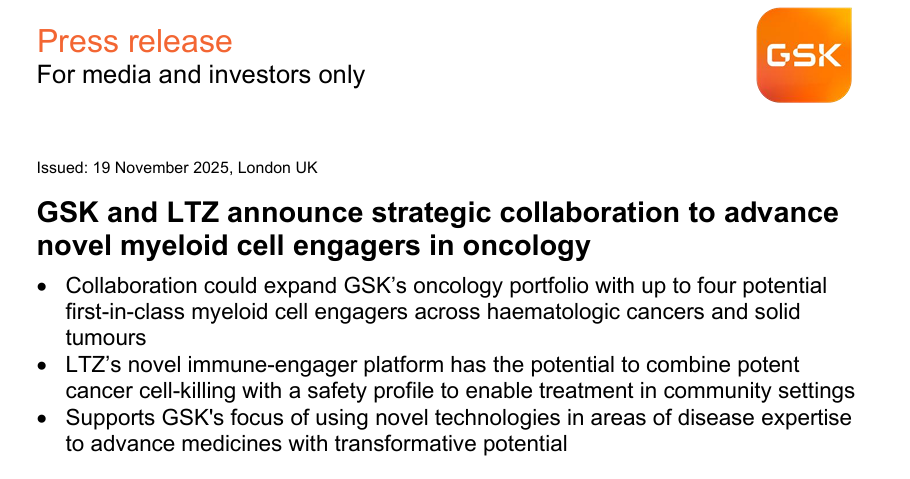
In March this year,SanofiAnnounced up to$19 BillionAcquisition of Myeloid Cell Bispecific Antibody DR-0201, which originated from Dren Bio's affiliate Dren-0201. Dren Bio's technology platform has also attracted attention.PfizerAndNovartisFollowing the attention, they successively reached cooperation with it.
This series of transactions sends a clear signal in the global BD environment. MCE, an emerging platform technology, is gaining continuous support from the world's top pharmaceutical companies and is expected to become an important direction for the next generation of immunotherapy.
The Logic Behind MNC's Heavy Investment:
Strategic Extension from T Cells to Myeloid Cells
Over the past decade, breakthroughs in tumor immunotherapy have mainly focused on T-cell technologies, including CAR-T and TCE. However, these strategies face numerous bottlenecks such as the tumor microenvironment and the risk of CRS, which have hindered their effective application in solid tumors.
Against this backdrop, the industry began to focus on another type of key immune cell — myeloid cells.(such as macrophages, dendritic cells, etc.)These types of cells play a more fundamental and diverse role in the immune system.
As an emerging immunotherapy strategy, the core mechanism of MCE is through bispecific antibodies,One end connects to specific receptors on the surface of myeloid cells, and the other end connects to target cells.(such as tumor cells)Surface Antigen, thereby activating the killing effect of myeloid cells on target cells. Unlike traditional Fcγ receptor-mediated phagocytosis, MCE specifically activates pattern recognition receptors on the surface of myeloid cells, such as CLEC5A, Dectin-1, or SIRPα, to achieve more precise immune activation.
The potential advantages of MCE over TCE are significant. In the tumor microenvironment, myeloid cells such as macrophages are abundant and possessStronger tumor infiltration capability and generally lower CRS risketc. In addition, myeloid cellsThe inherent phagocytic propertiesWhich also gives it a unique advantage in addressing solid "cold" tumors.
These characteristics make myeloid cells a key growth curve that is expected to complement existing immune strategies and push tumor immunotherapy to the next stage.
The three major leading players,
Differentiated Layout
Currently, MCEs worldwide are still in the early stages of development, with only a few players active in this cutting-edge field. Among them,Dren Bio, Zeanon Biotech, and Kescient PharmaThese are a few leading companies. Notably, these three enterprises have distinct strategic focuses in selecting targets for activating myeloid cells, choosing Dectin-1, CLEC5A, and SIRPα respectively.
Dren Bio
Dren Bio was founded in 2019, and its core technology platform utilizes Dectin-1/TAA bispecific antibodies to recognize tumor cells and activate macrophages to phagocytose the tumor cells. The phagocytosed tumor cells produce neoantigens that, after presentation, activate adaptive immune responses to further kill tumor cells. Dectin-1(Dendritic Cell-Associated C-Type Lectin-1)Is a class of selectively expressed in the bone marrow-monocyte lineage(including macrophages)Pattern recognition receptors, primarily triggering inflammatory responses and innate immune defense in the body.
Currently, Dren Bio has established a rich product pipeline, with core pipelines DR-0201 and DR-0202 both entering the clinical stage.
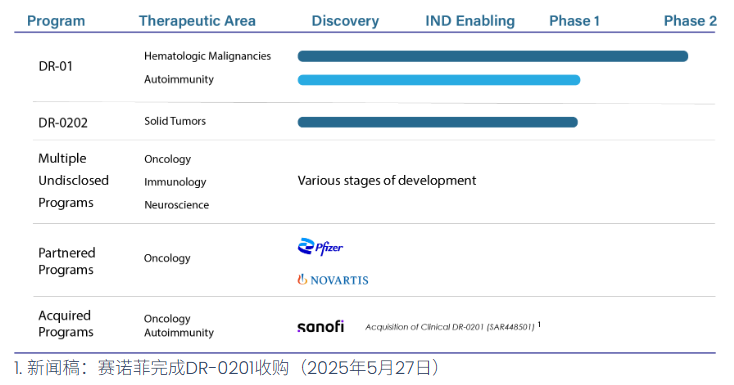
As early as 2021, Dren Bio had reached an agreement with PfizerOver USD 1.025 billionCooperation Agreement to Utilize Dren Bio's Myeloid Cell Technology Platform for the Development of Multiple Therapeutic Antibody Drugs for Cancer Treatment. On July 24, 2024, Novartis potentiallyUp to $3 billionPackage and Introduce Multiple Myeloid Cell Bispecific Antibody Candidate Drugs from Dren Bio.
On March 20, 2025, Dren Bio reached an agreement with Sanofi, under which the latter...$600 million upfront paymentThe acquisition of Dren Bio's subsidiary Dren-0201 has obtained the research pipeline DR-0201.
DR-0201 is a potential first-in-class bispecific MCE targeting CD20 developed by Dren Bio. This antibody acts on specific tissue-resident and trafficking myeloid cells, inducing deep B-cell depletion through targeted phagocytosis. DR-0201 has demonstrated strong preclinical safety in multiple non-human primate studies, with no evidence of cytokine release syndrome or neurotoxicity. The product is currently under development.Phase 1 Clinical Trials for Indications such as Polymyositis, B-cell Non-Hodgkin Lymphoma, and Sjögren's Syndrome。
Another product of the company, DR-0202, targets solid tumor indications. According to information from clinicaltrials.gov, this product has also entered Phase 1 clinical trials.
Zeanon Bio
As the most watched MCE company recently, Zeanon Biotech focuses on unmet clinical needs in major disease areas such as cancer and autoimmune diseases, and has successively collaborated within half a year withLilly, GSKReach a重磅 cooperation.
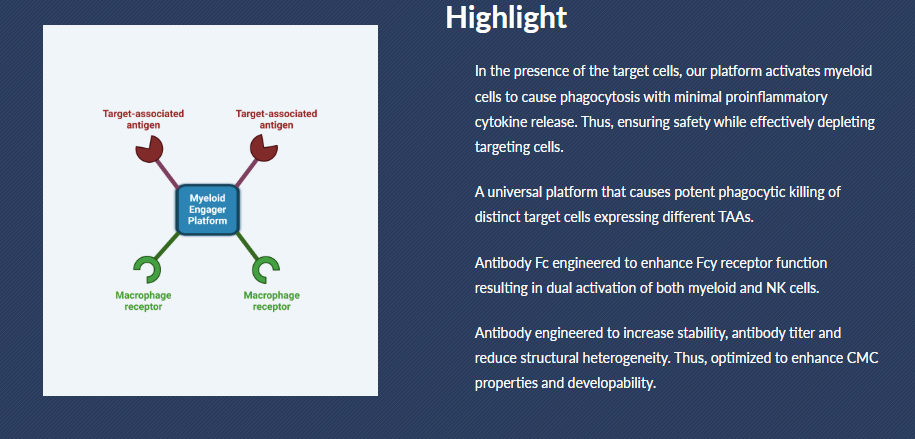
Zeanon Bio's MCE platform with CLEC5A(Human C-Type Lectin Domain Family 5 Member A)A target for myeloid cells, this receptor is primarily expressed on monocytes, macrophages, and neutrophils, and is stably expressed in macrophages of different polarization states. Its technical features include: activating the phagocytosis of myeloid cells while minimizing the release of pro-inflammatory cytokines, balancing efficacy and safety; engineering modifications to the Fc segment of the antibody,Enhance Fcγ Receptor Function to Achieve "Dual Activation" of Myeloid Cells and NK Cells, Enhance anti-tumor effects; Universal platform,Capable of potently engulfing target cells expressing different TAAs。
On April 23, 2025, Zeanon Biotech announced the successful completion of a $40 million Series A+ financing round, surpassing its target. Since its establishment in 2022, the company has raised a total of $90 million in funding.
Pipeline aspects,LTZ-301 It is Zean Bio's fastest progressing candidate drug. The drug enhances non Fc-γ receptor-dependent antibody-dependent cellular phagocytosis by redirecting monocytes and macrophages to CD79b+B cells, thereby achieving efficient clearance of CD79b+B cells.
Currently, LTZ-301 has been approved by the FDA for IND in February 2025 and is intended for use in relapsed or refractory non-Hodgkin lymphoma.(R/R NHL)Patient.
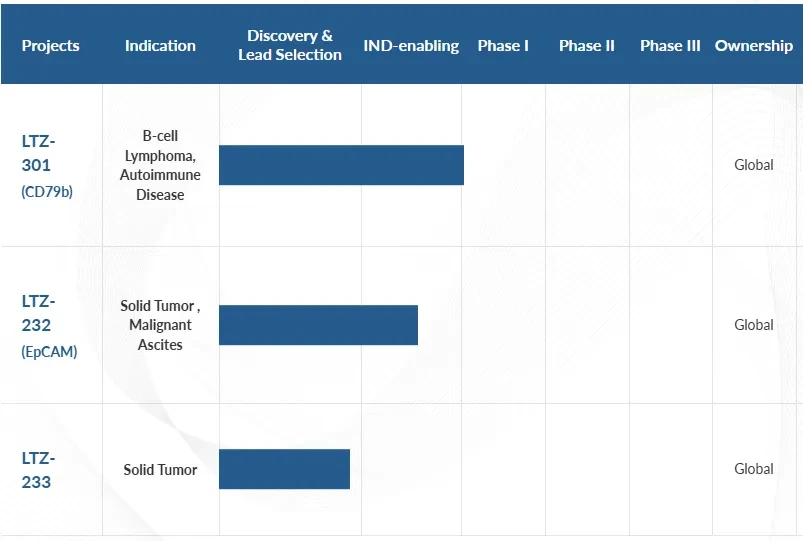
In addition, the pipeline layout of ZeAn Bio includes 1 product targeting solid tumors and malignant ascites. LTZ-232(EpCAM×Myeloid Receptor)And 1 undisclosed target LTZ-233, all in the preclinical development stage.
Kolon Life Sciences
Elpiscience Biopharma, founded in 2017, was one of the early companies to propose the concept of myeloid cell engagers.
In terms of technology platforms, Elpiscience Biopharma has an independently innovated drug discovery platform, including BiME.®-Bi-specific Antibody Macrophage Engager, Acebody™ -H-L Interchain Disulfide Bond Engineered Bi-specific Antibody Platform, and ElpiSourcerm-Fully Human Antibody Fab Library. Among them, BiME®Based on TAA and inhibitory receptors on myeloid cells(SIRPα)Construction, which demonstrated potentially superior anti-tumor efficacy and better safety in preclinical studies.
SIRPα is a key immune regulatory receptor on myeloid cells,After binding to CD47 on tumor cells, it transmits a "don't eat me" signal., inhibiting the phagocytosis of tumor cells by macrophages.
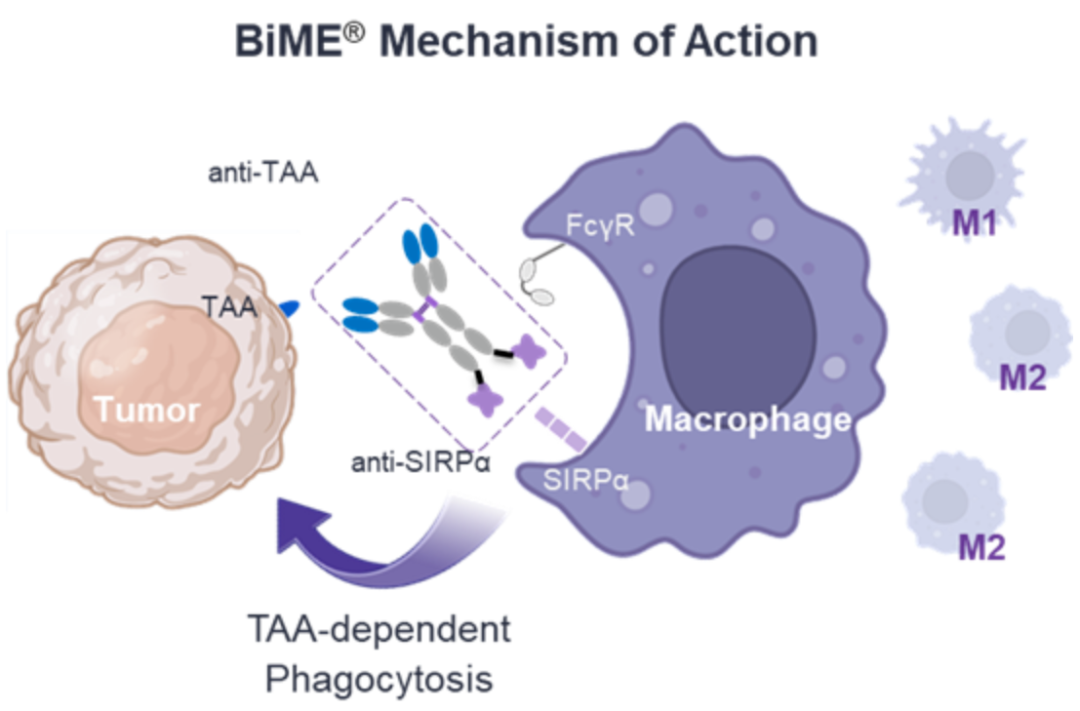
BiME®The platform is based on an anti-SIRPα antibody, with one end binding to SIRPα to block the CD47-SIRPα pathway and the other end targeting tumor antigens, directing macrophages toward tumor cells. Compared with drugs that directly target CD47, anti-SIRPα antibodies may avoid side effects such as anemia and thrombocytopenia caused by the widespread expression of CD47 on red blood cells and platelets.
In terms of pipeline, all of Elpiscience Biopharma's BiME pipelines are in preclinical research, with the fastest progress being ES019(SIRPα/PD-L1), with the proposed indication being solid tumors.
In December 2023, the company andAstellasAbout BiME®Platform and candidate drug ES019 reached a cooperative development and licensing agreement. Elpiscience Biopharma can also grant Astellas additional co-development rights for two more products. The amount of this cooperationOver 1.7 Billion USD。
Conclusion
From the intensive layout of MNCs such as GSK, Eli Lilly, and Sanofi, myeloid cell engagers may become the "next-generation potential track" in the field of tumor immunity following TCE.
Although this technical field is still in the clinical exploration and verification stage, and there is no definitive clinical data to draw clear conclusions yet, the competitive landscape of the industry has already begun to emerge. As drugs like Zetane Bio's LTZ-301 enter clinical trials, the next few years will be a critical validation period for the myeloid cell engager field.
Whether this platform technology can fulfill its potential in the treatment of solid tumors and autoimmune diseases, and support the "second curve" of cancer immunotherapy, remains to be seen.
Editorial Director | Xuan Xiao
Proofread by Xuan Xiao
References:
1.Official Websites and Official WeChat Accounts of Various Companies

Exciting Live Broadcast Preview
Press and hold to scan the QR code and participate immediately ↓



Dian Dian "Share”、“Like" and "In view", charge me up a bit~"