

Zuoyou Nao Medical: A Clinical Leader in Non-Invasive Brain-Computer Interface with an Integrated 'Assessment-Modulation-Training' Solution

NeuroMed
Developer and Manufacturer of Neuroscientific Instruments
Today, as brain-computer interfaces have been elevated to a national strategic level, various cutting-edge concepts continue to emerge, capturing global attention. Among these developments, a group of companies that focused on brain-computer interfaces early on and have deeply cultivated the field are gradually moving from laboratories to clinical settings, transitioning from technical validation to commercial implementation.NeuroMed, founded in 2015, is one of them.
As one of the early players in China's non-invasive brain-computer interface field, Nanjing NeuroMed Medical Technology Group Co., Ltd. ("NeuroMed") has spent a decade honing its expertise. Not only has it reached an internationally leading level in clinically applicable non-invasive brain-computer interface technology, but it has also been the first to break through the bottlenecks of clinical transformation and large-scale sales, becoming one of the few companies in China to achieve this milestone.
With a strong foundation in EEG AI big data, NeuroMed focuses on the research and clinical application of brain network dynamics assessment, brain-computer interfaces, and neuromodulation technologies. It has successfully established a closed-loop system from brain functional network detection to non-invasive brain stimulation regulation, and further to brain-computer interface combined with external assistive device training. The company not only provides comprehensive and precise diagnosis and treatment solutions for various brain-related disorders such as cognitive impairment, mental disorders, disorders of consciousness, and stroke, but also addresses the rehabilitation challenges of motor and cognitive impairments post-stroke through innovative brain-computer interface solutions.
The entrepreneurial story of NeuroMed began with founder Qian Yun's personal experience of the "bottleneck" issues in the diagnosis and treatment of neurological and psychiatric disorders.
Qian Yun has thirteen years of experience as a clinical neurologist, followed by a decade working as an agent for overseas-branded neuro-electrophysiological equipment. This unique cross-disciplinary experience, spanning both clinical practice and the industry, has enabled him to keenly identify gaps and opportunities in China’s brain science medical device sector.
The global survey released by The Lancet Neurology shows that in the past 30 years, the number of people suffering from neurological disorders has increased by 59%, and the total disease burden has risen by 18%. In China, the scale of patients with brain-related diseases such as cognitive, psychiatric, and consciousness disorders has reached nearly 150 million.
Facing the dual burden of a large base and rapid growth, current diagnosis and treatment mainly rely on subjective scales and structural imaging, which have low sensitivity (50%-60%). Moreover, most large equipment is imported, expensive, and difficult to popularize at the grassroots level. Qian Yun pointed out: "In practice, doctors will combine local needs to propose improvement suggestions for imported equipment, but foreign manufacturers rarely respond. Furthermore, what clinics truly need are comprehensive solutions that enable full-life-cycle management for patients, which is precisely lacking in the market."
At the same time, around 2015, national policies began to gradually restrict the procurement of imported equipment and strongly support the development of domestically produced medical devices. To develop products that better meet the clinical needs in China and keep core technologies in their own hands, Qian Yun resolutely abandoned the agency business and devoted himself to independent research and development, clarifying the path NeuroMed would take in the future—Focus on brain dysfunction diseases such as Alzheimer's disease, Parkinson's disease, stroke, depression, and autism, to create a "Evaluation-Regulation-Training" integrated solution.
First, in order to provide an objective and rapid assessment tool for brain dysfunction diseases, NeuroMed, in collaboration with a neuro-electrophysiology professional team with a Russian military background, initiated the project's development around 2017.After two years of all-out efforts, the prototype independently developed by the team entered the research ward of the Neurology Center at Beijing Tiantan Hospital in 2020. With the support of Professor Wang Yilong's team, it completed double-blind verification of cognitive function assessments in over 300 patients with cerebral small vessel disease in 2021. The accuracy of this EEG assessment model far exceeded that of traditional scales and imaging examinations, reaching over 85%.
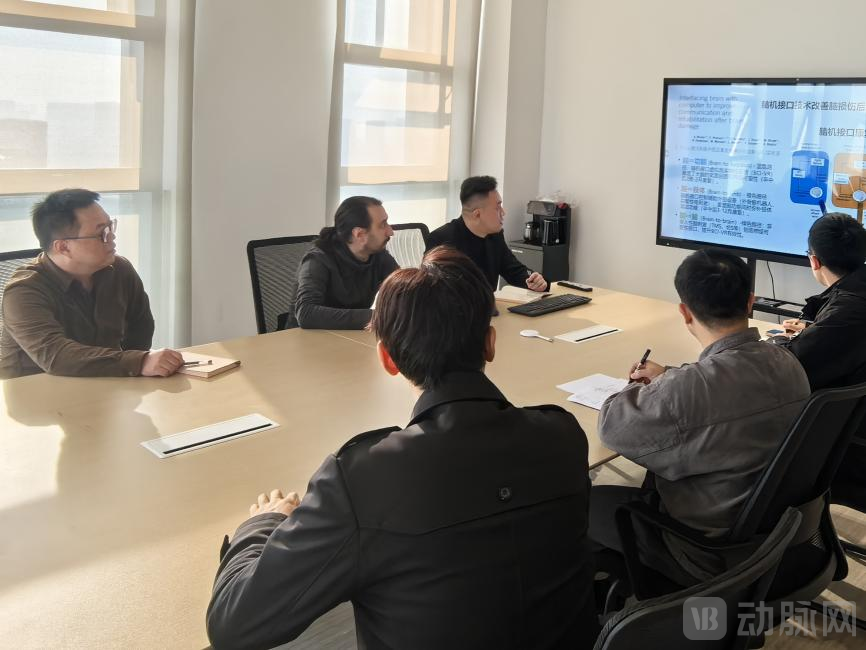
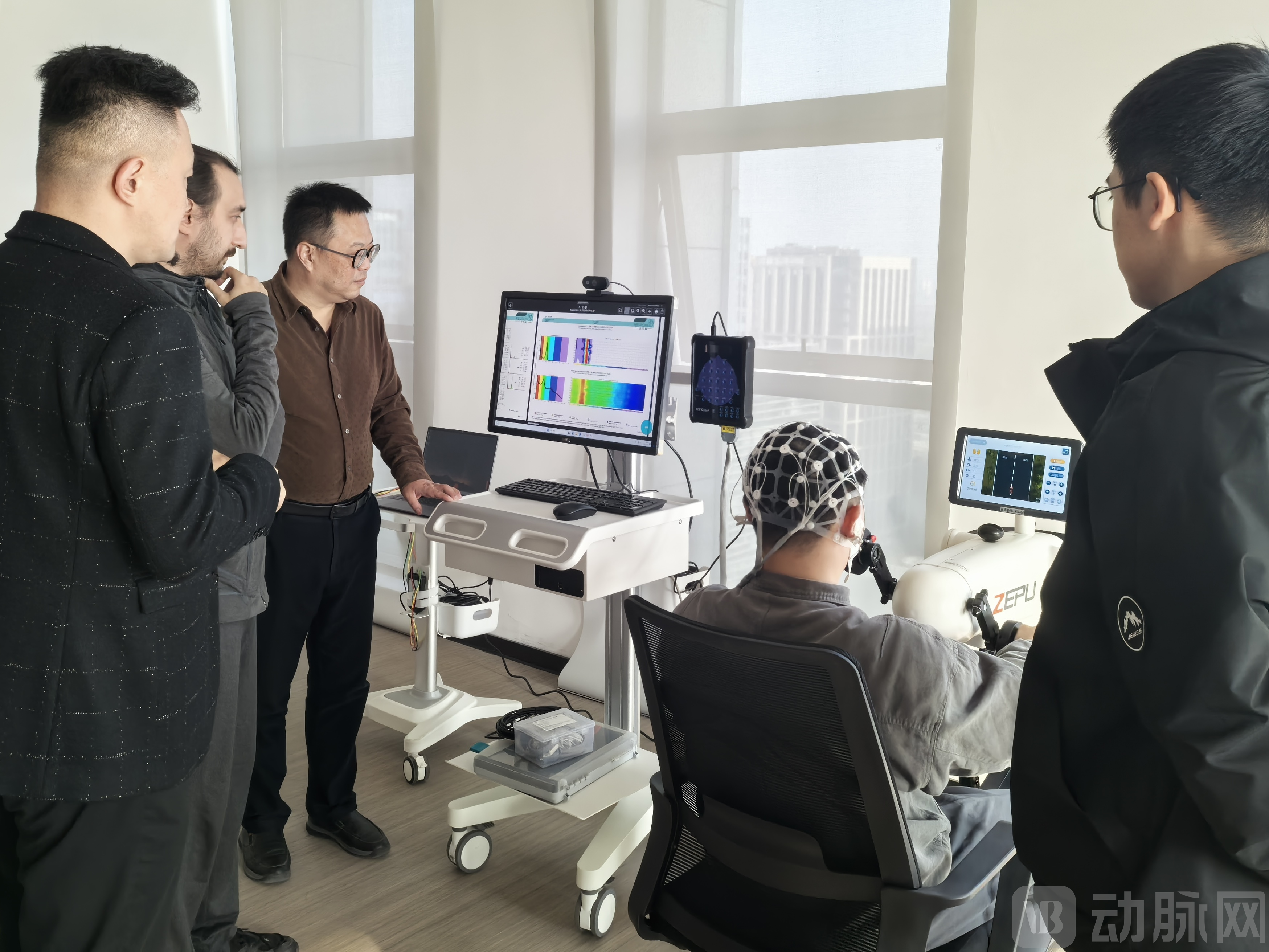
NeuroMed Cross-Border R&D Team, Photo Provided by NeuroMed
Afterward, the teamFujian Medical University Union HospitalProfessor Chen Xiaochun and Professor Pan Xiaodong from the Department of Neurology, as well asShandong Provincial HospitalWith the support of Professor Du Yifeng and Professor Song Lin's team from the Department of Neurology, more than 5,000 Alzheimer's patients have completed double-blind validation of cognitive function assessments.The accuracy rate of this EEG evaluation model also reaches over 85%, successfully completing the validation from laboratory to clinical application.
Based on precise evaluation, the team further introduced brain-computer interface technology to construct a closed-loop treatment system of "evaluation-regulation-training." First, through brain network detection, the patient's brain function status, disease staging, and prognosis risk are accurately assessed. Next, targeted neuromodulation is carried out under real-time EEG guidance, achieving precise intervention with adjustable parameters and visible efficacy. Finally, according to the patient’s rehabilitation stage, VR, exoskeleton robots, and brain-computer interface technologies are integrated to form a training closed loop, effectively improving the efficiency of neural function remodeling.
"Brain-computer interface is not a single device but a complete clinical process system." Qian Yun emphasized, "Traditional transcranial electrical/magnetic stimulation regulation is like blind firing, making it difficult to accurately locate the target neural circuits, and unable to achieve personalized regulation based on the patient's course of the disease. In contrast, NeuroMed, based on EEG assessment and real-time feedback-guided treatment, achieves precise positioning of the optimal stimulation brain region and frequency for each patient, marking a leap from empirical treatment to precise regulation."
The first step in this comprehensive solution is the precise analysis of the brain's real-time activity.This step relies on the four core models independently developed by NeuroMed based on brain network characteristics of different diseases — the Disorders of Consciousness Diagnosis Model, the Cognitive Impairment Assessment Model, the Post-Stroke Dysfunction Model, and the EEG Microstate Model.
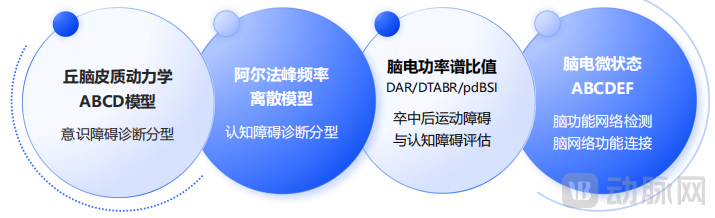
Brain Function Network Detection, Image Provided by NeuroMed
Taking the diagnosis of consciousness disorders as an example, the "Thalamocortical Dynamics ABCD Model" developed by the company can automatically diagnose and classify consciousness disorders with just 3-5 minutes of EEG data collection. The visual report clearly distinguishes among four states: Unresponsive Wakefulness Syndrome (UWS)/Vegetative State (VS), Minimally Conscious State (MCS), Minimally Conscious State+/Emerging from Minimally Conscious State (CS), and Full Consciousness (Norm).
It is worth mentioning that the model was successfully developed and entered clinical validation in 2020. In the same year, the International Federation of Clinical Neurophysiology (IFCN) expert panel officially listed it as one of the two core methods for diagnosing disorders of consciousness. Qian Yun stated in an interview, "We did not initially know that there was already an international consensus; it was only after our model was completed that we realized our approach aligned with international guidelines." Professor Zhang Wenbin's team from the Department of Functional Neurosurgery at Nanjing Medical University Affiliated Brain Hospital was the first in China to use this model to differentiate between Unresponsive Wakefulness Syndrome (UWS)/Vegetative State (VS) and Minimally Conscious State (MCS), thereby increasing the success rate of consciousness-promoting surgeries from around 30% to over 65%, reaching an internationally leading level. Professor Zhang Yan’s team from the Neurology ICU at Beijing Xuanwu Hospital used the model to accurately predict the prognosis of acute consciousness disorders.
In the more cutting-edge field of EEG microstates, NeuroMed has also achieved significant breakthroughs. Research shows that EEG microstates are closely related to brain functional networks. The company's self-developed automated EEG microstate model can accurately analyze the working status and coordination mechanisms of major brain networks. Through the topological diagrams, mean durations, mean occurrence frequencies, mean coverage rates, transition rates (Markov chains), and transition matrices of EEG microstates ABCDEF, it intuitively displays the working patterns of auditory, visual, salience, default mode, and attention networks, evaluating brain functional networks, brain network functional connectivity, and brain network dynamics. Professor Xue Qiahua from the First Department of Brain Rehabilitation at the Affiliated Rehabilitation Hospital of Fujian University of Traditional Chinese Medicine used this model to discover a decline in brain network information processing efficiency in stroke patients with cognitive impairment following basal ganglia injury.
The core purpose of precise analysis is to provide a scientific basis for the second stage of targeted regulation, achieving more efficient and precise intervention.
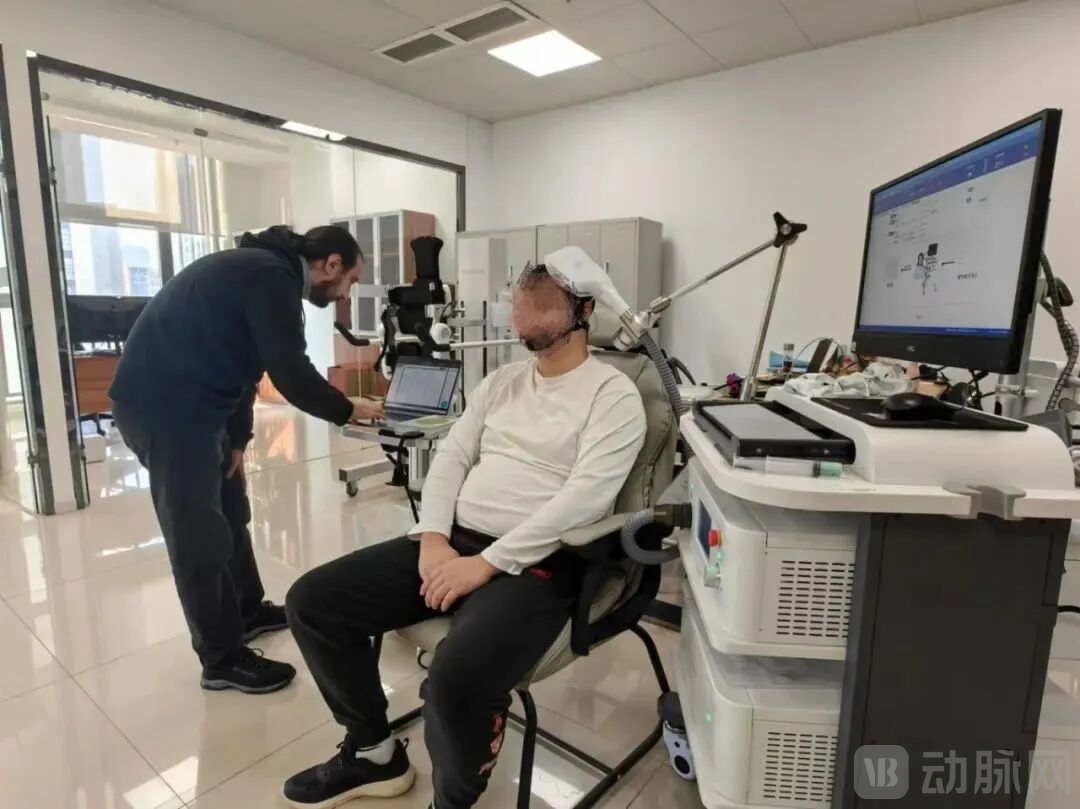
Closed-loop Transcranial Magnetic Stimulation Brain-Computer Interface Control System, Image provided by NeuroMed
NeuroMed's Self-Developed "Non-Invasive Brain Stimulation + EEG Monitoring" Integrated System Upgrades Traditional Fixed-Parameter Stimulation to a Closed-Loop Regulation Mode. Before treatment, brain network detection is used to identify targets and functional states; during treatment, key indicators such as TMS-evoked potentials (TEP) and TMS-induced oscillations (TIO) in transcranial magnetic stimulation combined with electroencephalogram (TMS-EEG) are monitored in real time; after treatment, efficacy is evaluated based on the same set of indicator systems.
To further enhance the accessibility of its technology, NeuroMed has integrated advanced techniques to streamline the originally time-consuming detection and analysis process, which used to take hours or even days, into a standardized operating system that is quick and easy to use. With just 3 to 5 minutes, a structured report can be generated at the touch of a button, perfectly aligning with the fast-paced clinical workflow and truly achieving seamless integration from the laboratory to the patient’s bedside.
The core of the third phase is the interaction between brain-computer interfaces and external assistive devices.
First, for stroke patients in the acute phase, NeuroMed utilizes non-invasive motor imagery brain-computer interface paradigm technology combined with a virtual reality neurofeedback system to promote early neural remodeling. As the disease progresses to the subacute and recovery phases, a closed-loop training system integrating central-peripheral and peripheral-central pathways is established through brain-computer interface integrated exoskeleton robots and transcranial magnetic/electrical stimulation systems.
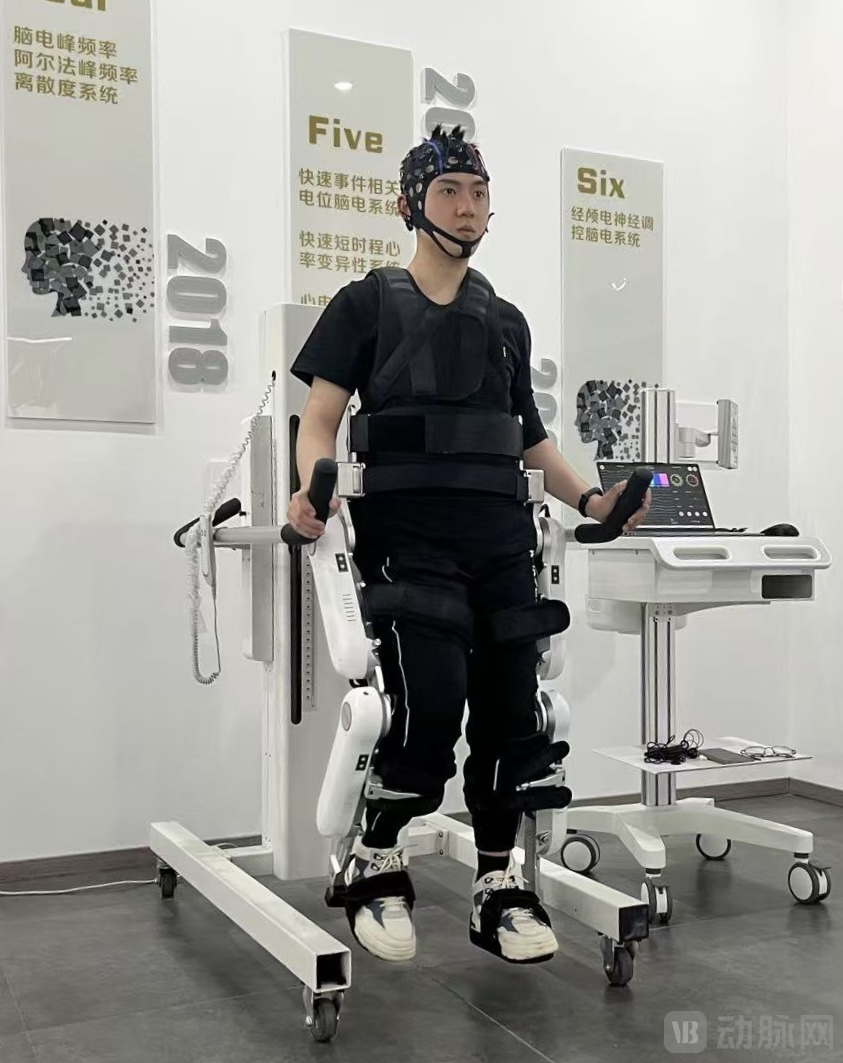
Exoskeleton Robot Brain-Computer Interface Control System, Photo Provided by NeuroMed
Qian Yun emphasized: "Unlike the rough intervention that tries to address everything at once, our approach is based on the detection model of the four major brain functional networks and brain-computer interface technology. This allows us to precisely target the impaired brain networks of patients, implement targeted stimulation regulation and closed-loop training, thereby exponentially improving rehabilitation efficiency. Moreover, the entire treatment process is visualizable, enabling doctors to instantly verify the treatment plan while allowing patients to see their progress intuitively, forming a monitorable and verifiable closed-loop system."
As a leader in the clinical application of brain-computer interfaces, NeuroMed's non-invasive brain-computer interface virtual reality neurofeedback combined with transcranial electrical stimulation system has been contracted to the brain-computer interface clinical trial platform of Jiangsu Provincial People's Hospital.The company has also jointly applied for the "Major Scientific and Technological Project of Brain-Computer Interface of Jiangsu Brain-Computer Interface Research Institute" with the Rehabilitation Department of Jiangsu Provincial People's Hospital, further deepening the integrated development of industry, academia, research, and medicine.
At the national project level,NeuroMed Collaborates with Beijing Tiantan Hospital and Beijing Institute of Technology to Jointly Apply for the MIIT's "Challenge Leader" Project in 2025. Its "Bidirectional Closed-Loop Intelligent Transcranial Electrical Stimulation System for Brain-Computer Interface" has Successfully Made the Shortlist, Marking National Recognition of the Company’s R&D Strength in Cutting-Edge Brain-Computer Interface Technologies.
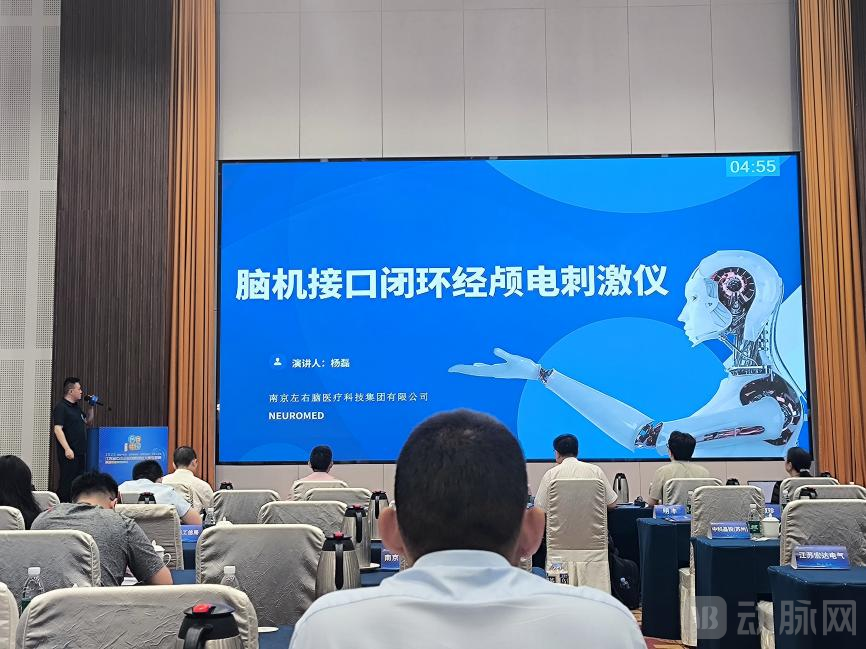
The 10th "Maker China" Jiangsu Province SME Innovation and Entrepreneurship Competition, photo provided by NeuroMed
As of June 2025, NeuroMed has completed the development of a series of products, including a brain-computer interface virtual reality neurofeedback system, an exoskeleton robot brain-computer interface control system, and closed-loop transcranial magnetic stimulation and closed-loop transcranial electrical stimulation brain-computer interface control systems. Moreover,Since obtaining the medical device registration certificate for its EEG machine in May 2024, the company has quickly expanded into the domestic market in China. Its products have been introduced into more than a hundred top-tier (Class III) hospitals in Beijing, Shanghai, Guangzhou, and provincial capital cities, covering key departments such as neurology, neurosurgery, rehabilitation medicine, and psychiatry. In the first year of commercialization, sales revenue exceeded 20 million yuan.
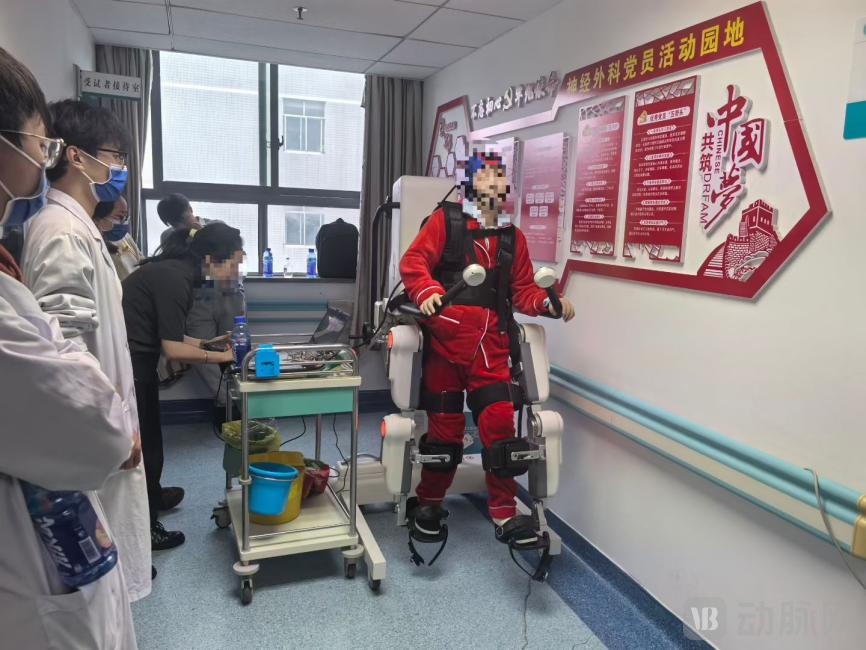
Treatment Scene of a Patient Wearing an Exoskeleton Robot Controlled by a Brain-Computer Interface System at a Certain Grade A Hospital, Photo Provided by NeuroMed
"Based on the construction of hundreds of model hospitals and the高潮 brought by the inclusion of brain-computer interface in the national 15th Five-Year Plan as a future industry, our goal in the next five years is to achieve full coverage of about 3,800 tertiary hospitals in China, with sales revenue expected to exceed 1 billion yuan," Qian Yun revealed.
While consolidating its position in the serious medical market, NeuroMed is also playing a bigger game — the home-use market. "We have already developed a home-use prototype with the goal of transforming hospital equipment that costs hundreds of thousands of yuan into consumer products priced at the ten-thousand-yuan level that ordinary families can afford, helping patients consolidate treatment effects after discharge and achieve long-term rehabilitation more effectively," said Qian Yun.
Facing the industry's boom, Qian Yun also emphasized the presence of bubbles within it: "Currently, many brain-computer interface companies lacking technical accumulation have rushed into the field in pursuit of capital. However, their products remain in the laboratory and are difficult to truly apply in clinical scenarios. If mistakenly applied clinically, it may cause patients to miss the optimal treatment window, resulting in irreversible harm. This is the fundamental reason for consistently upholding clinical efficacy and safety."
As a research and development enterprise rooted in serious medical care, NeuroMed is actively seeking partners with experience in consumer electronics and enabling investors with channel resources to jointly promote the implementation of home-use products and explore this blue ocean.
From Doctor to Entrepreneur, from Agent to Original, from Extensive to Precise: Qian Yun has led NeuroMed on a challenging yet correct path. During the critical period when brain-computer interfaces are moving from research to clinical application in China, the team is becoming one of the few enterprises that can truly "take root in the ward" with its profound clinical accumulation, complete technical closed-loop, and clear business strategy.