Philips Unveils BlueSeal Horizon: Industry’s First Helium-Free 3.0T MRI Platform

GE Healthcare
Digital Solution Provider

UNITED IMAGING
Artificial Intelligence Medical Product Developer

A series of dynamic images flows smoothly on the screen, capturing every subtle moment of joint movement. This is not footage from a high-speed camera but rather the world's first..."Camera" MRI Captures Real-Time Images of the Human Body.
At the RSNA Annual Meeting by the end of 2025, Philips officially releasedWorld's First Helium-Free 3.0T MRI Platform BlueSeal Horizon。
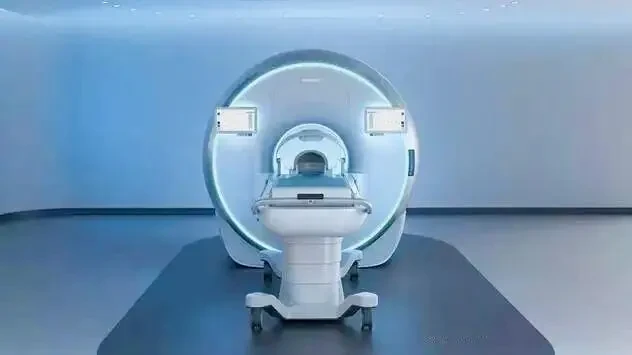
Since 2018, a certain company has consistently been at the forefront of helium-free MRI technology research and application, with its launch of1.5T BlueSeal MRIResonanceSystemMore than 2,000 units have been installed worldwide,Saved over 6 million liters of liquid helium to date.Now, the company has further implemented helium-free technology in its 3.0T MRI products.Not onlyNo longer requires helium replenishment and venting pipelines,This has also reduced the difficulty of equipment site selection, shortened installation time, and minimized operational risks throughout the entire lifecycle.

Technology Race
2025: The Watershed Year for High-End MRI Technology. The core breakthrough of Philips' BlueSeal Horizon platform lies in completely eliminating the dependency of 3.0T MRI on liquid helium.
This change not only reduces the complexity of equipment operation and maintenance and lifecycle risks but also removes the restriction of installation locations by exhaust ducts.
At the same time, China's United Imaging has taken a different path of innovation.uMR Ultra is calledWorld's First "Camera" MRI, achieving an imaging paradigm revolution from static "photography" to dynamic "videography."
TraditionalMRI is highly sensitive to motion, and physiological activities such as the patient's breathing and heartbeat often lead to image blurring. However, uMR Ultra, through the uAIFI.LIVE imaging platform and spatiotemporal fusion AI engine, can continuously capture high-definition dynamic images.

Intelligent Core
Hardware breakthroughs are only the surface; the real competition has gone deeper.AI Core. Philips has equipped BlueSeal Horizon with a full set of AI workflow tools, including SmartPlanning, which can reduce cardiac imaging planning time to 30 seconds, and based onNVIDIAReal-time scan preview function of accelerated computing.
GE Healthcare also places AI at the core of its next-generation SIGNA series. SIGNA One, as an AI-driven workflow platform, is dedicated to improving efficiency throughout the entire process from planning, scanning to reporting.
The platform has even integratedNo ConnectionTouch BreathingGating TechnologyAndAI-Positioned Automated Camera, aiming to reduce human intervention and improve the consistency of inspections、Improve Efficiency。
UNITED IMAGING showcased the world's only intelligent system for multi-examination with a single chest scan, capable of automatic detection.73 Common Thoracic Abnormalities, with an Average AUC of 94%. In Real-World Human-AI Collaborative Challenges, AI Assistance Increased Physicians' Diagnostic and Report Writing Efficiency by 25%.

Market Reshuffle
Behind the divergence of technical routes lies the medicalThe Rapid Evolution of the AI Market. 2025,The Scale of China's AI Medical Industry is Expected to Reach 115.7 Billion YuanAmong them, medical imaging is the field with the deepest AI penetration.More than 70% of clinical diagnoses rely on imaging data.
Global Medical Device Artificial Intelligence Market inIt reached 19.1 billion US dollars in 2024 and is expected to grow to 143.5 billion US dollars by 2037.
The market growth is accompanied by a rapid increase in adoption. According toAccording to Menlo Ventures, the adoption rate of healthcare AI was only 3% in 2023, while by 2025, 22% of institutions have deployed dedicated AI tools, marking an over sevenfold increase.
Medical institutions in choosingWhen it comes to AI tools, the three most important factors are:Technical maturity, risk level of patient care, and short-term value delivery。

Deep Change
ThisThe transformation led by AI is reshaping the underlying logic of the healthcare industry. In the past, healthcare was a field that relied heavily on human resources and less on software. Out of the $740 billion in U.S. healthcare administrative spending, only $63 billion is allocated to IT budgets.
ButAI is changing this situation by driving transformation through two pathways: one isPenetrate Existing IT Budget, enhancing traditional systems through intelligent modules; secondlyThe process originally reliant on manual services has been softwareized for the first time.。
In the field of medical imaging,The value of AI has been quantitatively validated. AI reduces image reading time by 53% compared to humans, while increasing detection rates by 17.6%. These efficiency improvements are significant for alleviating the shortage of radiologists and reducing diagnostic waiting times.

Regulation and Challenges
As technology rapidly develops, the global regulatory framework is also gradually becoming clearer.In 2025, the EU, China, and the United States respectively implemented new CE certification regulations, optimized approval processes, and established dynamic regulatory frameworks, creating a stricter yet clearer regulatory environment.
China's optimization initiatives haveThe average approval time for AI imaging products has been reduced from 24 months to 14 months. This "strict regulation + promote innovation" balanced model is reshaping the industry's competitive landscape.
Challenges remain. Medical data presentsThe characteristics of "abundant but not excellent, scattered but not connected," along with issues like inconsistent standards and unstructured storage, affect the training effectiveness of AI models. At the same time, an imperfect payment system also restricts commercialization progress.

Future Battlefield
As the technology continues to mature,The competition in the MRI field is shifting from single-device performance to comprehensive solutions. GE HealthCare has partnered withNVIDIACooperation, utilizing itsDevelopment of GPU-Accelerated Deep Learning Reconstruction Models.
This trend suggests that future competition will go beyond hardware parameters, extending to the ability to build ecosystems.
From the perspective of clinical application,AI is expanding from assisted diagnosis to broader scenarios. United Imaging's "camera" MRI provides a new dimension for diagnosis in areas such as the nervous system, gastrointestinal tract, pelvis, and joints.
AndGE's SIGNA series provides end-to-end clinical pathway solutions from planning to reporting for neurology and oncology.
The commercialization path is also gradually becoming clear. One analysis focuses on the medicalThe commercialization of AI is divided into three tiers: AI that empowers medical technology departments, AI that adds value to clinical treatment, and AI focused on health management. Hard-tech AI, which is tied to high-end equipment and meets critical clinical needs, is expected to more quickly establish a business model as reforms in medical insurance payment methods progress.
When the integration of AI and high-end imaging equipment enters uncharted waters, competition in the MRI field has long surpassed hardware itself, evolving into a comprehensive contest of technological ecosystems, clinical value, and commercialization capabilities. Breakthroughs in liquid helium dependency, innovations in dynamic imaging, and the full-process empowerment of AI are all bringing advanced medical technology closer to clinical practice. In the future, only those who focus on clinical needs, continuously refine their technologies and ecosystems, will be able to stand firm in this intelligent revolution of medical imaging, ultimately allowing the benefits of technological advancements to reach more patients.
Previous Recommendations
Countdown to Delisting for Medical Device Leader Amid Financial Fraud Scandal
This Medical Device Company in Suzhou Secures Nearly 100 Million Yuan in Financing!