Note: This article does not constitute any investment opinions or recommendations; please refer to official/company announcements for accuracy. This article only introduces drugs related to healthcare and does not recommend treatment plans (if involved), and does not represent the platform's position.Any article reprint requires authorization.
Recently, Zhongqi Capital completed its investment insiRNA DrugsSuzhou Siran Biotechnology Co., Ltd. (hereinafter referred to as "SiranBio")Pre-A Round Investment.Rising as a dark horse, small nucleic acid drugs are entering a period of rapid global growth.Different from the mechanisms of small molecule drugs and antibody drugs, small nucleic acid drugs, especially siRNA, possess unique advantages and great potential: 1) Broad target accessibility, 2) Strong targeting/specificity, 3) High R&D efficiency, 4) Long dosing intervals. Based on these characteristics, in recent years, large BD deals in the small nucleic acid drug field have occurred globally. For instance, in 2019, Novartis acquired The Medicine Company for $9.7 billion, and in 2023, it acquired DTx Pharma for $1 billion. Starting from 2023, siRNA pipeline collaborations through licensing have shifted to China, with a representative event being the $4.1 billion pipeline collaboration deal between Bo Wang and Novartis. In September this year, a $5.36 billion BD deal further ignited this track, indicating that China's small nucleic acid drugs have gained favor from MNCs.The representative siRNA drug currently on the market is Leqivo, jointly developed by Alnylam and Novartis. It was first approved for marketing in the United States in 2021 for the treatment of adult primary hypercholesterolemia. With the advantage of a dosing interval of up to six months, which enhances patient compliance, its global sales reached $750 million in 2024 (+114%), approaching those of Praluent. In the first quarter of 2025, its global sales were $260 million (+72%), showing rapid growth.Innovation Breakthrough: SiranBio Builds a New Paradigm for Small Nucleic Acid Drugs 2.0SiranBio was established in Suzhou in May 2022 as a biotechnology company focused on the development of innovative siRNA drugs. It was co-founded by a top-tier team of scientists and industrialization experts in the field of siRNA drug therapy. The company has built industry-leading, proprietary technology platforms for single-target and dual-target nucleic acid drugs, as well as an extrahepatic delivery platform. These include the eSAFE chemical modification technology, the STORK intrahepatic and extrahepatic delivery technology platform, and the dual-target nucleic acid technology platform, representing version 2.0 of siRNA drug technologies and placing the company in a leading position within the industry. Based on these technology platforms, SiranBio has rapidly developed a pipeline of FIC (First-in-Class) and BIC (Best-in-Class) small nucleic acid drugs targeting both intrahepatic and extrahepatic conditions, including treatments for chronic hepatitis B, cardiovascular and metabolic diseases, autoimmune disorders, and central nervous system-related diseases.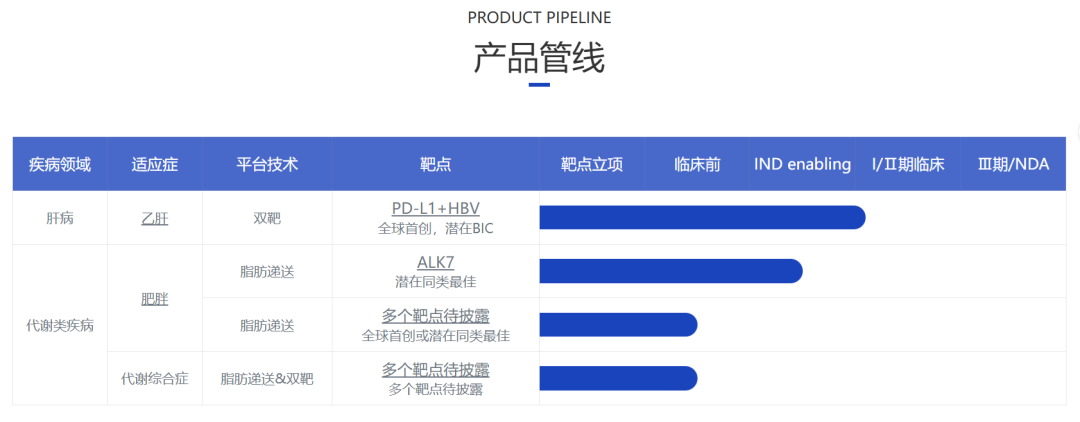
The first product has been approved for clinical trials,Challenge ImplementationFunctional Cure for Hepatitis B
In October 2025, SA1211 Injection, filed by SiranBio, received clinical trial approval from the CDE for the development of a treatment for chronic hepatitis B. SA1211 is the world's first dual-target siRNA that can simultaneously target the HBx gene of the hepatitis B virus and the PD-L1 gene in hepatocytes, and it is also the first single-molecule dual-target siRNA candidate drug to enter clinical trials internationally.Chronic Hepatitis B Virus (HBV) infection is one of the major disease challenges faced globally.,Current first-line clinical antiviral drugs include nucleoside (acid) analogs and interferons, which are difficult to achieve chronic hepatitis B (Functional Cure of CHB, that is,Eliminate viral infection without rebound. SiranBio's dual-target strategy demonstrated promising efficacy in previous preclinical animal experiments, with no rebound after discontinuation of treatment, offering hope for achieving functional cure in human clinical trials.
References:
Mastering CAR-T Therapy, Stem Cell Therapy, and Gene
Therapy,Comprehensive Information on Oncolytic Viruses and Nucleic Acid Drugs