Home CHOCO-STAB Study: Stable Efficacy of the Chocolate Balloon in Managing Dissections Following Femoropopliteal Angioplasty

CHOCO-STAB Study: Stable Efficacy of the Chocolate Balloon in Managing Dissections Following Femoropopliteal Angioplasty

Dec 04, 2025 12:00 CST Updated 12:00
Medtronic

Medical Device Manufacturer

Image
Image


Image


VEITH 2025


From November 18-21, 2025, the International Vascular and Endovascular Conference (VEITH Symposium 2025) was successfully held in New York, USA. During the conference, representatives from the University of Palermo, Italy,Professor Felice PecoraroShared the stable efficacy of the Chocolate balloon (Medtronic) in the treatment of dissections after femoropopliteal balloon angioplasty —— The CHOCO-STAB study systematically elaborated on the background, design, and results of the CHOCO-STAB study. It not only verified the efficacy of the Chocolate balloon in specific types of dissections but also provided an innovative "leave nothing behind" strategy for the field of vascular intervention, attracting widespread attention and discussion from attending experts.

At the same time, Vascular Information specially invited the Department of Vascular Surgery of Zhongshan Hospital, Fudan University.Professor Fu WeiguoComments and sharing were provided on the CHOCO-STAB study. Professor Wei-Guo Fu pointed out that in the vascular preparation of complex lesions, the chocolate balloon effectively reduces severe dissections. Combined with the use of drug-coated balloons (DCB), it offers a practical and synergistic solution for achieving "leave nothing behind." The highlights are summarized below for your reading pleasure!


1

On-site Interview

Question 1


The CHOCO-STAB study confirmed the effectiveness of the chocolate balloon in managing DISFORM Type III dissections. In your opinion, could directly using it during the initial PTA for high-risk lesions, such as severe calcifications or CTOs, reduce the occurrence of severe dissections?

▲Click to Play Video

Professor Fu Weiguo:Since the Chocolate balloon was launched in China, it has become a very important tool in vessel preparation, especially playing an active role in preventing or reducing severe dissections. As this therapy has been gradually promoted and popularized in China, the clinical application of the Chocolate balloon has become increasingly widespread. It not only helps reduce the incidence of DISFORM Type III or higher dissections but also, due to its growing clinical value and health economic benefits, allows more patients to benefit. Therefore, I believe this is a strategy worth promoting.


Question Two


In the CHOCO-STAB study, the chocolate balloon achieved a 91.2% technical success rate. Based on your clinical experience, can we quickly predict which dissections may respond poorly to the chocolate balloon after its dilation through certain angiographic or imaging features?

▲Click to play video

Professor Fu Weiguo:The effect after chocolate balloon dilation can indeed be predicted through imaging features. For instance, in cases of severe calcified lesions or significant elastic recoil, using only a chocolate balloon may struggle to achieve ideal and sustained outcomes. Additionally, if slow blood flow occurs post-dilation, it suggests that relying solely on a chocolate balloon for vessel preparation might have limited efficacy. Therefore, by analyzing imaging findings, we are able to identify situations where the use of a chocolate balloon may yield suboptimal results.


Question Three


The CHOCO-STAB study demonstrates the value of the chocolate balloon in avoiding stent implantation. In the context of the increasingly popular "leave nothing behind" concept, how do you view the synergistic effect of the chocolate balloon and drug-coated balloon?

▲Click to Play Video

Professor Fu Weiguo:Chocolate balloon mainly provides mechanical dilation, aiming to reduce the formation of dissection after balloon expansion, but it cannot control intimal hyperplasia. To effectively reduce the restenosis rate, drug-coated balloons are indispensable tools. The combination of the two can not only optimize lumen gain but also address the clinical challenge of intimal hyperplasia, thus having significant practical implications and synergistic value.


2

Keynote Speech

Professor Felice Pecoraro

Stable Efficacy of Chocolate Balloon (Medtronic) in the Treatment of Dissections After Femoropopliteal Balloon Angioplasty —— CHOCO-STAB Study

Research Background


Advanced Peripheral Artery Disease (PAD) Often Manifests as Chronic Limb-Threatening Ischemia, with a High Risk of Amputation. For chronic total occlusions of the femoropopliteal artery, Percutaneous Transluminal Angioplasty (PTA) is the mainstream treatment, but the postoperative dissection rate is as high as 80%. If moderate to severe dissections are left untreated, they significantly increase the risk of acute vascular occlusion and restenosis. Traditionally, rescue stent placement has been used, but it introduces long-term complications such as in-stent restenosis, thrombosis, and fracture, affecting long-term patency and patient outcomes.

Against this backdrop, the Chocolate balloon—a novel device design—has entered clinical view. Its unique surface nitinol constraining structure forms an alternating "pillow-groove" pattern, enabling more uniform and controllable expansion at low pressure. Theoretically, it can gently compress and stabilize dissection flaps without aggravating vascular trauma, offering a new possibility for repairing the vessel wall. Nevertheless, the exact efficacy, safety, and potential of the Chocolate balloon in avoiding stent implantation when managing specific types of post-balloon angioplasty dissections had previously lacked high-quality clinical research evidence. Clarifying the role of the Chocolate balloon in this clinical scenario is of great significance for optimizing treatment processes and improving long-term patient outcomes.


Research Methods


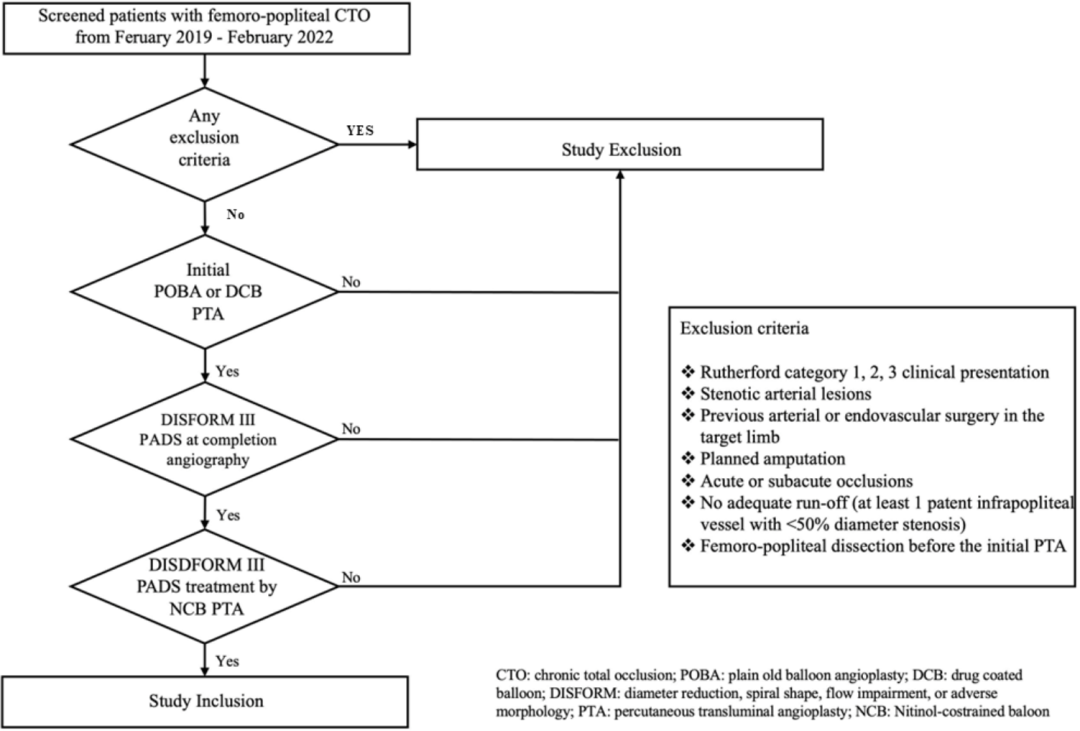
CHOCO-STAB is a single-center retrospective study that enrolled 68 patients with femoropopliteal artery CTO.All cases developed DISFORM type III dissection after initial balloon dilation (DCB or POBA).That is, diameter stenosis < 50% (D₀), and meets any of the following morphologies: ①Single short spiral dissection (<2cm, no flow impairment, D₀S₁F₀M₀); ②Long segment or multiple short linear dissections (mild flow impairment, D₀S₀F₁M₁); ③Multiple long linear dissections (without/with mild flow impairment, D₀S₀F₀M₂/D₀S₀F₁M₂).

In the study, all patients underwent secondary dilation using a chocolate balloon after dissection confirmation. The primary endpoint was technical success rate (dissection repair, residual stenosis <30%, no stent implantation) and the incidence of major adverse events.

Image


Research Results


This study enrolled 68 patients with an average age of 72 years, among whom 39% were diabetic. The mean length of the initially treated CTO was 10.32 mm, with 28% showing moderate to severe calcification. Forty-seven patients (69%) initially received drug-coated balloon (DCB) treatment.

The data presented by Professor Felice Pecoraro is encouraging.Technical success rate 91.2%,62 patients successfully stabilized dissections solely through chocolate balloon dilation, without the need for stent implantation.The stent implantation rate is only 8.8%,Only 6 patients received stent implantation due to significant residual stenosis still present after chocolate balloon treatment. The implanted stents were relatively short, with an average stent length of 53.33mm, which helps reduce the risk of long-term complications.

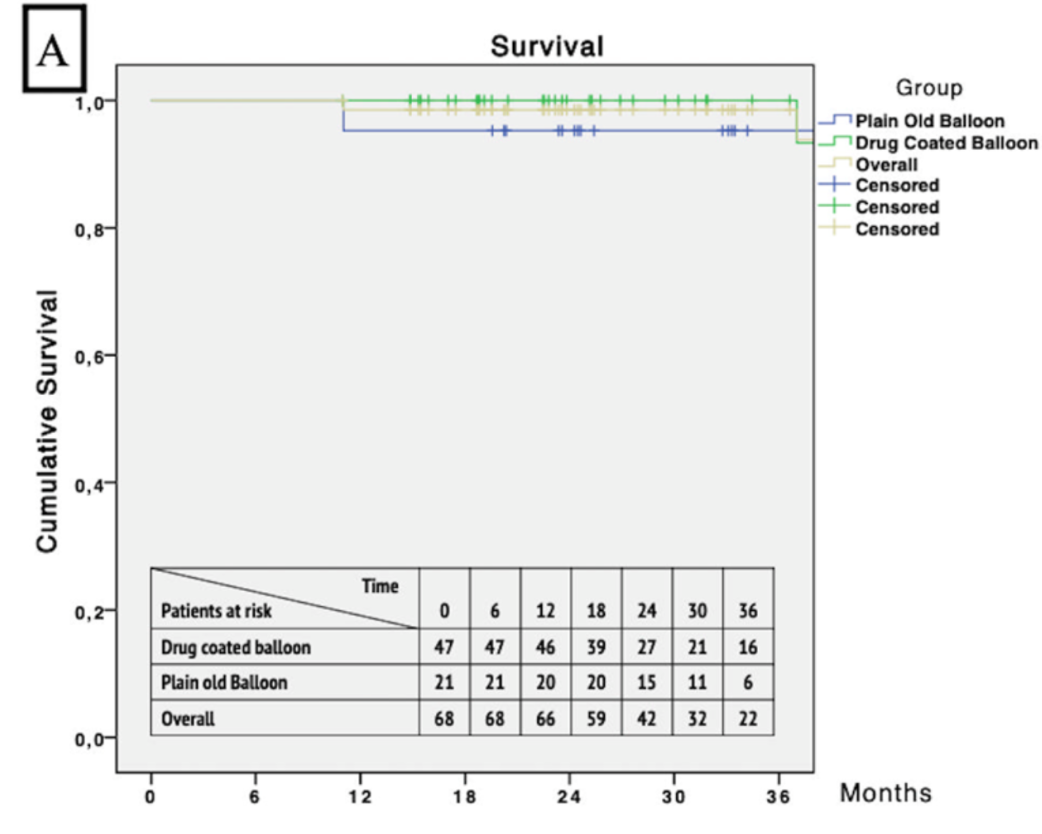
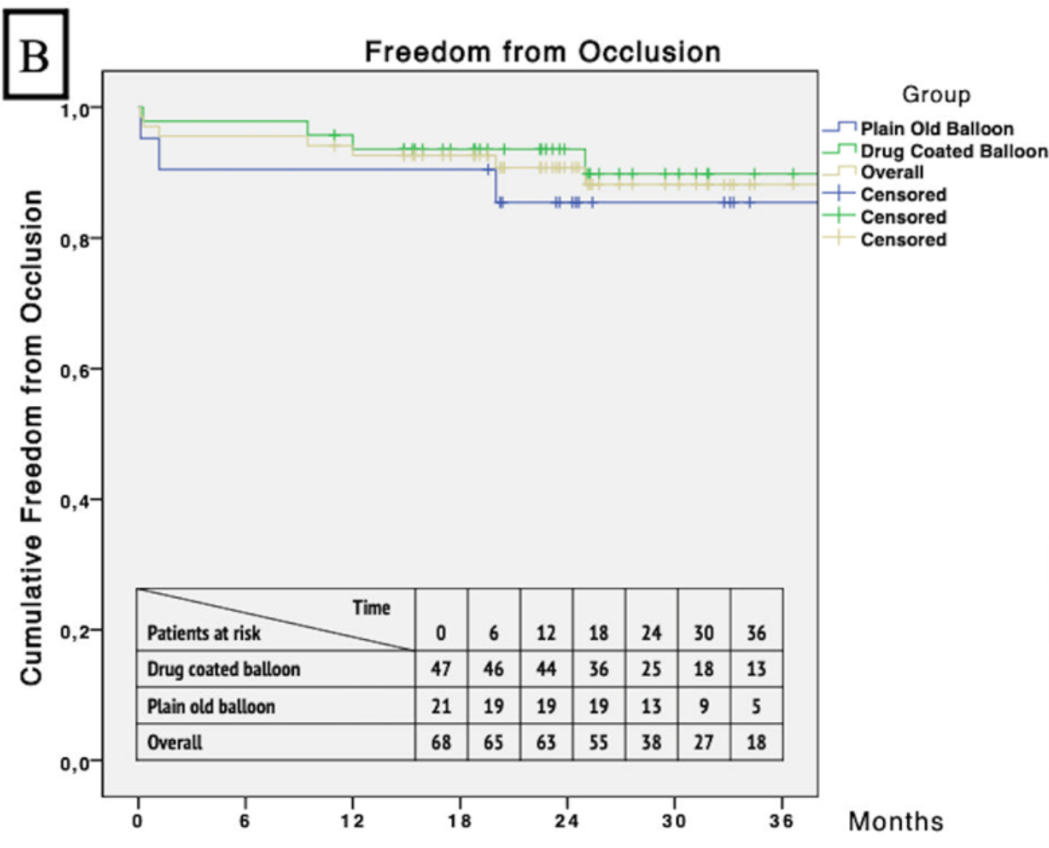
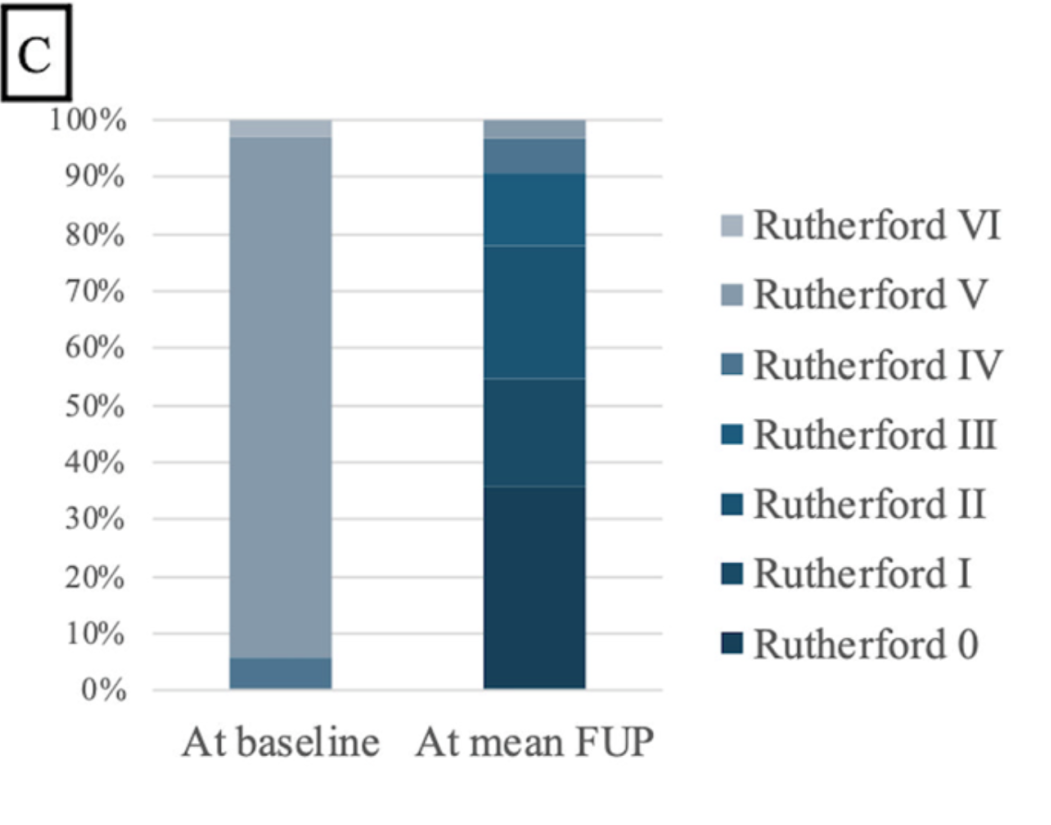
The three-year follow-up results showed an overall survival rate of 98.5%, a primary patency rate of 88.2%, a freedom from major amputation rate of 94.1%, and a freedom from target lesion revascularization rate of 94.1%. Patients' Rutherford classification and ankle-brachial index (ABI) significantly improved compared to pre-operation, with 35.94% of patients reaching Rutherford class 0 (asymptomatic), showing significant improvement from baseline (P<0.001).ABI increased from a baseline of 0.29 to 0.66, with a statistically significant difference (P<0.001). These data suggest that the chocolate balloon is not only feasible but also demonstrates sustained vascular repair capability during mid-term follow-up.

Image
Image
Image


Clinical Significance


CHOCO-STAB Study Shows,Chocolate balloon is safe and feasible for the treatment of DISFORM type III dissection, significantly reducing the need for stent implantation while achieving good three-year patency and limb salvage rates.Despite the study's single-center retrospective design and limited sample size, the results suggest that the chocolate balloon may serve as an alternative stent strategy for moderate to severe postoperative dissections, warranting further validation through prospective research.


Fu WeiguoProfessor

Zhongshan Hospital, Fudan University

Image

Second-level Professor, Doctoral Supervisor, Expert with Special Allowance from the State Council, Advanced Individual Worker in China's Health System, Middle-aged Expert with Outstanding Contributions from the Ministry of Health, Winner of Shanghai May 1 Labor Medal, and Leading Talent in Shanghai. Committed to the research on "endovascular minimally invasive treatment" for aortic and peripheral artery diseases, he has obtained five independent patents and successfully transformed innovative achievements. He currently serves as the Director of the Vascular Surgery Department at Zhongshan Hospital Affiliated with Fudan University, the Director of the Fudan University Vascular Surgery Research Institute, the Deputy Director of the National Clinical Research Center for Radiology and Treatment, the Deputy Leader of the Vascular Surgery Group under the Surgery Branch of the Chinese Medical Association, the Vice President of the Vascular Surgery Physician Branch of the Chinese Medical Doctor Association, the President of the Vascular Surgery Branch of the Cross-Straits Medical and Health Exchange Association, and the President of the Vascular Surgery Physician Branch of the Shanghai Medical Doctor Association.


Copyright Statement: This platform aims to help medical and health professionals better understand the latest developments in related disease areas. The information content published on this platform does not imply agreement with its descriptions and viewpoints, but is merely for providing more information. If there are any copyright issues, we kindly request the rights holders to contact us, and we will address them as soon as possible. The information is solely for medical and health professionals to stay informed, and such information cannot replace professional medical guidance in any way, nor should it be regarded as medical advice. If such information is used for purposes other than staying informed, this platform and the author shall not bear any related responsibility.Contact email for cooperation:vascular@edoctor.work。

Image